A buyer in Hamilton, Canada working on semiconductor equipment has an aluminium chamber lid whose seal land and 24 blind tapped holes must survive deburring without rounding or lodging. SurfacePolish supplies vibratory finishing machines, media and compounds across borders and runs a free sample trial: the part travels to Xiamen, and the returned part comes with a proposed media, compound and cycle direction for the buyer's own review. This brief is written for a buyer in Hamilton working on semiconductor equipment; it describes equipment, media and a scoped sample review, not a local polishing service.
Can the required finish be reached in one mechanical route, or does the part need a cut stage followed by a refinement stage?
What is the smallest internal passage, slot or hole the charge must not plug, and how will a lodged medium be detected and removed?
How will a production batch be identified, segregated by material family and documented so a result can be traced to its settings?
Start every assessment with a marked-up drawing, not a part family name. On a vacuum-chamber component the surfaces that matter are usually small: an O-ring groove floor, a knife-edge seal land, a gas inlet bore, a tapped hole pattern and a locating dowel bore. Each needs a decision before any medium is chosen, whether it is masked, plugged, finished to a roughness band or deliberately left untouched. A chamber lid and a roughing-line elbow can come off the same machining cell and still need different screening because one carries a knife edge and the other carries a welded flange. Ask which surface an elastomer or metal seal actually seats on, and treat that as a datum for acceptance. The feature list also drives handling rules: where parts may be stacked, which faces may touch, and how they are separated between operations.
Compound choice controls residue as much as it controls cutting. Alkaline and neutral families are common for general deburring and cleaning, acidic families may be used where a descale or brightening effect is wanted, and silicate-bearing products can leave a tenacious film that is difficult to remove from a sealing face or a gas passage. For aluminium, a compound with an effective corrosion inhibitor is usually necessary to avoid darkening and surface attack during and after the cycle. Concentration, flow rate and temperature all shift the result, so dosing should be metered rather than guessed. Water quality matters too: hardness, chloride content and suspended solids affect foaming, rinsing and the residue left behind. The question to put to a supplier is what the compound leaves on the part, how it is removed, and what evidence a buyer can collect to confirm removal.
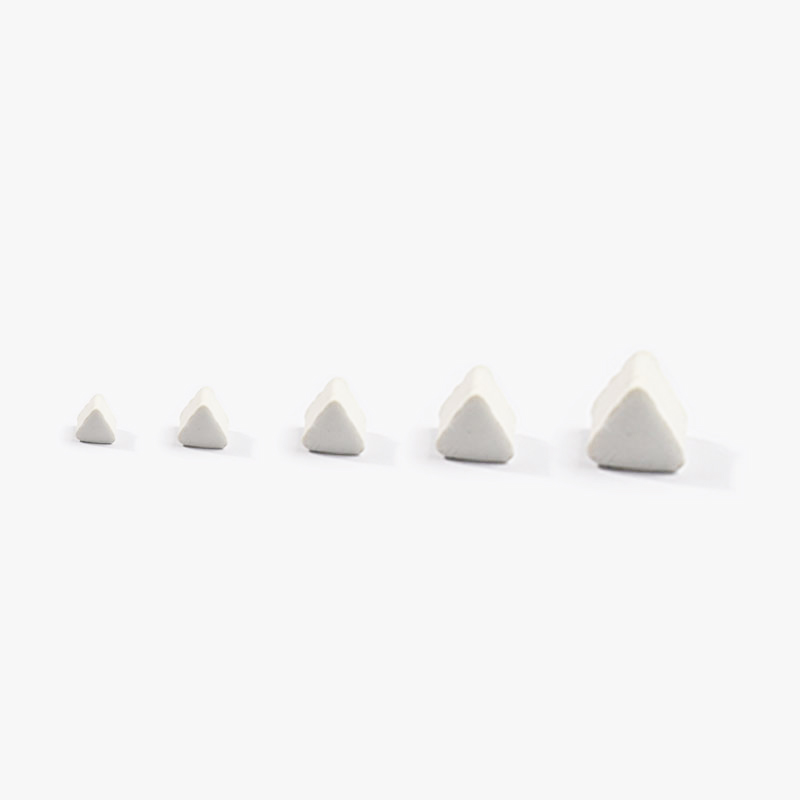
| Media | Best fit | Watch out for |
|---|---|---|
| Steel media, including balls and shaped pins | Bright finishing and edge blending on stainless components where appearance and a burnished surface matter | Transfers iron to aluminium and carbon steel, needs a corrosion-inhibiting compound, and must be separated magnetically or by screen at unload |
| Magnetic finishing pins and fine magnetic media | Small precise items such as nozzles, orifice plates and fine slot arrays where tumbling media cannot reach the feature | Limited working envelope, pins lodge in the same fine features they are chosen to reach, and the surface signature differs from tumbling |
| Plastic cylinders and cones in a harder, denser grade | Longer cycles on mixed batches of small fittings where a repeatable light edge break is wanted without ceramic impact | Can float or segregate by shape in a bowl, and cylindrical forms can wedge in slots and cross-drillings |
| Heavy-cut ceramic, angle-cut triangles in a coarse size class | Removing a substantial machining burr from open external edges and pockets on aluminium and stainless housings before a refinement stage | Cuts edges and corners aggressively, leaves a coarse surface, and lodges in slots whose width approaches the media section |
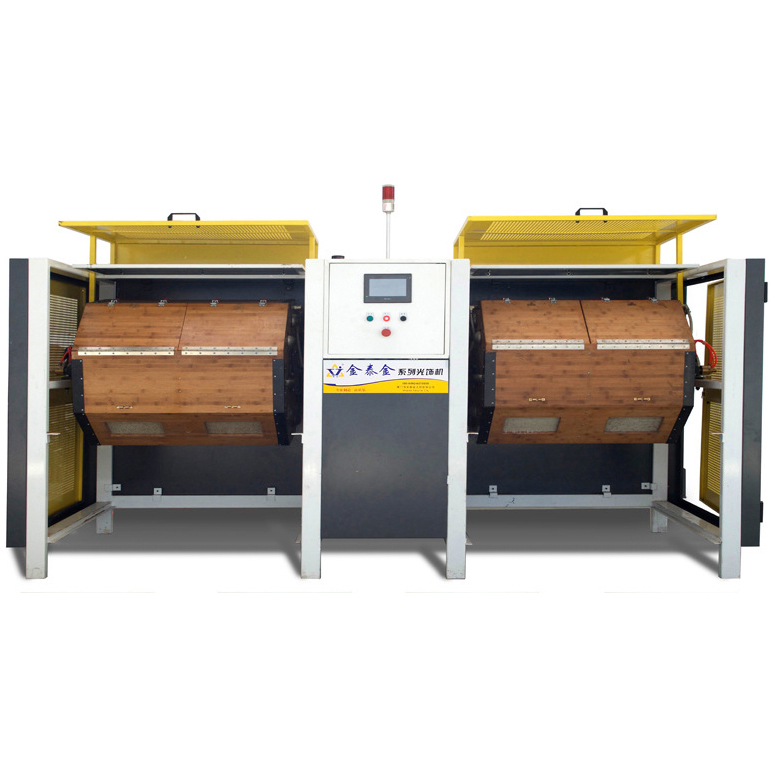
A vibratory bowl is the general-purpose starting point for chamber bodies, plates and housings that fit comfortably and can tumble without racking. Media circulates in a toroidal path and reaches external faces, edges and open pockets at moderate energy, and the open bowl allows an operator to pull a part mid-cycle for a look, which matters when a feature is sensitive. Part-on-part contact is continuous, so thin plates and finished mating faces need separation or protection within the charge. Where a heavy machining burr has to come off before refinement, a grinding finishing machine with higher removal energy can take the bulk of it, but it cuts edges faster as well and needs a tighter geometry assessment. A bowl will not reach deep internal passages on its own; those depend on media size, compound flow and how the part sits in the charge.
| Machine route | Where it fits | What it will not do |
|---|---|---|
| Vibratory finishing machine (bowl) | General deburring and refinement of chamber bodies, plates and housings that fit and can tumble without racking, with easy mid-cycle inspection | Continuous part-on-part contact and no access to deep internal passages; thin plates and finished mating faces need separation |
| Magnetic finishing machine | Fine deburring and light refinement of small precise features such as nozzles, orifice plates and narrow slots | Small working envelope that excludes chamber bodies and long gas lines, with pin media that can lodge in fine passages |
| Grinding finishing machine | Taking off a heavy machining burr or a defined stock layer before a refinement pass on robust stainless work | High removal energy cuts functional edges fast and demands a tighter geometry assessment and shorter cycles |
| Rotary barrel finishing machine | Gentle deburring of small fragile components and mixed fitting batches with a generous compound flow | Long cycles, no visibility while running, and internal passages can collect media and compound that must be retrieved at unload |
Compound film, media dust and embedded particles on a sealing face are the failure mode that most often forces a semiconductor equipment part back through cleaning or into scrap. The face may look acceptable under shop light while carrying a tenacious silicate film, a smear of aluminium, or fine ceramic debris forced into a soft surface. Impingement can also peen media fragments into aluminium, which is difficult to detect without magnification or a wipe test. Likely causes include too little rinse, a compound that forms a film, insufficient separation after the cycle, and drying a part before it is genuinely clean. Inspection should combine magnification of the sealing land, a solvent wipe over a defined area, and the buyer's own cleanliness method. Surface finish alone is not evidence that a face is free of residue.
| Failure mode | Likely cause | How to catch it |
|---|---|---|
| Water spotting or mineral residue left after wet processing and drying | Hard or high-chloride rinse water, slow or uneven drying, or parts stacked wet so moisture is trapped in pockets and grooves | Inspect dried parts under angled light for rings and haze, check the rinse water source and drying method, and verify that pockets and grooves drain before the part is packed |
| Compound film or tenacious residue left on a sealing face | A film-forming or silicate-bearing compound, insufficient rinse volume, or drying the part before it is genuinely clean | Magnify the sealing land and wipe a defined area with solvent, comparing the wipe against a clean reference; confirm with the buyer's own cleanliness method |
| Rust spotting on stainless parts appearing hours or days after finishing | Ferrous transfer from steel media, a machine or tooling that has held carbon steel, or insufficient corrosion inhibition and drying | Inspect after a defined dwell time rather than immediately, look for pinpoint spots on and near edges, and trace media and machine history for the lot |
| Tapped threads rounded, galled or opened out by edge finishing | Media working the thread crest during a long or high-energy cycle, with no plugging or masking on the hole | Run a go and no-go thread gauge on every sampled hole, inspect crest condition at magnification, and confirm that plugs or masks were used and removed |
Hamilton is Ontario's steel city, and the federal government describes its industrial base in those terms: the region plays a critical role in Ontario's economy, "supported by a diverse industrial base that includes advanced manufacturing, automation technologies, steel production, packaging solutions, and specialized industrial equipment". In August 2026, FedDev Ontario announced a combined investment of over CAD 12.5 million for nine Hamilton-area businesses responding to tariff-related pressures, and the backgrounder names the actual mix: custom robotic welding systems and CNC machining, steel fabrication of pressure equipment, hot-rolled steel bar production, prefabricated steel buildings, grease cartridges and industrial packaging, high-performance technical textiles for aviation, rail, defence and medical markets, and high-efficiency heating equipment. The national steel industry association frames the wider context, reporting over 40 producing facilities across Canada and a CAD 4.2 billion contribution to GDP from Canadian steel producers, and listing ArcelorMittal among its members. Automation is not incidental here — one of the funded Hamilton-area firms, Automation Design and Installation Inc., designs and manufactures custom robotic welding systems and automation solutions and is expanding into the mining and nuclear sectors.
The nearest part of that base to this brief is medical: The federal backgrounder lists the medical sector among the markets served by Hamilton advanced manufacturer FELLFAB's specialized textile products, alongside aviation, rail, defence and industrial.
Hamilton's steel and heavy-fabrication base produces rolled bar, pressure equipment, welded structures and machined components where scale, edge condition and coating preparation are recurring production issues: mill scale and oxide on hot-rolled product, weld spatter and heat-tint on fabricated stainless, and burrs on cut and machined edges. Pressure-equipment fabrication adds a code-driven requirement, because a ground or dressed weld and a clean base metal surface are part of what the fabricator's quality system has to demonstrate. The robotics and automation cluster is a second, distinct driver: custom welding and machining cells are built to run unattended, which raises the value of a deburring or finishing step that is equally repeatable and not dependent on an operator standing at the machine.
A Hamilton buyer should settle whether the finishing step exists to meet a code or customer surface requirement or simply to prepare a surface for coating, because the first case requires documented, inspectable results and the second is a cost-and-throughput decision; conflating the two usually produces either an over-specified machine or an audit finding. The second question is how the finishing step will be loaded and unloaded inside a fabrication shop that is already organised around heavy lifts and long cycle times, since material handling, not the finishing process itself, is where most of the labour and the safety risk sits in heavy fabrication.
Freight context: Port of Hamilton (Hamilton-Oshawa Port Authority), John C. Munro Hamilton International Airport, CN and CPKC rail corridors, Great Lakes / St. Lawrence Seaway marine corridor. Hamilton combines a Great Lakes seaport with an international airport and direct Class 1 rail service, which is what allows heavy steel and fabricated industrial equipment to move in and out by water and rail rather than only by road. The Hamilton Chamber of Commerce, one of the oldest in Canada, also issues certificates of origin and maintains a tariff and trade resource hub, reflecting how much of the local manufacturing base is export-facing.
China is one of Canada's ten principal merchandise trading partners and the second-largest single-country source of Canadian imports after the United States: Statistics Canada reported CAD 5,369 million of balance-of-payments imports from China in January 2025, against a CAD 2,299 million bilateral merchandise deficit that month. Canada has no free trade agreement with China, so Chinese-origin industrial machinery enters under the Most-Favoured-Nation (MFN) tariff column of the Canadian Customs Tariff; the preferential treatments listed in the tariff (CUSMA/UST and MXT, CETA/CEUT, CPTPP/CPTPT, UKT, KRT and others) do not include China, and preferential rates require proof of origin plus the applicable shipping rules, so a China-origin machine cannot claim them. Tariff classification is mandatory work, not a formality: vibratory, barrel, centrifugal and disc finishing machines are classified in Chapter 84 ("Nuclear reactors, boilers, machinery and mechanical appliances; parts thereof") according to the function of the machine, and the ten-digit Canadian tariff item drives both the duty rate and the statistics. A further landed-cost risk sits outside the tariff schedule: under the Special Import Measures Act (SIMA), the CBSA and the Canadian International Trade Tribunal may apply anti-dumping and countervailing duties to named goods, so a buyer should check the measures-in-force list for the specific product before assuming the MFN rate is the final duty.
Canada's national standards system is coordinated by the Standards Council of Canada (SCC), which accredits standards-development organizations, certification bodies and testing laboratories; the SCC and CSA Group websites could not be retrieved for citation during this research, so this entry rests on the accessible Government of Canada and CCOHS material below. The Canadian Centre for Occupational Health and Safety describes standards as documents that "establish specifications and procedures to ensure the reliability of the products, methods, and services people use every day on the job", and Innovation, Science and Economic Development Canada (ISED) maintains the federal entry point for "[t]he different types of standards and certifying bodies that can be used by your business". In practice a Canadian buyer of finishing equipment references (a) the Canadian electrical safety certification of the machine and its control panel, (b) provincial occupational health and safety regulation for machine guarding, lockout and dust/ventilation control, which in Canada is enforced by the provinces rather than by a single federal inspectorate, and (c) the buyer's own customer-specific surface finish, edge-condition and cleanliness specifications, which are contractual rather than national standards. Finishing-process standards in the ISO 25.080 machine-tool and ISO 8500-series surface-preparation families are the usual technical reference points, but product-level standards sold by CSA Group were not retrievable for verification here.
SurfacePolish supplies from Xiamen, China. The buyer's own destination rules, conformity marking, tariff classification and documentation responsibilities stay with the buyer; confirm them against the authorities named above before ordering.
Acceptance has to be written before the trial, on the drawing and in the purchase specification, not agreed verbally afterwards. Name the controlled surfaces individually, for example a seal land, a gas passage wall or a mating flange face, and state the parameter, the cut-off length, the direction of measurement and the number of readings. A single global roughness call-out on a chamber body is not enough, because the sealing face, the outer wall and the bore will not respond the same way to one media charge. Where an edge limit applies, express it as a maximum radius or a required chamfer at a named feature. Add the cleanliness requirements the part must meet and the method by which they will be judged. Settling these points early prevents the common dispute in which a supplier reports a finish and a buyer rejects on cleanliness.
Scale-up is mostly about holding the conditions that produced the trial result. In production that means a defined media charge kept at a target mass, screened on a schedule, with undersize and broken pieces removed and fresh media added to a recorded level. Compound should be metered to a concentration rather than poured by eye, and rinse water quality should be known and stable. Every lot needs an identity: part numbers, quantity, machine, settings, operator, inspection result and disposition. Where the same machine handles aluminium and stainless, define the changeover, including media purge, machine cleaning and compound replacement, and record when it happened. Cycle counting is a simple control that is often skipped: a charge that has run a known number of hours can be scheduled for replacement before wear starts producing lodged media or a drifting finish.

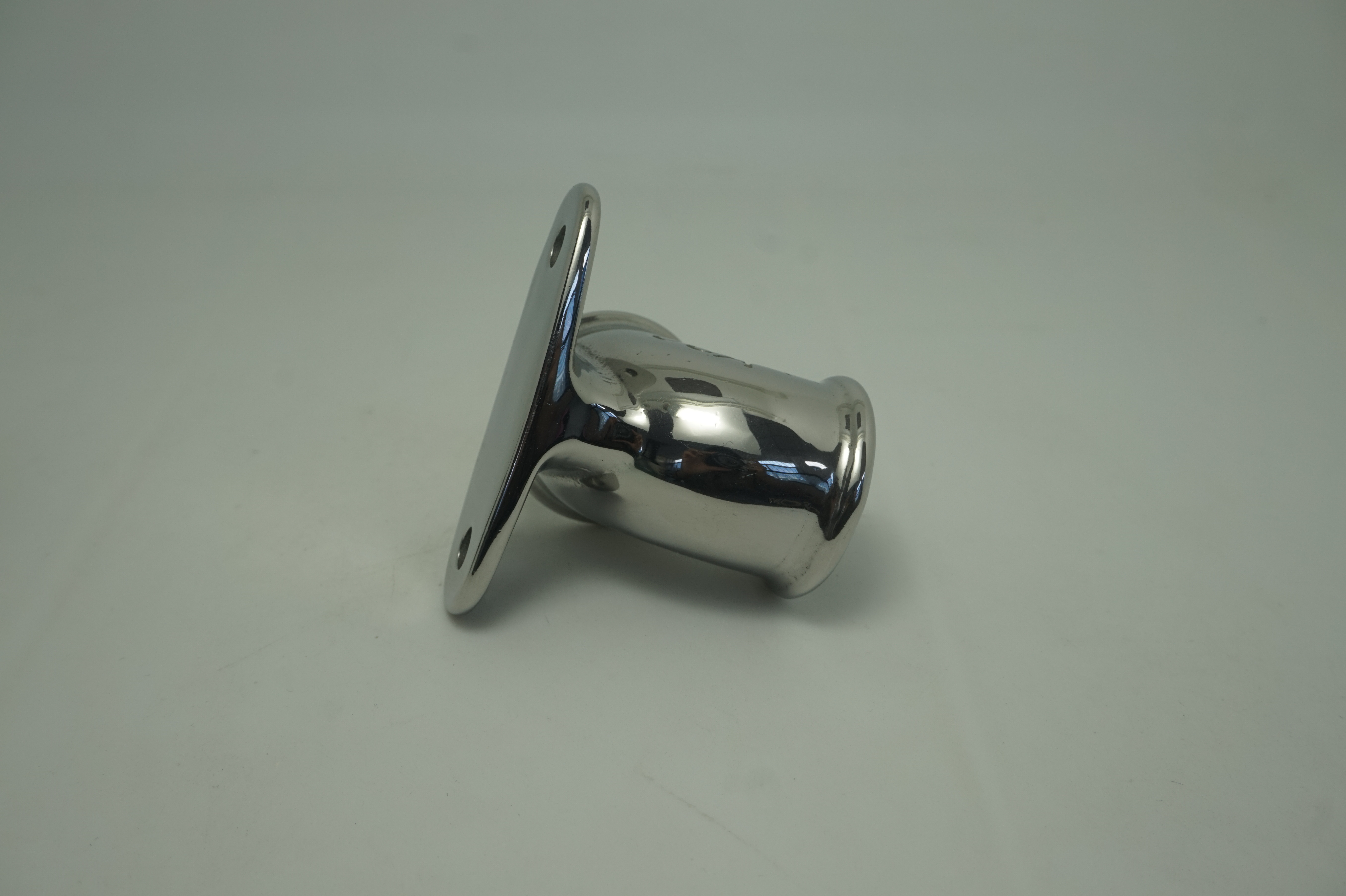
Any mechanical finishing operation can leave compound film, media dust and fine debris, particularly in blind features and soft aluminium surfaces. The practical controls are compound choice, rinse volume and quality, separation at unload, and a defined cleanliness check at a named surface. What that check should be is the buyer's specification, because only the buyer knows the downstream use. SurfacePolish cannot promise a particle count or certify a cleanliness level, and no process should be presented as cleanroom-ready on the strength of a sample trial. What a trial can show is how the parts looked and measured after the settings used, which supports the buyer's own verification in Canada.
There is no single best medium, because aluminium is soft and the trade-off is between cut rate and surface damage. Plastic media is often the safer starting point where a sealing face or a thin wall must be preserved, while a fine ceramic can cut faster if edges tolerate more energy. The deciding variables are the smallest opening a medium could enter, the smallest radius that must not be rounded, and the surface condition the buyer needs. Media size class usually matters more than the broad material name. Send a marked-up aluminium part with its tightest passage and one controlled face, and let the trial compare two size classes.
No cleanliness level or cleanroom readiness is certified or guaranteed here. The offer is cross-border supply of finishing machines, media and compounds, plus a sample trial that reports what was observed on the parts tested under the settings used. Cleanroom and process-environment requirements are defined by the buyer and verified by the buyer's own methods, which may include wipes, rinse collection, magnification, leak testing and functional checks. SurfacePolish can keep tested parts separated, documented and returned with a settings record, and that record can support your verification work in Hamilton, but the acceptance decision and any compliance statement remain with your quality function.
Use Hamilton, Canada as the destination on the enquiry and state whether the deliverable is equipment, media and compound, a representative sample review or a line concept. A destination does not imply local stock, a local service point or a local delivery time.
A Hamilton fabricator normally works to the material and fabrication standards named on the customer's drawing, the welding and pressure-equipment code applicable to the vessel or structure being built, and the customer's coating or surface-preparation specification. Plant-side requirements come from Ontario occupational health and safety regulation, including guarding, lockout and welding fume control, and equipment must carry Canadian electrical safety certification.
Sources were retrieved on 2026-09-29 and describe the local industrial and trade context only. They do not evidence any SurfacePolish project, shipment, installation or service in Hamilton.
The buyer needs the machined burrs removed and the groove cleaned without rounding the seal land or leaving media in the blind holes.
Send the material, dimensions, approximate weight, batch quantity, the incoming condition and photographs of the difficult features. Mark which features must not be contacted by media and state how the result will be inspected. This form carries source reference PSEO-0165; quote it if you prefer an additional manual reference.
Open the SurfacePolish enquiry form Email a prepared enquiry
No price, lead time, certification or result is promised here. Confirm whether a sample trial is available for the specific part and what the trial can and cannot show.
Page PSEO-0165 · revised 2026-09-29 · cross-border equipment, media and scoped sample review. City context is sourced and cited above.
Use this local checker to identify missing part and inspection information. It prepares a technical-review brief; it does not approve a machine, process recipe or production result.
Complete the part details to prepare a review brief.
Email : info@surface-polish.com


 IPv6 network supported


 +86-592-2381506