A buyer in Hyderabad, India working on semiconductor equipment has a thin stainless liner whose slot edges must be blended without distortion or lodged media. SurfacePolish supplies finishing machines, media and compounds across borders and runs a free sample trial, in which the liner is shipped to Xiamen and returned with an observed condition plus a proposed media, compound and cycle direction that the buyer can assess against its own requirements. This brief is written for a buyer in Hyderabad working on semiconductor equipment; it describes equipment, media and a scoped sample review, not a local polishing service.
Is edge rounding tolerable on a knife edge or bore lip, and what maximum radius belongs on the drawing?
Can the required finish be reached in one mechanical route, or does the part need a cut stage followed by a refinement stage?
Which surfaces on this part are functional, such as seal lands, gas passage walls and locating bores, and which are only cosmetic?
Start every assessment with a marked-up drawing, not a part family name. On a vacuum-chamber component the surfaces that matter are usually small: an O-ring groove floor, a knife-edge seal land, a gas inlet bore, a tapped hole pattern and a locating dowel bore. Each needs a decision before any medium is chosen, whether it is masked, plugged, finished to a roughness band or deliberately left untouched. A chamber lid and a roughing-line elbow can come off the same machining cell and still need different screening because one carries a knife edge and the other carries a welded flange. Ask which surface an elastomer or metal seal actually seats on, and treat that as a datum for acceptance. The feature list also drives handling rules: where parts may be stacked, which faces may touch, and how they are separated between operations.
Plastic media is chosen for aluminium and other soft materials where a ceramic charge would peen, smear or mark the surface. It is lighter, so contact pressure is lower and edges survive longer, at the cost of a slower cut and a longer cycle for the same burr. Shapes range from triangles and cones to cylinders, and the harder, denser grades remove more material than the softer ones. Because plastic media wear and deform, a charge that has run for many hours behaves differently from a fresh one, and part-to-part consistency can drift within a batch if the charge is not monitored. For a chamber component with a sealing face, plastic is often the safer starting point, and the trade-off to be tested is whether the achievable surface and the cycle time are acceptable once the burr is genuinely gone.
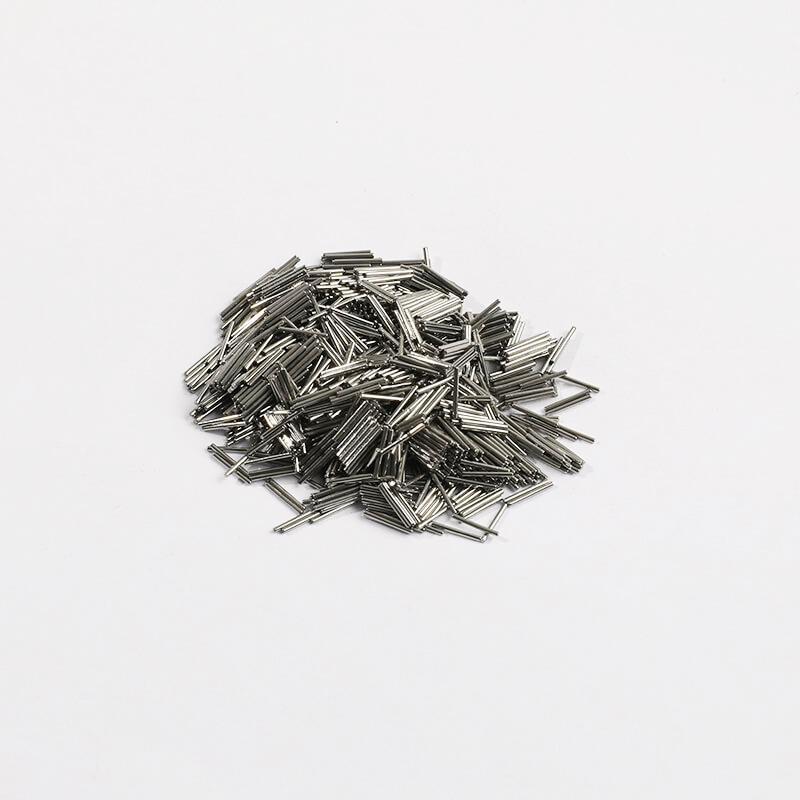
| Media | Best fit | Watch out for |
|---|---|---|
| Magnetic finishing pins and fine magnetic media | Small precise items such as nozzles, orifice plates and fine slot arrays where tumbling media cannot reach the feature | Limited working envelope, pins lodge in the same fine features they are chosen to reach, and the surface signature differs from tumbling |
| Plastic cylinders and cones in a harder, denser grade | Longer cycles on mixed batches of small fittings where a repeatable light edge break is wanted without ceramic impact | Can float or segregate by shape in a bowl, and cylindrical forms can wedge in slots and cross-drillings |
| Heavy-cut ceramic, angle-cut triangles in a coarse size class | Removing a substantial machining burr from open external edges and pockets on aluminium and stainless housings before a refinement stage | Cuts edges and corners aggressively, leaves a coarse surface, and lodges in slots whose width approaches the media section |
| Plastic triangles and pyramids in a soft to medium grade | Deburring aluminium and other soft alloys where surface marking and edge rounding must be kept to a minimum | Slow cut rate, media deforms and wears, and a worn charge behaves noticeably differently from a fresh one |
A tub vibrator suits long parts that cannot rotate in a bowl: gas rails, tubular manifolds, long weldments and linear electrode assemblies. The part is immersed or clamped rather than tumbled end over end, so bending risk from a bowl divider is removed, but the energy delivered per unit area is lower and heavy burrs take longer. Disc finishing machines work in the opposite direction: high energy, short cycles, effective on small robust parts and on producing a consistent edge across a batch of similar fittings, with more risk of edge loss and impingement on thin sections. Neither route is automatically gentler or faster on a sealing face. The deciding factors are part length, mass, how the part can be supported, and whether the critical surface can be presented to the media stream at all.
| Machine route | Where it fits | What it will not do |
|---|---|---|
| Centrifugal barrel finishing machine | Small precise parts and short cycles with high contact pressure, such as inserts, small valve bodies and distribution components | Rounds edges and can distort thin unsupported sections quickly; results are sensitive to charge weight, speed and stop time |
| Rotary barrel finishing machine | Gentle deburring of small fragile components and mixed fitting batches with a generous compound flow | Long cycles, no visibility while running, and internal passages can collect media and compound that must be retrieved at unload |
| Tub vibrator | Long gas rails, tubular manifolds, weldments and linear electrode assemblies that cannot rotate in a bowl | Lower energy per unit area so heavy burrs take longer, and large tubs need floor space and a suitable part support method |
| Vibratory finishing machine (bowl) | General deburring and refinement of chamber bodies, plates and housings that fit and can tumble without racking, with easy mid-cycle inspection | Continuous part-on-part contact and no access to deep internal passages; thin plates and finished mating faces need separation |
A medium lodged in a blind hole, slot or gas passage is the classic semiconductor finishing failure, and it often escapes the finishing shop and is found at the buyer's leak or particle check. It happens when the media size class is too close to the feature opening, when the charge has worn into smaller pieces, or when a passage was never mapped as a retention risk. Slots with a width close to the media section are the worst case, followed by cross-drilled intersections and deep tapped holes. Checking relies on controlled unloading and an agreed inspection: count the media charge in and out where practical, borescope the smallest passages at a defined angle, use a pin gauge on holes, and rinse into a filter for a visual residue check. Any medium found is a reportable non-conformance, not a wipe-and-release.
| Failure mode | Likely cause | How to catch it |
|---|---|---|
| Fine media fragments or aluminium smear embedded in a soft surface | Impingement from too much energy or charge mass, media that has fractured, or cross-contamination from a previous material family | Inspect at magnification under angled light, use a wipe or tape lift on the suspect area, and check the charge for broken media and fines |
| Burr remaining in a cross-drilled intersection or an internal corner | Media too large to enter the intersection, part orientation that shields the feature, or a cycle stopped before that feature was reached | Borescope the intersection at a fixed angle, compare against a first-article reference, and use a pin or probe to feel for a lip on sampled parts |
| Rust spotting on stainless parts appearing hours or days after finishing | Ferrous transfer from steel media, a machine or tooling that has held carbon steel, or insufficient corrosion inhibition and drying | Inspect after a defined dwell time rather than immediately, look for pinpoint spots on and near edges, and trace media and machine history for the lot |
| A ceramic or plastic medium lodged in a blind tapped hole, slot or gas passage | Media size class too close to the opening, a worn charge that has broken down into smaller pieces, or a retention feature that was never mapped | Count the charge in and out where practical, borescope the smallest passages at an agreed angle, pin gauge every hole, and rinse through a filter for a visual residue check |
Hyderabad's industrial base combines pharmaceuticals and life sciences with aerospace and defence manufacturing and heavy electrical equipment. The city is the registered-office base of Aurobindo Pharma, an Indian generics manufacturer, and Telangana's apex chamber, the Federation of Telangana Chambers of Commerce and Industry (established 1917), runs its industry programmes at Federation House in the city. Tata Advanced Systems' Boeing joint venture delivered the 250th AH-64 Apache fuselage from its Hyderabad facility, which the company says employs over 900 engineers and technicians. BHEL keeps a dedicated R&D centre in Hyderabad and lists a Heavy Power Equipment Plant (HPEP) in the city.
The nearest part of that base to this brief is aerospace: Tata Advanced Systems' Boeing joint venture delivered the 250th AH-64 Apache fuselage from its Hyderabad facility, and Tata Advanced Systems describes end-to-end aerostructure and aero-engine work for global aerospace OEMs.
Hyderabad's mix of pharmaceutical equipment, aerospace structures and heavy electrical hardware puts deburring, edge quality and cleanliness on the production agenda: hygienic stainless components have to meet the equipment owner's cleaning and contamination requirements, while machined aerospace and power-equipment parts are checked for burrs and edge condition before assembly. Process selection also depends on whether media or compound residue can be fully removed from internal passages and crevices, which is a standard qualification question for safety-critical and hygienic parts.
Before choosing a finishing process, a Hyderabad buyer should settle whether acceptance is defined by edge condition on machined parts or by particulate and contamination cleanliness on hygienic stainless parts, and confirm on sample parts that the selected media and compound can be removed completely from the part's internal geometry.
Freight context: Hyderabad Begumpet Airport (Airports Authority of India). AAI maintains the Hyderabad airport page for Begumpet Airport and lists a cargo section. Imported machines and sample parts move under the standard Indian customs procedure — bill of entry and clearance at the airport or port of entry, or at an inland container depot — and notified products are checked for BIS compliance at import.
India's foreign-trade, customs and standards machinery works in English: the Foreign Trade Policy, DGFT's IEC and scheme material, the BIS standards catalogue and Invest India's investor guide are all published in English, and the mandatory import documents are the internationally conventional bill of lading, commercial invoice cum packing list and bill of entry (c1, c3, c6, c10). Payment in the import channel is bank-intermediated; the Foreign Trade Policy treats the irrevocable commercial letter of credit as the instrument that fixes an importer's commitment when import policy changes (c4), so a supplier should expect LC or advance terms rather than open-account credit on a first order. Indian industry associations are explicit about import substitution: the Bombay Chamber of Commerce and Industry states that one of its major focuses today is how to expand manufacturing setups and substitute imported products (c13), so a cross-border equipment seller should expect questions about local support, spares, training and total cost of ownership rather than price alone, and should hold the IEC, GST registration, bill of entry documentation and any BIS obligation as part of the commercial discussion.
An Importer-Exporter Code (IEC) issued by DGFT is a key business identification number which is mandatory for exports or imports, and since the introduction of GST the IEC number is the same as the PAN of the firm (c6). The post-incorporation clearance list published by Invest India includes the IEC, a Customs- Special Valuation Branch reference and the grant of a Bureau of Indian Standards (BIS) licence, and it names the Central Board of Excise and Customs among the agencies in the framework (c10). The Foreign Trade Policy fixes the mandatory import documents as a bill of lading / airway bill / lorry receipt / railway receipt, a commercial invoice cum packing list and a bill of entry, with additional documents or NOCs possible for goods subject to product-specific compliance (c3); it also states that domestic laws, rules, orders, technical specifications and environmental, safety and health norms applicable to domestically produced goods apply mutatis mutandis to imports unless specifically exempted (c2), which is the basis on which a BIS quality-control order can bite on imported machinery. A landed-cost plan therefore needs the correct ITC(HS) classification and the basic customs duty and IGST that follow from it, plus the IEC, the bill of entry documentation and any BIS licence or registration obligation, and a related-party import can additionally be pulled into special customs valuation.
SurfacePolish supplies from Xiamen, China. The buyer's own destination rules, conformity marking, tariff classification and documentation responsibilities stay with the buyer; confirm them against the authorities named above before ordering.
Acceptance has to be written before the trial, on the drawing and in the purchase specification, not agreed verbally afterwards. Name the controlled surfaces individually, for example a seal land, a gas passage wall or a mating flange face, and state the parameter, the cut-off length, the direction of measurement and the number of readings. A single global roughness call-out on a chamber body is not enough, because the sealing face, the outer wall and the bore will not respond the same way to one media charge. Where an edge limit applies, express it as a maximum radius or a required chamfer at a named feature. Add the cleanliness requirements the part must meet and the method by which they will be judged. Settling these points early prevents the common dispute in which a supplier reports a finish and a buyer rejects on cleanliness.
Compare one variable at a time. If the question is media shape, hold the compound, the cycle time, the machine and the load constant and change only the medium; if the question is cycle time, hold the charge constant and stop at two or three defined intervals. Running two changes at once produces a result that cannot be attributed. Where a trial includes a refinement stage after a cutting stage, evaluate the stages separately, since a final figure can hide a coarse first stage or an unremoved burr. Blind evaluation helps when several people judge appearance: label the returned parts with codes and have the buyer's inspectors score edge condition, coverage and cleanliness without knowing the settings. Keep the parts and the record. A trial showing both routes failing on one controlled feature is as useful as one showing a difference.
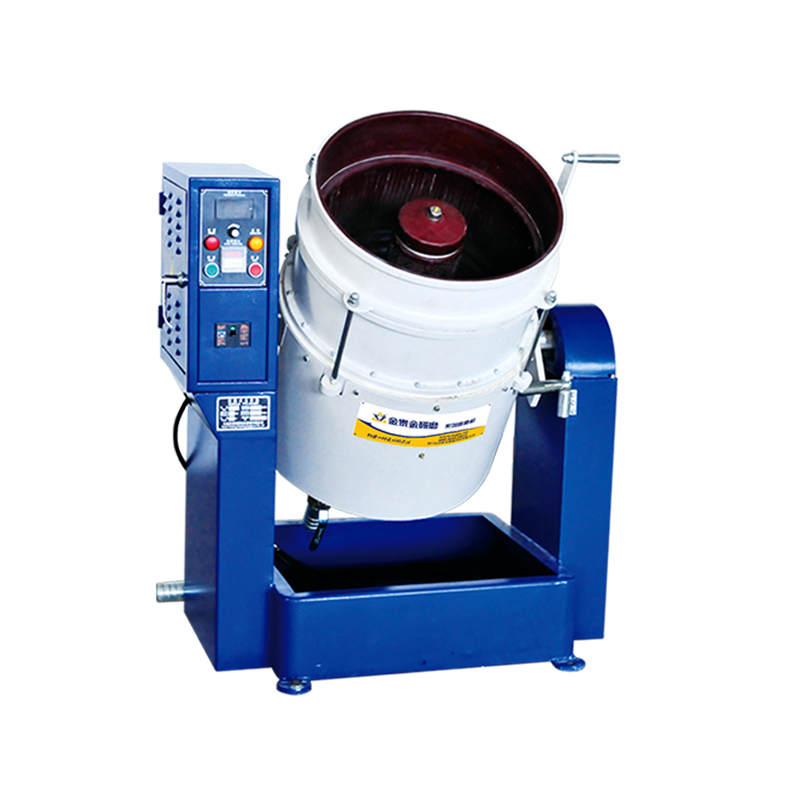
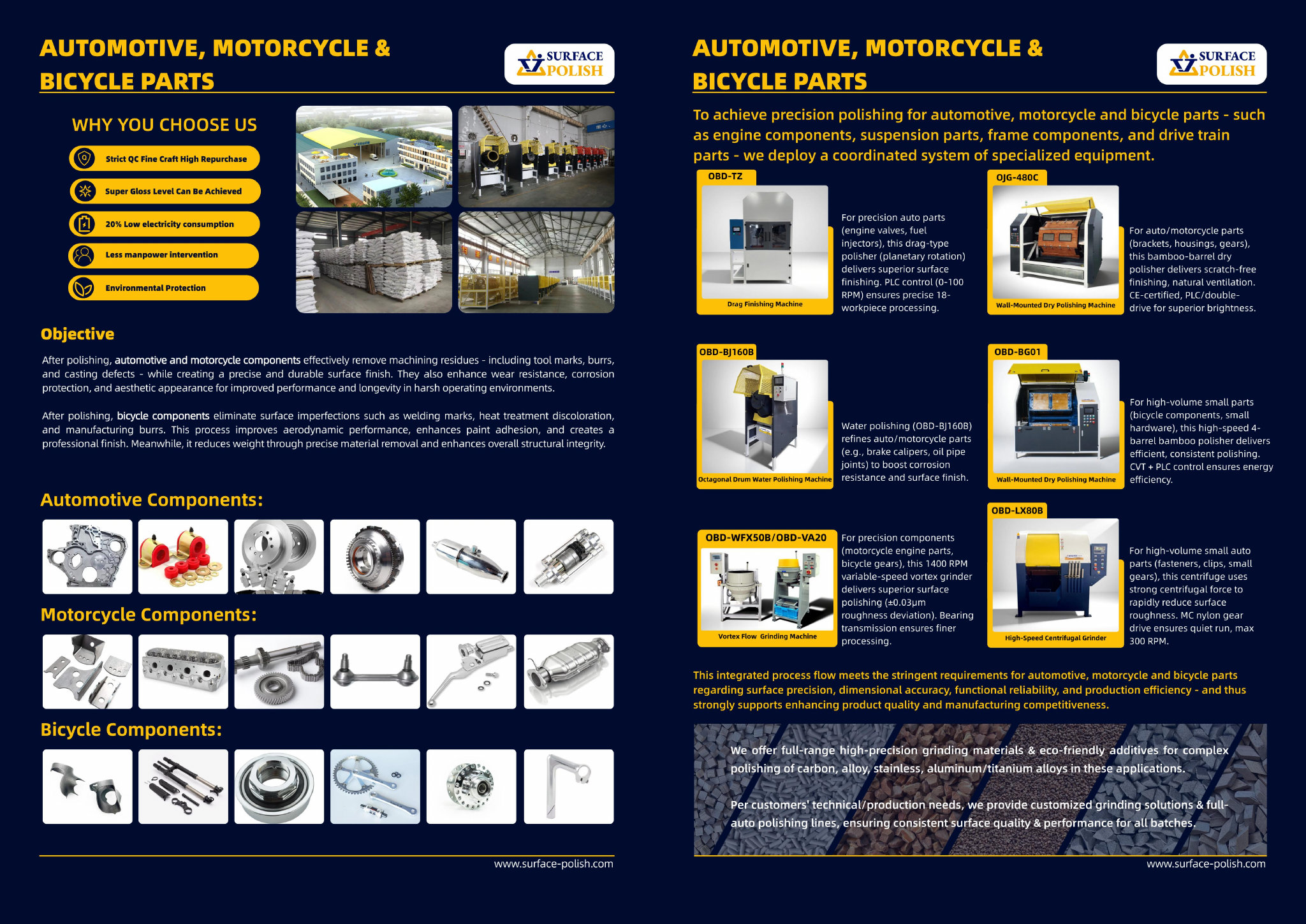
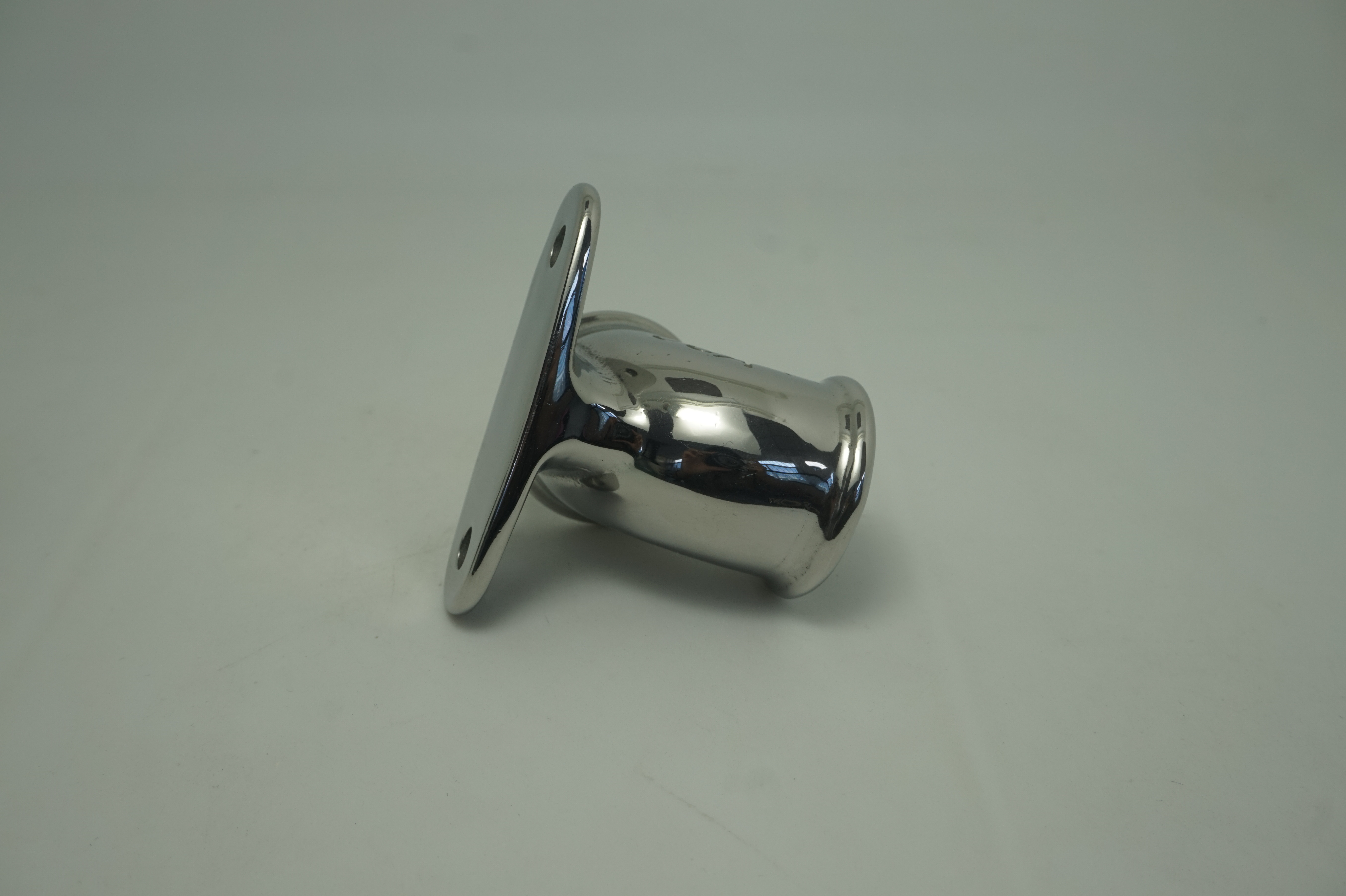
Send a set that covers the real range rather than one convenient piece. Include the part with the tightest passage or smallest hole, the thinnest unsupported section, the surface that must not be touched, and one part in its normal as-received condition with its usual burr and soil. Add a coupon of the same material with a known starting roughness, and a marked-up drawing naming the controlled surfaces, edge limits and any cleanliness requirement. Several pieces let more than one cycle time be examined. Parts are shipped to Xiamen and returned with a settings record.
Change one variable at a time. Hold the machine, load, compound, cycle time and part mix constant, and change only the medium; if the question is cycle time, hold the charge constant and stop at two or three defined intervals. Evaluate the returned parts at the same marked measurement points, and if several people judge appearance, use coded labels so the assessment is blind. Where a cut stage is followed by a refinement stage, score the stages separately, because a good final figure can hide a coarse first stage. A clear comparison needs the returned parts, the record and your own inspectors.
There is no single best medium, because aluminium is soft and the trade-off is between cut rate and surface damage. Plastic media is often the safer starting point where a sealing face or a thin wall must be preserved, while a fine ceramic can cut faster if edges tolerate more energy. The deciding variables are the smallest opening a medium could enter, the smallest radius that must not be rounded, and the surface condition the buyer needs. Media size class usually matters more than the broad material name. Send a marked-up aluminium part with its tightest passage and one controlled face, and let the trial compare two size classes.
Use Hyderabad, India as the destination on the enquiry and state whether the deliverable is equipment, media and compound, a representative sample review or a line concept. A destination does not imply local stock, a local service point or a local delivery time.
India's national standards body is the Bureau of Indian Standards (BIS). Pharmaceutical and medical-device buyers in Hyderabad normally write finish, cleanliness and material requirements into their own equipment specifications and vendor qualification documents, on top of the applicable Indian Standards.
Sources were retrieved on 2026-09-29 and describe the local industrial and trade context only. They do not evidence any SurfacePolish project, shipment, installation or service in Hyderabad.
The buyer needs the slot edges blended and the surface refined while keeping the liner flat and free of trapped media.
Send the material, dimensions, approximate weight, batch quantity, the incoming condition and photographs of the difficult features. Mark which features must not be contacted by media and state how the result will be inspected. This form carries source reference PSEO-0955; quote it if you prefer an additional manual reference.
Open the SurfacePolish enquiry form Email a prepared enquiry
No price, lead time, certification or result is promised here. Confirm whether a sample trial is available for the specific part and what the trial can and cannot show.
Page PSEO-0955 · revised 2026-09-29 · cross-border equipment, media and scoped sample review. City context is sourced and cited above.
Use this local checker to identify missing part and inspection information. It prepares a technical-review brief; it does not approve a machine, process recipe or production result.
Complete the part details to prepare a review brief.
Email : info@surface-polish.com


 IPv6 network supported


 +86-592-2381506