A buyer in London, United Kingdom working on semiconductor equipment has a thin perforated electrode plate where every hole exit carries a burr and the plate cannot tolerate distortion. SurfacePolish supplies vibratory and related finishing equipment, media and compounds across borders, and runs a free sample trial: parts go to Xiamen and come back with observed results and a proposed processing direction for the buyer's engineering team. This brief is written for a buyer in London working on semiconductor equipment; it describes equipment, media and a scoped sample review, not a local polishing service.
Is edge rounding tolerable on a knife edge or bore lip, and what maximum radius belongs on the drawing?
Which surfaces on this part are functional, such as seal lands, gas passage walls and locating bores, and which are only cosmetic?
Can the required finish be reached in one mechanical route, or does the part need a cut stage followed by a refinement stage?
Start every assessment with a marked-up drawing, not a part family name. On a vacuum-chamber component the surfaces that matter are usually small: an O-ring groove floor, a knife-edge seal land, a gas inlet bore, a tapped hole pattern and a locating dowel bore. Each needs a decision before any medium is chosen, whether it is masked, plugged, finished to a roughness band or deliberately left untouched. A chamber lid and a roughing-line elbow can come off the same machining cell and still need different screening because one carries a knife edge and the other carries a welded flange. Ask which surface an elastomer or metal seal actually seats on, and treat that as a datum for acceptance. The feature list also drives handling rules: where parts may be stacked, which faces may touch, and how they are separated between operations.
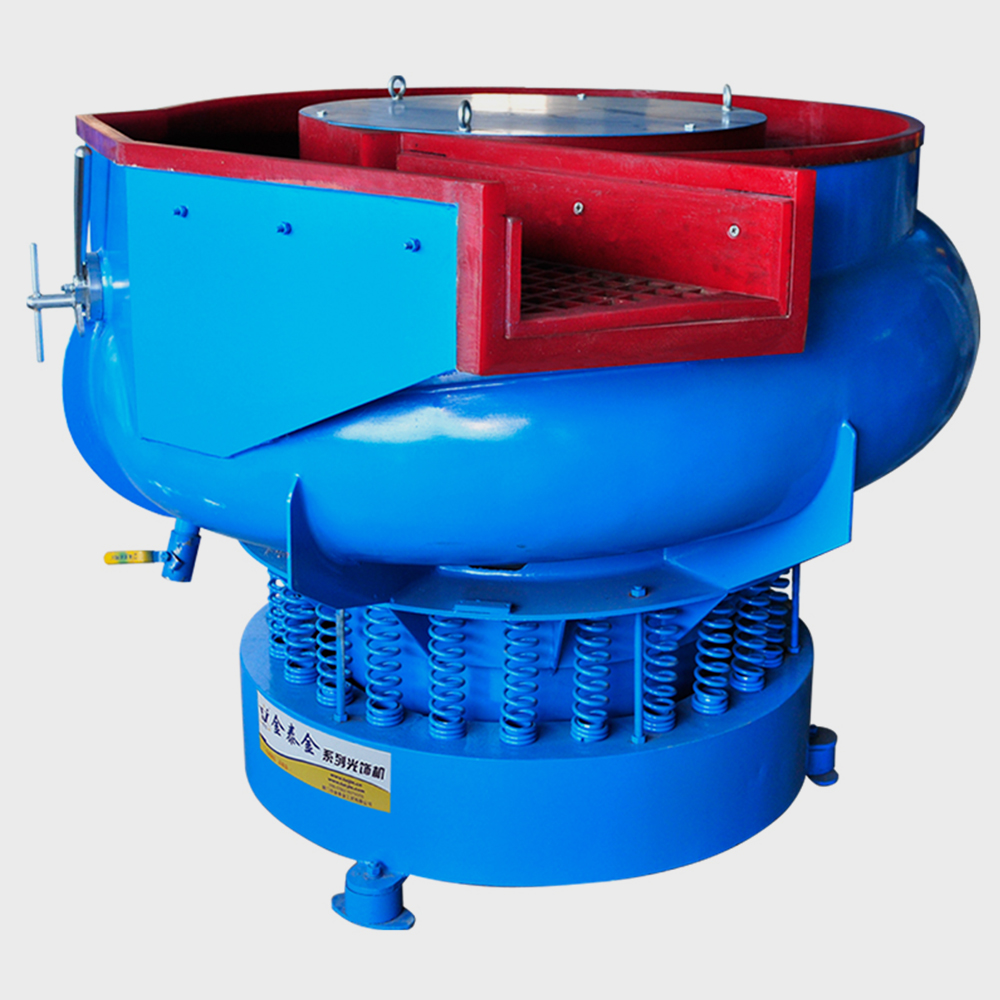
A vibratory bowl is the general-purpose starting point for chamber bodies, plates and housings that fit comfortably and can tumble without racking. Media circulates in a toroidal path and reaches external faces, edges and open pockets at moderate energy, and the open bowl allows an operator to pull a part mid-cycle for a look, which matters when a feature is sensitive. Part-on-part contact is continuous, so thin plates and finished mating faces need separation or protection within the charge. Where a heavy machining burr has to come off before refinement, a grinding finishing machine with higher removal energy can take the bulk of it, but it cuts edges faster as well and needs a tighter geometry assessment. A bowl will not reach deep internal passages on its own; those depend on media size, compound flow and how the part sits in the charge.
| Machine route | Where it fits | What it will not do |
|---|---|---|
| Vibratory finishing machine (bowl) | General deburring and refinement of chamber bodies, plates and housings that fit and can tumble without racking, with easy mid-cycle inspection | Continuous part-on-part contact and no access to deep internal passages; thin plates and finished mating faces need separation |
| Disc finishing machine | Fast, high-energy edge breaking and surface refinement on small robust parts and uniform batches of fittings | High impingement and edge-loss risk on thin or soft parts, and geometry must suit the disc working gap |
| Centrifugal barrel finishing machine | Small precise parts and short cycles with high contact pressure, such as inserts, small valve bodies and distribution components | Rounds edges and can distort thin unsupported sections quickly; results are sensitive to charge weight, speed and stop time |
| Grinding finishing machine | Taking off a heavy machining burr or a defined stock layer before a refinement pass on robust stainless work | High removal energy cuts functional edges fast and demands a tighter geometry assessment and shorter cycles |
Plastic media is chosen for aluminium and other soft materials where a ceramic charge would peen, smear or mark the surface. It is lighter, so contact pressure is lower and edges survive longer, at the cost of a slower cut and a longer cycle for the same burr. Shapes range from triangles and cones to cylinders, and the harder, denser grades remove more material than the softer ones. Because plastic media wear and deform, a charge that has run for many hours behaves differently from a fresh one, and part-to-part consistency can drift within a batch if the charge is not monitored. For a chamber component with a sealing face, plastic is often the safer starting point, and the trade-off to be tested is whether the achievable surface and the cycle time are acceptable once the burr is genuinely gone.
| Media | Best fit | Watch out for |
|---|---|---|
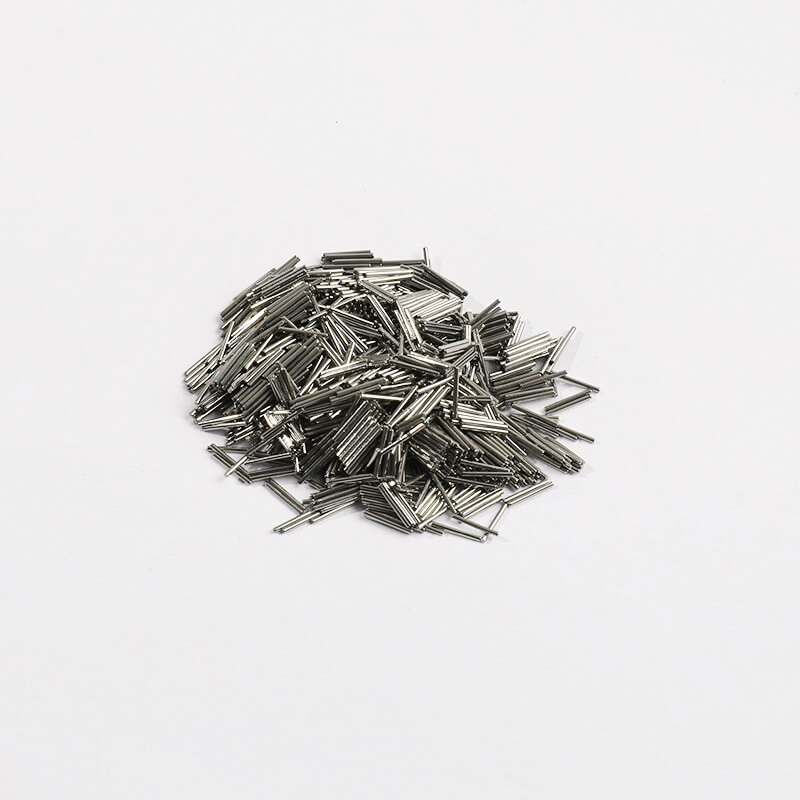
| Steel media, including balls and shaped pins | Bright finishing and edge blending on stainless components where appearance and a burnished surface matter | Transfers iron to aluminium and carbon steel, needs a corrosion-inhibiting compound, and must be separated magnetically or by screen at unload |
| Fine ceramic or porcelain spheres in a small size class | Refinement and light edge blending after a cutting stage, and reaching tighter external geometry on chamber bodies and plates | Small sizes enter and retain in gas passages and fine slots; media wear shrinks the charge and changes the finish over its life |
| Dry media such as walnut shell and corn cob | Drying assistance, light surface drying polish and removal of superficial soil after a wet cycle | Does not deburr or refine metal significantly, generates dust, and must not be treated as a cleanliness step |
| Aluminium oxide grinding media in a dense ceramic bond | Where a heavier stock removal or a more consistent cut is needed on robust stainless parts with thick edges | High removal energy rounds functional edges quickly and is a poor match for thin aluminium plates or knife-edge seal lands |
Compound film, media dust and embedded particles on a sealing face are the failure mode that most often forces a semiconductor equipment part back through cleaning or into scrap. The face may look acceptable under shop light while carrying a tenacious silicate film, a smear of aluminium, or fine ceramic debris forced into a soft surface. Impingement can also peen media fragments into aluminium, which is difficult to detect without magnification or a wipe test. Likely causes include too little rinse, a compound that forms a film, insufficient separation after the cycle, and drying a part before it is genuinely clean. Inspection should combine magnification of the sealing land, a solvent wipe over a defined area, and the buyer's own cleanliness method. Surface finish alone is not evidence that a face is free of residue.
| Failure mode | Likely cause | How to catch it |
|---|---|---|
| Fine media fragments or aluminium smear embedded in a soft surface | Impingement from too much energy or charge mass, media that has fractured, or cross-contamination from a previous material family | Inspect at magnification under angled light, use a wipe or tape lift on the suspect area, and check the charge for broken media and fines |
| Compound film or tenacious residue left on a sealing face | A film-forming or silicate-bearing compound, insufficient rinse volume, or drying the part before it is genuinely clean | Magnify the sealing land and wipe a defined area with solvent, comparing the wipe against a clean reference; confirm with the buyer's own cleanliness method |
| Knife-edge seal face or bore lip rounded past the drawing limit | High-energy route, over-long cycle, dense or coarse media, or a soft aluminium edge run without masking or shielding | Measure a defined edge feature before and after with an optical comparator, radius gauge or moulded replica, and compare with the maximum radius on the drawing |
| Thin plate or liner distorted, bowed or dimensionally drifted after the cycle | Tumbling load on an unsupported thin section, part-on-part contact, or heat and pressure from a high-energy route | Measure flatness, wall thickness and critical dimensions at the same marked points as the pre-process baseline, using a CMM or surface plate and gauge |
London's published trade profile is services-led rather than goods-led: ONS estimates place London's total trade surplus at £59.4 billion in 2023, with services exports of £213.1 billion, while ONS also records the capital as having the value of services exports higher than any UK region in 2023. The Greater London Authority publishes the city's data through the London Datastore, which holds over a thousand datasets on the capital. Deep-sea container freight for the capital region is handled by Thames-side terminals such as DP World's London Gateway rather than by inner-London wharves.
The nearest part of that base to this brief is food: ONS records London as the UK region with the highest total trade surplus in 2023, reflecting the scale of the capital's traded-goods and services economy including its consumer and food supply base.
London's published trade profile is dominated by services rather than by goods production, so finishing capacity serving the capital is generally not located in the capital. Deburring, edge and cleanliness requirements for London-specified work therefore have to be written into the purchase specification and the technical file, with an acceptance test agreed in advance, rather than settled against an assumed local plant practice.
A London-based buyer should decide up front whether the finishing step will run in-house or at a supplier, and write the edge or cleanliness acceptance test into the purchase order, because the equipment is imported and the technical file and Declaration of Conformity must be held by a manufacturer or a UK-established economic operator.
Freight context: London Gateway (DP World), deep-sea container terminal on the Thames, Thames-side port estate controlled under the Port of London Authority regime. ONS records London as the UK region with the highest total trade surplus in 2023 (£59.4 billion) and shows the capital importing £89.8 billion of goods against £41.8 billion of goods exports, so incoming machinery and media for London buyers are landed and cleared outside the capital, principally at Thames-side deep-sea terminals.
China does not appear in the alphabetical list of trade agreements in effect published by the Department for Business and Trade, so Chinese-origin machinery imported into the UK cannot claim a preferential agreement rate. Duty is instead determined by the commodity code declared on the import declaration, and the UK's customs authority is HM Revenue and Customs (HMRC), which ONS also names as the largest single data source behind UK trade-in-goods statistics. Because a GB-prefixed EORI number is a precondition for importing into England, Scotland or Wales, a Chinese seller's UK buyer must already hold that registration before any machine ships.
English is the working language of contracts, drawings and conformity paperwork, so quotations, technical files and Declarations of Conformity should be supplied in English. UK manufacturers have now recovered above 2019 output levels in every English region and devolved nation except Northern Ireland, and the sector is concentrated in food and drink and transport equipment, with the North West the largest manufacturing region by total output. Buyers typically expect the UKCA/CE route, a Declaration of Conformity and a UK-established economic operator to be identified before order, and they need commercial invoices, customs declarations and the C79 retained in a form their finance team can use for import VAT recovery. No source verified in this research establishes a mandated payment instrument, so payment structure should be treated as commercial negotiation rather than a regulatory requirement.
SurfacePolish supplies from Xiamen, China. The buyer's own destination rules, conformity marking, tariff classification and documentation responsibilities stay with the buyer; confirm them against the authorities named above before ordering.
Acceptance has to be written before the trial, on the drawing and in the purchase specification, not agreed verbally afterwards. Name the controlled surfaces individually, for example a seal land, a gas passage wall or a mating flange face, and state the parameter, the cut-off length, the direction of measurement and the number of readings. A single global roughness call-out on a chamber body is not enough, because the sealing face, the outer wall and the bore will not respond the same way to one media charge. Where an edge limit applies, express it as a maximum radius or a required chamfer at a named feature. Add the cleanliness requirements the part must meet and the method by which they will be judged. Settling these points early prevents the common dispute in which a supplier reports a finish and a buyer rejects on cleanliness.
Record the starting condition before the parts leave, because a trial can only be read against a baseline. Photograph each burr and each controlled surface at a fixed scale, measure roughness at the same marked locations with the same instrument and cut-off, note edge condition with a comparator or radius gauge, and record mass and critical dimensions. Then ask for the same measurements on the returned parts at the same marked points. Without that pairing, a result is an opinion. Ask also for the settings used: machine, media type and size class, charge mass, compound and dose, cycle time, and the number of parts in the batch. Note any behaviour observed during the run, such as part-on-part impact, media lodging or compound foaming. That record is what allows two routes to be compared rather than merely described.
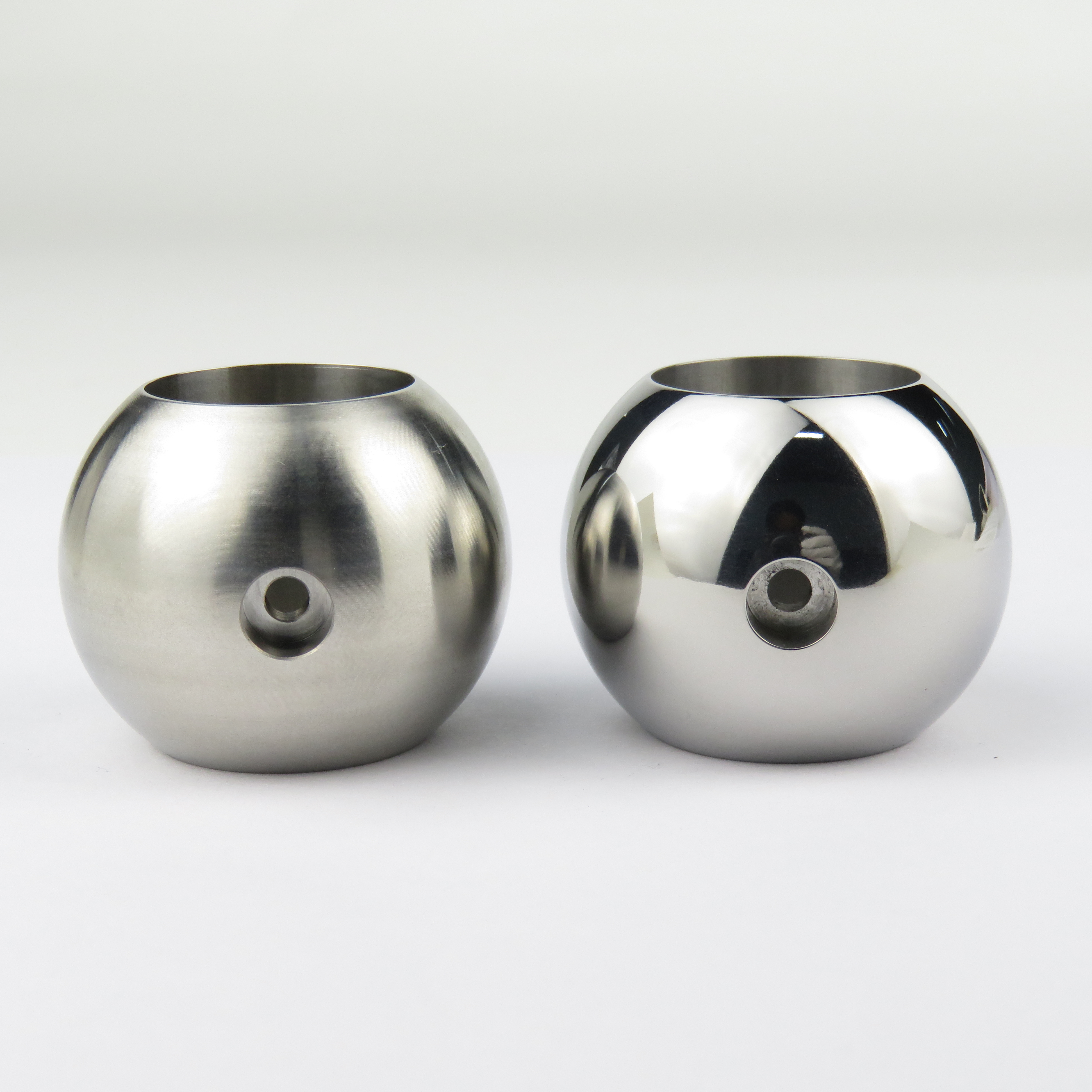
It can change a surface, but whether it lands inside a specified band is something to measure rather than assume. The parameter, the cut-off length, the measurement direction and the reading locations all have to be fixed first, because a seal land, a bore and an outer wall respond differently to the same charge. A trial result applies to the geometry and settings tested, not to every part in the family. SurfacePolish does not guarantee a roughness value. Send parts with a marked measurement plan, ask for readings at those points, and set your own acceptance band from data you can verify in London.
A batch record should identify what was done rather than simply assert a result. Ask for part numbers and quantities, the machine used, the media type and size class, charge mass and age since the last screen, the compound and dose, the rinse water source, cycle time, inspection results and the lot disposition. Request the media and compound data sheets offered by the supplier. Where aluminium and stainless are processed on the same site, ask for the changeover note covering media purge, machine cleaning and compound replacement. This is finishing process documentation, not a certificate of compliance, and it supports your own traceability in United Kingdom.
Any mechanical finishing operation can leave compound film, media dust and fine debris, particularly in blind features and soft aluminium surfaces. The practical controls are compound choice, rinse volume and quality, separation at unload, and a defined cleanliness check at a named surface. What that check should be is the buyer's specification, because only the buyer knows the downstream use. SurfacePolish cannot promise a particle count or certify a cleanliness level, and no process should be presented as cleanroom-ready on the strength of a sample trial. What a trial can show is how the parts looked and measured after the settings used, which supports the buyer's own verification in United Kingdom.
Use London, United Kingdom as the destination on the enquiry and state whether the deliverable is equipment, media and compound, a representative sample review or a line concept. A destination does not imply local stock, a local service point or a local delivery time.
London buyers work to the same Great Britain regime as the rest of England: UKCA or CE marking with a Declaration of Conformity, HSE duties on work equipment and machinery, and COSHH for the compounds, media and dust arising from finishing.
Sources were retrieved on 2026-09-29 and describe the local industrial and trade context only. They do not evidence any SurfacePolish project, shipment, installation or service in London.
The buyer must deburr hundreds of hole exits on a thin plate without warping it or driving media fragments into the holes.
Send the material, dimensions, approximate weight, batch quantity, the incoming condition and photographs of the difficult features. Mark which features must not be contacted by media and state how the result will be inspected. This form carries source reference PSEO-0225; quote it if you prefer an additional manual reference.
Open the SurfacePolish enquiry form Email a prepared enquiry
No price, lead time, certification or result is promised here. Confirm whether a sample trial is available for the specific part and what the trial can and cannot show.
Page PSEO-0225 · revised 2026-09-29 · cross-border equipment, media and scoped sample review. City context is sourced and cited above.
Use this local checker to identify missing part and inspection information. It prepares a technical-review brief; it does not approve a machine, process recipe or production result.
Complete the part details to prepare a review brief.
Email : info@surface-polish.com


 IPv6 network supported


 +86-592-2381506
