A buyer in Saitama, Japan working on semiconductor equipment has an aluminium chamber lid whose seal land and 24 blind tapped holes must survive deburring without rounding or lodging. SurfacePolish supplies vibratory finishing machines, media and compounds across borders and runs a free sample trial: the part travels to Xiamen, and the returned part comes with a proposed media, compound and cycle direction for the buyer's own review. This brief is written for a buyer in Saitama working on semiconductor equipment; it describes equipment, media and a scoped sample review, not a local polishing service.
Which cleanliness method and limit does the buyer own, and is it applied before or after the buyer's own cleaning step?
Is edge rounding tolerable on a knife edge or bore lip, and what maximum radius belongs on the drawing?
Can the required finish be reached in one mechanical route, or does the part need a cut stage followed by a refinement stage?
Batch composition is a process variable, not a logistics detail. Mixing a 4 kg chamber lid with a handful of small stainless fittings changes media circulation, the cycle energy per part and the contact pattern between parts. Delicate electrode plates and thin-wall liners can be dented by heavier neighbours, and aluminium fines released in one batch can transfer onto stainless parts in the next unless the charge and the machine are cleaned between material families. Decide the part mix, the maximum mass per batch and whether fragile parts need racking or compartmentalisation. Decide also how batches are identified, with a traveller that carries material, media charge, compound, cycle time and operator, so a finishing result can be traced back to the settings that produced it. Batch identity is the basis for any later comparison.
A tub vibrator suits long parts that cannot rotate in a bowl: gas rails, tubular manifolds, long weldments and linear electrode assemblies. The part is immersed or clamped rather than tumbled end over end, so bending risk from a bowl divider is removed, but the energy delivered per unit area is lower and heavy burrs take longer. Disc finishing machines work in the opposite direction: high energy, short cycles, effective on small robust parts and on producing a consistent edge across a batch of similar fittings, with more risk of edge loss and impingement on thin sections. Neither route is automatically gentler or faster on a sealing face. The deciding factors are part length, mass, how the part can be supported, and whether the critical surface can be presented to the media stream at all.
| Machine route | Where it fits | What it will not do |
|---|---|---|
| Grinding finishing machine | Taking off a heavy machining burr or a defined stock layer before a refinement pass on robust stainless work | High removal energy cuts functional edges fast and demands a tighter geometry assessment and shorter cycles |
| Magnetic finishing machine | Fine deburring and light refinement of small precise features such as nozzles, orifice plates and narrow slots | Small working envelope that excludes chamber bodies and long gas lines, with pin media that can lodge in fine passages |
| Disc finishing machine | Fast, high-energy edge breaking and surface refinement on small robust parts and uniform batches of fittings | High impingement and edge-loss risk on thin or soft parts, and geometry must suit the disc working gap |
| Dry polishing machine and dryer | Removing residual moisture after a wet cycle and reducing water spotting on aluminium and stainless surfaces | A finishing step only; a dry part can still carry compound film, fines and media dust, so it is not a cleanliness release |
Steel media produces a bright, burnished appearance and high contact pressure, and it is usually paired with a corrosion-inhibiting compound. On semiconductor equipment parts it belongs mainly on stainless items where appearance and edge blending matter, and it should be treated with caution on aluminium, where steel can transfer iron and leave rust spotting or embedded fragments that later appear as particles or staining. Separation at unload is critical: steel media is dense, is easily retained in blind holes and slots, and can be recovered magnetically only if the equipment is set up for that. Steel charges also need their own containment and cleaning discipline to keep ferrous contamination out of aluminium work. A bright result from a steel charge is an observation about a surface, not evidence about cleanliness or suitability for a process environment.
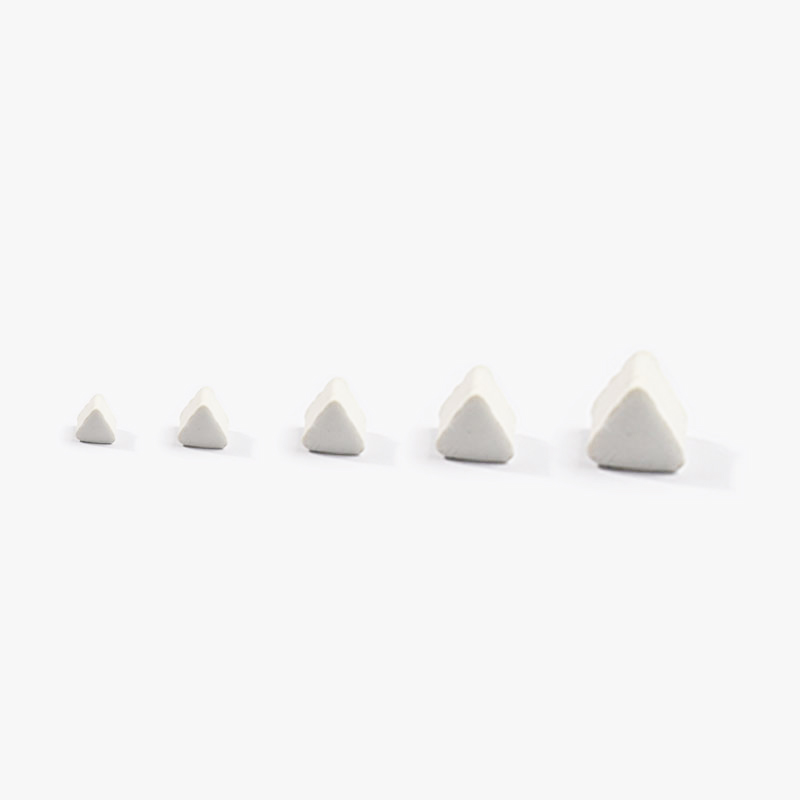
| Media | Best fit | Watch out for |
|---|---|---|
| Dry media such as walnut shell and corn cob | Drying assistance, light surface drying polish and removal of superficial soil after a wet cycle | Does not deburr or refine metal significantly, generates dust, and must not be treated as a cleanliness step |
| Fine ceramic or porcelain spheres in a small size class | Refinement and light edge blending after a cutting stage, and reaching tighter external geometry on chamber bodies and plates | Small sizes enter and retain in gas passages and fine slots; media wear shrinks the charge and changes the finish over its life |
| Plastic triangles and pyramids in a soft to medium grade | Deburring aluminium and other soft alloys where surface marking and edge rounding must be kept to a minimum | Slow cut rate, media deforms and wears, and a worn charge behaves noticeably differently from a fresh one |
| Heavy-cut ceramic, angle-cut triangles in a coarse size class | Removing a substantial machining burr from open external edges and pockets on aluminium and stainless housings before a refinement stage | Cuts edges and corners aggressively, leaves a coarse surface, and lodges in slots whose width approaches the media section |
A medium lodged in a blind hole, slot or gas passage is the classic semiconductor finishing failure, and it often escapes the finishing shop and is found at the buyer's leak or particle check. It happens when the media size class is too close to the feature opening, when the charge has worn into smaller pieces, or when a passage was never mapped as a retention risk. Slots with a width close to the media section are the worst case, followed by cross-drilled intersections and deep tapped holes. Checking relies on controlled unloading and an agreed inspection: count the media charge in and out where practical, borescope the smallest passages at a defined angle, use a pin gauge on holes, and rinse into a filter for a visual residue check. Any medium found is a reportable non-conformance, not a wipe-and-release.
| Failure mode | Likely cause | How to catch it |
|---|---|---|
| Compound film or tenacious residue left on a sealing face | A film-forming or silicate-bearing compound, insufficient rinse volume, or drying the part before it is genuinely clean | Magnify the sealing land and wipe a defined area with solvent, comparing the wipe against a clean reference; confirm with the buyer's own cleanliness method |
| Bright impact marks, dents or flattened corners from part-on-part contact | Dense charge, high load ratio, thin or light parts left loose among heavy neighbours, or a cycle run longer than the edge condition required | Look for repeating mark patterns on exposed faces and edges, compare an unsupported part with a racked or compartmentalised one, and review the batch mix and load recorded for the lot |
| Water spotting or mineral residue left after wet processing and drying | Hard or high-chloride rinse water, slow or uneven drying, or parts stacked wet so moisture is trapped in pockets and grooves | Inspect dried parts under angled light for rings and haze, check the rinse water source and drying method, and verify that pockets and grooves drain before the part is packed |
| Knife-edge seal face or bore lip rounded past the drawing limit | High-energy route, over-long cycle, dense or coarse media, or a soft aluminium edge run without masking or shielding | Measure a defined edge feature before and after with an optical comparator, radius gauge or moulded replica, and compare with the maximum radius on the drawing |
Saitama City positions itself as a Greater Tokyo business and logistics location: its official investment guide states that the city supports the siting of research facilities, manufacturing plants and distribution facilities with one-stop administrative service, and that it is preparing new industrial accumulation sites as receptacles for incoming companies in ten districts. The guide also cites the city's medical-device manufacturing initiative (さいたま医療ものづくり都市構想) as part of its location support. The city has a dedicated policy for creating logistics-facility induction districts, justified in part by securing supplies and logistics during disasters. A separate municipal project relocates and rebuilds the central meat wholesale market together with a roadside-station-based agri-food distribution and tourism hub.
The nearest part of that base to this brief is medical: The city's investment guide lists medical-device manufacturing support (さいたま医療ものづくり都市構想) among its business-location services.
Medical-device manufacturing in the area puts cleanliness, edge quality and surface integrity on the critical path, because burrs or embedded media on a diagnostic or device component are a quality and documentation issue rather than a cosmetic one. General machinery and sheet-metal fabrication in the city's industrial parks needs consistent deburring and edge break before coating, welding or assembly, so one process specification rarely fits both groups.
A Saitama buyer should first decide which regime the part falls under - medical-device-related work where cleanliness and surface integrity must be documented, or general machinery where edge break and roughness callouts dominate - because that choice determines whether the sample trial has to include cleanliness verification as well as dimensional and visual checks.
Freight context: Designated 物流施設誘導地区 (logistics-facility induction districts) in Saitama City. Saitama City creates logistics-facility induction districts for facilities meeting the legal definition of a specified distribution business facility (特定流通業務施設), and it requires disaster-resilience measures and a disaster-time cooperation agreement - a sign of the city's role as a metropolitan distribution base. The city has no seaport, so freight for machines and samples moves by road and rail.
The customs authority is Japan Customs, the Customs and Tariff Bureau of the Ministry of Finance, with regional customs at Tokyo, Yokohama, Nagoya, Osaka and Kobe. Any person importing goods must declare them to the Director-General of Customs and obtain an import permit after examination and payment of customs duty and consumption tax. The declaration is normally filed by the importer or by a customs broker acting as proxy, on a triplicate import (customs duty payment) declaration form (Customs form C-5020) supported by the invoice, the bill of lading or air waybill, a certificate of origin where a WTO rate applies, certificates of origin for preferential rates, packing lists and freight and insurance documents where required, plus any licence or certificate demanded by laws other than the Customs Law. More than 90 per cent of import procedures are computerised. A JIS Mark certificate is a separate, voluntary third-party scheme; foreign exporters are eligible to apply, and certification bodies must comply with ISO/IEC 17065.
Chinese industrial machinery entering Japan is classified under the Customs Tariff Law, whose harmonised schedule sets the classification and the General Rate; the Temporary Tariff Measures Law sets a Temporary Rate for certain products, and where the WTO rate or an EPA rate for the goods is lower, that lower rate is applied. The applied rate therefore depends on the exact commodity code, and on whether an economic partnership agreement covers the goods and their origin, so a landed-cost figure has to be confirmed against the specific machine before it is quoted. Japan Customs' monthly country table for August 2026 records exports to China of 1,809,133 million yen and imports from China of 2,361,239 million yen, the largest single-country line in the Asian table, with imports from China up 22.5 per cent year on year.
SurfacePolish supplies from Xiamen, China. The buyer's own destination rules, conformity marking, tariff classification and documentation responsibilities stay with the buyer; confirm them against the authorities named above before ordering.
Ask for a batch record that identifies what was actually done. A useful record lists the part numbers and quantities in the lot, the machine used, the media type and size class, the media charge mass and its age since the last screen or top-up, the compound product and dose, the water source used for rinse, the cycle time and any in-process interruptions, plus inspection results and disposition. For material traceability, request the media and compound data sheets offered by the supplier, including safety data, and keep them with the lot. Segregation evidence matters where aluminium and stainless run on the same site: a note of the purge or changeover between material families supports the buyer's own contamination control. This is process documentation from a finishing operation, not a certificate of compliance with any regulated standard.
Compare one variable at a time. If the question is media shape, hold the compound, the cycle time, the machine and the load constant and change only the medium; if the question is cycle time, hold the charge constant and stop at two or three defined intervals. Running two changes at once produces a result that cannot be attributed. Where a trial includes a refinement stage after a cutting stage, evaluate the stages separately, since a final figure can hide a coarse first stage or an unremoved burr. Blind evaluation helps when several people judge appearance: label the returned parts with codes and have the buyer's inspectors score edge condition, coverage and cleanliness without knowing the settings. Keep the parts and the record. A trial showing both routes failing on one controlled feature is as useful as one showing a difference.
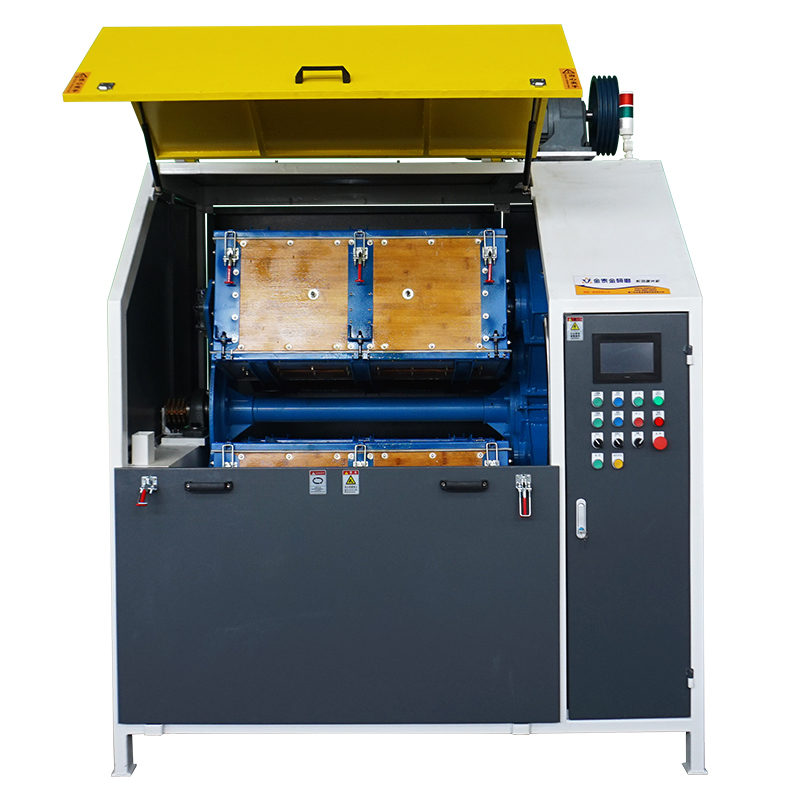
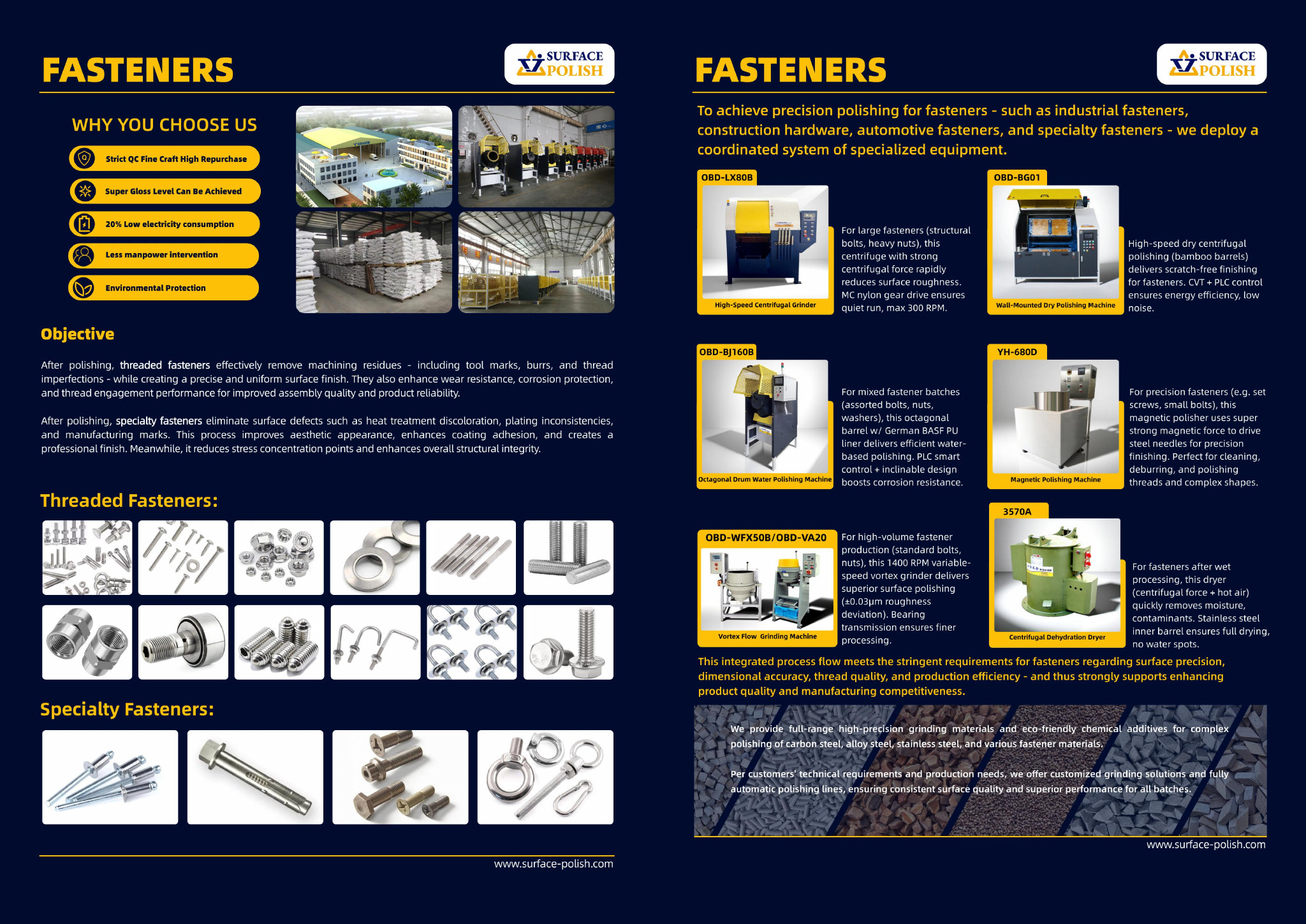
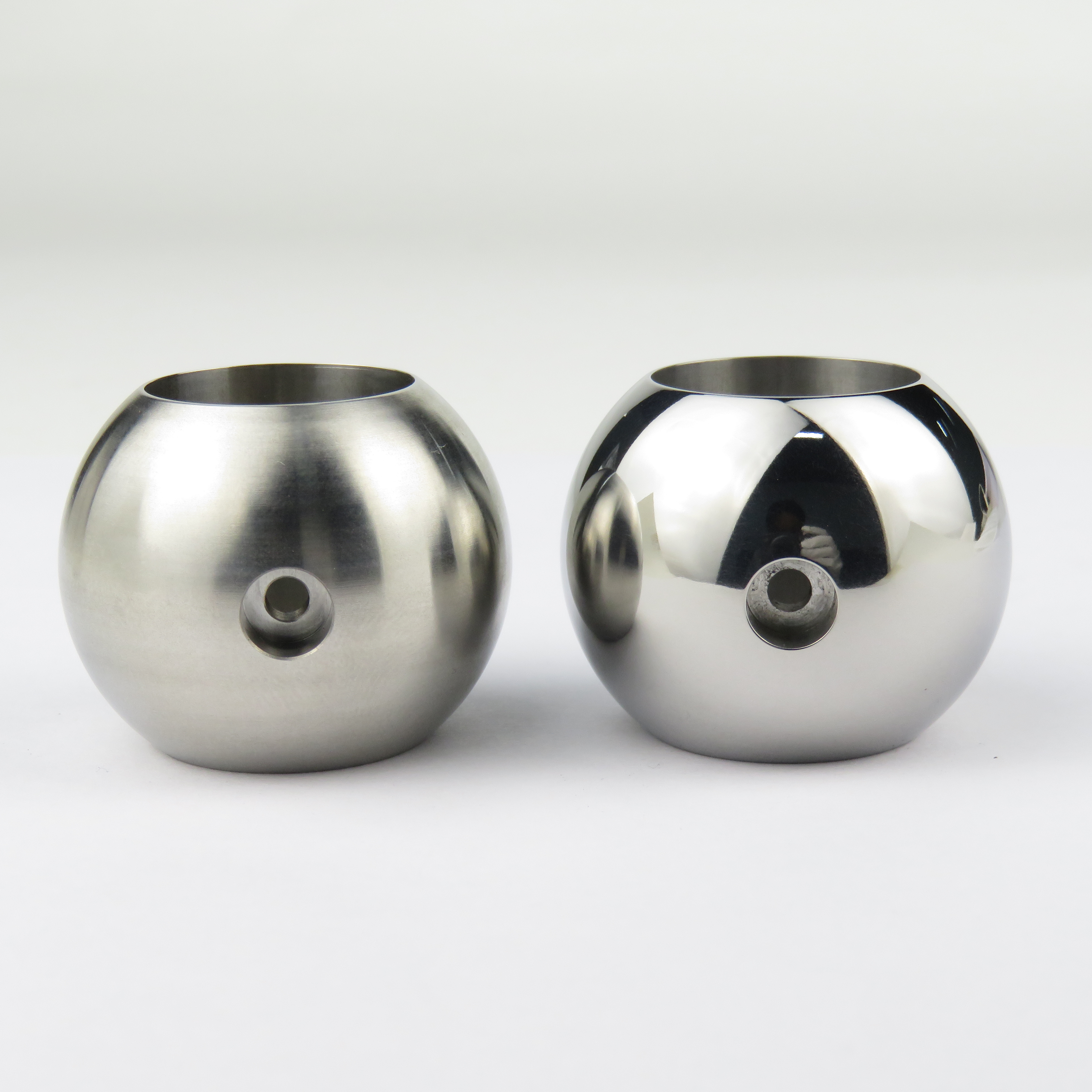
Cycle time depends on the starting burr, the material, the media size class, the compound and how much edge refinement is wanted, so no figure can be quoted in advance. A part that only needs a light edge break may run very differently from one that must shed a machining burr before refinement, and a two-stage route needs both stages counted. The useful approach is to test a defined stop point or two on representative parts and record what changed. SurfacePolish does not promise cycle times or capacity; treat the timing on returned parts as an observation from that run, not a production commitment.
Send a set that covers the real range rather than one convenient piece. Include the part with the tightest passage or smallest hole, the thinnest unsupported section, the surface that must not be touched, and one part in its normal as-received condition with its usual burr and soil. Add a coupon of the same material with a known starting roughness, and a marked-up drawing naming the controlled surfaces, edge limits and any cleanliness requirement. Several pieces let more than one cycle time be examined. Parts are shipped to Xiamen and returned with a settings record.
Size the medium well below the smallest opening the charge could enter, and treat every passage as a retrieval point rather than assuming it stays clear. Map the tightest hole, slot or cross-drilling first, then choose a size class against that geometry instead of an average part. Add a defined check such as a borescope at an agreed angle, a pin gauge on holes, and a rinse collected through a filter. For Japan buyers preparing a trial, send the part with the smallest passage so the media choice is tested on the real feature. SurfacePolish reports what was observed on tested parts; the cleanliness release remains the buyer's decision.
Use Saitama, Japan as the destination on the enquiry and state whether the deliverable is equipment, media and compound, a representative sample review or a line concept. A destination does not imply local stock, a local service point or a local delivery time.
Japanese buyers work to JIS (Japanese Industrial Standards) administered through the Japanese Industrial Standards Committee (JISC), which also maintains the market-creation standardisation scheme run with METI; drawings normally cite JIS or customer standards for surface finish and material conformity. For medical-device-related work, customers add their own cleanliness and quality-system requirements on top of ISO 9001 as general industry practice.
Sources were retrieved on 2026-09-29 and describe the local industrial and trade context only. They do not evidence any SurfacePolish project, shipment, installation or service in Saitama.
The buyer needs the machined burrs removed and the groove cleaned without rounding the seal land or leaving media in the blind holes.
Send the material, dimensions, approximate weight, batch quantity, the incoming condition and photographs of the difficult features. Mark which features must not be contacted by media and state how the result will be inspected. This form carries source reference PSEO-0885; quote it if you prefer an additional manual reference.
Open the SurfacePolish enquiry form Email a prepared enquiry
No price, lead time, certification or result is promised here. Confirm whether a sample trial is available for the specific part and what the trial can and cannot show.
Page PSEO-0885 · revised 2026-09-29 · cross-border equipment, media and scoped sample review. City context is sourced and cited above.
Use this local checker to identify missing part and inspection information. It prepares a technical-review brief; it does not approve a machine, process recipe or production result.
Complete the part details to prepare a review brief.
Email : info@surface-polish.com


 IPv6 network supported


 +86-592-2381506