
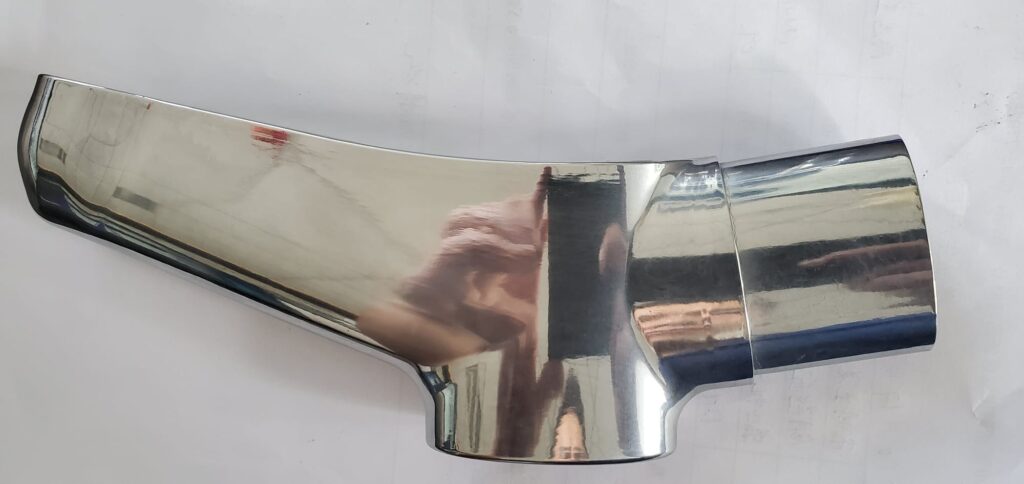
Metal Polishing Compound: What Each Type Does to the Surface
A metal polishing compound does not "make metal shiny". It decides which of three things happens to the surface: the abrasive cuts it, the chemistry burnishes it, or the combination polishes it. Choose the wrong function class and the part gets a result that looks like a process fault — grey, hazy, scratched, or spotty — when the actual fault is that the liquid was doing a different job than the one the customer is judging.
This page is organised by function rather than by product name, because a metal polishing compound sold under one trade name and the same chemistry sold under another travel badly between suppliers. It ends with how to test a compound on your own parts, and with what we will not claim about any of them.
One thing stated up front, because it is the difference between a specification and a sales sentence: a published cycle assumes a material and a removal that may not be yours, and the same is true of a published compound recommendation. The function classes below are reliable. The exact product and dose for your part is a trial result.
The four function classes, and what each one is actually for
Most of the confusion around "polishing compound" comes from one word covering four different jobs. Separating them answers most selection questions before any product is named:
| Function class | What it does | What it does not do | Typical failure if misapplied |
|---|---|---|---|
| Cutting / abrasive | Keeps the abrasive cutting, carries swarf away, controls the cut rate | Will not brighten a surface on its own | A part that is dimensionally right and visually matte |
| Burnishing / brightening | Raises reflectivity with little stock removal | Cannot remove a scratch or a burr | A part that is bright over an unfixed scratch pattern, which reads as haze |
| Cleaning / degreasing | Removes oil, soil and compound residue; prepares the surface | Does not finish anything by itself | Plating defects and spotting that get blamed on the polishing stage |
| Protection | Corrosion inhibition between finishing and the next operation | Is not a substitute for drying | Rust or fingerprint staining appearing days after the parts were accepted |
The practical consequence for anyone buying a metal polishing compound: a single product that claims to cut, brighten and protect at once is usually doing one of them well and the others approximately. Where a part has a real requirement in two classes — say a controlled cut and a corrosion window before plating — two products used in sequence beat one product used generously.
This is also why the compound question cannot be answered without the media question. The media does the cutting; the compound carries the heat and the swarf away and decides whether the surface ends up cut, burnished or polished. A fine compound in a coarse charge does not produce a fine finish.
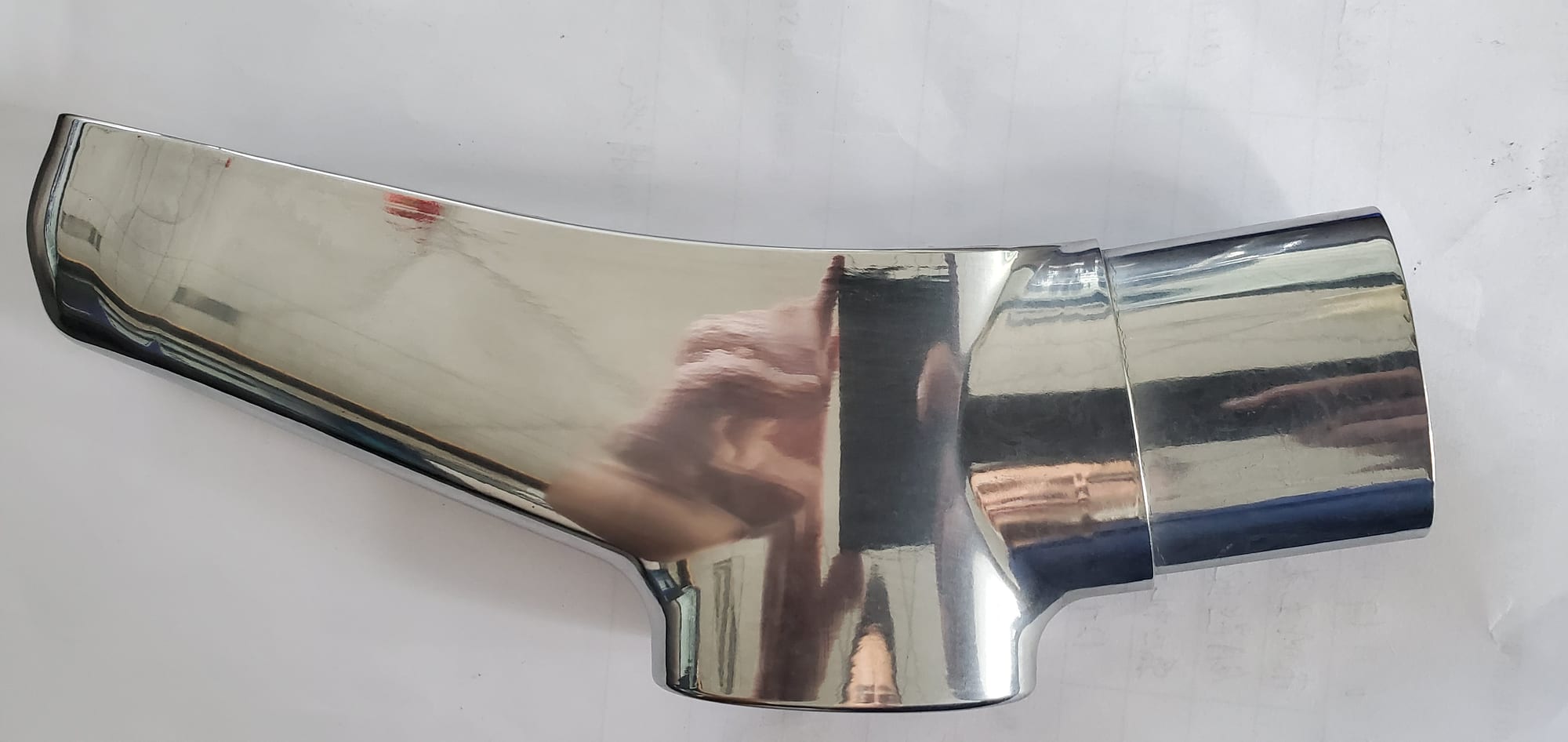
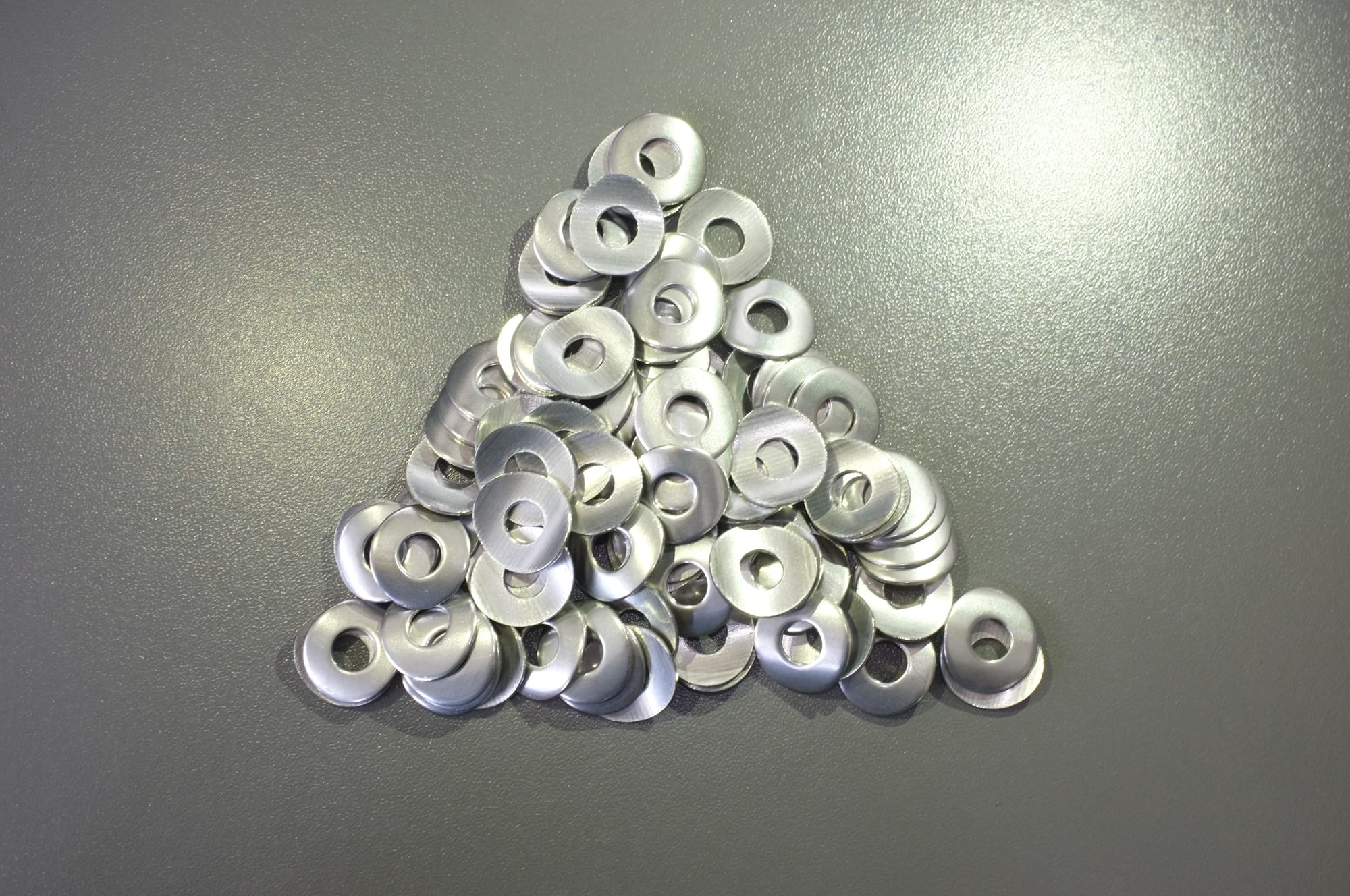
What we actually stock, by function
This is the part of the page most suppliers leave vague. These are the compound products in our own range, with the form and pack size, grouped by what they are for. Naming them is not a recommendation for your part — it is so you can see that the range is built around functions, not around a single "polishing compound".
Liquid polishing fluids, 20 kg per barrel — the working fluids for wet mass finishing:
- Polishing fluid for metal, 20 kg/barrel — general metal use
- Polishing fluid for metal, essential-oil type, 20 kg/barrel — the variant in the range for work where the oil character matters
- Polishing fluid for stainless, 20 kg/barrel
- Polishing fluid for stainless steel, 20 kg/barrel — the stainless range carries two entries; confirm which one suits your alloy and stage rather than assuming they are interchangeable
- Polishing fluid for acetate, 20 kg/barrel and acetate fine-rolling oil, 20 kg/barrel — for acetate frame work, where a wet process has to be kept cool and short
Aluminium grinding oils and compounds:
- Metal green liquid polishing compound, aluminium grinding oil
- Metal grinding compound, aluminium green liquid, paste/oil form
Powders and drums, 50 kg:
- Polishing, degreasing and anti-rust powder, 50 kg/barrel — the combined cleaning-plus-protection class
- Abrasive polishing brightener, 50 kg/drum — the brightening class
- Abrasive solution, 50 kg/drum
- Stainless steel electrolytic polishing chemical agent, 50 kg/drum — a different process family from mechanical tumbling, and it should not be treated as an additive to one
- Stainless steel polishing cleaning fluid, 50 kg/drum
The full range sits on the finishing compounds page. If you are ordering against a specification rather than a bin number, the compound is one line of a four-line specification — the others being media grade, media size, and cycle — and a supplier who quotes one without the other three is quoting a guess.
Polishing compound by material: stainless steel, steel, aluminium and acrylic
The function class decides what the compound does; the material decides which version of it you need. Four materials cover most enquiries, and they fail differently.
Stainless steel polishing compound
Stainless is the material where the compound does the most work and where the wrong one shows up fastest. It work-hardens, it holds heat, and it is often the part that has to end up bright rather than merely clean.
- What the compound has to do: carry the heat and the swarf away without letting the surface re-cut itself, and hold the chemistry that keeps the surface from going grey between stages.
- The characteristic failure: a grey or bluish haze that appears after a long cycle. It is usually a compound that is too weak to keep the swarf in suspension, so the fines recirculate and polish the surface back dull.
- What to change first: not the media — raise the concentration and check the flow before touching the charge.
Steel polishing compound
Steel is the material where the compound has a second job: corrosion control between the machine and the next operation.
- What the compound has to do: cut, keep the swarf off the surface, and leave the part in a condition that survives the interval to the next stage. A steel part that comes out clean and rusts overnight was finished with the wrong compound, not the wrong media.
- The characteristic failure: rust bloom or flash rusting within hours of finishing, usually in blind features and on freshly cut edges.
- What to change first: the compound's corrosion package and the rinse discipline, not the cycle time. Extending the cycle makes it worse, because the part stays wet longer.
Aluminium
Aluminium punishes a compound carried over from steel. It is soft, it smears rather than cuts, and it reacts with chemistry steel tolerates. The compound has to cut gently without smearing or discolouring — aluminium polishes to a different base colour than steel, which matters if the part is plated. The characteristic failure is a smeared, mottled, slightly grey surface with black residue on the parts and in the machine, and the fix is the chemistry: a stainless compound on aluminium is the most common cause of a disappointing aluminium trial, and time only smears it further.
Acrylic polishing compound and the plastics case
An acrylic polishing compound is not a metal compound at lower intensity — it is a different product. Plastic is not a metal problem at lower intensity — it is a different process. A wet bath with a warm compound softens many plastics, and acrylic distorts permanently. The compound has to lubricate and clean without heat build-up and come off completely, because residue on a transparent part is a reject. The characteristic failures are whitening or frosting and distortion on thin sections, both from heat plus a compound that does not clear — and the lever is the wet-or-dry decision, not the compound. Most plastic work is done dry for this reason.
The one rule that covers all four
A stainless steel polishing compound, a steel polishing compound and an aluminium compound are three different products for a reason: the compound is chosen for the material first and the finish second. Two parts of the same geometry, one stainless and one aluminium, need different compounds at the same media grade and the same target roughness — and running one compound across both is how a shop ends up with a mottle it cannot explain.
Why concentration and flow are the next question, not the first
Once the function class is right, the second question is how much and how fast. This is where most compound problems actually live, and it is also where published advice fails most often, because the right dose depends on the machine, the media, the workpiece, the incoming contamination and whether the liquid is once-through or recirculated.
Two rules survive that variability and are worth stating:
More compound is not automatically better. The result depends on the compound's function and on the contamination entering the process. Overdosing can change the contact environment, raise foam, and leave residue that reads as a haze after drying.
More water is not automatically better either. Flow changes flushing behaviour and the contact environment rather than simply "cleaning better". A change in flow is a process change, and it should be confirmed by a repeated sample, not by eye.
The method that works is unglamorous: record a baseline (machine, media and its condition, material, incoming soil, load, water source, compound identity, dose method, flow, time, rinse, drying), then change one variable and inspect the response. That method is set out in more detail in vibratory finishing water and compound control, and the division of labour between media, compounds and additives is covered in how media, compounds and additives shape a finishing process. This page does not repeat either.
The misdiagnosis to rule out before you change the compound
A grey or hazy result after a brightening stage gets blamed on the compound far more often than the compound deserves. The usual cause is coarse grit carried over from the previous stage: the charge still holds abrasive from the cutting step, and the polishing stage then polishes over it, producing a uniform grey haze that lifts slightly and then comes back.
The test is cheap. Clean the parts and the charge, re-run the same compound and the same dose, and see whether the haze returns. If it does not, the compound was never the problem. If a shop changes the compound first, it buys a new product, changes the dose, changes the flow, and never learns which variable mattered — which is exactly how a process becomes a set of superstitions.
The same logic applies to a dull result in a wet process: dirty water, suspended fines and oil can leave a grey film that looks like a finishing failure and is actually a rinsing failure.
How to test a compound on your own parts
No metal polishing compound selection converges by reading. It converges by a trial that changes one variable at a time. The test itself is short:
- Use the worst-case part, not the average one — the part with the deepest marks, the tightest feature and the most protected face.
- Fix the media, the load and the machine settings for the trial, so that the only variable is the compound.
- State the acceptance criterion before the run: what roughness, what visual result under which lighting, which faces must be unchanged, and whether a post-finishing corrosion window matters.
- Measure, don't judge. Record the finish and the consumption. Our standard route is that you send representative parts including the worst case plus the material and the finish you need, and you get them back with the cycle time and the media consumption measured.
- Repeat it. A compound result that does not repeat on a second sample is not a result.
Two context numbers that decide whether a compound trial is worth the queue time. First, the job the compound suits is bounded by the cycle band of the stage: 10 to 20 minutes for a light deburr, 20 minutes to 2 hours for a typical small-part bowl batch, 2 to 8 hours for a high-finish polish. A compound is chosen for one of those bands, not for "finishing" in general, and a product trialled outside the band it was made for tells you nothing. Second, the compound is a running cost rather than a purchase: it is dosed each cycle by volume or by weight, and it sits below the media on the consumable bill. The number worth asking a supplier for is therefore not the drum price but the consumption per batch, the same discipline as asking for media consumption in kilograms per 100 hours.
When buyers search for a polishing compound for stainless steel, they are usually looking for one of two different products: a compound that cuts the work-hardened surface, or one that lifts the colour after the cut. This section separates the two, because a single product sold as "stainless compound" will do one of them well and the other badly.
Stainless polishing compound and jewellery compound: two cases where "metal" is too coarse a word
The function classes above answer what the compound does. Two material cases cut across them and are worth separating, because they are asked for by name.
Jewellery polishing compound (jewelry polishing compound in US spelling)
Jewellery work is a different case again, and it is not a niche — it is a real production category, covering fine jewellery components, watch parts, decorative hardware and precious-metal finishing.
Three things make it distinct. The metal is soft and the value is high, so predictable cutting beats fast cutting — a scratch on a precious-metal part is rework, not a touch-up. The finish is judged on colour and clarity, and a compound leaving a grey cast has failed even with a fine profile. And metal loss is a cost: on a thin precious-metal section, the compound's aggressiveness is a commercial decision as much as a technical one.
What to write into the specification: the metal, the target colour rather than only a roughness figure, the features that must not lose material, and whether the parts are plated afterwards — because plating on a colour that varies between batches plates to a visible difference.
When a compound is the wrong lever
Compound cannot fix everything, and treating it as a universal additive wastes money and time:
- A scratch pattern that was never refined. If the previous stage left scratches, no compound removes them. The stage has to change.
- A charge that is spent. Media life runs from about 20 to 200 operating hours depending on material and cycle. When the finish stops improving, the parts show a matte grey haze and the same result needs about 20% longer, the answer is new media, not a stronger compound.
- A geometry the media cannot reach. Compound does not move media into a blind hole or a cross-hole. That is a media size and process decision.
- Acetate and soft plastics in a warm wet bath. The distortion is thermal and permanent; no compound prevents it. Most acetate frame work is done dry for this reason.
- Titanium and other contamination-sensitive alloys. These need a dedicated, clean charge first. A compound will not neutralise contamination carried in from another job.
- A surface that must be identical across two batches for plating. Compound changes the base appearance slightly. Consistency between batches comes from a fixed written process, not from a brighter compound.
- A part that must come off the machine dry and spot-free. Drying is a separate step. The dryers range exists because a wet process without a drying step leaves a film in blind features that shows up as spotting weeks later.
What to ask before you buy a compound
- "Which function class is this, and what is it not intended to do?" A supplier who cannot answer the second half is selling a generic product.
- "What dose, and is it by volume or by weight?" The dose is process-specific, but the method should be stated.
- "What is the consumption per batch?" Not the drum price alone. Consumption, not price per kilogram, is the cost per part.
- "Is it intended for once-through or recirculated operation?" A compound made for single use may not suit a recycling loop, and a recirculating system adds separation, make-up and maintenance variables.
- "What happens between finishing and the next operation?" If there is a corrosion window before plating, the protection class matters and should be specified, not assumed.
- "Will you run it on our parts first?" Compound selection ends at a sample result, and the sample should be recorded so the recipe can be reproduced.
FAQ
What is the difference between a polishing compound and a polishing fluid? They overlap, and the words are used loosely in the trade. "Fluid" usually means a liquid product dosed into a wet process; "compound" can mean the same thing or a paste, oil or powder. The classification that matters is functional — cutting, burnishing, cleaning, protection — not whether the product is liquid.
Do I need a different compound for stainless than for aluminium? Yes. Aluminium is softer, smears more easily and polishes to a slightly different colour, so the working fluid and the dose are different from a stainless process. Using a stainless-oriented product on aluminium usually shows up as a rough, hard surface, and the common recovery — take more material off — goes the wrong way.
Can a brighter compound make my parts shinier? Up to the limit of the surface it is working on. A compound raises reflectivity; it does not remove the scratch pattern left by an earlier stage. If the part is hazy because the previous stage was too coarse, a brighter compound changes the haze rather than removing it.
How much compound should I use? There is no universal number, and any figure copied from an unrelated machine or material should be treated as a guess. Start from the supplier's technical data, record the dose, change one variable at a time, and confirm with a repeated sample. The same discipline applies to water flow.
Is the electrolytic polishing agent the same as a tumbling compound? No. Electrolytic polishing is a different process family, and its chemical agent is not an additive for a mechanical tumbling charge. They can both be part of a finishing route, but they are not interchangeable and should not be mixed into the same step.
 +86-592-2381506


 IPv6 network supported
