
Which Media Body? Five Materials, Five Different Physical Actions
Ten guides on this site cover media, mostly answering which grade, size, and shape. This one answers the question that comes before those. The body of the media — ceramic, plastic, steel, synthetic, or organic — decides what the media physically does to your part before grade or size. Ceramic cuts. Plastic cuts shallow. Steel does not cut at all; it pushes. Synthetic sits between ceramic and plastic. Organic only wipes. Get the body wrong and tuning size or grade never fixes it, because you are adjusting the wrong machine.
How this guide connects to our particle-level guides: Our ten existing media articles work at the particle layer — picking a spec inside one class. Read the tumbling media selection guide for grade and size and the ceramic media shape guide for shapes. See the tumble deburring media grade and cycle guide and how to prevent media lodging in holes, slots, and threads for sizing. While the vibratory tumbler media selection guide lists material among four choices, this page works at the material layer — putting material first.
Five Bodies, and Why the Body Comes First
When buyers search for mass finishing media, deburring media, or vibratory tumbling media, they usually pick triangles or cylinders first. Starting with shape is backwards.
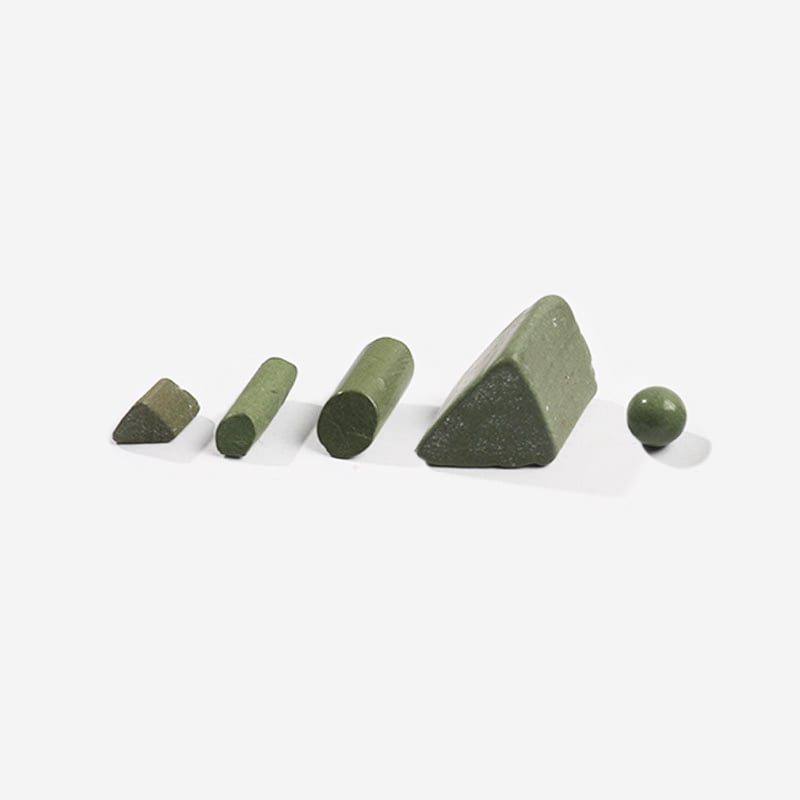
Why choosing shape and size before material is backwards
Most shops pick a shape first, check slot width second, and think about the media body last. That order is backwards because shape and size decide how media contacts the part, while the body decides if it cuts, pushes, or wipes. Lock in the body first.
The core analogy: shape and size are the knobs, material is the engine
Think of media selection like setting up a machine tool. Shape and size are the tuning knobs, but the media body is the engine. Tuning knobs never saves a batch with the wrong engine.
Five media bodies and what each one physically does
All industrial polishing media and tumble deburring media fall into five material bodies.
- Ceramic body: Performs hard grinding and true metal cut across hard alloys.
- Plastic body: Performs a shallow, cushioned cut without gouging soft metals.
- Steel body: Uses stainless steel tumbling media to flatten peaks by peening and burnish with zero cutting.
- Synthetic body: Sits between ceramic and plastic for controlled fine cutting.
- Organic body: Wipes and dries surfaces using plant fiber without cutting.
Why this page is about knowing when to switch classes
Many guides stop at a ceramic vs plastic debate and ask which is better. Yet each body executes only one physical action. This guide is not about crowning one best media — it is about spotting each body's failure mode so you know when to switch classes.
The One Question That Picks the Body
Before browsing catalogs for vibratory polishing media or polishing media for tumbler bowls, narrow the five bodies down with one question.
Note: This diagram is explained in the text and table above rather than shown as a separate figure.
The single question: are you cutting metal off or pushing it flat?
If you only ask one question when selecting media, ask this: "Do I need to cut material off this part, or push the surface flat"? Every surface job needs stock removal, peak pressing, or dry wiping. Choosing between shearing metal and pressing peaks rules out wrong bins fast.
How the answers map to the five media bodies
Your answer to that single question maps straight to the five material classes.
- To cut material off: Pick ceramic for hard cutting, plastic for shallow cutting on soft metals, or synthetic for controlled fine cutting.
- To push the surface flat: Pick steel to cold-work and burnish peaks into a bright plane without cutting.
- To wipe and brighten only: Pick organic media to absorb oil, wipe residue, and bring up dry luster.
Why cutting versus pushing decides everything downstream
Why does this split settle the recipe? Cutting and pushing are two opposite physical mechanisms, so picking the wrong media body makes every downstream adjustment useless. Pushing media only folds heavy burrs over; cutting media only scratches mirror faces.
Why asking "which media is best?" has no answer
Buyers often ask salespeople which tumbling media is the best overall. The question "which media is best?" has no answer because it leaves out the subject: on what base metal, and for what action. Once you replace "which is best?" with "how hard is my part, and do I need to cut or push?", the right body is clear.
| Hardness Relation | Physical Action | Media Body | Typical Goal |
|---|---|---|---|
| Harder than part | Deep shearing cut | Ceramic | Heavy burrs, scale & tool marks |
| Close to part | Shallow cushioned cut | Plastic / Synthetic | Soft-metal burrs, pre-plate prep |
| Hard & smooth | Peening / burnish | Steel | Mirror brightening, pore sealing |
| Softer than metal | Fibrous wipe (zero cut) | Organic | Dry wiping, oil & water removal |
Ceramic — It Cuts, and It Cuts More Than You Think
When operators need real stock removal, they use ceramic media — searched as ceramic tumbler media, ceramic finishing media, or tumbler ceramic media.
The physical action of a ceramic body
A ceramic medium binds abrasive grit in a hard porcelain matrix. Because the matrix is stiff, ceramic abrasive media transfers bowl energy straight to the edge. Exposed grit acts like tiny grinding wheels shearing metal.
Where ceramic media belongs on the shop floor
Whether running triangles in ceramic media for tumbling or round ceramic polishing beads and ceramic polishing media, ceramic belongs wherever metal must be cut off. It grinds heavy burrs, scale, and tool marks on steel, stainless, and titanium. After a break-in run, ceramic cuts steadily.
Failure mode one: over-cutting edges and dimensions
Ceramic's strength is also its main trap on precision parts. Ceramic cuts deeper than many operators expect, eating away part dimensions and rounding off sharp functional corners. Over-cutting is deceptive because the part looks clean and bright, only failing when inspection checks tolerances.
Note: This diagram is explained in the text and table above rather than shown as a separate figure.
Failure mode two: fracturing, glazing, and how to spot end of media life
Because ceramic is brittle, heavy impact can fracture stones into sharp chips that cause lodging in holes. As grit wears and corners round, the wear rate shifts and cutting slows. You know ceramic media life is over when cutting slows down sharply while the machine runs fine.
Plastic — Shallow Cut, and Where That Fails
When ceramic is too harsh for soft alloys, shops switch to plastic media for plastic deburring with plastic abrasive media.
The physical action of a plastic body
Plastic media suspends fine grit inside a resilient polyester resin binder instead of porcelain. When a plastic cone hits aluminum or brass, the softer polymer body cushions the impact. Instead of gouging craters, grit takes a shallow shave across peaks.
Where plastic media belongs on the shop floor
That shallow cut suits soft metals like aluminum, brass, copper, and zinc. It also protects threads and ground faces from peening or scratches. Plastic leaves a uniform matte satin base ready for anodizing, painting, or plating.
Failure mode one: under-cutting heavy burrs and the cycle-time trap
Because plastic cuts gently, it fails on thick steel burrs or deep milling ridges. When plastic media cannot remove a heavy burr, operators often assume the cycle was too short and keep adding time, when the body is simply too soft. Running longer only wastes cones and causes surface smear without cutting the burr root.
Note: This diagram is explained in the text and table above rather than shown as a separate figure.
Failure mode two: heat sensitivity, tackiness, and end of media life
Polymer-bonded media reacts to shop heat and harsh solvents. In a hot summer shop or poorly flushed bowl, plastic cones can soften and turn tacky. As plastic wears, it shrinks evenly without cracking, and you know its media life is over when burrs stop coming off and cycles keep stretching.
Steel — It Does Not Cut, It Pushes
Buyers searching for steel finishing media — including tumbling media stainless steel, tumbling media for stainless steel, stainless tumbling media, ss tumbling media, or steel tumbling media — often expect cutting. In reality, steel does the opposite.
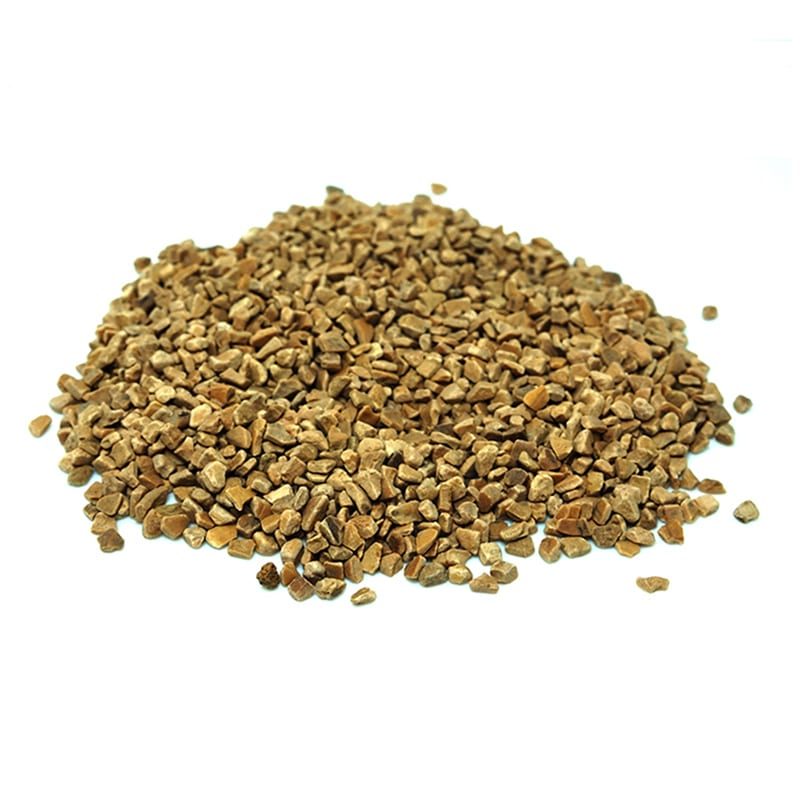
The physical action of a steel body
Hardened or stainless steel media contains zero abrasive grit and has a smooth surface. Steel media does not cut metal at all — it works by impact peening and sliding burnish, pushing surface peaks down into valleys. Because no metal is cut off, steel produces zero grit swarf; see our steel media burnishing guide.
Where steel media belongs on the shop floor
Note that buyers typing tumbler media for steel or tumbling media for steel sometimes want ceramic stones to cut steel parts, and sometimes want steel pins. True steel finishing media belongs at final brightening to create a cold-worked mirror luster on castings, brass, or tools. Its rolling pressure seals pores and builds compressive stress.
Failure mode one: denting and deforming thin walls
Because steel media is heavy and rigid, it delivers high impact forces. If you run thin-wall stampings or hollow tubes in heavy steel media, the steel balls will dent and deform the part. Because steel pushes metal down rather than shaving it off, a dented thin wall never springs back.
Note: This diagram is explained in the text and table above rather than shown as a separate figure.
Failure mode two: ball-on-ball scratching and why steel cannot run blind
If compound lubrication drops, steel balls skid against the part and leave crescent scratches. Moreover, the steel route requires visual checks rather than blind timer runs, because steel removes zero stock and gives no cut-rate feedback. Steel media life fails when nicked pins or spot rust leave random scratches on bright faces.
Synthetic — The Compromise, and What It Costs
When a part needs more bite than plastic but gentler contact than ceramic, engineers use synthetic polishing media and synthetic tumbling media.
Note: This diagram is explained in the text and table above rather than shown as a separate figure.
The physical action of a synthetic body
Synthetic media uses engineered polymer resins firmer than plastic yet lighter than ceramic. That intermediate stiffness lets grit bite into light burrs cleanly without cratering the metal. The resin binder wears at a controlled pace to expose fresh grit steadily.
Where synthetic media belongs on the shop floor
Synthetic media fits precision machined parts and complex aluminum or stainless housings where ceramic is too rough and plastic is too slow. It handles light machining burrs right next to delicate sealing faces. Its lighter weight also reduces part-on-part bruising in the bowl.
Failure mode: batch-to-batch formula sensitivity and keeping control samples
Synthetic media relies on exact chemical curing during production. Because synthetic performance depends on resin formulation, cutting speed and wear rate can shift between production lots. Always keep a sealed reference jar of your current lot and run a trial comparison before loading a new shipment.
Note: This diagram is explained in the text and table above rather than shown as a separate figure.
The economics: why a higher unit price can lower cost per part
Buyers often hesitate because synthetic media costs more per bag upfront. However, synthetic media has a very low wear rate, making it cost-effective on small precision parts and long cycles. Judging synthetic media is a trade-off between long media life and purchase price, not just "expensive versus cheap."
Organic — It Only Wipes, and Why That Is Sometimes Exactly Right
At the gentlest end sits dry finishing media — walnut shell grit and corn cob granules.
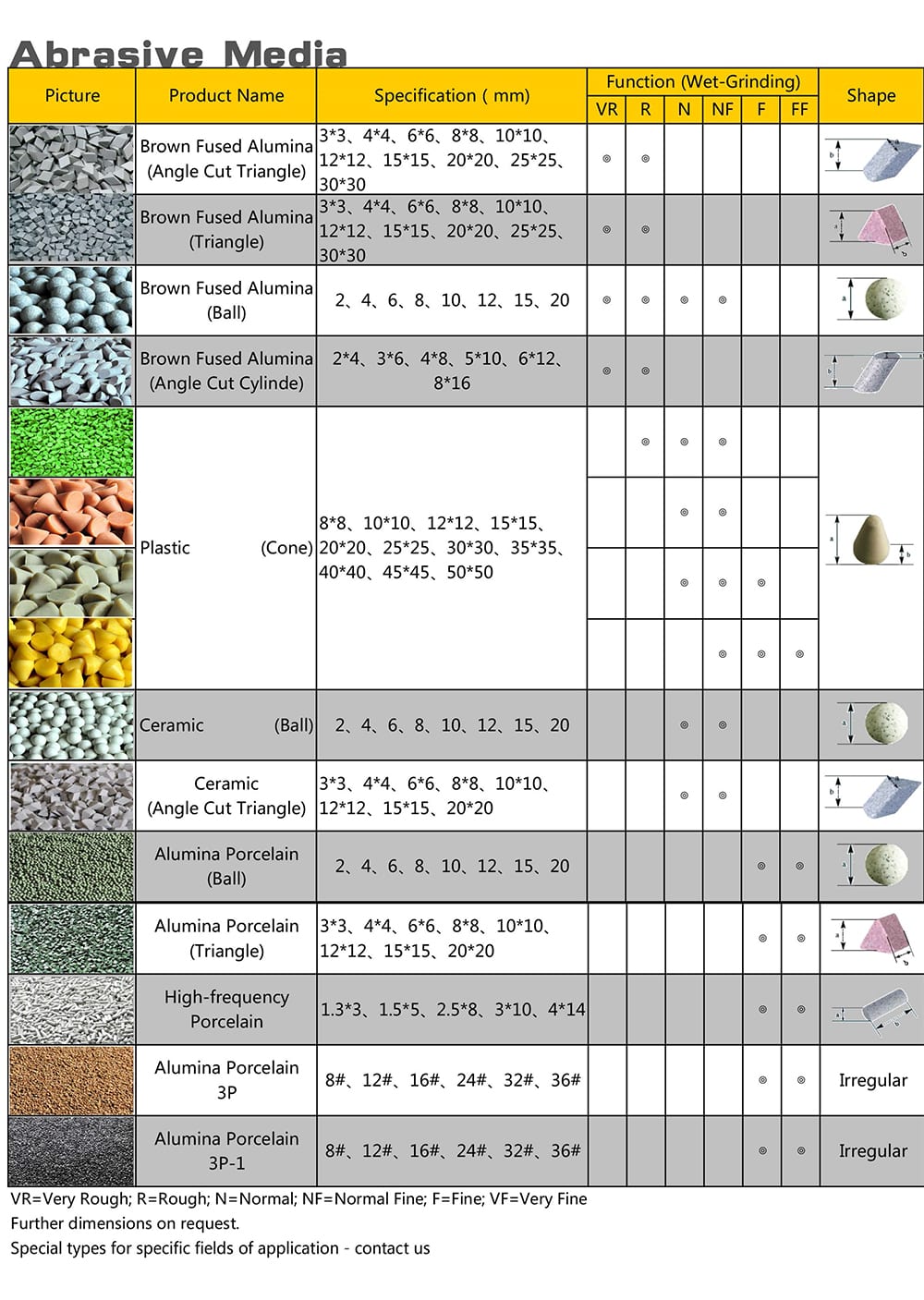
The physical action of an organic body
Organic media is made from fibrous plant shell or cob, used plain or with light paste. Organic media performs zero metal cutting and zero peening — it works strictly by soft fibrous wiping across the surface. Because plant fiber is softer than metal, it never alters part dimensions.
Where organic media belongs on the shop floor
Pure wiping is right when geometry is finished and you only need to dry parts, absorb oil, or bring up a final dry luster. Brass fittings, stampings, and hardware run in corn cob or walnut shell to remove water drops and light film without touching threads. Running dry also prevents water spots completely.
Failure mode one: trying to remove burrs with a wiping media
The most common mistake is loading raw burred parts into walnut shell expecting deburring. Using organic media to remove metal burrs wastes cycle time because plant fiber cannot shear metal. This mistake is deceptive because the run looks effective: the part exits clean and bright, yet every sharp burr remains standing.
Failure mode two: moisture absorption, saturation, and end of media life
Organic media has two quiet killers: moisture and dirt loading. If wet parts enter an organic barrel, the cob swells, clumps, and stops wiping immediately. Even in a dry barrel, organic media eventually loads up with metal dust and oil — and you know it has reached saturation when parts exit dirtier and dustier than they went in.
Note: This diagram is explained in the text and table above rather than shown as a separate figure.
| Dimension | Cutting (Ceramic/Plastic/Synthetic) | Pushing (Steel) | Wiping (Organic) |
|---|---|---|---|
| Action | Shears peaks and burrs off | Presses peaks into valleys | Wipes oil, water, film |
| Corners | Rounds sharp edges | Peens sharp edges | Leaves edges untouched |
| Byproduct | Swarf and spent grit | Zero grit; needs soap | Loads with oil and dust |
| Over-Run | Over-cuts or wears cones | Dents thin walls | Saturates and leaves dust |
When to Change Body — and What We Supply
Knowing the five bodies also tells you when one media class has finished its job and must hand off to another.
Note: This diagram is explained in the text and table above rather than shown as a separate figure.
A real shop-floor handoff: ceramic first, steel second on stainless steel
A classic multi-body route is finishing machined stainless steel to a mirror shine. The proven route is running ceramic media first to cut away machining tool marks, and switching to stainless steel media second to burnish the surface bright. Why not skip ceramic and run steel balls directly? Because steel media does not cut: tool marks are physical ridges, and hammering raw ridges with steel balls only flattens them into shiny waves that still show every tool track.
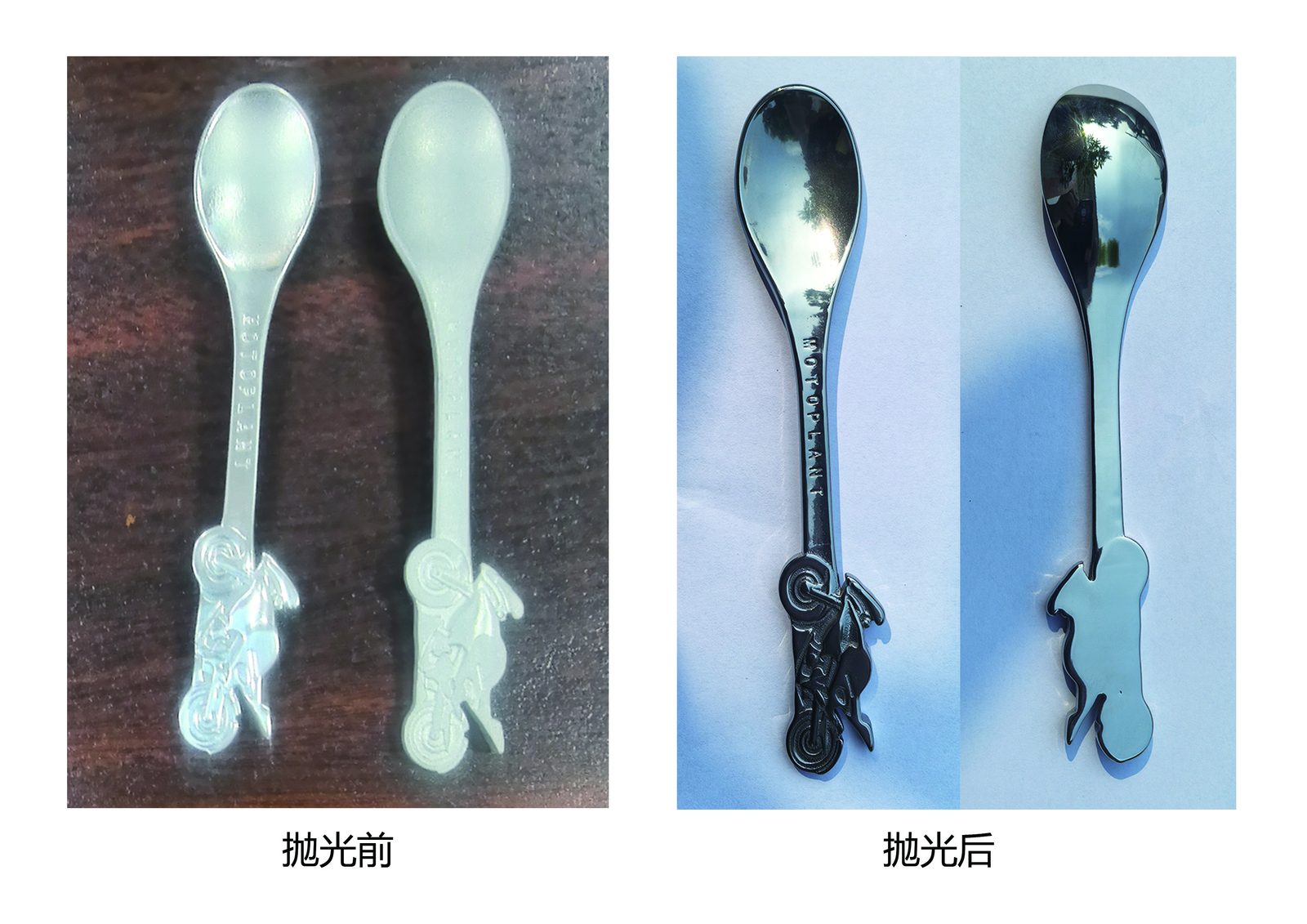
What switching media bodies actually means
Operators sometimes call switching from ceramic to plastic or steel "upgrading to a better media". Switching media bodies is never upgrading to a better product — it is recognizing that the first body finished its physical job, and switching to a different mechanism for the next step. Ceramic cuts the ridge; plastic refines the matte face; steel presses it bright; organic cob wipes it dry.
Why you can never mix media bodies or skip bowl cleanout
When a shop runs multiple media classes, strict separation between runs is essential. You must never mix different media bodies in one batch or switch bodies in a bowl without a thorough cleanout. Broken ceramic chips hiding in a drain grate will contaminate a plastic load and scratch soft aluminum parts, while stray steel pins in ceramic will bruise edges.
What we manufacture — and the "abrasive media" trap we do not touch
At Xiamen Jin Tai Jin Grinding Technology Co.,Ltd., certified under ISO 00726Q01571R001 with 21 machine platforms and 24 IP rights, we manufacture all five mass finishing media bodies and wet finishing compounds. Watch out for the naming trap in what abrasive media grade and body decide: "abrasive media" means two different things. In mass finishing, abrasive media means tumbling stones in a bowl; in blasting, it means loose grit shot from a nozzle. We manufacture all five tumbling media bodies and compounds, and we never supply sandblasting or shot-blasting abrasives (glass beads, garnet, or loose grit). We also do not offer plating, anodizing, coating, heat treatment, hand tools, electropolishing, or contract finishing.
| Body | Action | Best For | Failure Mode | Sign Life Is Over |
|---|---|---|---|---|
| Ceramic | Hard cut | Heavy burrs, scale, tool marks | Over-cutting; chipping | Cut slows while machine is fine |
| Plastic | Shallow cut | Soft metals (aluminum, brass) | Under-cutting; heat softening | Burrs stay and cycles stretch |
| Steel | Peening / burnish | Mirror luster, pore sealing | Denting thin walls; scratches | Random scratches appear |
| Synthetic | Controlled cut | Fine burrs on precision parts | Lot formula shifts | Cut speed jumps between lots |
| Organic | Fibrous wipe | Dry polishing, wiping oil | Zero deburring; clumping | Parts exit with grey dust |
Frequently Asked Questions
Which media is best for my parts?
There is no single "best" media because the question lacks a subject: what alloy and action. Instead, ask whether you need to cut metal off or push the surface flat. Use ceramic for hard cutting, plastic or synthetic for shallow cutting on soft parts, steel for mirror burnishing, and organic media for dry wiping.
How do I know when to change the media?
Each body shows a clear symptom when its media life ends (see the table above). Ceramic is spent when cutting slows sharply with a healthy machine, and plastic is spent when burrs stay on and cycles stretch. Steel needs checking when random scratches appear, synthetic if speed shifts between lots, and organic when it saturates and leaves grey dust.
Can I use ceramic and plastic in the same machine?
Never mix ceramic and plastic in the same batch, and never switch between them in one bowl without cleaning. Ceramic chips in drains mix into plastic and gouge deep scratches into aluminum or brass parts. Always flush the bowl and screen between media classes.
Why does steel media not remove burrs?
Steel media has a smooth surface with zero abrasive grit, so it works by impact peening and sliding burnish rather than cutting. Steel balls only fold sharp burrs over instead of cutting them. Cut burrs and tool marks off with ceramic or plastic first, then switch to steel to burnish.
What is the difference between abrasive media and blasting abrasive?
In metalworking, "abrasive media" refers to two separate products. First, it means preformed tumbling stones (ceramic or plastic shapes) that rub parts inside a mass finishing bowl. Second, it means loose blasting grit (glass beads, garnet, or oxide powder) shot from a nozzle; we only make tumbling media, never blasting grit.
Do you supply all five media types?
Yes, we manufacture all five mass finishing media bodies: ceramic, plastic, steel (balls, pins, and ballcones), synthetic, and organic (walnut shell and corn cob). We also supply wet compounds and machines. We do not supply loose sandblasting or shot-blasting abrasives, and part photos help us give an initial check.
 +86-592-2381506


 IPv6 network supported
