


Acetate Eyeglass Frame Polishing: Dry versus Wet Tumbling
This page reproduces the published tables for acetate eyeglass frame polishing: the decision factors separating dry tumbling from wet tumbling, and the observed defects with their likely process causes and what to check first. Media and compound descriptions are the article own, reproduced verbatim. Acetate frames vary in polymer grade, coating and geometry, so confirm any of this on a sample and with the supplier.
Browse the published rows
Choose a section or search the published rows, then read the article text.
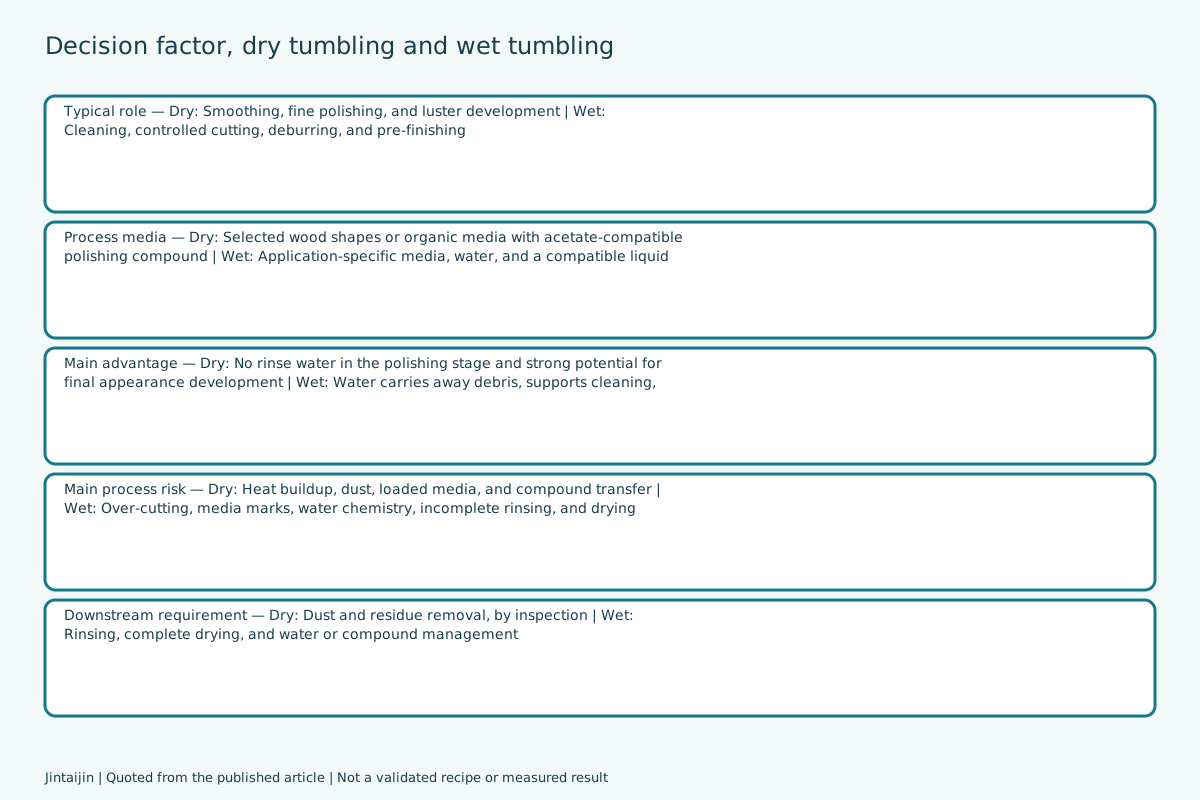
Decision factor, dry tumbling and wet tumbling
| decision factor | dry tumbling | wet tumbling |
|---|---|---|
| Typical role | Smoothing, fine polishing, and luster development | Cleaning, controlled cutting, deburring, and pre-finishing |
| Process media | Selected wood shapes or organic media with acetate-compatible polishing compound | Application-specific media, water, and a compatible liquid compound |
| Main advantage | No rinse water in the polishing stage and strong potential for final appearance development | Water carries away debris, supports cleaning, and helps control process heat |
| Main process risk | Heat buildup, dust, loaded media, and compound transfer | Over-cutting, media marks, water chemistry, incomplete rinsing, and drying defects |
| Downstream requirement | Dust and residue removal, by inspection | Rinsing, complete drying, and water or compound management |
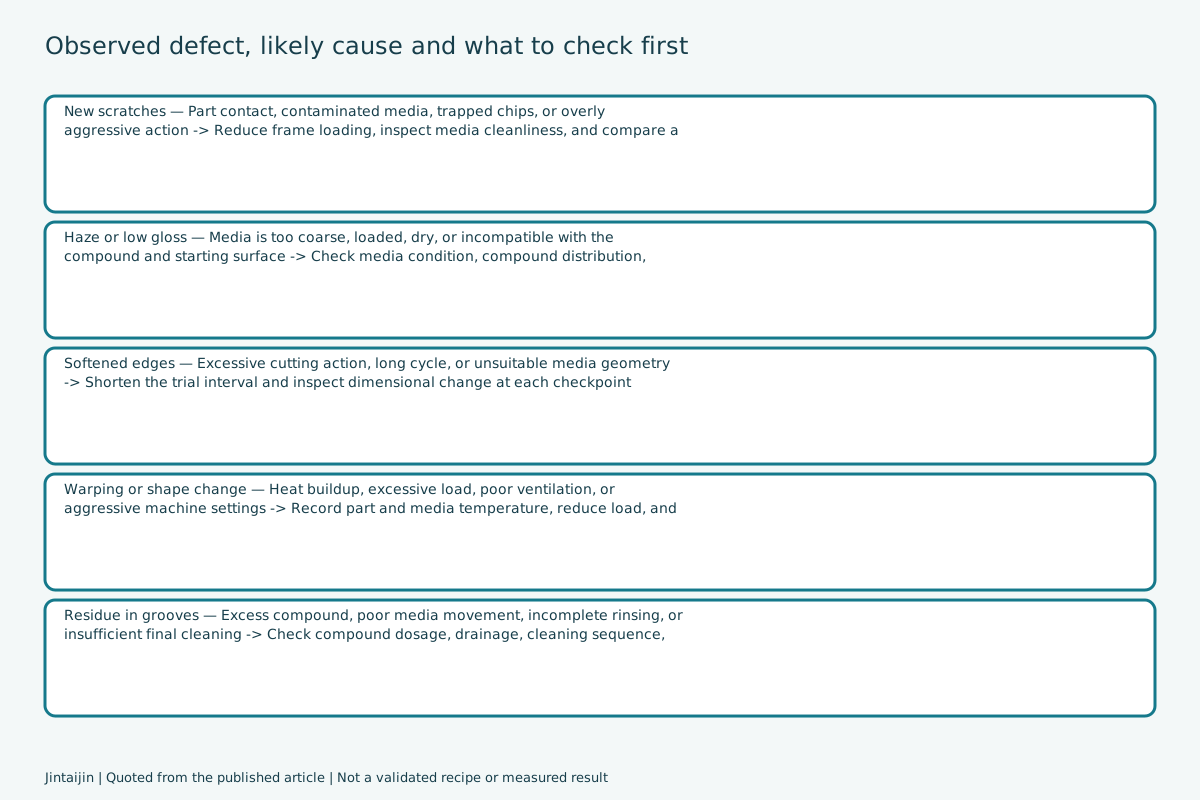
Observed defect, likely process cause and what to check first
| observed defect | likely process cause | what to check first |
|---|---|---|
| New scratches | Part contact, contaminated media, trapped chips, or overly aggressive action | Reduce frame loading, inspect media cleanliness, and compare a lower-intensity test |
| Haze or low gloss | Media is too coarse, loaded, dry, or incompatible with the compound and starting surface | Check media condition, compound distribution, moisture, and whether a finer stage is required |
| Softened edges | Excessive cutting action, long cycle, or unsuitable media geometry | Shorten the trial interval and inspect dimensional change at each checkpoint |
| Warping or shape change | Heat buildup, excessive load, poor ventilation, or aggressive machine settings | Record part and media temperature, reduce load, and review motion and ventilation |
| Residue in grooves | Excess compound, poor media movement, incomplete rinsing, or insufficient final cleaning | Check compound dosage, drainage, cleaning sequence, and feature access |
Source and its limits
Published reference article; captured 5 October 2026. SHA256: 17529d7e1a69a37c503a69a7d1f79d67bfdf55ffa0aefcd2e74b760c0deb3f49.
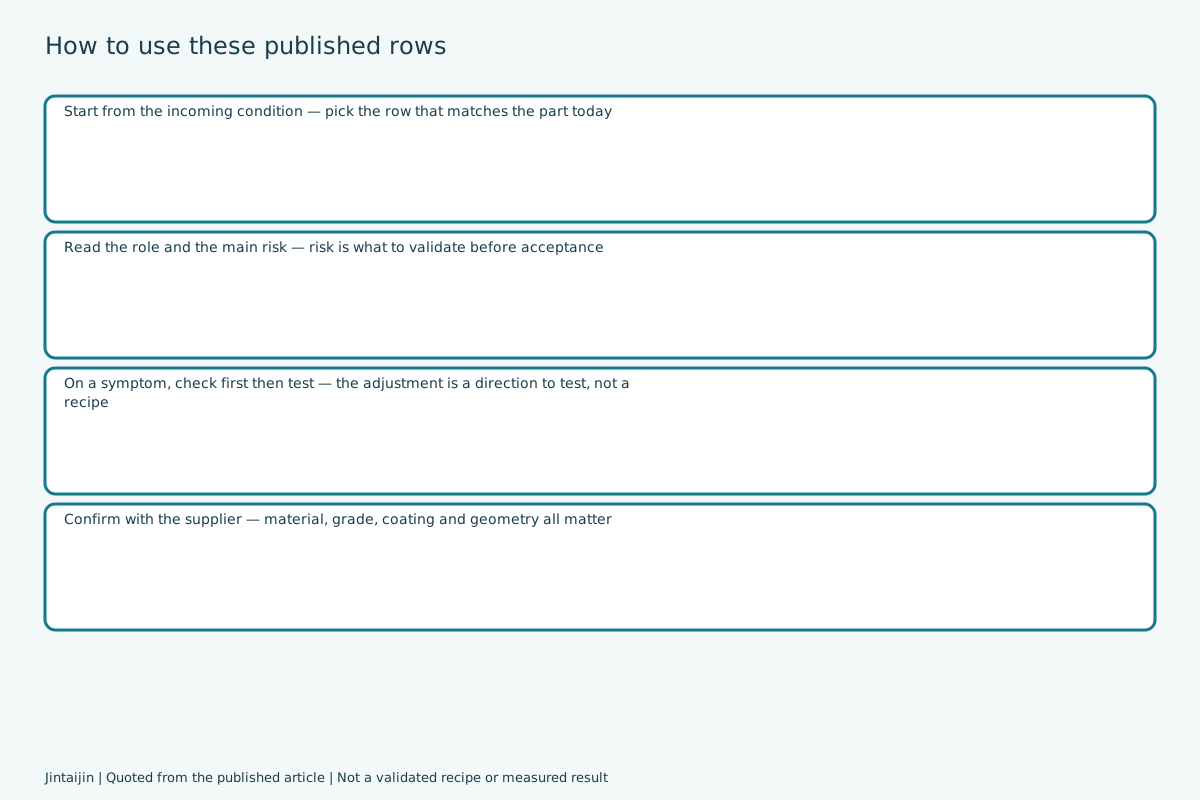
- Media and compound descriptions are the published article own, reproduced verbatim. They are not a validated recipe for your frames.
- Acetate frames vary in polymer grade, coating and geometry. Confirm on a sample and with the supplier.
- A defect cause is a likely direction, not a diagnosis, and a check is what to look at first.
Table headers as published
- Decision Factor / Dry Tumbling / Wet Tumbling
- Observed Defect / Likely Process Cause / What to Check First
Frequently asked questions
Does this give me a recipe for my part?
No. These are the published article own rows reproduced verbatim. They are a direction to confirm on a sample and with the supplier, not a validated production recipe.
Does it diagnose my part?
No. A defect cause is a likely direction, not a confirmed cause, and a check is what to look at first. The same visible mark can have more than one cause.
Does it state cycle time, speed or temperature?
No. No cycle time, speed, amplitude, load ratio, concentration, temperature or removal result is stated or implied anywhere on this page or in its download.
Are the tables quoted exactly?
Yes. Every cell is taken from a single source table cell and verified against the captured page, including wording, units and punctuation.
Can I apply this to a different material?
These rows describe the material the article covers. Polymer grade, coating, geometry, alloy, wall thickness and burr height all matter, so confirm every value for your own part.
 +86-592-2381506

 IPv6 network supported