


Deburring Stamped Metal Parts: Incoming Condition, Potential and Validation
This page reproduces the reference tables published for deburring stamped metal parts: the incoming condition with its mass-finishing potential and the main validation point, and the equipment with its best starting application and what to watch for. Suitability and equipment direction are the article's own, reproduced verbatim. Stampings vary in material, thickness, burr height and flatness, so confirm on a sample and with the supplier.
Browse the published rows
Choose a section or search the published rows, then read the article text.
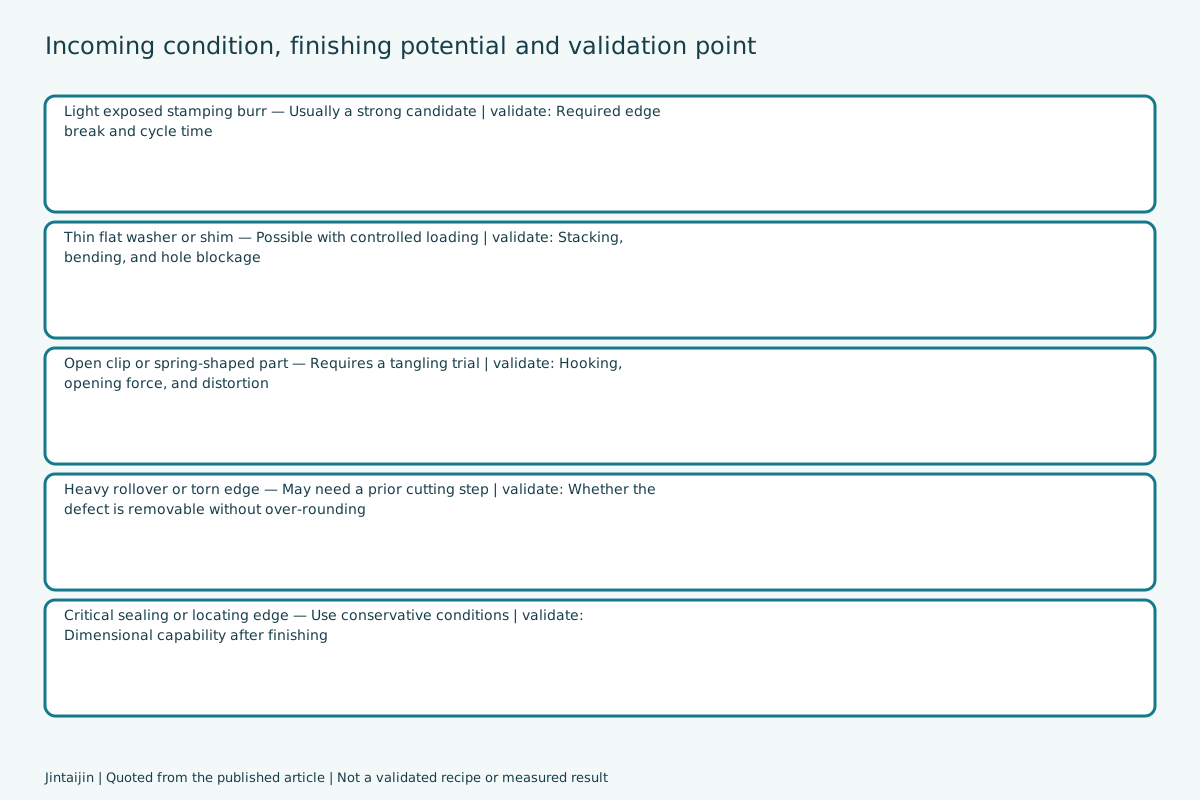
Incoming condition, mass-finishing potential and validation point
| incoming condition | mass-finishing potential | main validation point |
|---|---|---|
| Light exposed stamping burr | Usually a strong candidate | Required edge break and cycle time |
| Thin flat washer or shim | Possible with controlled loading | Stacking, bending, and hole blockage |
| Open clip or spring-shaped part | Requires a tangling trial | Hooking, opening force, and distortion |
| Heavy rollover or torn edge | May need a prior cutting step | Whether the defect is removable without over-rounding |
| Critical sealing or locating edge | Use conservative conditions | Dimensional capability after finishing |
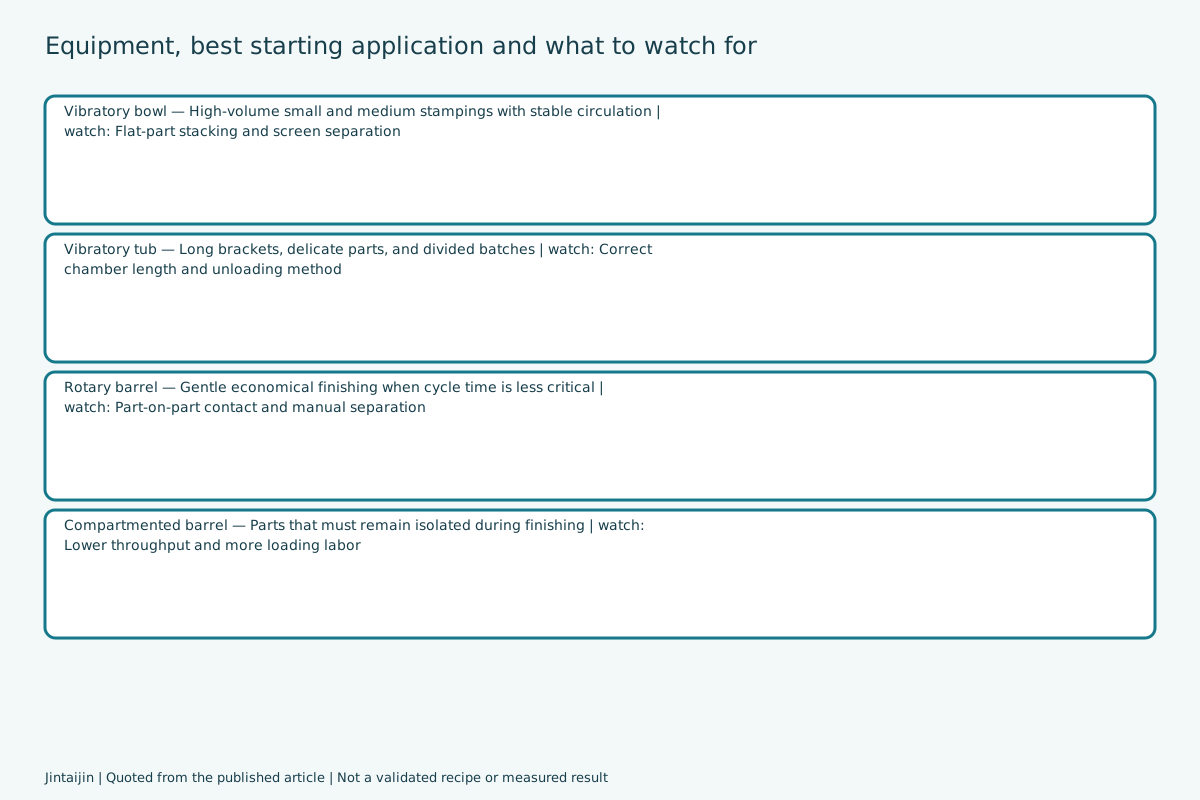
Equipment, best starting application and what to watch for
| equipment | best starting application | watch for |
|---|---|---|
| Vibratory bowl | High-volume small and medium stampings with stable circulation | Flat-part stacking and screen separation |
| Vibratory tub | Long brackets, delicate parts, and divided batches | Correct chamber length and unloading method |
| Rotary barrel | Gentle economical finishing when cycle time is less critical | Part-on-part contact and manual separation |
| Compartmented barrel | Parts that must remain isolated during finishing | Lower throughput and more loading labor |
Source and its limits
Published reference article; captured 5 October 2026. SHA256: 1246ad7deba636db3c2f98d8a67066945f42cac0d78bbf756581389be91c81ca.
- Suitability and equipment direction are the published article's own, reproduced verbatim, not a validated recipe.
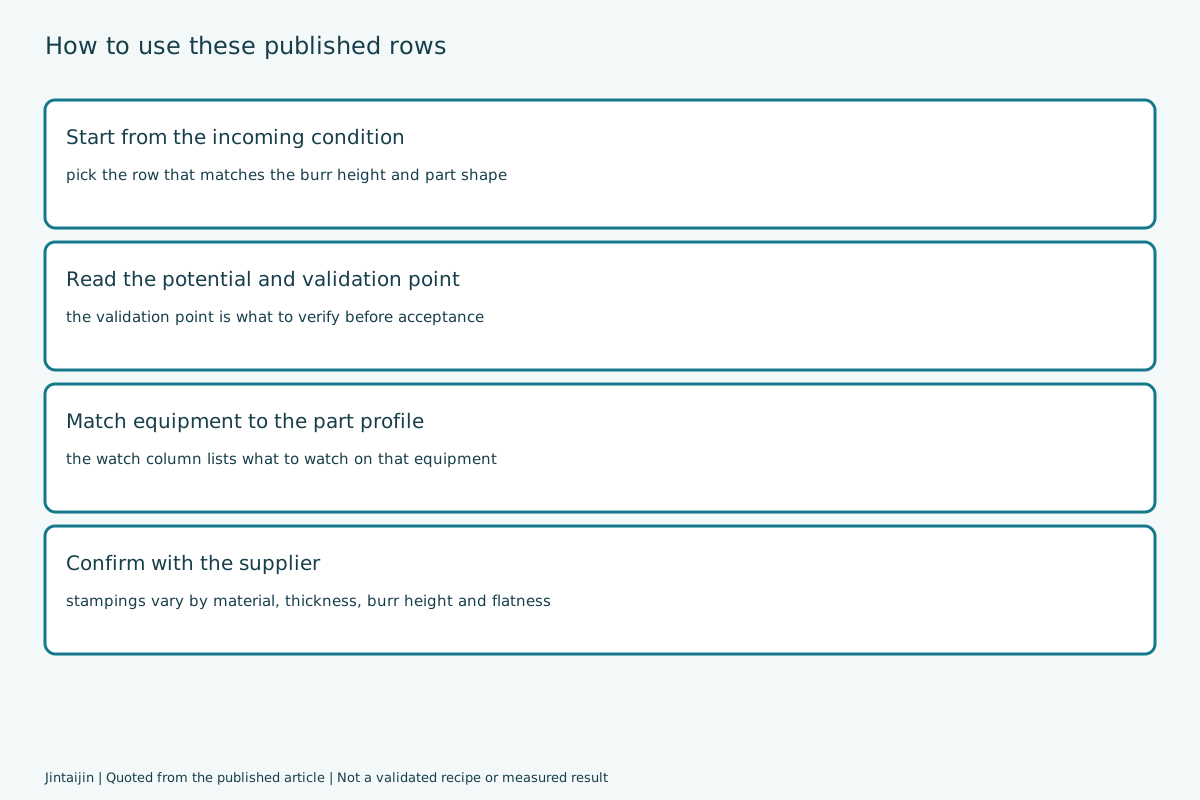
- Stampings vary in material, thickness, burr height and flatness. Confirm on a sample and with the supplier.
- A validation point is what to verify, not a prediction of the outcome.
Table headers as published
- Incoming Condition / Mass-Finishing Potential / Main Validation Point
- Equipment / Best Starting Application / Watch For
Frequently asked questions
Does this give me a recipe for my part?
No. These are the published article's rows reproduced verbatim. Media role and adjustments are a direction to confirm on a sample and with the supplier, not a validated production recipe.
Is a validation point a prediction?
No. A validation point is what to verify before accepting the part. It does not predict the outcome, and the same visible condition can have more than one cause.
Does it state cycle time, speed or temperature?
No. No cycle time, speed, amplitude, load ratio, concentration, temperature or removal result is stated or implied anywhere on this page or in its download.
Are the tables quoted exactly?
Yes. Every cell is taken from a single source table cell and verified against the captured page, including wording, units and punctuation.
Can I apply this to a different material?
These rows describe the material the article covers. Parts vary in species, grain, moisture, coating, thickness, burr height and flatness, so confirm every value for your own part.
 +86-592-2381506

 IPv6 network supported