


Acetate Eyeglass Frame Finishing: Condition, Staged Release Criteria and Symptoms
This page reproduces the published tables for acetate eyeglass frame finishing: the incoming condition with its process direction and acceptance check, the staged process with what to monitor and a release criterion per stage, and the symptoms with a likely cause direction, what to check and an adjustment to test. Directions are the article own, reproduced verbatim. Acetate frames vary in polymer grade, coating, geometry and wall thickness, so confirm on a sample and with the supplier.
Browse the published rows
Choose a section or search the published rows, then read the article text.
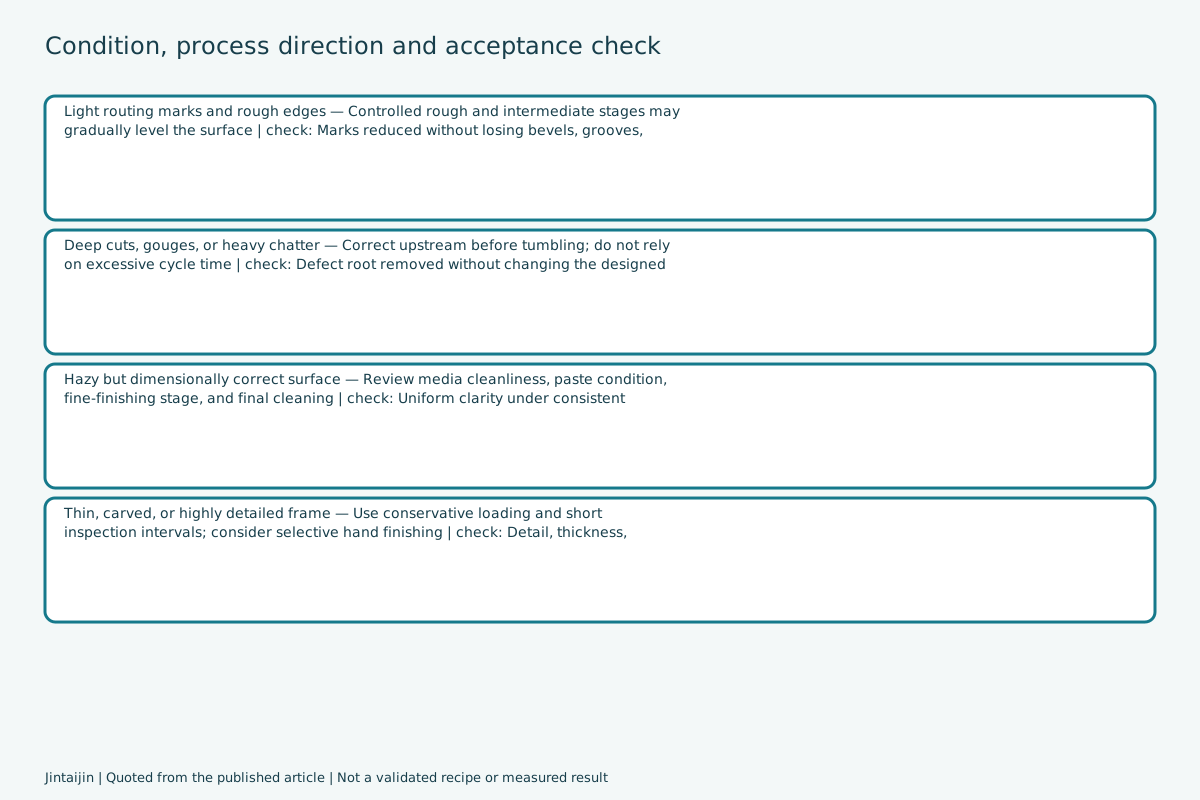
Condition, process direction and acceptance check
| condition | process direction | acceptance check |
|---|---|---|
| Light routing marks and rough edges | Controlled rough and intermediate stages may gradually level the surface | Marks reduced without losing bevels, grooves, or dimensional fit |
| Deep cuts, gouges, or heavy chatter | Correct upstream before tumbling; do not rely on excessive cycle time | Defect root removed without changing the designed profile |
| Hazy but dimensionally correct surface | Review media cleanliness, paste condition, fine-finishing stage, and final cleaning | Uniform clarity under consistent lighting with no residue in recesses |
| Thin, carved, or highly detailed frame | Use conservative loading and short inspection intervals; consider selective hand finishing | Detail, thickness, alignment, and assembly interfaces remain within specification |
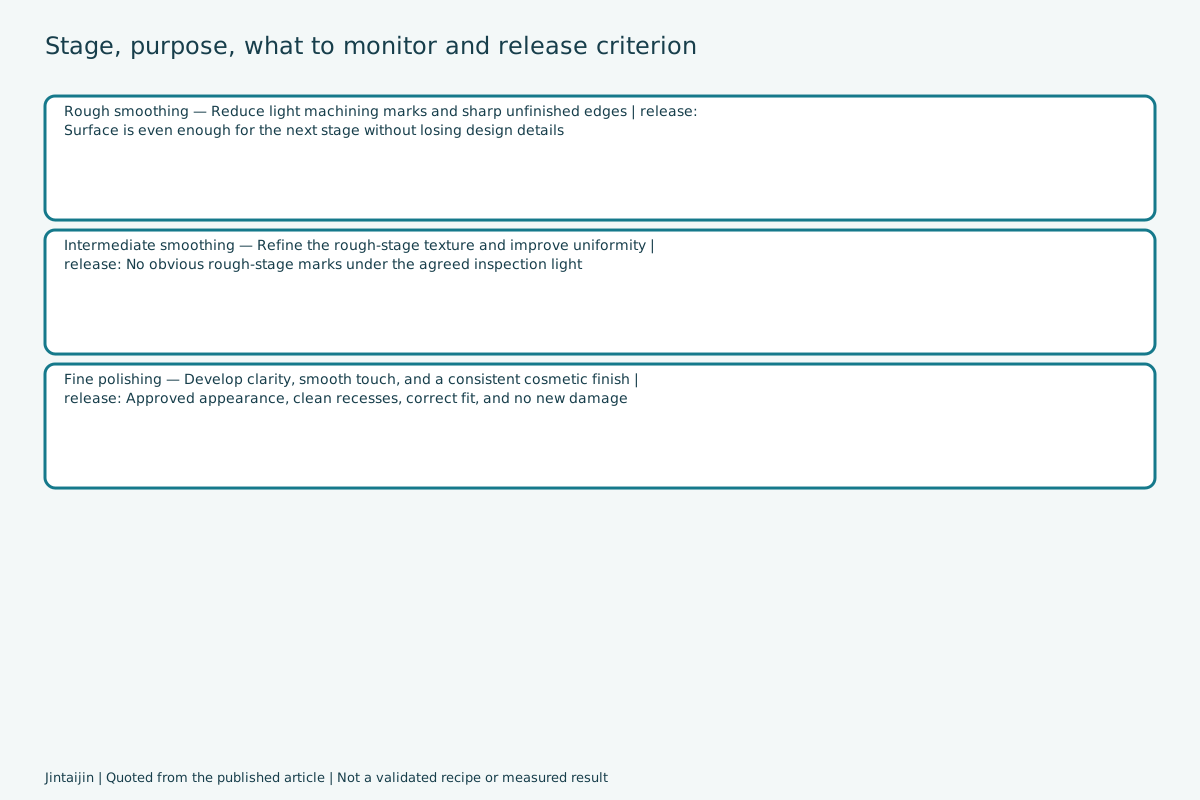
Stage, purpose, what to monitor and release criterion
| stage | purpose | what to monitor | release criterion |
|---|---|---|---|
| Rough smoothing | Reduce light machining marks and sharp unfinished edges | Profile change, heat, collisions, thin areas, and deep marks that remain | Surface is even enough for the next stage without losing design details |
| Intermediate smoothing | Refine the rough-stage texture and improve uniformity | Residual lines, media access, uneven contact, and contamination | No obvious rough-stage marks under the agreed inspection light |
| Fine polishing | Develop clarity, smooth touch, and a consistent cosmetic finish | Haze, residue, gloss variation, fine scratches, and temperature | Approved appearance, clean recesses, correct fit, and no new damage |
Symptom, likely cause direction, what to check and adjustment to test
| symptom | likely cause direction | what to check | adjustment to test |
|---|---|---|---|
| Cloudy or dull surface | Incomplete stage progression, contaminated media, unsuitable paste, or poor final cleaning | Media age, paste history, stage transfer, residue in grooves, and inspection lighting | Refresh or segregate media, validate paste dosing, and correct the fine-finishing stage |
| Warping or fit change | Excess heat, long uninterrupted cycle, overloading, or vulnerable geometry | Temperature trend, cycle segments, wall thickness, stacking, and frame alignment | Reduce load or process intensity, shorten inspection intervals, and isolate sensitive parts |
| New scratches or contact marks | Hard debris, dirty media, frame collisions, or damaging loading and unloading | Chamber cleanliness, media screening, part spacing, transfer trays, and operator handling | Clean and screen the system, lower the part load, improve cushioning, and protect transfers |
| Rounded grooves or lost details | Aggressive media, excessive time, or using tumbling to remove a defect that should be corrected upstream | Stage where detail loss begins, media access, starting tool marks, and profile measurements | Use gentler media or a shorter stage and improve cutting or manual preparation before tumbling |
About the release criterion
The staged table gives a release criterion per stage. This is the article own criterion wording, reproduced verbatim. It is a criterion to agree with your inspection, not a measured result and not an approval.
Source and its limits
Published reference article; captured 5 October 2026. SHA256: e3c84964da5bb0125e057d8c006836416375fa627b88c2057ed5460fca5e7a5f.
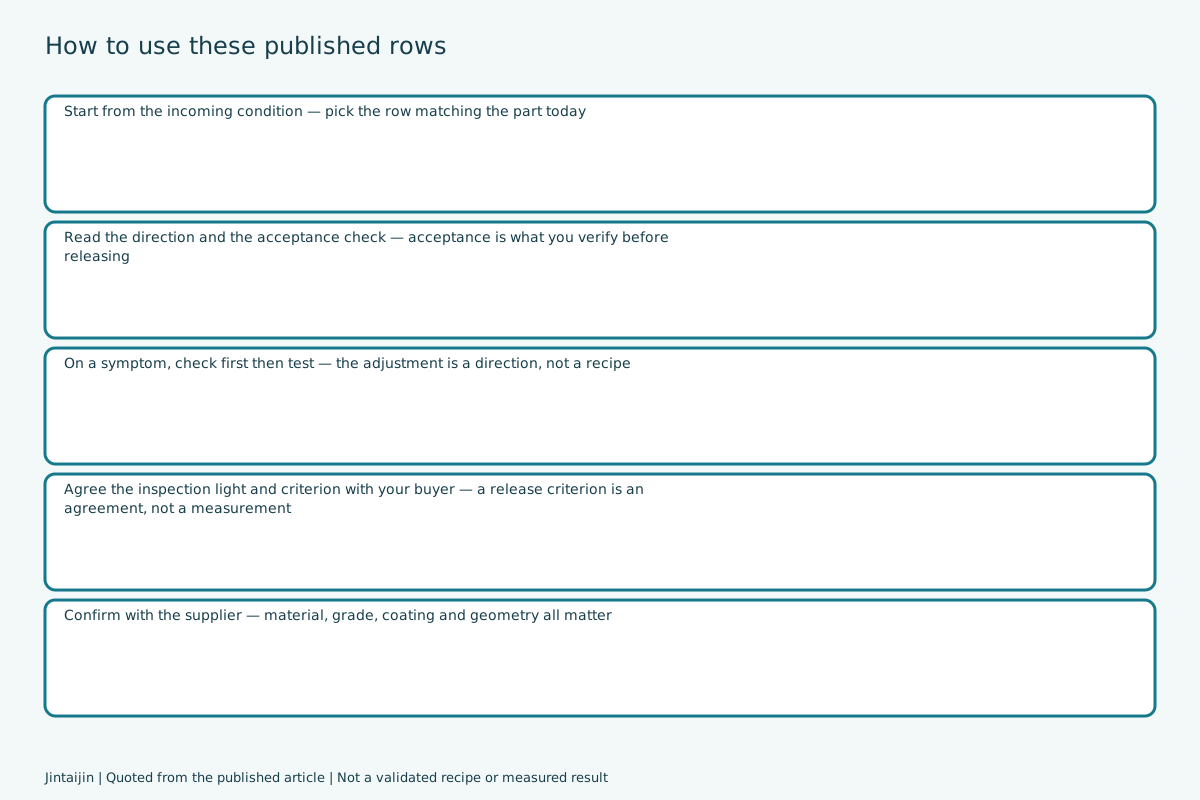
- Process directions and adjustments are the published article own, reproduced verbatim. They are not a validated recipe for your frames.
- Acetate frames vary in polymer grade, coating, geometry and wall thickness. Confirm on a sample and with the supplier.
- A symptom lists a likely cause direction and a first check, not a diagnosis.
Table headers as published
- Condition / Process Direction / Acceptance Check
- Stage / Purpose / What to Monitor / Release Criterion
- Symptom / Likely Cause Direction / What to Check / Adjustment to Test
Frequently asked questions
Does this give me a recipe for my part?
No. These are the published article own rows reproduced verbatim. They are a direction to confirm on a sample and with the supplier, not a validated production recipe.
Is a release criterion a measured result?
No. A release criterion is the article own criterion wording. It is something to agree with your inspection, not a measurement and not an approval.
Does it state cycle time, speed or temperature?
No. No cycle time, speed, amplitude, load ratio, concentration, temperature or removal result is stated or implied anywhere on this page or in its download.
Are the tables quoted exactly?
Yes. Every cell is taken from a single source table cell and verified against the captured page, including wording and punctuation.
Can I apply this to a different material?
These rows describe the material the article covers. Polymer grade, coating, geometry, wall thickness and part size all matter, so confirm every value for your own part.
 +86-592-2381506

 IPv6 network supported