


Mass Finishing for 3D-Printed Parts: Process, Media and Defects
This page reproduces the reference tables published for mass finishing of 3D-printed parts: the AM process with its typical surface issues and finishing approach, the part material with the recommended media and notes, and the defects with their likely causes and fixes. Media grades, compounds and cycle notes are the article's own direction reproduced verbatim. AM surfaces vary with layer height, orientation, infill and post-cure, so confirm any of this on a sample and with the supplier.
Browse the published rows
Choose a section or search the published rows, then read the article text.
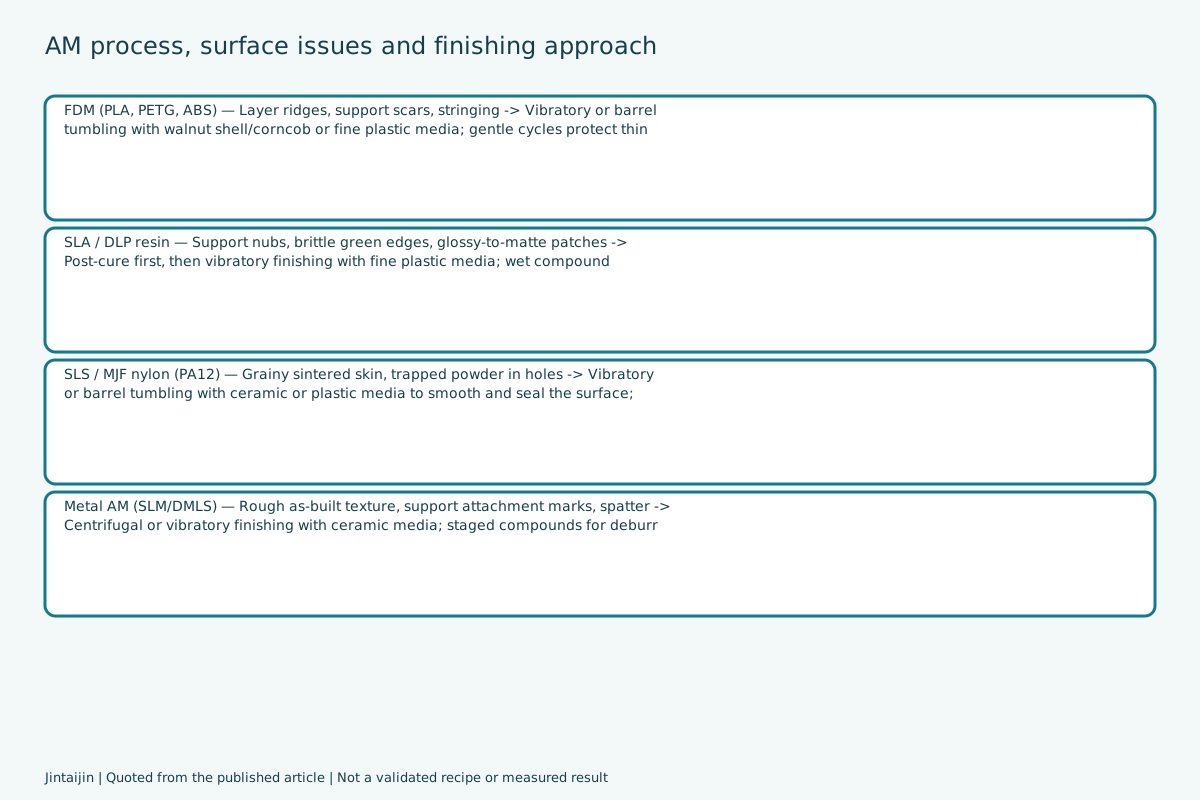
AM process, surface issues and finishing approach
| AM process | typical surface issues | mass finishing approach |
|---|---|---|
| FDM (PLA, PETG, ABS) | Layer ridges, support scars, stringing | Vibratory or barrel tumbling with walnut shell/corncob or fine plastic media; gentle cycles protect thin walls |
| SLA / DLP resin | Support nubs, brittle green edges, glossy-to-matte patches | Post-cure first, then vibratory finishing with fine plastic media; wet compound helps avoid chipping |
| SLS / MJF nylon (PA12) | Grainy sintered skin, trapped powder in holes | Vibratory or barrel tumbling with ceramic or plastic media to smooth and seal the surface; improves dye uptake |
| Metal AM (SLM/DMLS) | Rough as-built texture, support attachment marks, spatter | Centrifugal or vibratory finishing with ceramic media; staged compounds for deburr then refine |
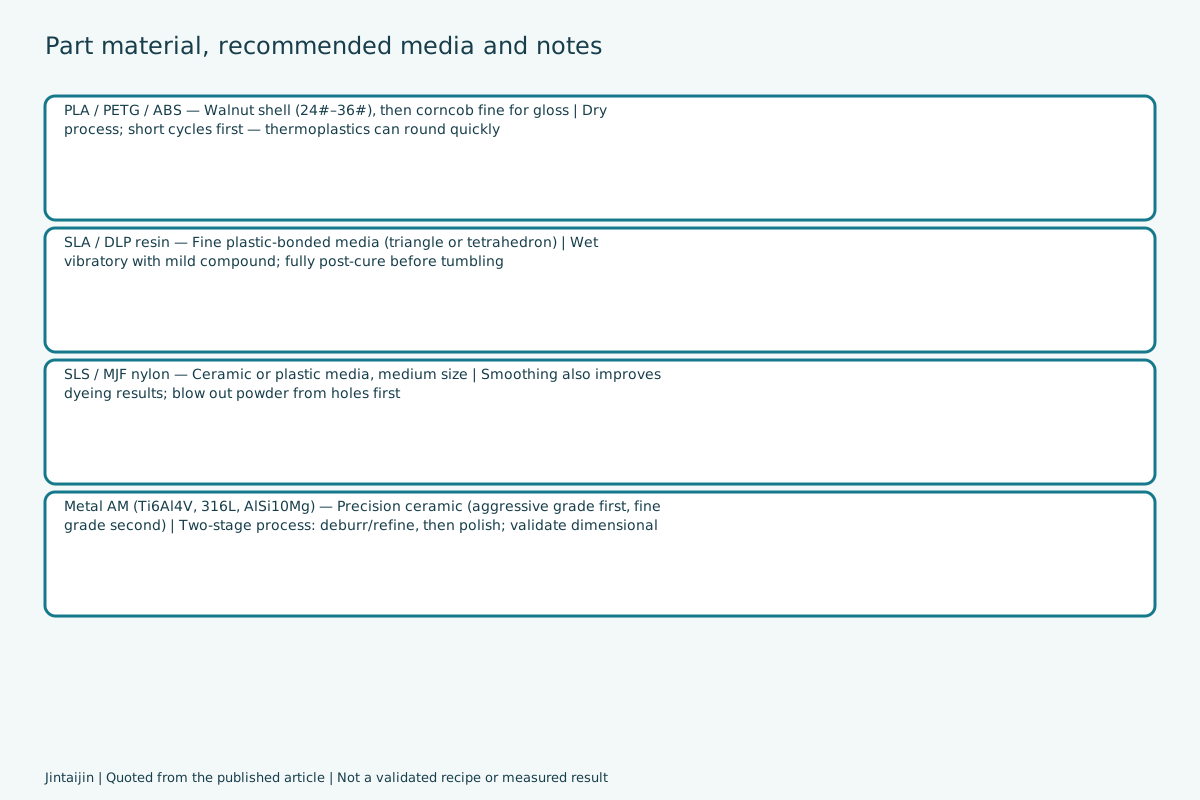
Part material, recommended media and notes
| part material | recommended media | compound / notes |
|---|---|---|
| PLA / PETG / ABS | Walnut shell (24#–36#), then corncob fine for gloss | Dry process; short cycles first — thermoplastics can round quickly |
| SLA / DLP resin | Fine plastic-bonded media (triangle or tetrahedron) | Wet vibratory with mild compound; fully post-cure before tumbling |
| SLS / MJF nylon | Ceramic or plastic media, medium size | Smoothing also improves dyeing results; blow out powder from holes first |
| Metal AM (Ti6Al4V, 316L, AlSi10Mg) | Precision ceramic (aggressive grade first, fine grade second) | Two-stage process: deburr/refine, then polish; validate dimensional change |
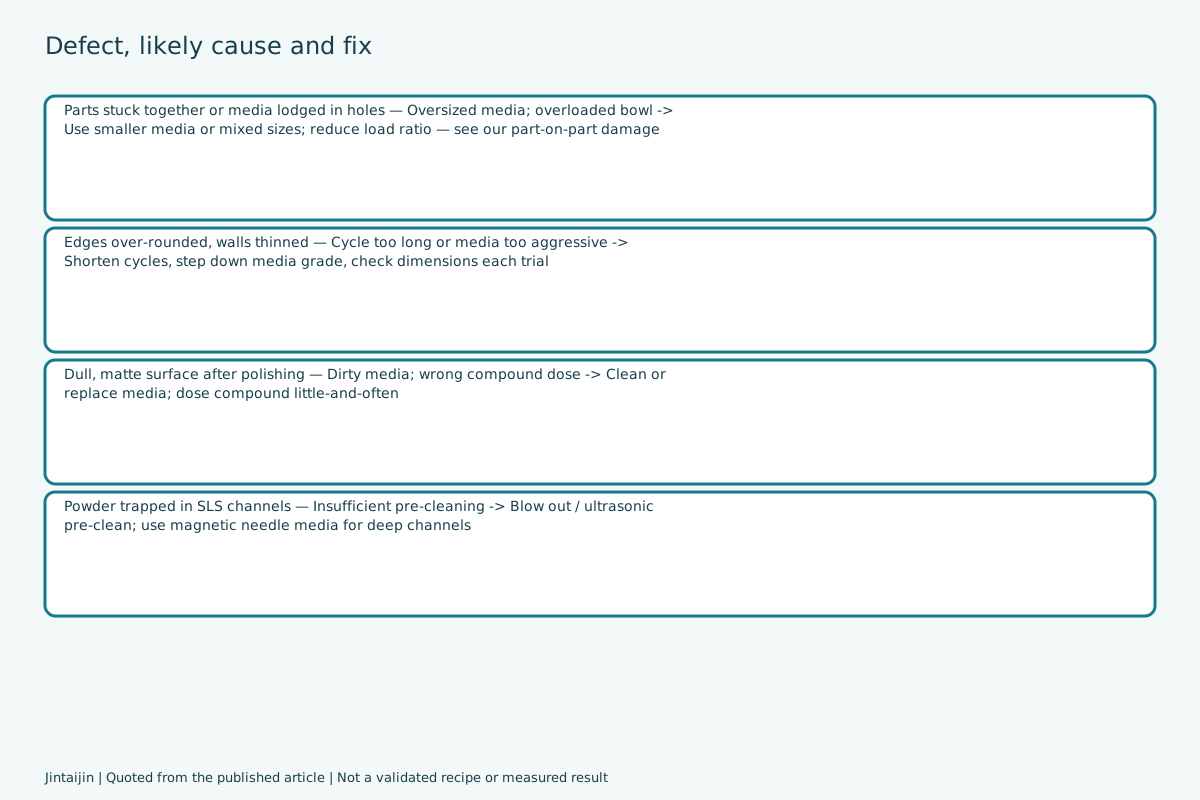
Defect, likely cause and fix
| defect | likely cause | fix |
|---|---|---|
| Parts stuck together or media lodged in holes | Oversized media; overloaded bowl | Use smaller media or mixed sizes; reduce load ratio — see our part-on-part damage guide |
| Edges over-rounded, walls thinned | Cycle too long or media too aggressive | Shorten cycles, step down media grade, check dimensions each trial |
| Dull, matte surface after polishing | Dirty media; wrong compound dose | Clean or replace media; dose compound little-and-often |
| Powder trapped in SLS channels | Insufficient pre-cleaning | Blow out / ultrasonic pre-clean; use magnetic needle media for deep channels |
Source and its limits
Published reference article; captured 5 October 2026. SHA256: e02047565b91de93f4e5029fbc502d5a1a3a5818c52baf8a933ea6b606bcfcb4.
- Media grades, compounds and cycle notes are the published article's own direction reproduced verbatim, not a validated recipe for your part.
- AM surfaces vary with layer height, orientation, infill and post-cure. Confirm on a sample and with the supplier.
- A defect cause is a likely direction, not a diagnosis.
Table headers as published
- AM Process / Typical Surface Issues / Mass Finishing Approach
- Part Material / Recommended Media / Compound / Notes
- Defect / Likely Cause / Fix
Frequently asked questions
Does this give me a recipe for my part?
No. These are the published article's rows reproduced verbatim. Media grades, compounds and process notes are a direction to confirm on a sample and with the supplier, not a validated production recipe.
Does it diagnose my defect?
No. A defect or symptom lists likely causes and what to check first. The same visible mark can have more than one cause, and confirming it needs a controlled test on a sample.
Does it state cycle time, speed or temperature?
No. No cycle time, speed, amplitude, load ratio, concentration, temperature or removal result is stated or implied anywhere on this page or in its download.
Are the tables quoted exactly?
Yes. Every cell is taken from a single source table cell and verified against the captured page, including wording, units and punctuation.
Can I apply this to a different material or machine?
These rows describe the material and process the article covers. AM surfaces vary with layer height, orientation, infill and post-cure, so confirm every value for your own part.
 +86-592-2381506

 IPv6 network supported