


Mass Finishing Aluminum Parts: Staged Media and Defect Correction
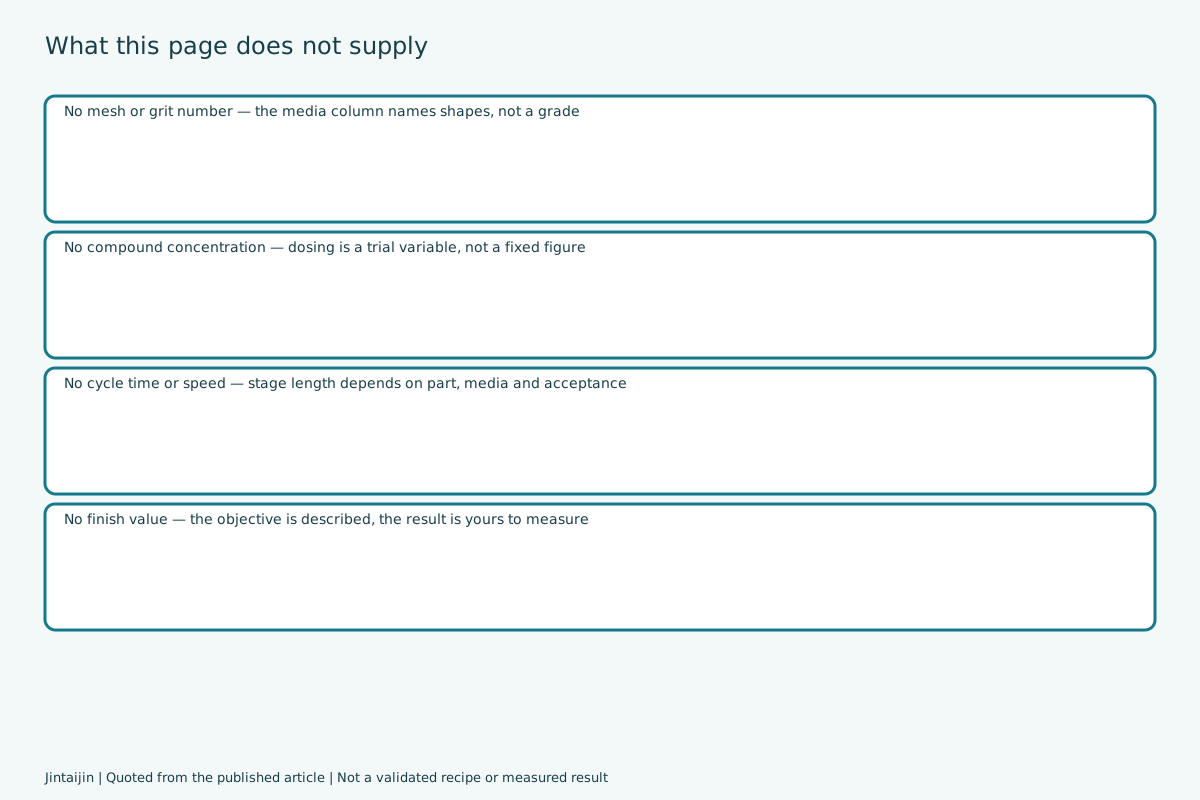
This page reproduces the published tables for mass finishing aluminum parts: the staged media sequence with its objective, and the defects with their causes and fixes. The media column names media shapes and general grade descriptions only. No mesh or grit number, compound concentration, cycle time or finish value is stated, implied or supplied here.
Browse the published rows
Choose a section or search the published rows, then read the article text.
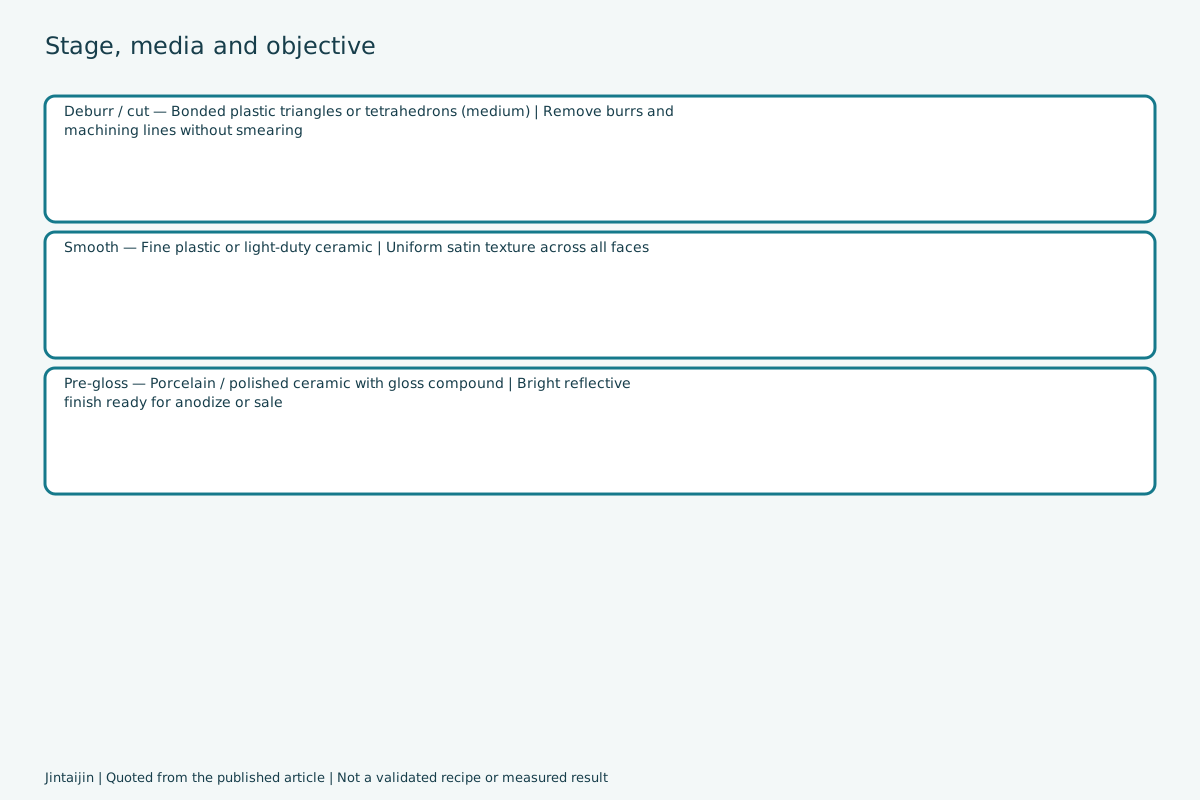
Stage, media and objective
| stage | media | objective |
|---|---|---|
| Deburr / cut | Bonded plastic triangles or tetrahedrons (medium) | Remove burrs and machining lines without smearing |
| Smooth | Fine plastic or light-duty ceramic | Uniform satin texture across all faces |
| Pre-gloss | Porcelain / polished ceramic with gloss compound | Bright reflective finish ready for anodize or sale |
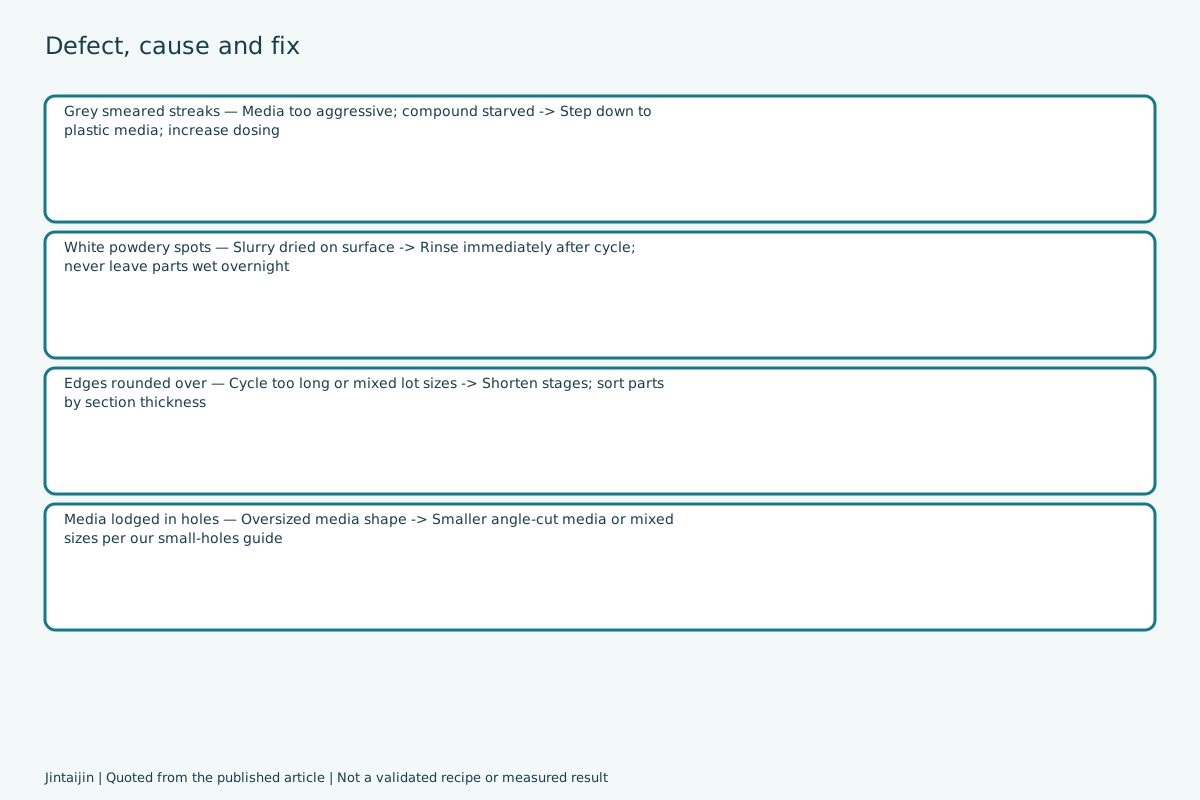
Defect, cause and fix
| defect | cause | fix |
|---|---|---|
| Grey smeared streaks | Media too aggressive; compound starved | Step down to plastic media; increase dosing |
| White powdery spots | Slurry dried on surface | Rinse immediately after cycle; never leave parts wet overnight |
| Edges rounded over | Cycle too long or mixed lot sizes | Shorten stages; sort parts by section thickness |
| Media lodged in holes | Oversized media shape | Smaller angle-cut media or mixed sizes per our small-holes guide |
What the media column does and does not say
The media column names media shapes and general grade descriptions. It does not give a mesh or grit number, a compound concentration, a cycle time or a result, and none is supplied on this page.
Source and its limits
Published reference page; captured 6 October 2026. SHA256: 5cda3f834cc9e2bfa1623833bd6fa4f89e403f0f6f3152821cfc159846877555.
- Stage, media and objective wording is the published article own, reproduced verbatim.
- No mesh or grit number, compound concentration, cycle time or finish value is stated, implied or supplied.
- A stage sequence is a direction to test on a sample, not a validated recipe for your alloy and geometry.
Table headers as published
- Stage / Media / Objective
- Defect / Cause / Fix
Frequently asked questions
What grit or mesh should I use?
This page does not give one. The media column names media shapes and general grade descriptions; a grit number, compound concentration and cycle time are trial variables that are not supplied here.
Can I copy the stage sequence straight onto my parts?
No. It is a published direction to test. Alloys, part geometry, incoming roughness and your acceptance criteria differ, so confirm each stage on a sample.
Does it state a cycle time, speed or result?
No. No cycle time, speed, amplitude, load ratio, concentration, temperature or removal result is stated or implied anywhere on this page or in its download.
Are the tables quoted exactly?
Yes. Every cell is taken from a single source table cell and verified against the captured page, including wording, units and punctuation.
Can I rely on these figures for my own part?
They describe the machine or the published process direction. Suitability for your part is a sample trial question, confirmed with the supplier.
 +86-592-2381506

 IPv6 network supported