


CNC Aluminum Part Deburring: Condition, Starting Point and Reason
This page reproduces the published table for deburring CNC aluminum parts: the part condition, the suggested starting point and the reason the source gives. These are the article own directions reproduced verbatim, and a starting point is where to begin a trial rather than a setting to run in production. Aluminum parts vary in alloy, wall thickness, burr height and which surfaces are cosmetic, so confirm on a sample and with the supplier.
Browse the published rows
Choose a section or search the published rows, then read the article text.
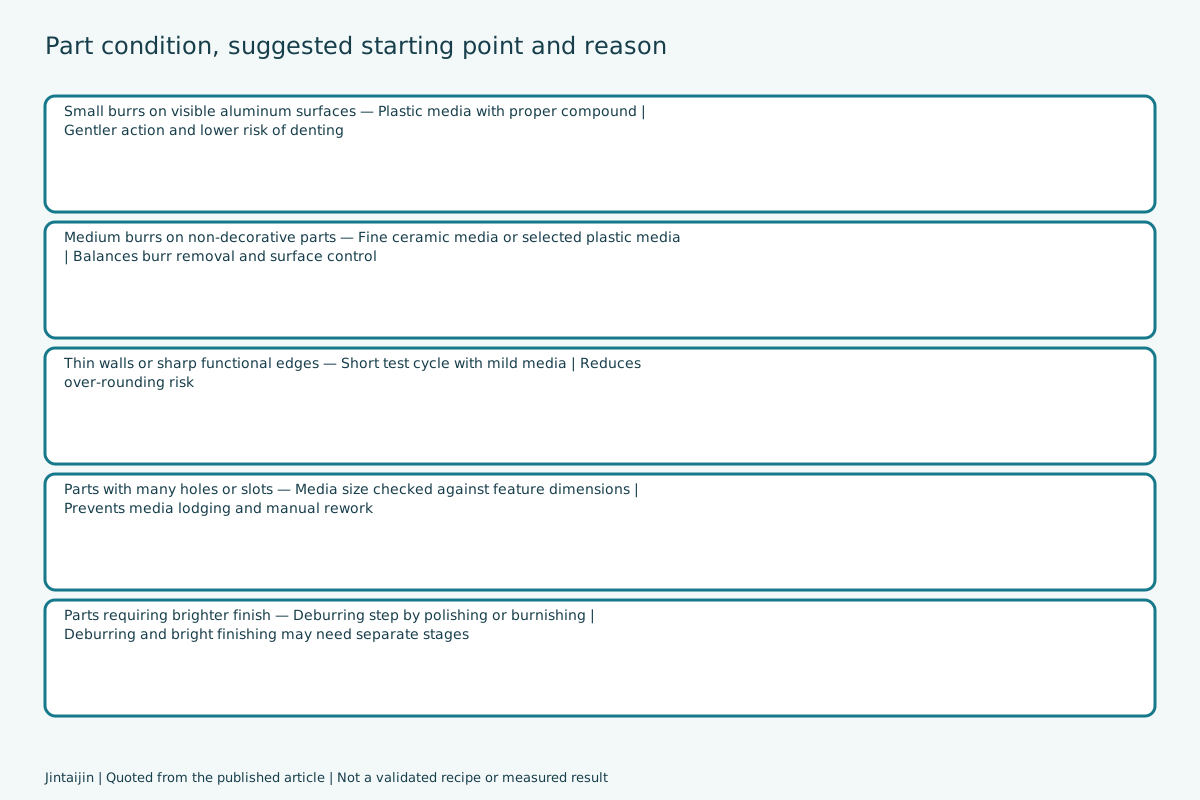
Part condition, suggested starting point and the reason
| part condition | suggested starting point | reason |
|---|---|---|
| Small burrs on visible aluminum surfaces | Plastic media with proper compound | Gentler action and lower risk of denting |
| Medium burrs on non-decorative parts | Fine ceramic media or selected plastic media | Balances burr removal and surface control |
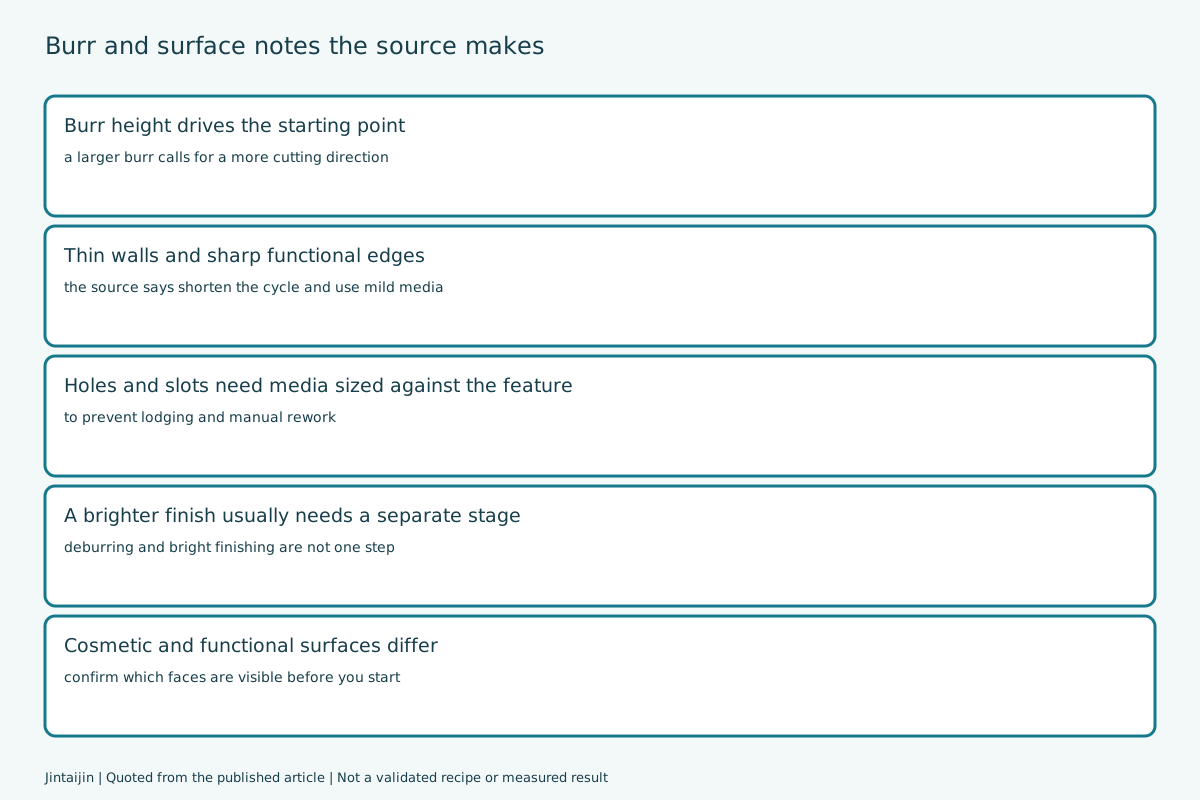
| Thin walls or sharp functional edges | Short test cycle with mild media | Reduces over-rounding risk |
| Parts with many holes or slots | Media size checked against feature dimensions | Prevents media lodging and manual rework |
| Parts requiring brighter finish | Deburring step by polishing or burnishing | Deburring and bright finishing may need separate stages |
Source and its limits
Published reference article; captured 5 October 2026. SHA256: fb43186146f34f3ff40f782303e0cb79680ac5071516b423b85d0e34b3c76046.
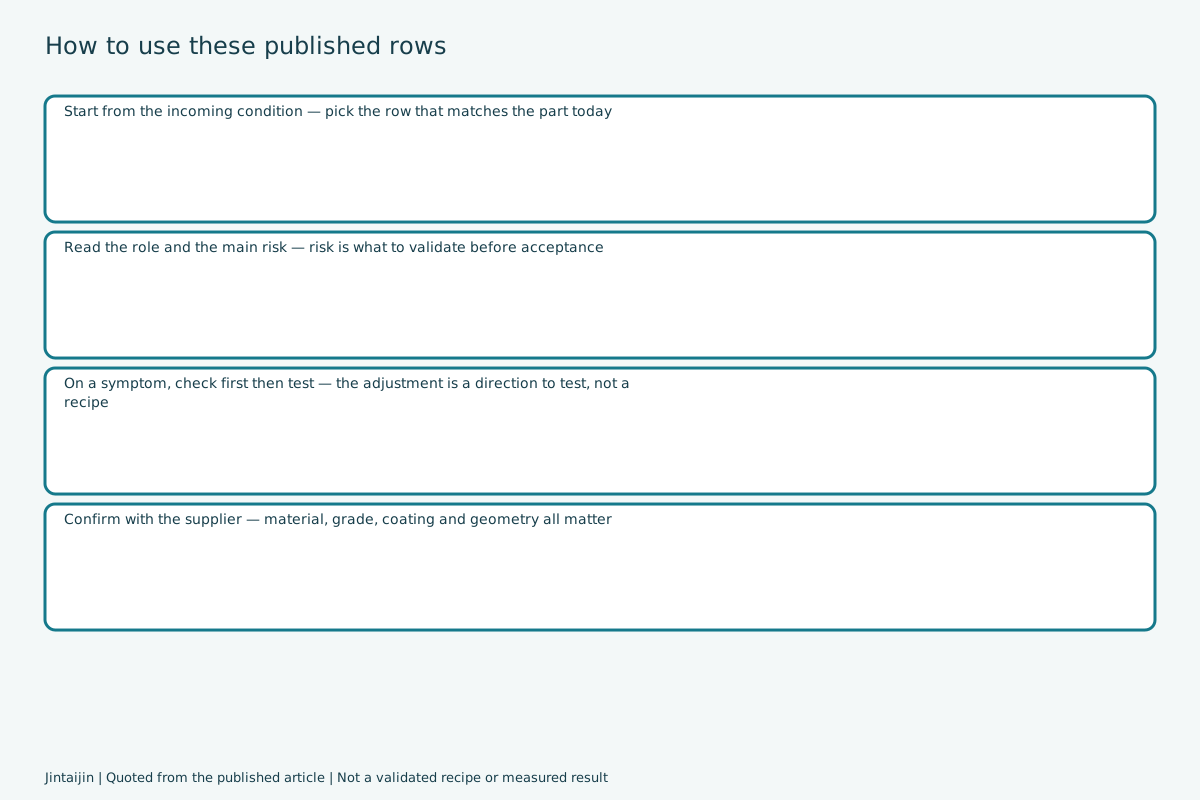
- The suggested starting point and its reason are the published article own, reproduced verbatim, not a validated recipe.
- Aluminum parts vary in alloy, wall thickness, burr height and which surfaces are cosmetic. Confirm on a sample and with the supplier.
- A starting point is where to begin a trial, not a setting to run in production.
Table headers as published
- Part Condition / Suggested Starting Point / Reason
Frequently asked questions
Does this give me a recipe for my part?
No. These are the published article own rows reproduced verbatim. They are a direction to confirm on a sample and with the supplier, not a validated production recipe.
Does it diagnose my part?
No. A defect cause is a likely direction, not a confirmed cause, and a check is what to look at first. The same visible mark can have more than one cause.
Does it state cycle time, speed or temperature?
No. No cycle time, speed, amplitude, load ratio, concentration, temperature or removal result is stated or implied anywhere on this page or in its download.
Are the tables quoted exactly?
Yes. Every cell is taken from a single source table cell and verified against the captured page, including wording, units and punctuation.
Can I apply this to a different material?
These rows describe the material the article covers. Polymer grade, coating, geometry, alloy, wall thickness and burr height all matter, so confirm every value for your own part.
 +86-592-2381506

 IPv6 network supported