


Finishing Machine Classes: Best For, Typical Cycle, Sensitivity and Batch Size
This page reproduces the published comparison of finishing machine classes: what each class is best for, the typical cycle the article gives, the part sensitivity and the batch size range. The cycle times and batch sizes are the article own class-level figures reproduced verbatim: they are not specifications for any Jintaijin model, not a capacity guarantee, and not a cycle time for your part. No machine model, price or throughput is stated, implied or supplied.
Browse the published rows
Choose a section or search the published rows, then read the article text.
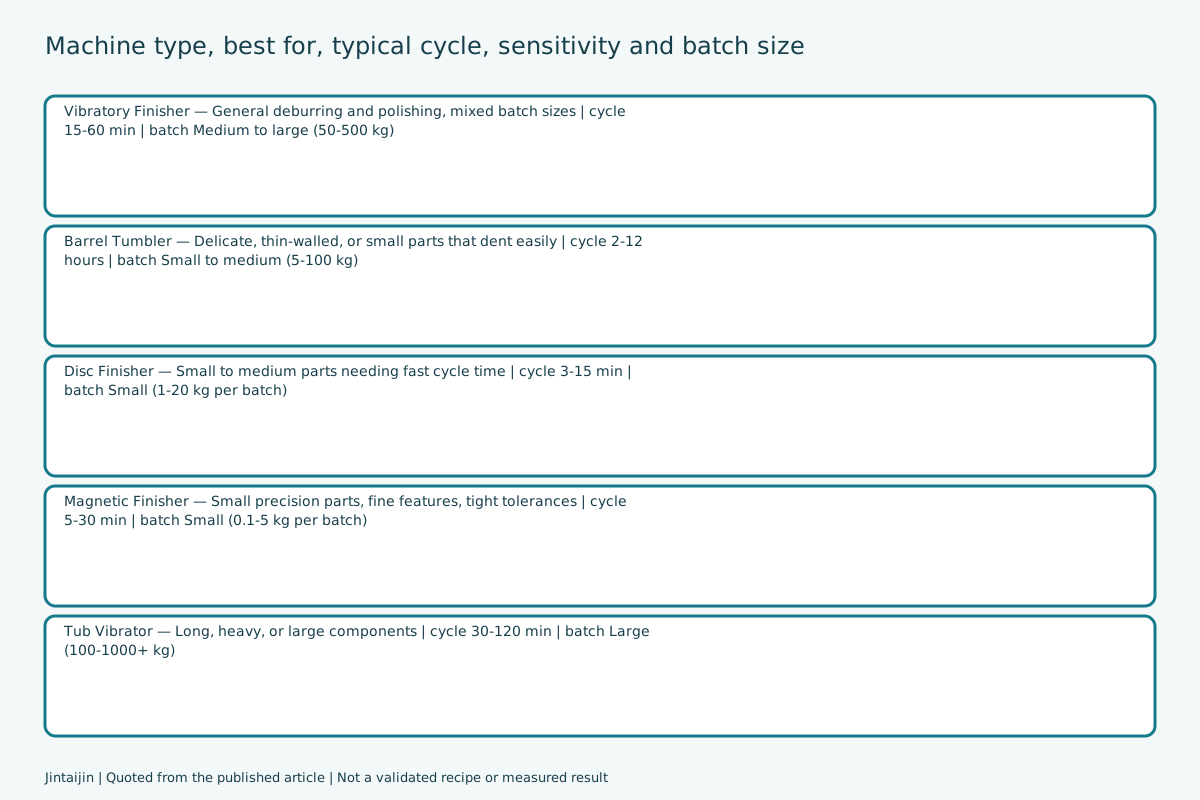
Machine type, best for, typical cycle, part sensitivity and batch size
| machine type | best for | typical cycle | part sensitivity | batch size |
|---|---|---|---|---|
| Vibratory Finisher | General deburring and polishing, mixed batch sizes | 15-60 min | Moderate — suitable for most metal parts | Medium to large (50-500 kg) |
| Barrel Tumbler | Delicate, thin-walled, or small parts that dent easily | 2-12 hours | Low impact — gentle rolling action | Small to medium (5-100 kg) |
| Disc Finisher | Small to medium parts needing fast cycle time | 3-15 min | Moderate to high — centrifugal force is strong | Small (1-20 kg per batch) |
| Magnetic Finisher | Small precision parts, fine features, tight tolerances | 5-30 min | Very gentle — no media-on-part impact | Small (0.1-5 kg per batch) |
| Tub Vibrator | Long, heavy, or large components | 30-120 min | Moderate — good for robust parts | Large (100-1000+ kg) |
How to read the cycle and batch figures
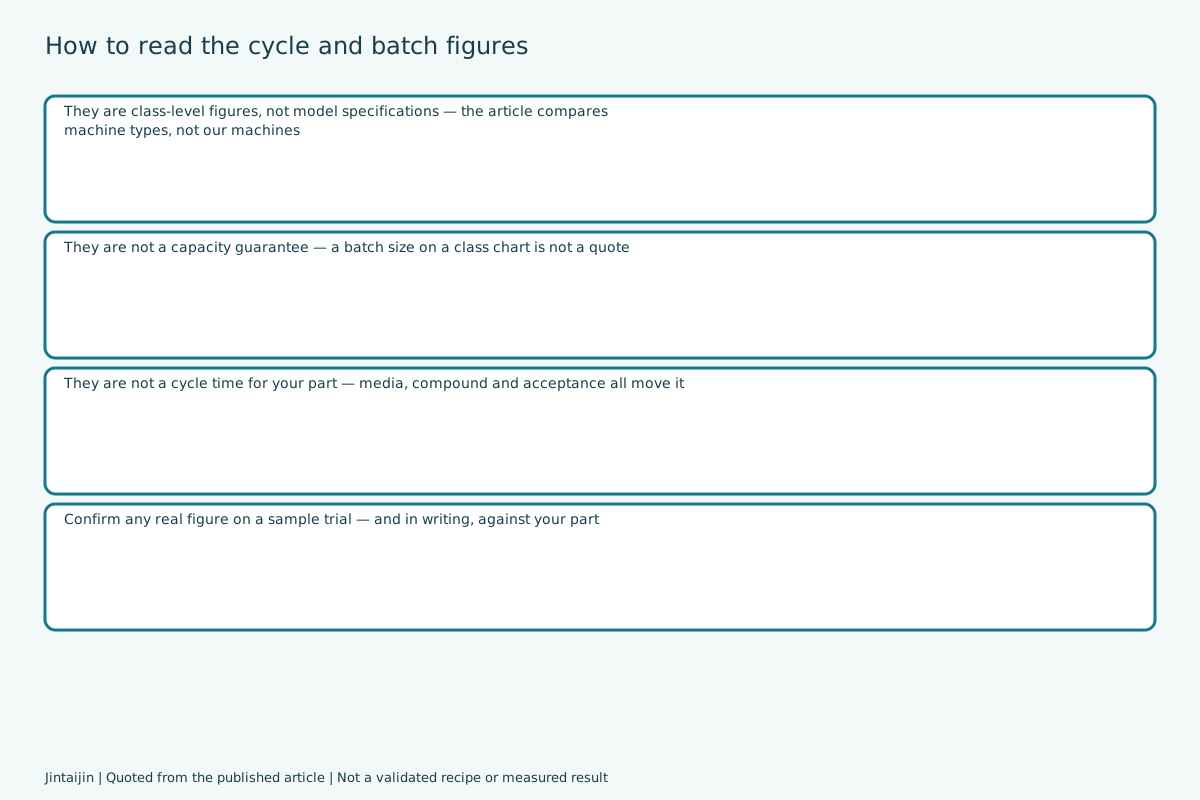
The cycle times and batch sizes in this table are the published article own figures for machine CLASSES, reproduced verbatim. They are not specifications for any Jintaijin model, not a capacity guarantee and not a cycle time for your part. Equipment selection and the actual cycle depend on the part, the media, the compound and the acceptance criteria.
Source and its limits
Published reference article; captured 5 October 2026. SHA256: 7403111d3f81f344b3bca726ff0dde2d348f4ae19fcec41d0aa1e4e1e98aae59.
- Cycle times and batch sizes are the published article own class-level figures, not model specifications or capacity guarantees.
- No machine model, price, throughput figure or result is stated, implied or supplied, and no figure here applies to your part without a trial.
- Part sensitivity is a general description, not a suitability verdict for your geometry or tolerance.
Table headers as published
- Machine Type / Best For / Typical Cycle / Part Sensitivity / Batch Size
Frequently asked questions
Are those cycle times and batch sizes your machine specs?
No. They are the published article own figures for machine CLASSES, reproduced verbatim. They are not specifications for any Jintaijin model, not a capacity guarantee and not a cycle time for your part.
Does the batch size mean how much I can load?
No. It is a class-level range from the article, not a load figure for a machine. Actual loading depends on part geometry, media volume and how the machine has to move the load, and that is a trial question.
Does it state a cycle time, capacity or price?
No. No machine model, capacity, throughput, price or result is stated or implied anywhere on this page or in its download.
Does it diagnose my part?
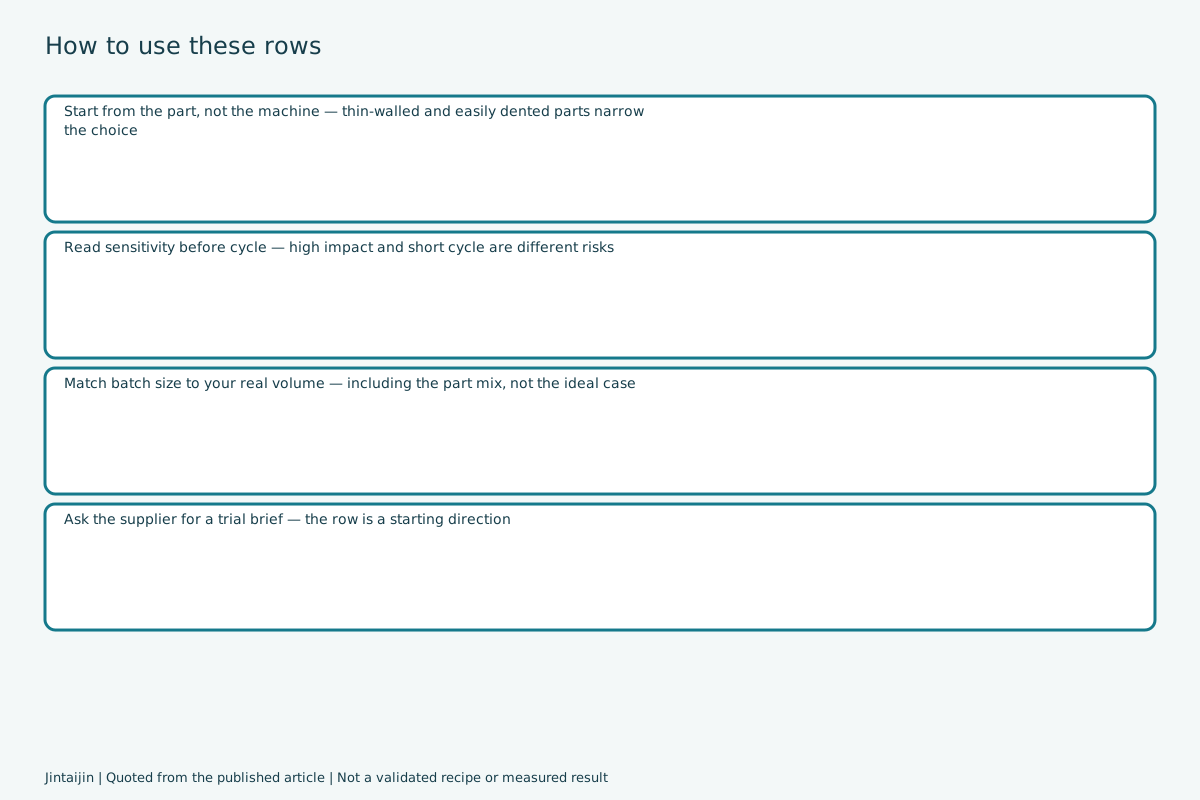
No. A row describes a machine type or a feature difference. Confirm suitability for your part on a sample trial.
Are the tables quoted exactly?
Yes. Every cell is taken from a single source table cell and verified against the captured page, including units, ranges and punctuation.
 +86-592-2381506

 IPv6 network supported