


Double-Deck Bamboo Tumbling Machine: Published Parameters, Stages and Faults
This page reproduces the tables published for the double-deck bamboo tumbling machine: its technical parameters, the process stages with media, compound and cycle time, the control elements and their operating logic, the components and their role, and the fault symptoms with probable causes and corrective actions. Every figure is the article's own for its own machine, reproduced verbatim. A published media grade, compound or cycle time is not a validated process for your part: confirm on a sample and with the supplier.
Browse the published rows
Choose a section or search the published rows, then read the article values.
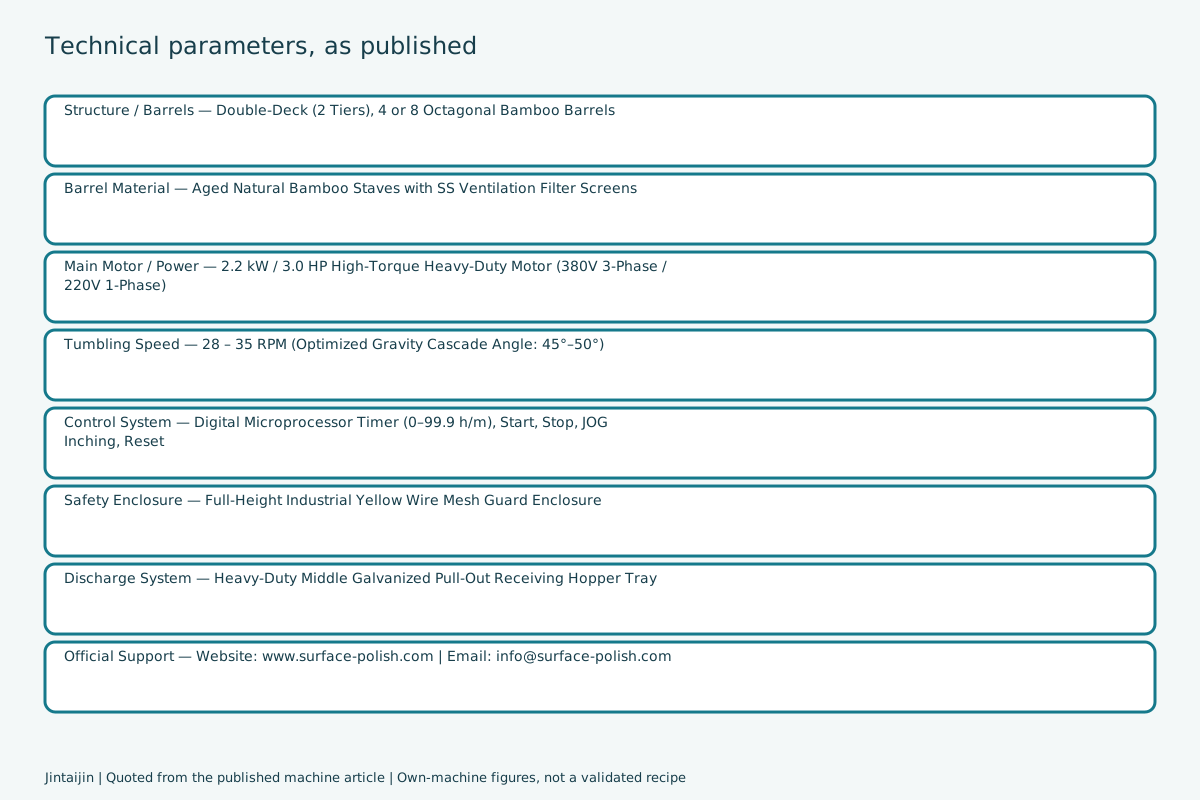
Technical parameters
| parameter | engineering specification / configuration |
|---|---|
| Structure / Barrels | Double-Deck (2 Tiers), 4 or 8 Octagonal Bamboo Barrels |
| Barrel Material | Aged Natural Bamboo Staves with SS Ventilation Filter Screens |
| Main Motor / Power | 2.2 kW / 3.0 HP High-Torque Heavy-Duty Motor (380V 3-Phase / 220V 1-Phase) |
| Tumbling Speed | 28 – 35 RPM (Optimized Gravity Cascade Angle: 45°–50°) |
| Control System | Digital Microprocessor Timer (0–99.9 h/m), Start, Stop, JOG Inching, Reset |
| Safety Enclosure | Full-Height Industrial Yellow Wire Mesh Guard Enclosure |
| Discharge System | Heavy-Duty Middle Galvanized Pull-Out Receiving Hopper Tray |
| Official Support | Website: www.surface-polish.com | Email: info@surface-polish.com |
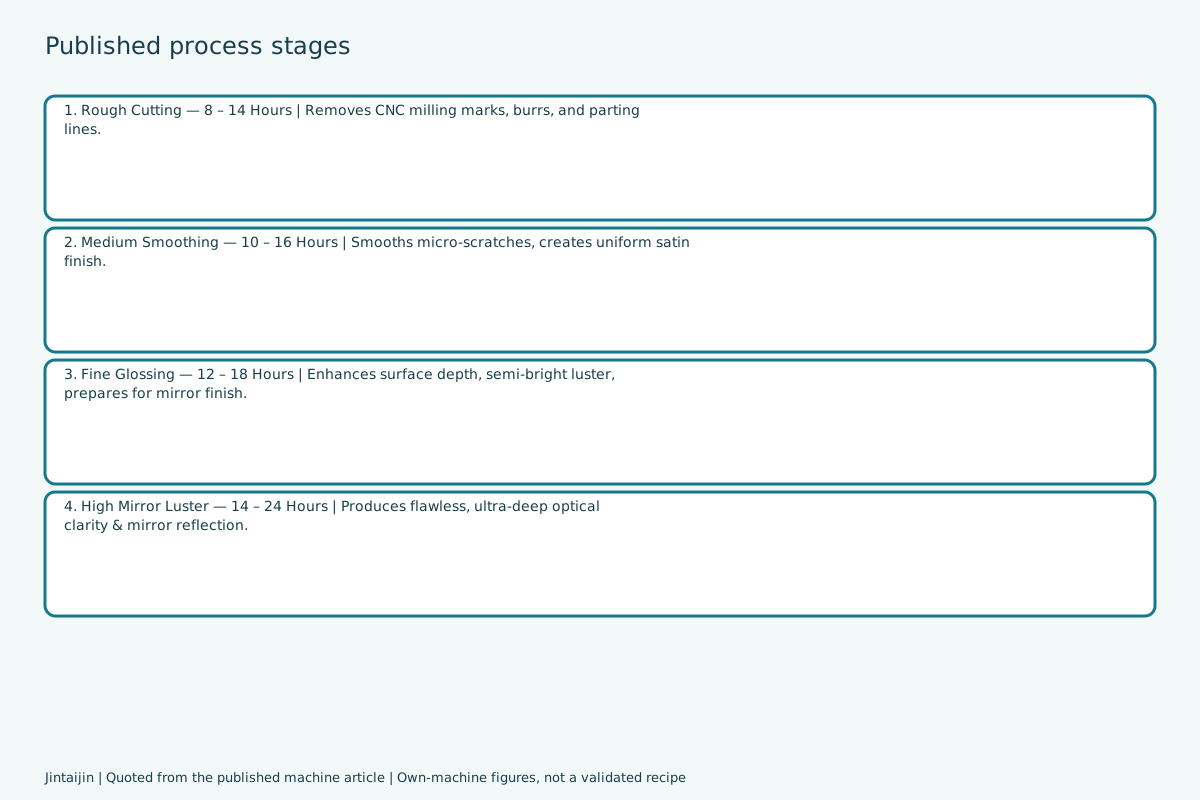
Published process stages
| process stage | recommended media | polishing compound | cycle time | surface objective |
|---|---|---|---|---|
| 1. Rough Cutting | Coarse Walnut Shell (16#–20#) | Rough Cut Wax / Gray Paste | 8 – 14 Hours | Removes CNC milling marks, burrs, and parting lines. |
| 2. Medium Smoothing | Medium Walnut Shell (24#–36#) | Medium Polish Cream / Brown Wax | 10 – 16 Hours | Smooths micro-scratches, creates uniform satin finish. |
| 3. Fine Glossing | Fine Corncob (20#–40#) / Bamboo Pegs | Fine Buffing Oil / White Wax | 12 – 18 Hours | Enhances surface depth, semi-bright luster, prepares for mirror finish. |
| 4. High Mirror Luster | Micro Corncob (40#–60#) / Hard Pegs | Mirror Finish Glaze / Blue-Green Wax | 14 – 24 Hours | Produces flawless, ultra-deep optical clarity & mirror reflection. |
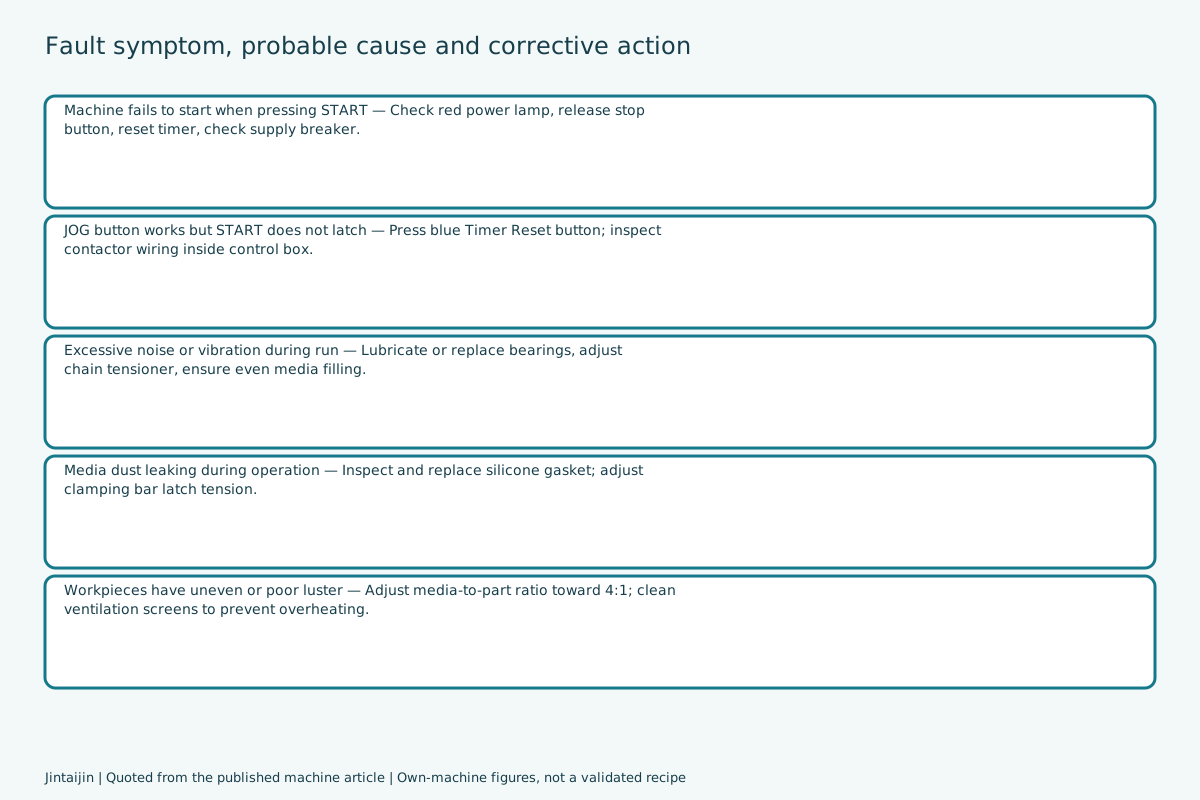
Fault symptom, probable cause and corrective action
| fault symptom | probable root cause | corrective action |
|---|---|---|
| Machine fails to start when pressing START | Main power off / emergency halt engaged / timer not set / fuse blown | Check red power lamp, release stop button, reset timer, check supply breaker. |
| JOG button works but START does not latch | Timer timed out / contactor auxiliary contact fault | Press blue Timer Reset button; inspect contactor wiring inside control box. |
| Excessive noise or vibration during run | Worn pillow block bearing / loose drive chain / unbalanced load | Lubricate or replace bearings, adjust chain tensioner, ensure even media filling. |
| Media dust leaking during operation | Worn hatch sealing gasket / toggle clamps not fully locked | Inspect and replace silicone gasket; adjust clamping bar latch tension. |
| Workpieces have uneven or poor luster | Improper media ratio / insufficient wax / clogged mesh screens | Adjust media-to-part ratio toward 4:1; clean ventilation screens to prevent overheating. |
Control elements and operating logic
| control element | hardware type | operating logic |
|---|---|---|
| Power Lamp | Red Pilot Lamp (Top) | Illuminates continuously when the 3-phase/single-phase main power supply is energized. |
| Start Button | Green Pushbutton | Latches the main magnetic contactor to start continuous automatic tumbling cycle. |
| Stop Button | Red Pushbutton | Immediately de-energizes the drive motor and halts all barrel rotation. |
| JOG / Inching | Yellow Pushbutton | Momentary run: rotates barrels only while pressed. Used to align doors for loading/unloading. |
| Timer Reset | Blue Pushbutton | Resets the digital timer accumulator back to zero (00:00) for a new cycle run. |
| Digital LED Timer | Microprocessor Controller | Digital display with +/- setting buttons. Automatically shuts down the machine upon cycle completion. |
Components and their role
| component | functional description |
|---|---|
| Bamboo Tumblers | Dual-deck octagonal barrels (#3, #4 upper; #7, #8 lower) for gentle cascading dry polishing. |
| Clamping Bars & Latches | Heavy-duty steel compression bars with quick-acting toggle clamps to secure hatch doors. |
| Ventilation Mesh Screens | Perforated stainless steel screens to dissipate internal frictional heat and vent micro-dust. |
| Receiving Hopper Drawer | Middle heavy-gauge galvanized collection tray for clean, rapid workpiece/media discharge. |
| Structural Steel Chassis | Rigid, vibration-damped welded steel frame supporting dual-tier drive loads. |
| Yellow Safety Mesh Enclosure | Full-height yellow wire mesh cage isolating transmission belts, pulleys, and drive chains. |
| Electric Control Cabinet | Dust-proof electrical enclosure housing the pushbutton station, safety locks, and LED timer. |
Source and its limits
Published machine article; captured 5 October 2026. SHA256: 37ff8e377762cc3afe82288417a6de49896bba4456c2e74d122d2043ccbf038b.
- All values are the published article's own figures for its own machine, reproduced verbatim, not a specification for any other machine.
- A published media grade, compound or cycle time is not a validated process for your part. Confirm on a sample and with the supplier.
- Fault rows give probable causes and corrective actions to check, not a diagnosis or a warranty repair instruction.
Table headers as published
- Technical Parameter / Engineering Specification / Configuration
- # / Component / Functional Description & Operational Role
- Control Element / Hardware Type / Color / Operating Logic & Standard Action
- Process Stage / Recommended Media / Polishing Compound / Cycle Time / Surface Objective
- Fault Symptom / Probable Root Cause / Corrective Action / Solution
Frequently asked questions
Are these our machine specifications?
No. Every figure is the published article's own for its own machine, reproduced verbatim. It is not a specification for any other machine and not a validated process for your part.
Does it tell me what cycle or speed to use?
No cycle time, speed, amplitude, load ratio, concentration, temperature or removal result is implied beyond the article's own published values, and those are its starting points to test on a sample with the supplier.
Are the fault rows a diagnosis?
No. They give probable causes and corrective actions to check, not a diagnosis and not a warranty repair instruction.
Are the tables quoted exactly?
Yes. Every cell is taken from a single source table cell and verified against the captured page, including units, ranges and punctuation.
Can I use this for a different machine model?
The values describe the article's machine. Media, compound, speed and cycle time must be re-established for your own part, machine and acceptance criteria.
 +86-592-2381506

 IPv6 network supported