


Finishing Brass Valves and Fittings Without Damaging Threads or Sealing Surfaces
This page reproduces the published article on this subject: its section-by-section guidance and the questions it answers. The source contains no numeric specification at all: no dimension, burr height, angle, speed, pressure or torque figure appears in it, and none is supplied or inferred here. A gauge, a check on the protected feature, a drawing requirement or your own acceptance plan decides whether a part is acceptable, not this page.
Browse the published passages
Choose a section or search the published text, then read the article wording.
Start with the manufacturing defect
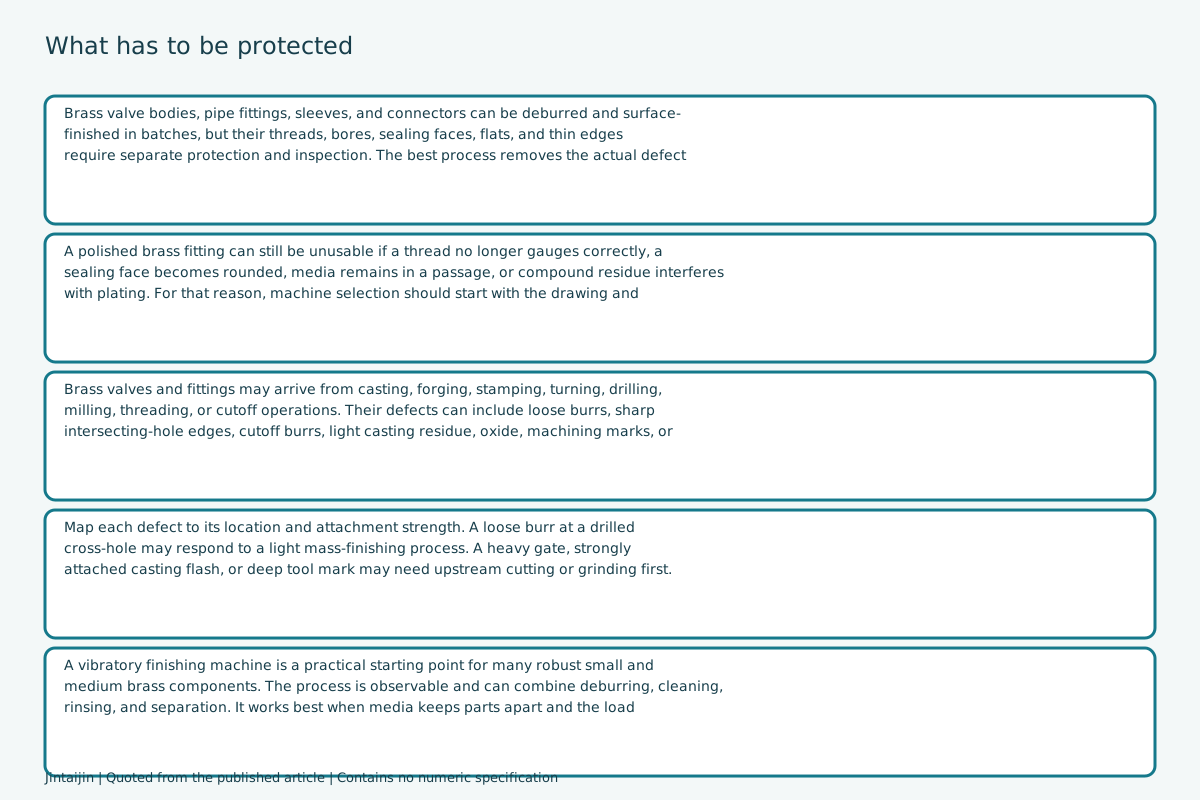
Brass valves and fittings may arrive from casting, forging, stamping, turning, drilling, milling, threading, or cutoff operations. Their defects can include loose burrs, sharp intersecting-hole edges, cutoff burrs, light casting residue, oxide, machining marks, or inconsistent surface color. These conditions do not all require the same process intensity.
Map each defect to its location and attachment strength. A loose burr at a drilled cross-hole may respond to a light mass-finishing process. A heavy gate, strongly attached casting flash, or deep tool mark may need upstream cutting or grinding first. Extending a gentle finishing cycle to remove a heavy defect can round good edges and damage sealing features before the defect is corrected.
Vibratory bowl
A vibratory finishing machine is a practical starting point for many robust small and medium brass components. The process is observable and can combine deburring, cleaning, rinsing, and separation. It works best when media keeps parts apart and the load circulates consistently. Integrated separation can be useful when the media-to-part size relationship is safe.
Vibratory tub
A tub may be evaluated for longer fittings, parts that do not circulate well in a bowl, or components that need compartments or dividers. A tub is not automatically damage-free; length, orientation, load depth, contact, and unloading still require trials. See the bowl, tub, and capacity guide for the equipment decision framework.
Centrifugal disc or barrel
High-energy systems can be considered for compact, robust parts when stronger relative movement is useful. Their higher intensity also increases the need to protect threads, thin walls, sealing faces, and sharp geometry. A faster machine does not eliminate process development; it makes conservative loading and short inspection intervals more important.
Magnetic finishing
Magnetic pins may reach detailed areas on compatible small brass parts and can be useful for light burrs or surface refinement. They are not the normal answer for large valve bodies or heavy flash. Every hole and passage must be checked for retained pins, and the part must fit the practical working volume of the selected machine.
Media selection: cutting action versus protection
Brass is softer than many steels, so contact pressure, media density, and cutting rate deserve careful control. Plastic media is often considered when lower density and gentler contact are helpful. Ceramic media may be selected when stronger cutting is required, but its greater density can increase impact and edge change. Steel media is mainly used for burnishing or brightness rather than heavy cutting.
Media shape and size must be compared with threads, ports, cross-holes, undercuts, grooves, and internal passages. A media shape that reaches a burr may also become trapped. Include both new and worn media in the risk review because media becomes smaller during production. Our guide to preventing media lodging provides a dedicated selection checklist.
Compound, cleaning, and color control
The finishing compound supports wetting, cleaning, lubrication, residue transport, and process stability. Select it for the brass alloy, contamination, media, wastewater plan, and downstream coating or plating. More compound is not automatically better: excessive concentration can create foam, deposits, difficult rinsing, or an unstable surface appearance.
Control water and compound by measurement, not by visual estimation. Monitor the solution condition and replace or filter it according to the approved process. After finishing, rinse internal passages and threads, then dry parts with a method that prevents water spots and trapped moisture. If the parts will be plated, coated, brazed, or assembled with seals, validate downstream compatibility with production-representative samples.
Build a repeatable sample trial
Start with a controlled batch that represents the real alloy, heat condition, part geometry, burr, contamination, and batch mix. Record the machine, media, compound, water setting, load, time, solution condition, and observed movement. Inspect fixed samples at planned intervals rather than running one long cycle and judging only the final appearance.
If scratches, dents, residue, or uneven results appear, use the vibratory finishing troubleshooting guide to isolate contact, media, flow, and compound variables.
Evaluate your brass valve or fitting
Send representative parts, drawings, the starting defect, protected features, batch quantity, and the required surface. We can define a test matrix for machine, media, compound, separation, and functional inspection.
Related manufacturing reference: jingseyewear covers another precision-component environment where cosmetic appearance must be accepted together with material and functional requirements.
Tags :
Mass Finishing Sample Trial Record for Small Precision Parts
How to Deburr Small Fasteners Without Damaging Threads, Points, or Recesses
+86-592-2381506
Email : info@surface-polish.com
Access exclusive offers, news, and more.
click here to leave a message
Preparing secure enquiry form…
Home
Products
contact
Read our Privacy Policy
Questions the source answers
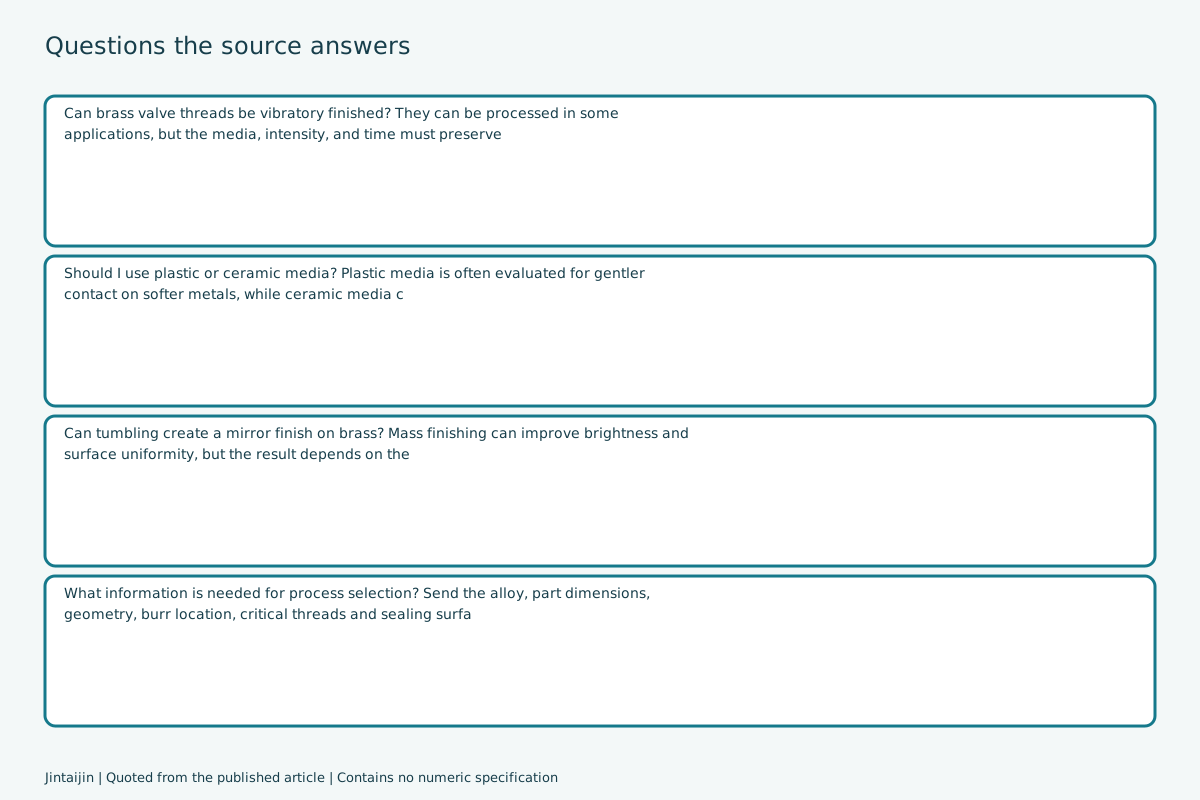
Can brass valve threads be vibratory finished?
They can be processed in some applications, but the media, intensity, and time must preserve thread geometry. Use the required go/no-go gauge and a representative mating test during approval.
Should I use plastic or ceramic media?
Plastic media is often evaluated for gentler contact on softer metals, while ceramic media can provide stronger cutting. The starting burr, protected features, finish target, and required cycle determine the better candidate. Test both when the decision is not clear.
Can tumbling create a mirror finish on brass?
Mass finishing can improve brightness and surface uniformity, but the result depends on the starting surface and the full process sequence. Do not specify a mirror result without a representative sample and an agreed visual or measurement standard.
What information is needed for process selection?
Send the alloy, part dimensions, geometry, burr location, critical threads and sealing surfaces, batch quantity, target finish, current process, downstream plating or coating, and clear photos or drawings.
Source and its limits
Published reference article; captured 7 October 2026. SHA256: c9124cc420f5699bba3fc920601cecd68b0fc4284aa5676dade4c890dd75c721. Source shape: prose guidance under section headings with a question block; no tables.
The source contains no numeric specification at all: no dimension, angle, speed, pressure or torque figure. Nothing numeric is supplied on this page and none is inferred.
- The guidance and answers are the published article own text, reproduced verbatim. They are directions to test, not a validated recipe.
- No dimension, burr height, angle, speed, pressure, torque, concentration or result is stated or supplied, because the source states none.
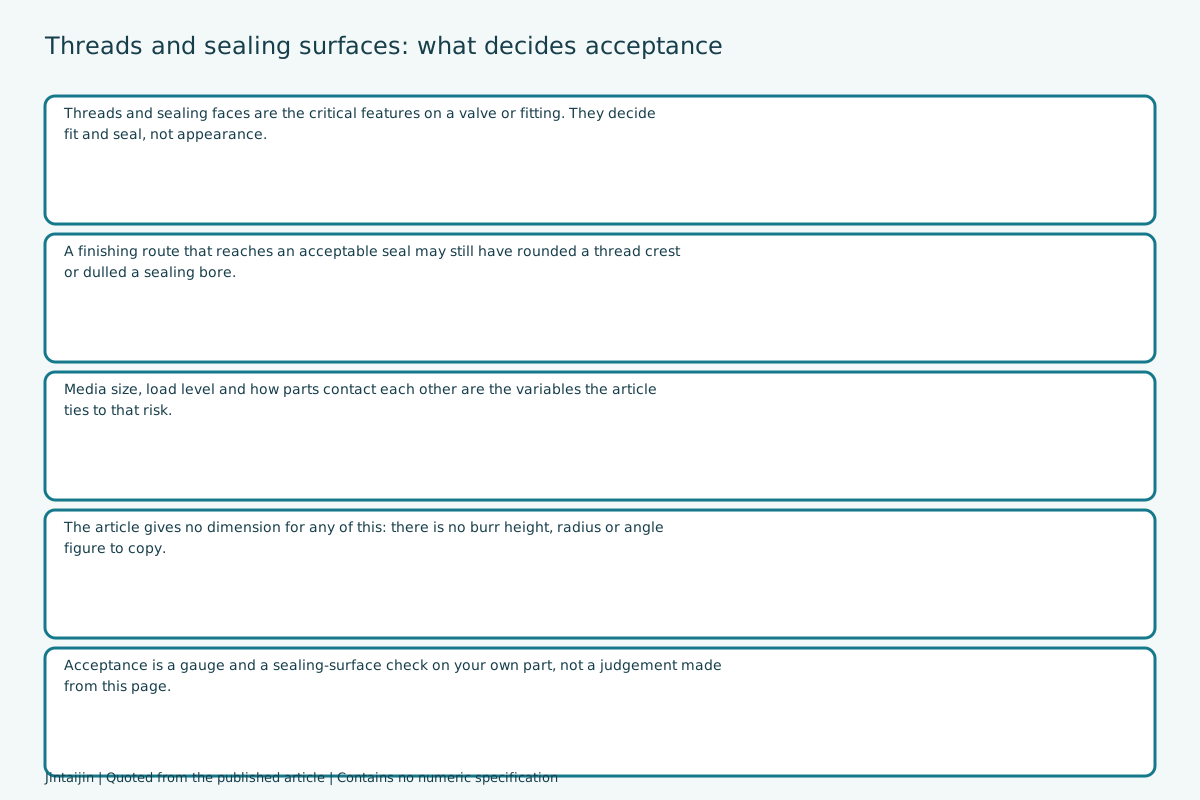
- A thread gauge, sealing-face check, drawing requirement or your own acceptance plan decides whether a part is acceptable, not this page.
Frequently asked questions
Are the threads and the sealing surface both still acceptable, or has the finish taken one of them?
This page does not decide that for you. It reproduces the article own guidance and its own questions. A gauge, a check on the protected feature or a drawing requirement decides whether a part is acceptable.
Does this page tell me what burr height or speed to use?
No. The source article states no dimension, burr height, angle, speed, pressure or torque figure at all, so none appears here and none is inferred.
Does it choose a machine or media for my part?
It describes the machine classes and media considerations the source describes. It does not select one for your part.
Can I copy this straight into production?
No. It is a direction to test. Alloy, geometry, burr origin and your own loading all change the outcome. Confirm on a sample.
Are the passages quoted exactly?
Yes. Every passage and every answer is reproduced verbatim from the captured page and verified against it in the unit tests.
 +86-592-2381506


 IPv6 network supported