


Small Fastener Deburring: Process, Media and Acceptance Guidance
This page reproduces the published article on deburring small fasteners: the guidance on defining the defect, the machine classes it describes, the media and geometry points, and the questions it answers. The source contains no numeric specification at all: no dimension, burr height, angle, speed, pressure or torque figure appears in it, and none is supplied or inferred here. A thread gauge, a drawing requirement or your own acceptance plan decides whether a part is acceptable, not this page.

Browse the published passages
Choose a section or search the published text, then read the article wording.
Define the defect before choosing the process
Fasteners can carry cutoff burrs, heading flash, thread-start burrs, sharp edges around stamped recesses, machining burrs, or oxide and scale. These defects do not require the same action. A light loose burr may respond to a gentle vibratory process, while a heavy rollover at a cutoff edge may need upstream tooling correction or a targeted mechanical operation before mass finishing.
Record where the burr is located, which direction it points, how strongly it is attached, and which surfaces must not change. Use a drawing requirement, limit sample, microscope image, thread gauge, or assembly test as the acceptance reference. Do not use brightness as a substitute for functional inspection.
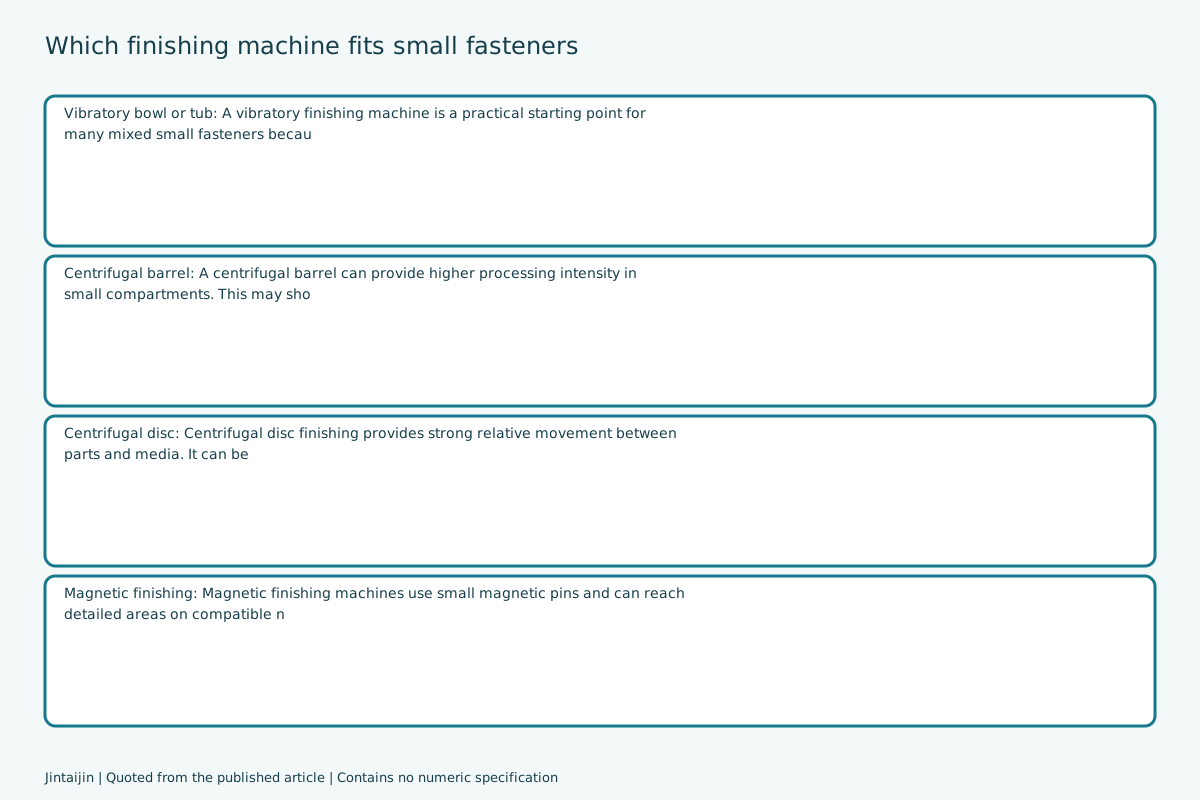
Vibratory bowl or tub
A vibratory finishing machine is a practical starting point for many mixed small fasteners because the process is observable and can combine deburring, rinsing, and separation. It works best when the media-to-part relationship prevents nesting and provides enough cushioning to reduce direct collisions. Long pins or parts that interlock may require a tub, compartment, or a different process.
Centrifugal barrel
A centrifugal barrel can provide higher processing intensity in small compartments. This may shorten development cycles for compact precision parts, but it also increases the need to control loading and inspect fragile threads, points, and thin walls. The machine is not automatically the best choice for every small fastener; it should be selected after a controlled sample trial.
Centrifugal disc
Centrifugal disc finishing provides strong relative movement between parts and media. It can be useful for robust small components, provided the working gap, load, media size, and separation plan match the part. Delicate points, hollow sections, and parts that tangle need conservative testing.
Magnetic finishing
Magnetic finishing machines use small magnetic pins and can reach detailed areas on compatible non-ferrous and stainless components. They are more suited to light burrs and surface improvement than heavy edge removal. Open holes and recesses must still be checked for retained pins, and the process must be validated for the fastener material and geometry.
Choose media around the functional geometry
Cutting demand is only one part of media selection. Shape and size determine whether media reaches a burr, bridges across a recess, enters a hollow rivet, or becomes trapped between threads. Ceramic media usually provides stronger cutting action, while plastic media is often used when lower density and gentler contact are helpful. Steel media mainly burnishes and should not be treated as a substitute for cutting media.
Compare the media against the smallest hole, recess, thread space, and internal cavity on the actual part. Include worn media in the review because media becomes smaller during production. Our guide to preventing media lodging in holes, slots, and threads explains how to build a safer size relationship.
The finishing compound should support cleaning, wetting, lubrication, and residue control for the selected metal and media. More compound does not necessarily mean better protection; excessive foam or residue can interfere with flow, rinsing, and inspection.
Loading and tangling control
Small parts can be difficult because a large batch creates many contact opportunities. Nails, pins, springs, and long screws may align, bridge, or tangle. Reduce the concentration of parts, increase media separation, shorten the process, or use compartments when direct contact cannot be controlled. The correct load is a process-development result, not a universal fixed ratio.
For thin stamped clips and other interlocking geometries, see our stamped metal parts deburring guide . It applies the same contact-control principles to parts that can hook or deform.
Separation, rinsing, and retained-media checks
A deburring cycle is not complete until parts can be separated and cleaned without creating a second defect. Choose screens using both new and worn media. Confirm that small fasteners cannot pass through the screen in an unintended orientation. Inspect the screen for blind zones where pins or rivets can bridge.
After wet finishing, rinse away abrasive fines and compound residue, then dry the parts promptly using a method compatible with the metal and any later coating process. Hollow rivets, internal threads, and recessed heads need specific checks for retained media, magnetic pins, water, and debris. Our parts and media separation guide covers screen and size-control decisions in more detail.
Build a fastener finishing validation plan
Use a small controlled batch and record the part material, hardness or condition, starting burr, machine, media, compound, water setting, load, time, and observed movement. Inspect a fixed sample at planned intervals. Compare burr removal with functional change and choose the shortest stable window that meets both requirements.
The exact acceptance plan depends on the final product. Small fastening components appear in everything from nail and staple systems supplied by Elite Fasteners to precision consumer assemblies such as eyewear produced by Jingseyewear . The finishing recipe must therefore follow the component drawing and application rather than a generic appearance target.
Need a finishing trial for small fasteners?
Tags :
How to Finish Brass Valves and Fittings Without Damaging Threads or Sealing Surfaces
How to Deburr Stamped Metal Parts Without Tangling, Distortion, or Part-on-Part Damage
+86-592-2381506
Email : info@surface-polish.com
Access exclusive offers, news, and more.
click here to leave a message
Preparing secure enquiry form…
Home
Products
contact
Read our Privacy Policy
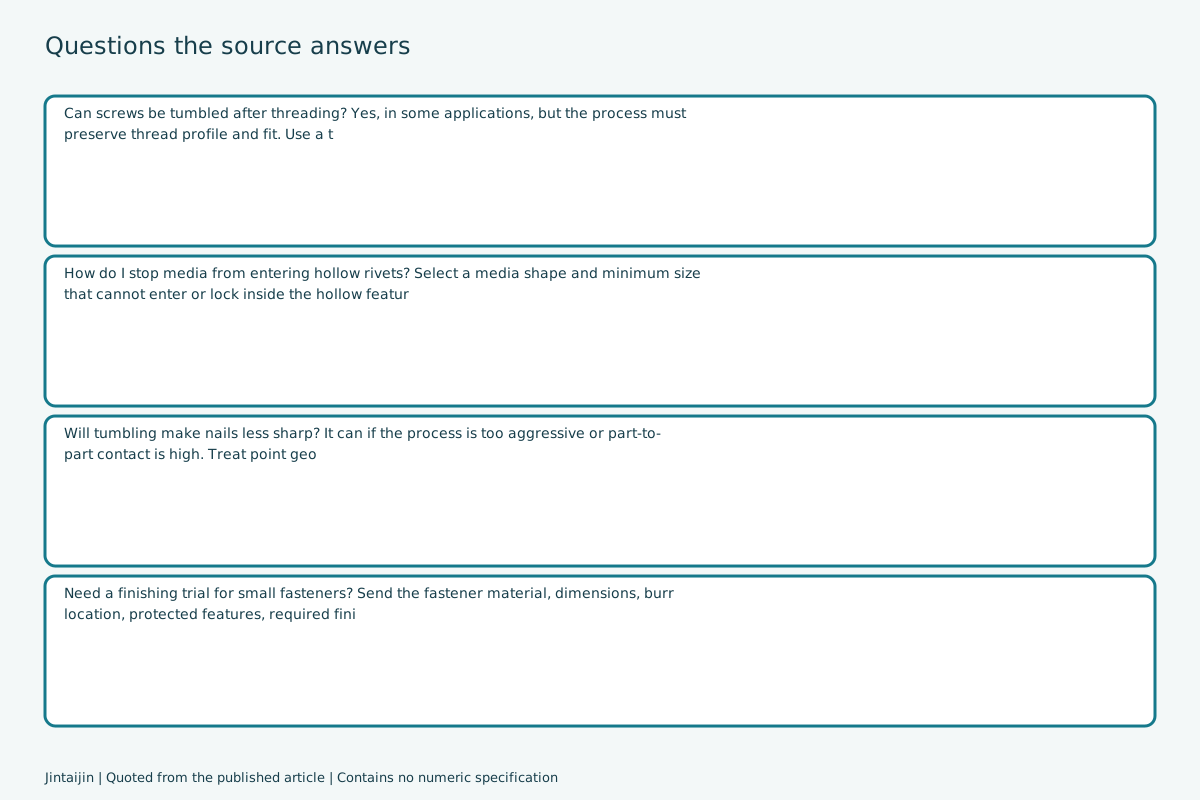
Questions the source answers
Can screws be tumbled after threading?
Yes, in some applications, but the process must preserve thread profile and fit. Use a thread gauge before and after the trial, control media size, and avoid an aggressive cycle that rounds the thread start or damages the drive recess.
How do I stop media from entering hollow rivets?
Select a media shape and minimum size that cannot enter or lock inside the hollow feature, including after media wear. Validate separation with actual production media and inspect every critical cavity during process approval.
Will tumbling make nails less sharp?
It can if the process is too aggressive or part-to-part contact is high. Treat point geometry as a critical feature, use a conservative process, inspect early, and confirm performance with a representative driving or insertion test.
Need a finishing trial for small fasteners?
Send the fastener material, dimensions, burr location, protected features, required finish, production volume, and photos or drawings. We can recommend a test route and the measurements needed to approve it.
Source and its limits
Published reference article; captured 6 October 2026. SHA256: 1c0ffe6e6dcc602f8fcdfd6bce37f4ab7a519cf3164e2a0e4a63e0bc882c1da7. Source shape: prose guidance organised under section headings, with a three-question block; no tables and no numeric specification tokens.
The source contains no numeric specification at all: no dimension, burr height, angle, speed, pressure or torque figure. Nothing numeric is supplied on this page and none is inferred.
- The guidance and answers are the published article own text, reproduced verbatim. They are directions to test, not a validated recipe.
- No dimension, burr height, angle, speed, pressure, torque, compound concentration or result is stated or supplied, because the source states none.
- A thread gauge, drawing requirement or your own acceptance plan decides whether a part is acceptable, not this page.
Frequently asked questions
Does this page tell me what burr height or speed to use?
No. The source article states no dimension, burr height, angle, speed, pressure or torque figure at all, so none appears here and none is inferred.
Does it choose a machine for my fastener?
It describes the machine classes the source describes, including where each is suited and what it costs you in intensity or loading. It does not select one for your part.
How do I know a part is acceptable?
By a thread gauge, a drawing requirement or your own acceptance plan, tested on your own parts. This page reproduces the article wording, not an acceptance decision.
Can I copy this straight into production?
No. It is a direction to test. Alloy, thread form, burr origin and your own loading all change the outcome.
Are the passages quoted exactly?
Yes. Every passage and every answer is reproduced verbatim from the captured page and verified against it in the unit tests.
 +86-592-2381506


 IPv6 network supported