CNC Aluminum Deburring: Machine Direction and Controlled Tests
This page reproduces the published tables for CNC aluminum deburring: the machine directions with where each fits and the main risk to validate, and the observed results with their likely causes and the controlled test that isolates the cause. These describe equipment classes and trial methods, not a machine specification. No machine model, capacity, cycle time, speed or removal result is stated, implied or supplied here.
Browse the published rows
Choose a section or search the published rows, then read the article text.
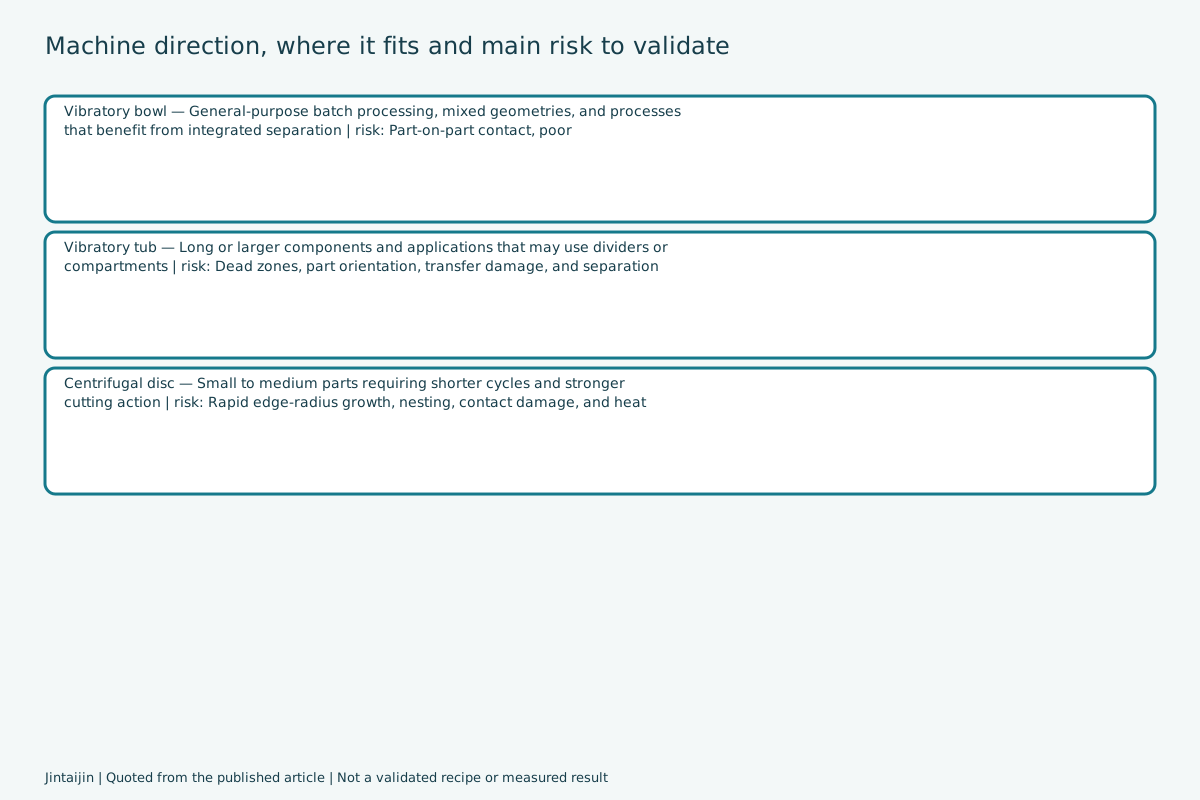
Machine direction, where it fits and main risk to validate
| machine direction | where it fits | main risk to validate |
|---|---|---|
| Vibratory bowl | General-purpose batch processing, mixed geometries, and processes that benefit from integrated separation | Part-on-part contact, poor circulation, or media lodging in holes and slots |
| Vibratory tub | Long or larger components and applications that may use dividers or compartments | Dead zones, part orientation, transfer damage, and separation method |
| Centrifugal disc | Small to medium parts requiring shorter cycles and stronger cutting action | Rapid edge-radius growth, nesting, contact damage, and heat or foam buildup |
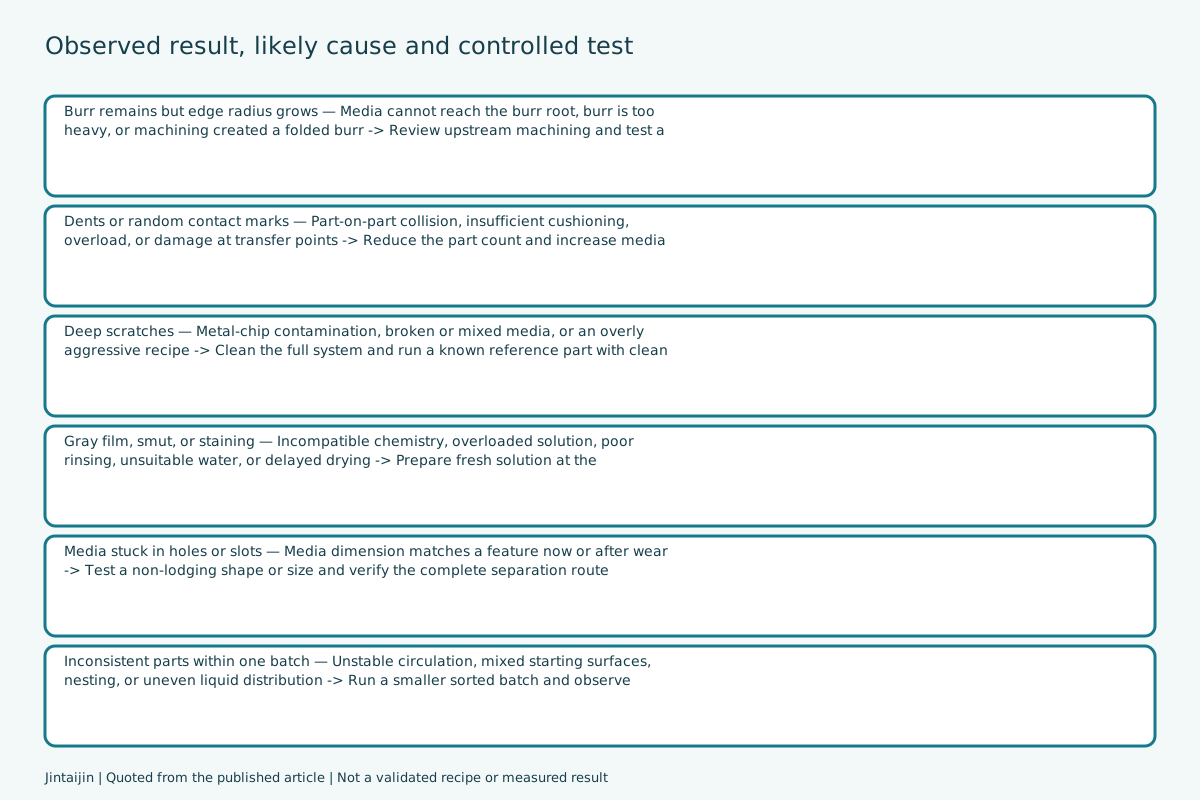
Observed result, likely cause and controlled test
| observed result | likely cause | controlled test |
|---|---|---|
| Burr remains but edge radius grows | Media cannot reach the burr root, burr is too heavy, or machining created a folded burr | Review upstream machining and test a shape that reaches the burr without matching nearby openings |
| Dents or random contact marks | Part-on-part collision, insufficient cushioning, overload, or damage at transfer points | Reduce the part count and increase media coverage while keeping other settings unchanged |
| Deep scratches | Metal-chip contamination, broken or mixed media, or an overly aggressive recipe | Clean the full system and run a known reference part with clean media |
| Gray film, smut, or staining | Incompatible chemistry, overloaded solution, poor rinsing, unsuitable water, or delayed drying | Prepare fresh solution at the recommended concentration, add a clean rinse, and dry immediately |
| Media stuck in holes or slots | Media dimension matches a feature now or after wear | Test a non-lodging shape or size and verify the complete separation route |
| Inconsistent parts within one batch | Unstable circulation, mixed starting surfaces, nesting, or uneven liquid distribution | Run a smaller sorted batch and observe movement in every area of the chamber |
About the controlled test
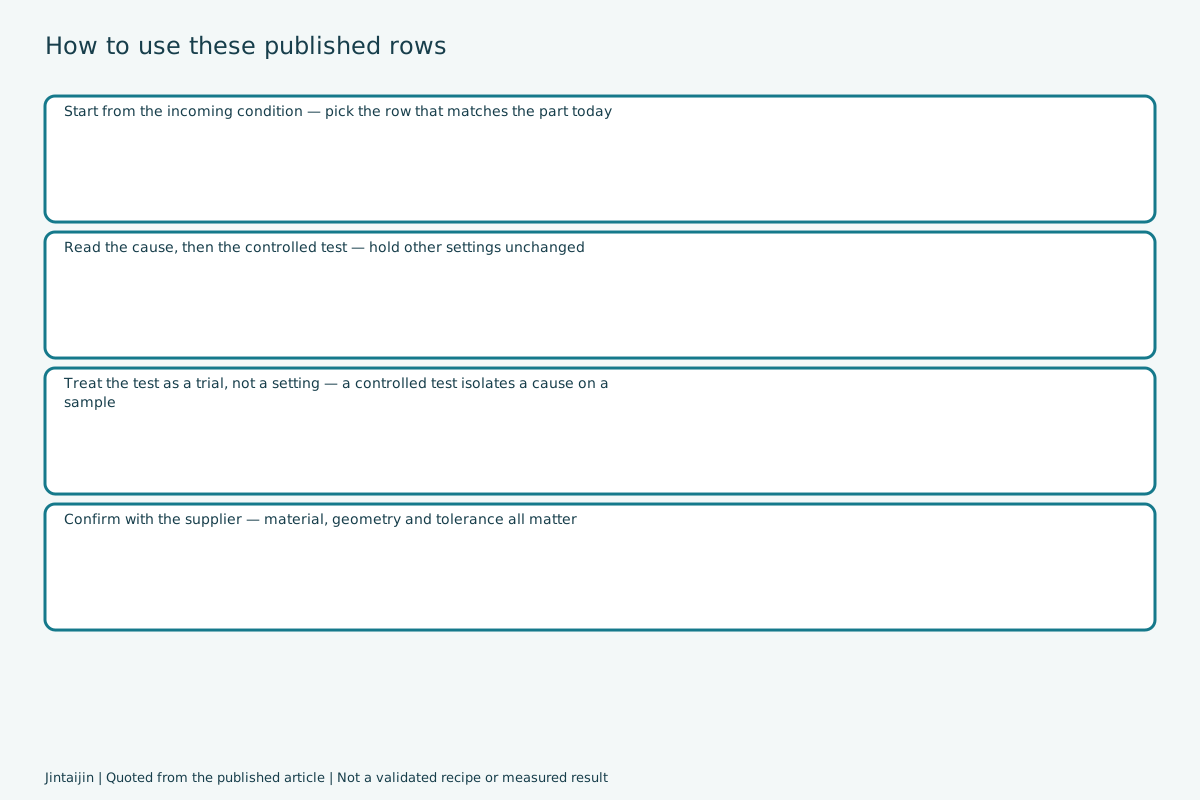
The controlled test column is the article own way of isolating a cause on a sample. Holding other settings unchanged is the point of a controlled test; it is not a validated production setting.
Source and its limits
Published reference article; captured 5 October 2026. SHA256: 024898b7eb682a98d9aef2ee8880932d916717094828363e727b9a41b156a5dc.
- Machine direction and controlled tests are the published article own, reproduced verbatim. They describe equipment classes and trial methods, not a machine specification.
- No machine model, capacity, cycle time, speed or removal result is stated, implied or supplied.
- A likely cause is a direction to check, not a diagnosis.
Table headers as published
- Machine Direction / Where It Fits / Main Risk to Validate
- Observed Result / Likely Cause / Controlled Test
Frequently asked questions
Does this give me a machine or a recipe?
No. These are the published article own rows reproduced verbatim. They describe equipment classes and trial methods, not a specific machine, and they are not a validated production recipe.
Does this page state regulatory or compliance requirements?
No. No standard, certification or regulatory requirement appears on this page or in its download. Validation requirements belong to your own quality system and to the intended use of the part.
Does it diagnose my part?
No. A defect lists a likely cause and a first check. The same visible mark can have more than one cause, and confirming it needs a controlled test on a sample.
Does it state cycle time, speed or temperature?
No. No cycle time, speed, amplitude, load ratio, concentration, temperature or removal result is stated or implied anywhere on this page or in its download.
Are the tables quoted exactly?
Yes. Every cell is taken from a single source table cell and verified against the captured page, including wording and punctuation.
 +86-592-2381506

 IPv6 network supported