


ECO Manual Polishing Machine: Published Parameters, Stages, Faults and Parts
This page reproduces the tables published for the ECO manual polishing machine: its technical parameters, the process stages with wheel and compound, the fault symptoms with probable causes and corrective actions, the spare parts with factory part numbers, and the mandatory maintenance schedule. Every figure is the article's own for its own machine, reproduced verbatim. A published speed, stage or part number is not a validated process for your part: confirm the recipe on a sample and with the supplier.
Browse the published rows
Choose a section or search the published rows, then read the article values.
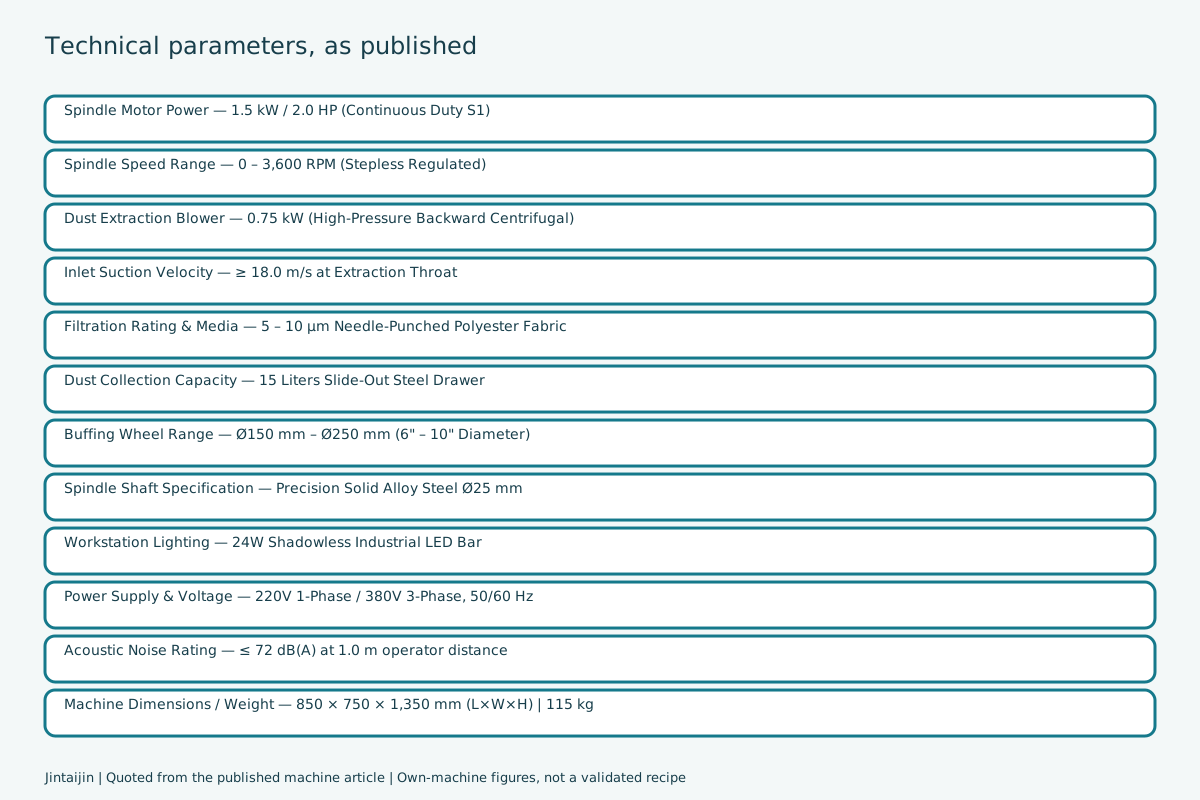
Technical parameters
| parameter | engineering value / range | specification notes |
|---|---|---|
| Spindle Motor Power | 1.5 kW / 2.0 HP (Continuous Duty S1) | High-Torque Induction Motor with VFD Inverter |
| Spindle Speed Range | 0 – 3,600 RPM (Stepless Regulated) | Digital RPM Display & Precision Potentiometer Dial |
| Dust Extraction Blower | 0.75 kW (High-Pressure Backward Centrifugal) | Airflow Rate: 1,200 – 1,500 m³/h (700 – 880 CFM) |
| Inlet Suction Velocity | ≥ 18.0 m/s at Extraction Throat | Direct Particle Pull with Zero Ambient Leakage |
| Filtration Rating & Media | 5 – 10 µm Needle-Punched Polyester Fabric | ≥ 98.5% Dust Separation Rating (Multi-Pocket Array) |
| Dust Collection Capacity | 15 Liters Slide-Out Steel Drawer | Dual Quick-Release Toggle Clamps & EPDM Seal |
| Buffing Wheel Range | Ø150 mm – Ø250 mm (6" – 10" Diameter) | Core Arbor Bore: Ø16 mm or Ø25 mm |
| Spindle Shaft Specification | Precision Solid Alloy Steel Ø25 mm | M16 Left-Hand Reverse Thread; Runout ≤ 0.02 mm |
| Workstation Lighting | 24W Shadowless Industrial LED Bar | Illuminance ≥ 1,200 Lux at Tabletop Working Plane |
| Power Supply & Voltage | 220V 1-Phase / 380V 3-Phase, 50/60 Hz | Chassis Grounding Resistance strictly < 4.0 Ω |
| Acoustic Noise Rating | ≤ 72 dB(A) at 1.0 m operator distance | Compliant with ISO 11202 & OSHA 1910.95 |
| Machine Dimensions / Weight | 850 × 750 × 1,350 mm (L×W×H) | 115 kg | Heavy-Duty Welded Frame + 4 Leveling Footpads |
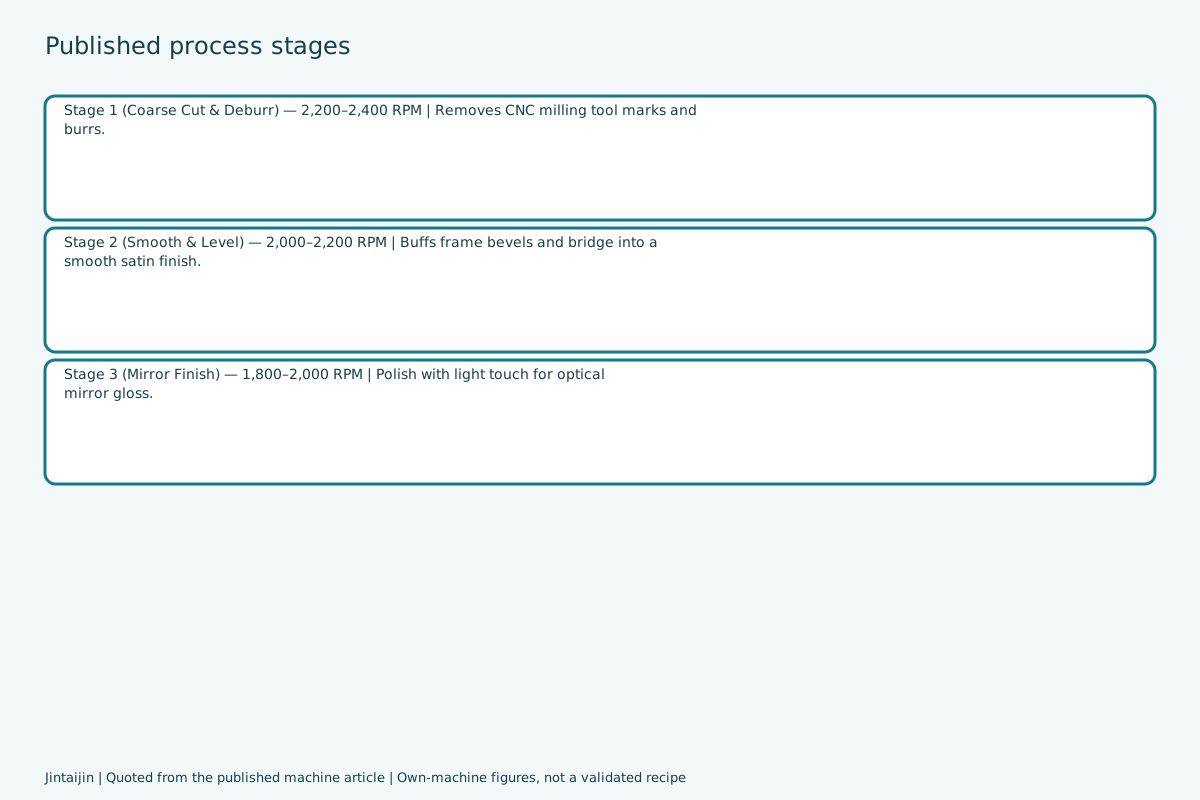
Published process stages
| process stage | recommended wheel | compound | speed | surface objective |
|---|---|---|---|---|
| Stage 1 (Coarse Cut & Deburr) | Spiral cotton / sisal wheel | Brown Tripoli compound | 2,200–2,400 RPM | Removes CNC milling tool marks and burrs. |
| Stage 2 (Smooth & Level) | Yellow treated cotton wheel | Green Chromium Oxide compound | 2,000–2,200 RPM | Buffs frame bevels and bridge into a smooth satin finish. |
| Stage 3 (Mirror Finish) | Soft unstitched muslin wheel | Blue Luster or White Diamond wax | 1,800–2,000 RPM | Polish with light touch for optical mirror gloss. |
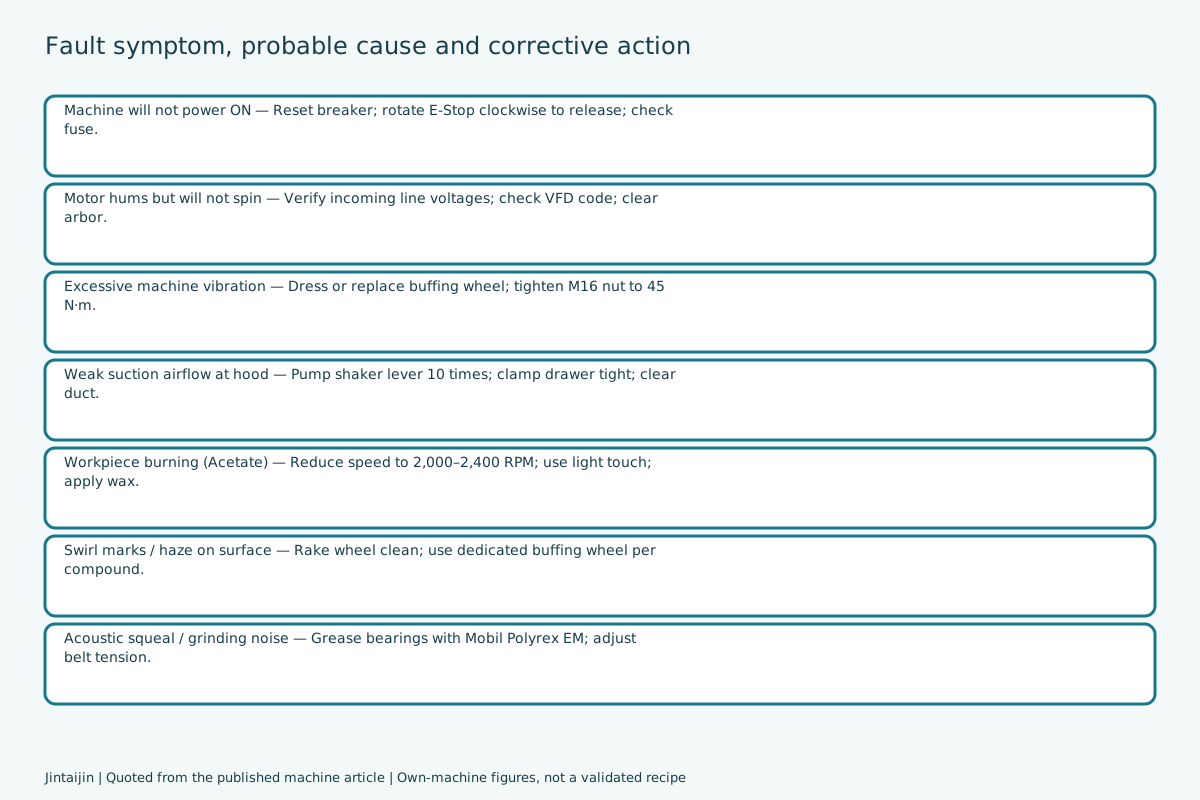
Fault symptom, probable cause and corrective action
| fault symptom | probable root causes | corrective action |
|---|---|---|
| Machine will not power ON | Main breaker tripped; E-Stop locked down; blown fuse. | Reset breaker; rotate E-Stop clockwise to release; check fuse. |
| Motor hums but will not spin | Phase loss on power line; VFD fault; arbor jam. | Verify incoming line voltages; check VFD code; clear arbor. |
| Excessive machine vibration | Unbalanced buffing wheel; loose M16 lock nut. | Dress or replace buffing wheel; tighten M16 nut to 45 N·m. |
| Weak suction airflow at hood | Filter bags caked; drawer unlatched; duct clog. | Pump shaker lever 10 times; clamp drawer tight; clear duct. |
| Workpiece burning (Acetate) | RPM too high; excessive pressure; dry buffing wheel. | Reduce speed to 2,000–2,400 RPM; use light touch; apply wax. |
| Swirl marks / haze on surface | Wheel contaminated with coarse compound/grit. | Rake wheel clean; use dedicated buffing wheel per compound. |
| Acoustic squeal / grinding noise | Dry spindle bearings; loose drive belt rubbing frame. | Grease bearings with Mobil Polyrex EM; adjust belt tension. |
Spare parts and factory part numbers
| part description | factory part no. | replacement notes |
|---|---|---|
| Multi-Pocket Polyester Filter Bag Set (4 Pockets, 5–10µm) | SPM-FLT-1004 | Replace every 12–18 months depending on duty cycle |
| Polycarbonate Safety Visor Shield (3mm High-Impact PC) | SPM-SHD-PC01 | Pre-drilled mounting holes with hinge hardware |
| NSK High-Speed Spindle Deep Groove Ball Bearings (Pair) | BRG-6205-2RS | Pre-greased, double rubber sealed (25×52×15 mm) |
| Over-Center Toggle Clamps with Rubber Spindle Pad | CLP-TGL-GH403 | Heavy-duty zinc-plated steel for recovery drawer |
| M16 Left-Hand Reverse Thread Hex Nut & Clamping Flanges | NUT-M16-LH02 | Precision balanced alloy steel hardware set |
| Mushroom Head Twist-to-Reset Emergency Stop Pushbutton | SW-ESTOP-XB2 | Standard 22mm panel mount, 1NC contact block |
| 24W Industrial Shadowless Daylight LED Tube Luminaire | LED-T8-24W-6.5K | 6500K Color Temperature, IP54 dust resistant |
| EPDM Foam Airtight Recovery Drawer Sealing Gasket | GSK-EPDM-1505 | Self-adhesive oil and wax resistant sponge rubber |
Mandatory maintenance schedule
| frequency | inspection and service |
|---|---|
| Daily (Every Shift) | Empty 15L recovery drawer; clean PC visor; pump filter shaker 6–8 times; check wheel wear. |
| Weekly (40 Hours) | Inspect spindle arbor runout; check drive belt tension; inspect EPDM drawer gasket seal. |
| Monthly (160 Hours) | Inspect filter bags for tears or caking; verify ground bond (<4.0 Ω); check electrical terminals. |
| Semi-Annually (1,000 Hours) | Lubricate spindle bearings with 3–5g high-speed grease (Mobil Polyrex EM); check VFD. |
| Annually (2,000 Hours) | Replace complete set of multi-pocket filter bags (SPM-FLT-1004); inspect motor dynamic balance. |
Components and their role
| component | functional description |
|---|---|
| Precision Spindle Arbor | Solid Ø25mm alloy shaft with M16 reverse-thread nut and clamping flanges. |
| Aerodynamic Suction Hood | Wide negative-pressure intake hood pulling dust directly behind the wheel. |
| Dust Recovery Drawer | 15-liter slide-out steel bin with dual quick-release airtight toggle latches. |
| Multi-Pocket Filter Chamber | Houses 4 polyester cloth filter bags (5–10µm) with ≥98.5% separation rating. |
| Polycarbonate Safety Visor | Hinged, high-impact transparent shield protecting operator from flying swarf. |
| 24W Shadowless LED Lamp | Daylight-spectrum LED bar illuminating the polishing contact plane (≥1200 Lux). |
| Control Console | Front panel with E-Stop, Power/Suction/Light switches, and VFD RPM dial. |
| Leveling Footpads | Four adjustable heavy-duty rubber-cushioned M16 anti-vibration feet. |
| Dust Shaker Lever | External side lever linked to internal grid to dislodge filter cake into the drawer. |
Source and its limits
Published machine article; captured 5 October 2026. SHA256: 63d87818e51336576b6395d44d8152c04f3a5f9184c61c1bd5914c117b21447a.
- All values are the published article's own engineering figures for its own machine, reproduced verbatim. They are not a specification for any other machine.
- A published speed, stage or part number is not a validated process for your part. Confirm the recipe on a sample and with the supplier.
- Fault rows give probable causes and corrective actions to check, not a diagnosis or a warranty repair instruction.
Table headers as published
- Technical Parameter / Engineering Value / Range / Specification Notes
- # / Component / Functional Description & Operational Role
- Process Stage / Recommended Wheel / Compound / Speed / Surface Objective
- Maintenance Frequency / Mandatory Inspection & Service Procedures
- Fault Symptom / Probable Root Causes / Corrective Action & Resolution
- Part Description & Specifications / Factory Part No. / Application & Replacement Notes
Frequently asked questions
Are these our machine specifications?
No. Every figure is the published article's own for its own machine, reproduced verbatim. It is not a specification for any other machine and not a validated process for your part.
Does it tell me what cycle or speed to use?
No cycle time, speed, amplitude, load ratio, concentration, temperature or removal result is implied beyond the article's own published values, and those are its starting points to test on a sample with the supplier.
Are the fault rows a diagnosis?
No. They give probable causes and corrective actions to check, not a diagnosis and not a warranty repair instruction.
Are the tables quoted exactly?
Yes. Every cell is taken from a single source table cell and verified against the captured page, including units, ranges and punctuation.
Can I use this for a different machine model?
The values describe the article's machine. Media, compound, speed and cycle time must be re-established for your own part, machine and acceptance criteria.
 +86-592-2381506

 IPv6 network supported