


Media Selection by Part Feature: Risk, Media Choice and Process Note
This page reproduces the published table that selects media by part feature: through holes, blind holes, narrow slots, threads and complex castings, each with its common risk, the better media choice and a process note. The table deliberately gives a choice band rather than a size: larger than the feature, or much smaller if it passes freely, and explicitly to avoid a size close to the feature dimension. No hole diameter, slot width, media size or cycle time is stated, implied or supplied.
Browse the published rows
Choose a section or search the published rows, then read the article text.
Part feature, common risk, better media choice and process note
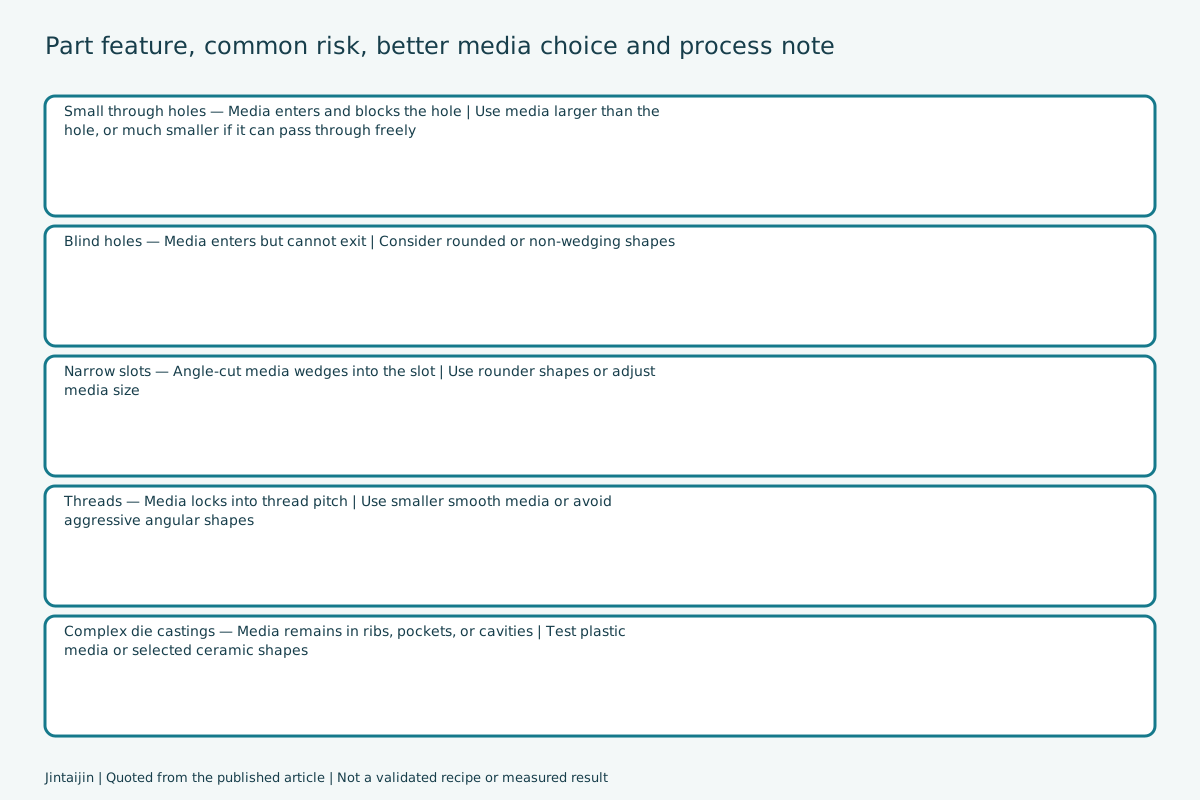
| part feature | common risk | better media choice | process note |
|---|---|---|---|
| Small through holes | Media enters and blocks the hole | Use media larger than the hole, or much smaller if it can pass through freely | Avoid media size close to the hole diameter |
| Blind holes | Media enters but cannot exit | Consider rounded or non-wedging shapes | Rinsing and air blow-off may be required after finishing |
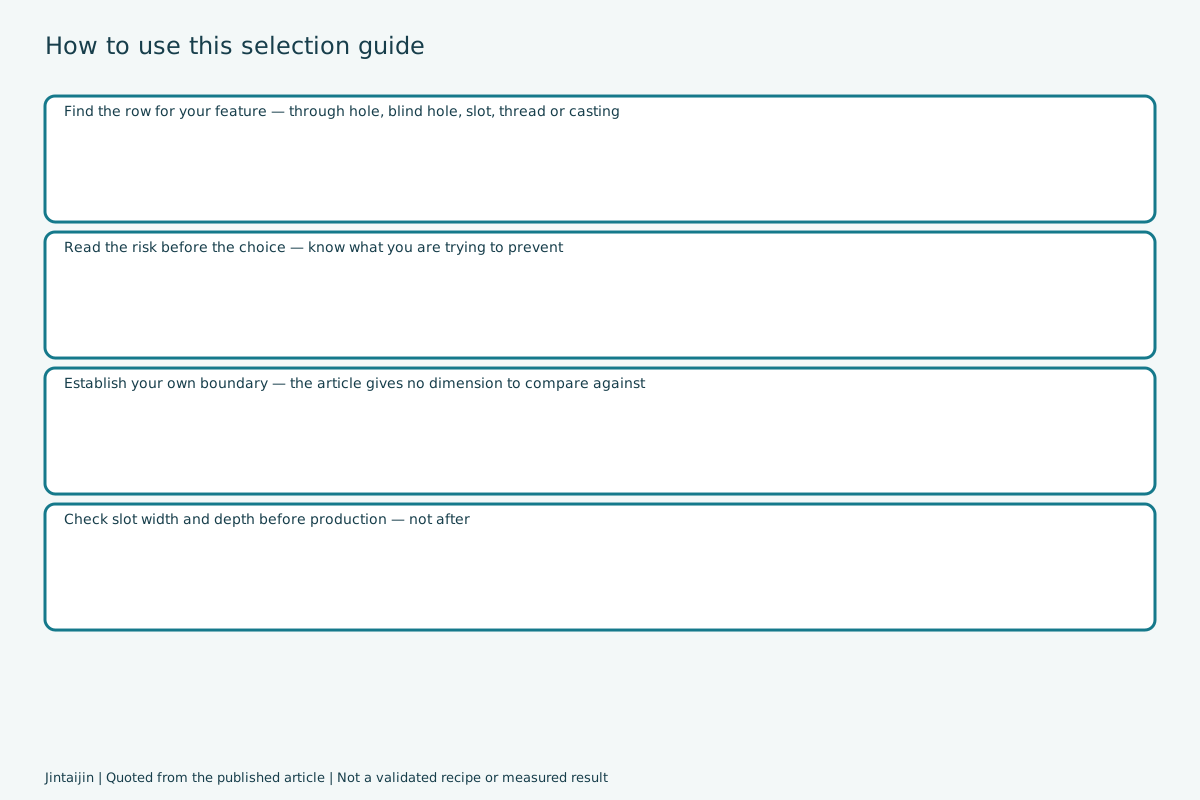
| Narrow slots | Angle-cut media wedges into the slot | Use rounder shapes or adjust media size | Check slot width and depth before production |
| Threads | Media locks into thread pitch | Use smaller smooth media or avoid aggressive angular shapes | Protect critical threads when tight tolerance is required |
| Complex die castings | Media remains in ribs, pockets, or cavities | Test plastic media or selected ceramic shapes | Design separation into the process, not as an afterthought |
Why the table gives a band, not a size
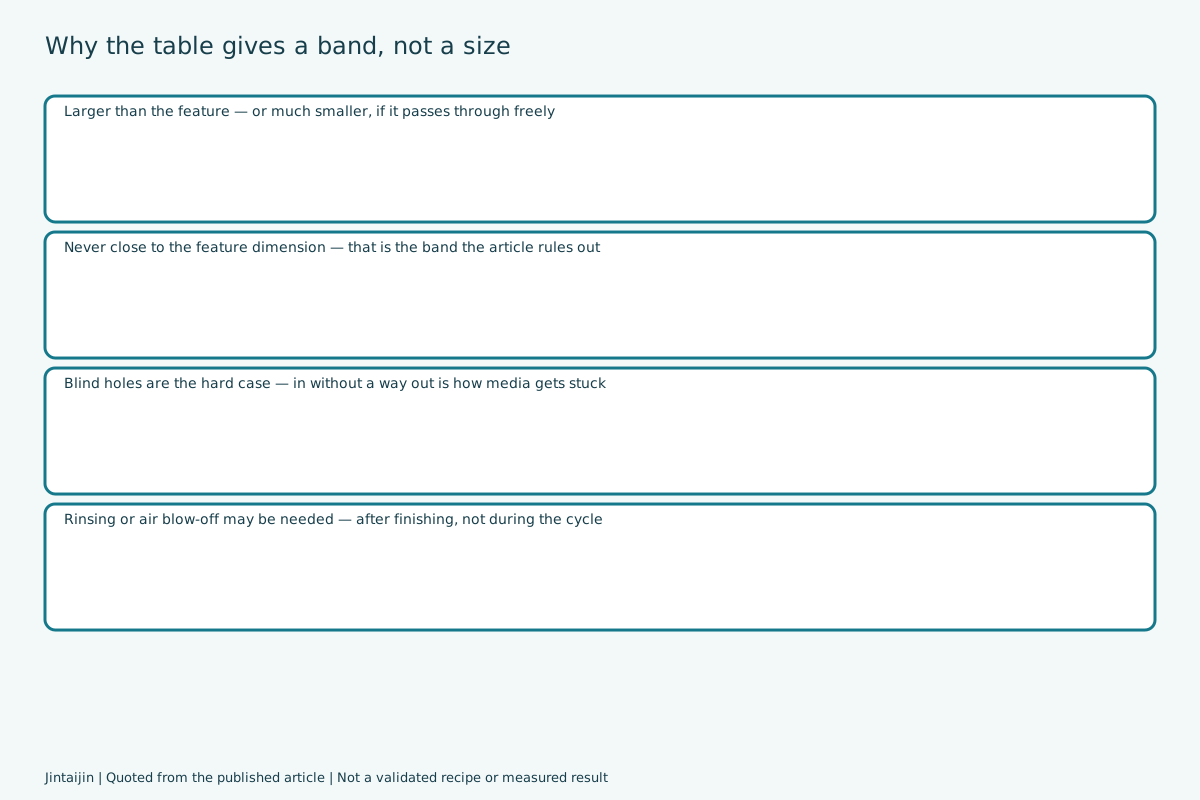
The rows describe a choice band rather than a number: media larger than the feature, or much smaller if it passes through freely, and explicitly to avoid a size close to the feature dimension. The article gives no dimension, so the boundary is yours to establish against your own part.
Source and its limits
Published reference article; captured 5 October 2026. SHA256: d494a84e09163a4d085d9815fc306a2dbd9b4ed744bab9d61b69f75d4dee8d00.
- Media choices and process notes are the published article own, reproduced verbatim. They describe shape and size relationships, not a specification.
- No hole diameter, slot width, media size, cycle time or result is stated, implied or supplied.
- A media choice for a feature is a starting point that must be checked against your own part dimensions.
Table headers as published
- Part Feature / Common Risk / Better Media Choice / Process Note
Frequently asked questions
What media size should I use for a hole?
This page states none. The table gives a band: larger than the hole, or much smaller if it passes through freely, and explicitly to avoid a size close to the hole diameter. Your boundary is yours to establish.
Is blind-hole media risk the same as through-hole risk?
No. A through hole lets media exit; a blind hole does not, which is why the table treats it as the harder case and suggests rounded or non-wedging shapes.
Does it diagnose my part?
No. A row lists a likely cause and a first check. The same visible mark can have more than one cause, and confirming it needs a controlled test on a sample.
Does it state cycle time, speed or temperature?
No. No cycle time, speed, amplitude, load ratio, concentration, temperature or removal result is stated or implied anywhere on this page or in its download.
Are the tables quoted exactly?
Yes. Every cell is taken from a single source table cell and verified against the captured page, including wording and punctuation.
 +86-592-2381506

 IPv6 network supported