Select every relevant workpiece condition to assemble the inspection questions for a magnetic finishing trial. The tool combines the five conditions in Jintaijin’s published matrix: light burrs, openings or threads, fragile or tangled parts, large parts or heavy flash, and certified results. It preserves unfavorable and conditional checks alongside favorable trial labels. Use the output as an inspection discussion; no combined suitability score, machine approval or finishing recipe is generated.
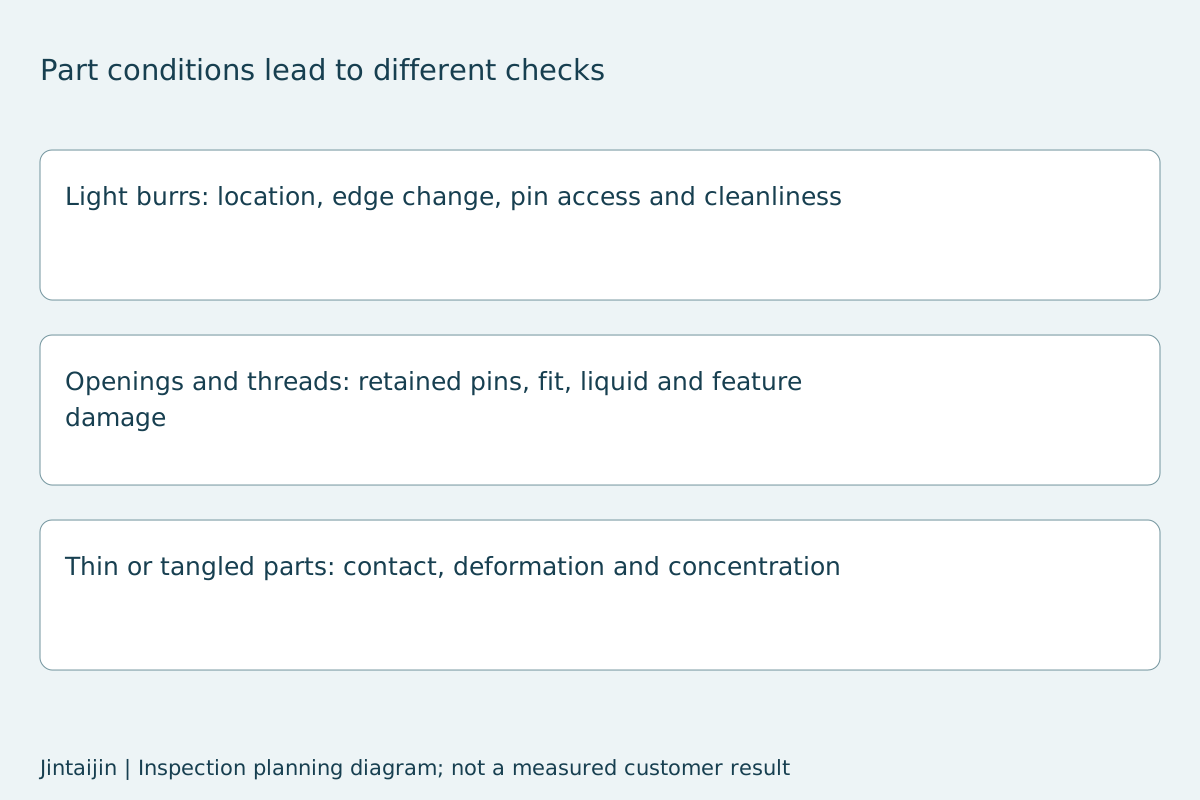
Select every applicable condition to prepare the inspection discussion.
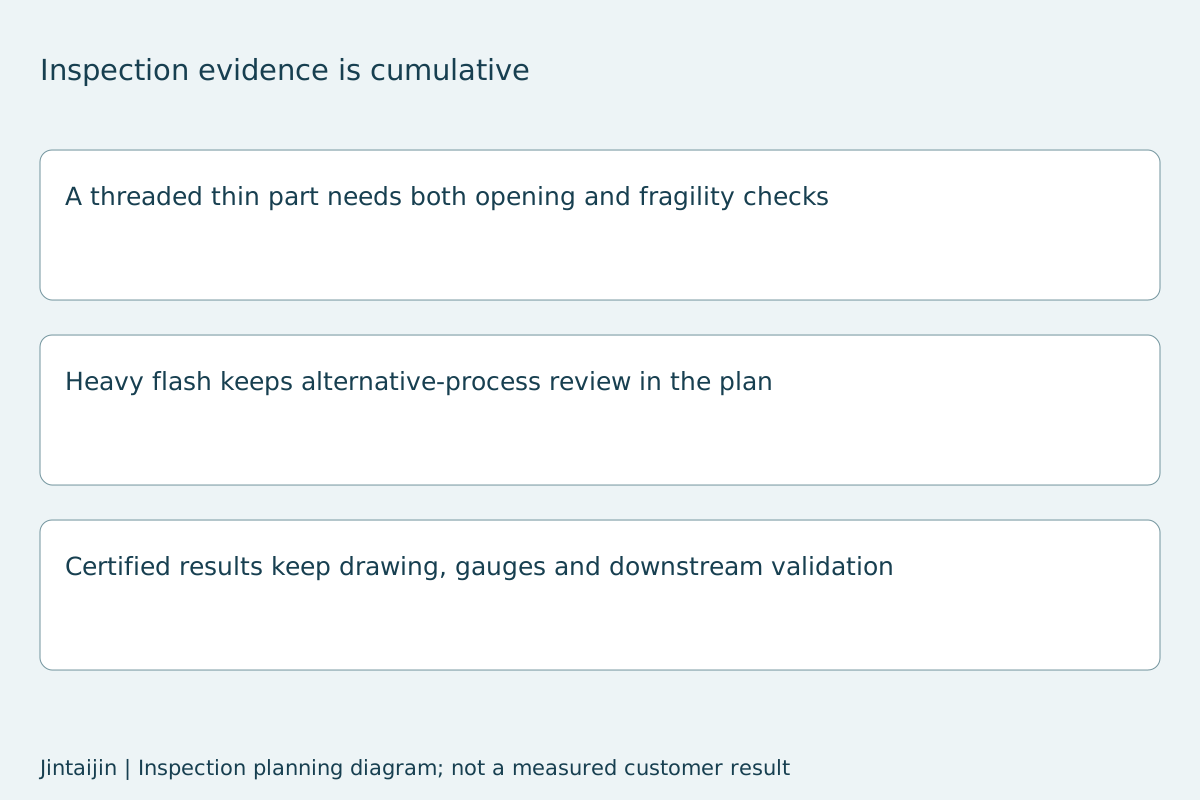
The source describes small stainless or non-ferrous parts with light burrs as a good trial candidate. That row still requires burr location, edge change, pin access and cleanliness checks. If the same part has threads or thin sections, select those conditions as well. The planner preserves all corresponding checks instead of choosing the most favorable label. A material family name alone does not establish the behavior of the exact alloy or assembled part.
The opening-and-thread row specifically requires retained-pin, thread-fit, trapped-liquid and feature-damage validation. Record which recesses can be inspected and how a pin would be recovered. Include the agreed thread gauge or drawing requirement where applicable. Do not infer that a catalog pin size will pass through every internal feature or that a visible external improvement proves a blind hole is clear.
The source marks fragile, thin or easily tangled parts as conditional. Its checks cover part-to-part contact, deformation, tangling and batch concentration. An isolated part and a production batch have different contact contexts. Keep the number of parts, their orientation and the actual trial configuration in the review record; the planner provides no safe batch-density or loading limit.
Large parts or heavy casting flash have a usually-poor-fit label in the source matrix, with an alternative deburring and finishing process to validate. Selecting a light-burr condition alongside this row does not remove that review item. Describe the heavy and light regions separately, and compare the required burr removal and protected geometry with an application specialist.
The source calls for a trial plus documented inspection when certified surface or dimensional results are needed. Include drawing requirements, gauges, cleanliness and downstream validation. The page does not supply a certification standard, pass/fail tolerance, Ra requirement or inspection sample size. Those acceptance conditions belong to the applicable drawing and the buyer-approved test method.
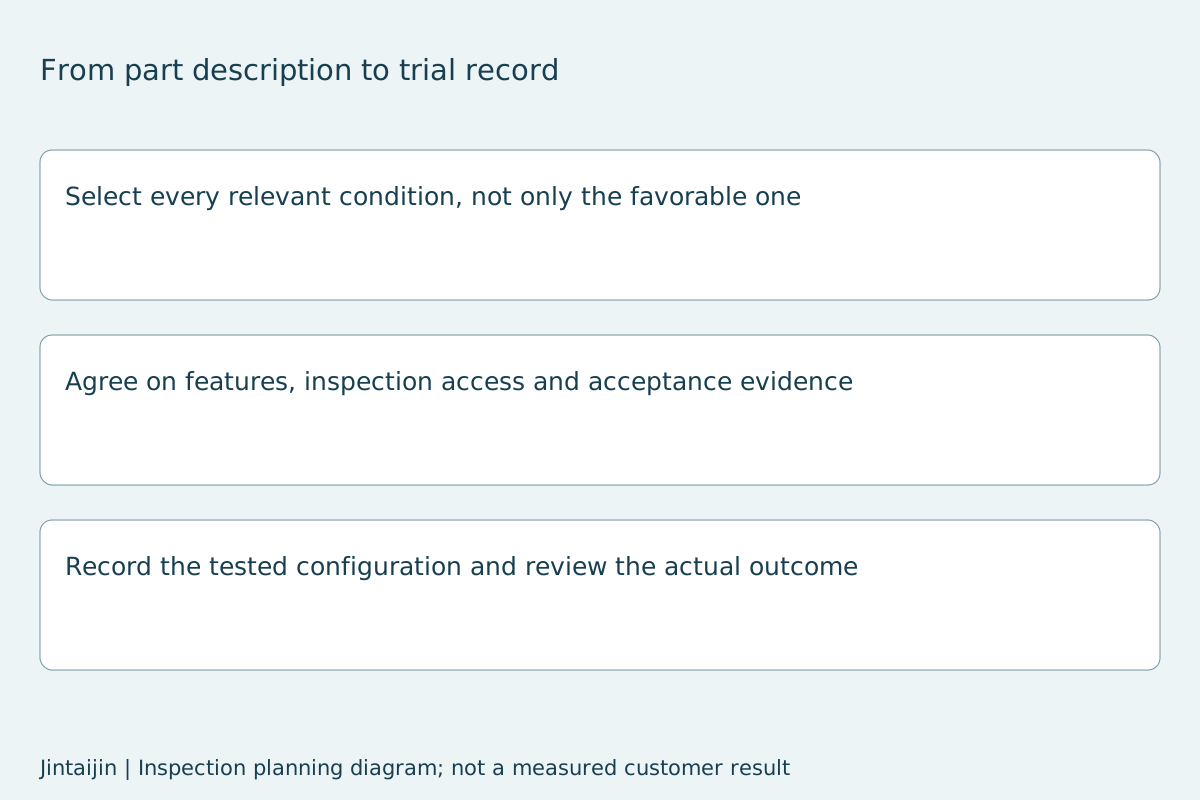
Source row assessment: Good trial candidate.
Validate: Burr location, edge change, pin access, cleanliness.
Source row assessment: Potential advantage.
Validate: Retained pins, thread fit, trapped liquid, feature damage.
Source row assessment: Conditional.
Validate: Part-to-part contact, deformation, tangling, batch concentration.
Source row assessment: Usually poor fit.
Validate: Alternative deburring and finishing process.
Source row assessment: Trial plus documented inspection.
Validate: Drawing requirements, gauges, cleanliness and downstream validation.
Jintaijin magnetic polishing workpiece matrix, rechecked 3 October 2026. Individual fit labels apply to their source rows and do not resolve conflicting combined conditions.
Email : info@surface-polish.com


 IPv6 network supported


 +86-592-2381506