


Residual Deburring Problems: What Remains, Why, and What to Test
This page reproduces the published table for deburring problems that remain after a first pass: what is left, the likely cause, what to check and the adjustment to test. Several of the rows are about features the media cannot enter, and the table openly leaves a trade-off there. No media size, hole or slot dimension, cycle time, speed or removal result is stated, implied or supplied.
Browse the published rows
Choose a section or search the published rows, then read the article text.
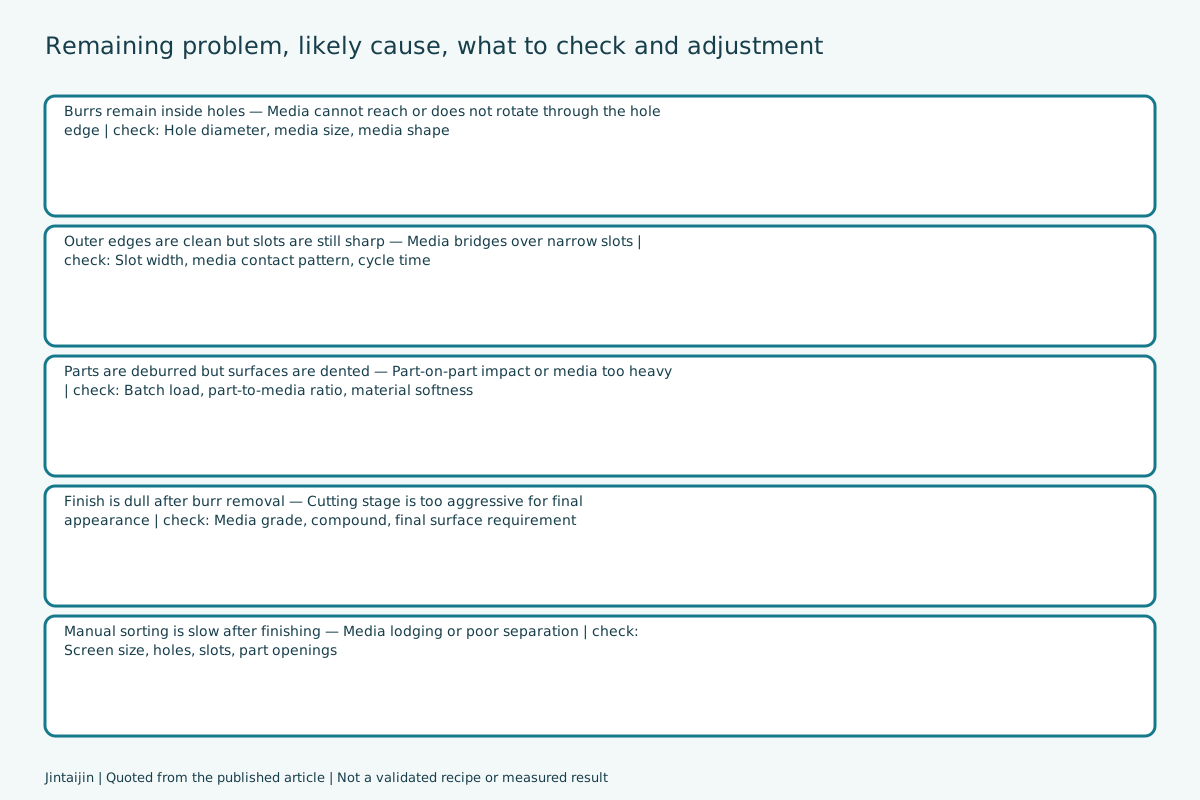
Remaining problem, likely cause, what to check and recommended adjustment
| remaining problem | likely cause | what to check | recommended adjustment |
|---|---|---|---|
| Burrs remain inside holes | Media cannot reach or does not rotate through the hole edge | Hole diameter, media size, media shape | Test smaller or better-shaped media, but avoid media that can lodge |
| Outer edges are clean but slots are still sharp | Media bridges over narrow slots | Slot width, media contact pattern, cycle time | Use media geometry that can enter the slot without sticking |
| Parts are deburred but surfaces are dented | Part-on-part impact or media too heavy | Batch load, part-to-media ratio, material softness | Increase media support, reduce batch load, or use gentler media |
| Finish is dull after burr removal | Cutting stage is too aggressive for final appearance | Media grade, compound, final surface requirement | Add a finer finishing or polishing stage |
| Manual sorting is slow after finishing | Media lodging or poor separation | Screen size, holes, slots, part openings | Improve separation and avoid media close to feature dimensions |
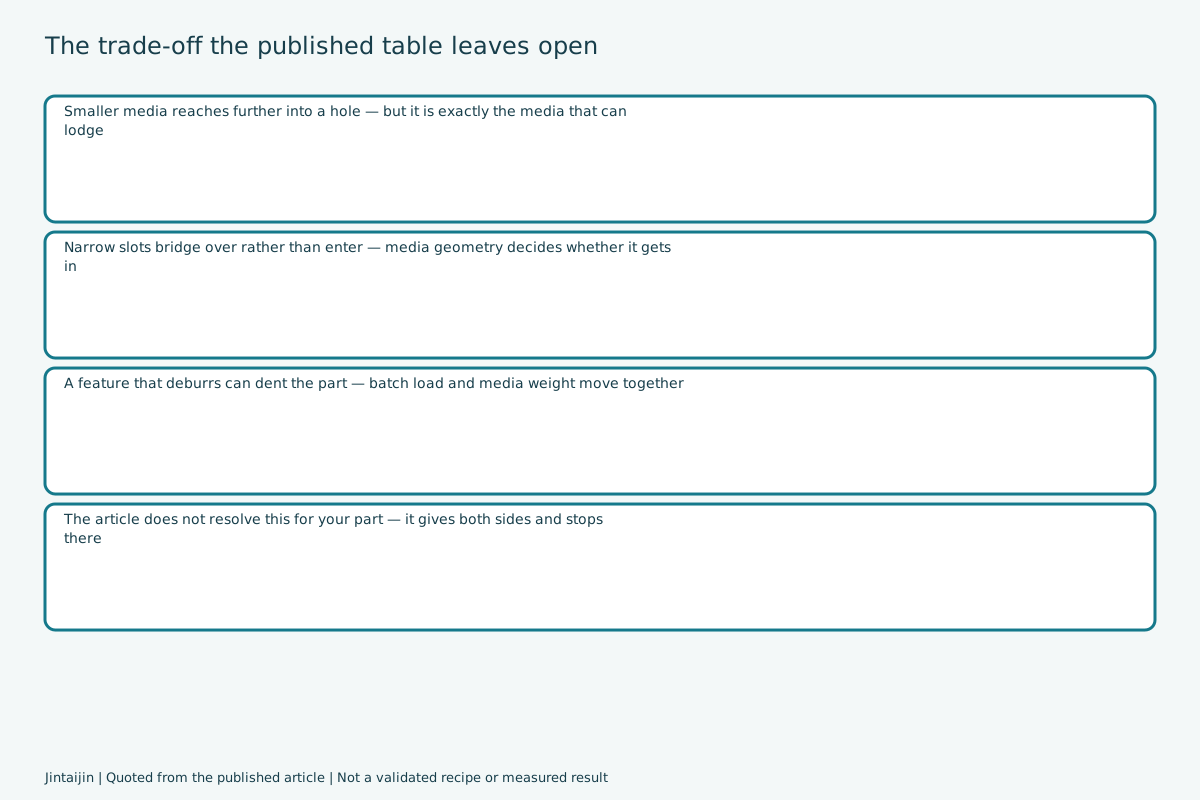
The trade-off the published table leaves open
Several rows are about features the media cannot enter: a hole edge, a narrow slot. Where the published table says to test smaller or better-shaped media, it also says to avoid media that can lodge. The two trade against each other and the article does not resolve them for your part.
Source and its limits
Published reference article; captured 5 October 2026. SHA256: 397abb23d5481346e09274bdefb82106394c9ee6b877c44d1b31afd8e8b65d4f.
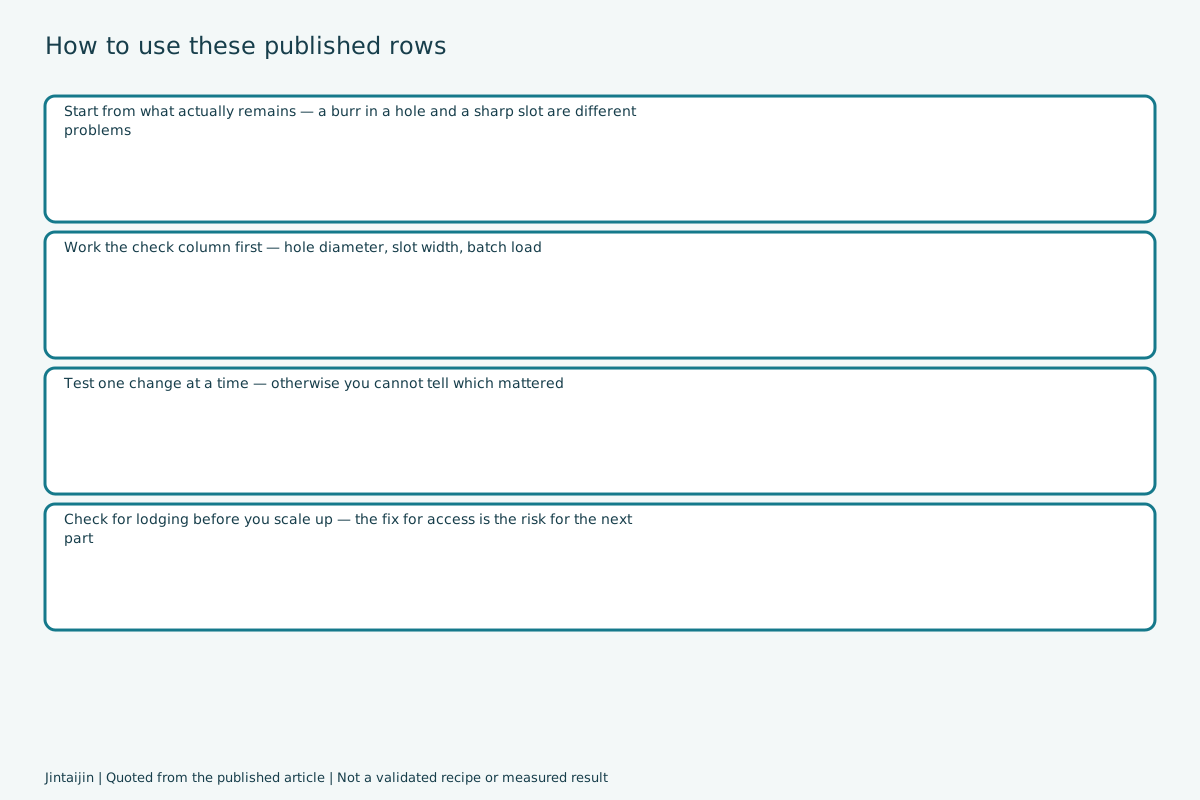
- Problems, checks and adjustments are the published article own, reproduced verbatim. They are directions to test on a sample, not a validated recipe.
- No media size, hole or slot dimension, cycle time, speed or removal result is stated, implied or supplied.
- Smaller media is not automatically safer: what reaches a feature can also lodge in it.
Table headers as published
- Remaining Problem / Likely Cause / What to Check / Recommended Adjustment
Frequently asked questions
Does smaller media always solve a hole or slot?
No. Smaller or better-shaped media can reach further, and that same media is the one that can lodge. The published table gives both sides and leaves the trade-off open for your part.
What hole or slot size should I target?
This page states none. What to check is the hole diameter and slot width against your media; the values come from your own trial and the supplier.
Does it diagnose my part?
No. A defect lists a likely cause and a first check. The same visible mark can have more than one cause, and confirming it needs a controlled test on a sample.
Does it state cycle time, speed or temperature?
No. No cycle time, speed, amplitude, load ratio, concentration, temperature or removal result is stated or implied anywhere on this page or in its download.
Are the tables quoted exactly?
Yes. Every cell is taken from a single source table cell and verified against the captured page, including wording and punctuation.
 +86-592-2381506

 IPv6 network supported