


Medical Instrument Part Finishing: Defect, Cause, Check and Adjustment
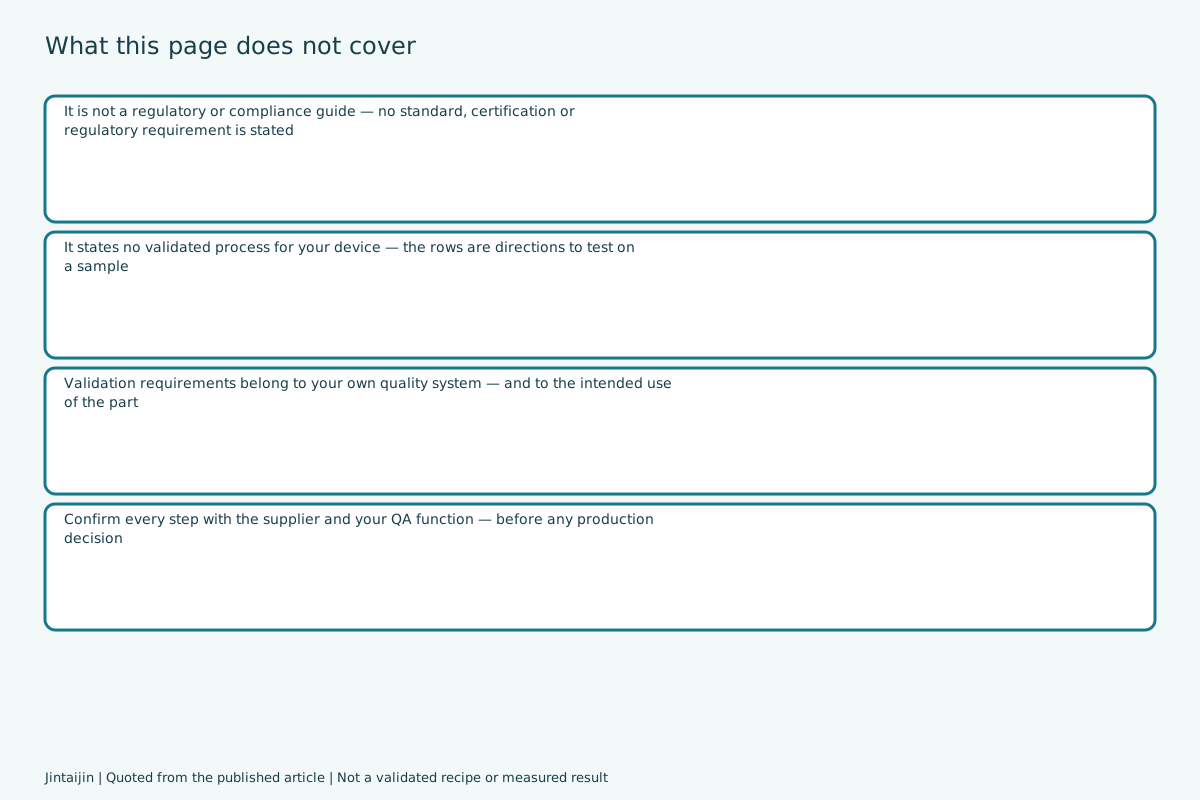
This page reproduces the published troubleshooting table for finishing medical instrument parts: the defects with their likely causes, what to check first and the adjustment to test. Checks and adjustments are the article own, reproduced verbatim. This page states no regulatory requirement, standard or certification, and is not a compliance guide: validation requirements belong to your own quality system and to the intended use of the part.
Browse the published rows
Choose a section or search the published rows, then read the article text.
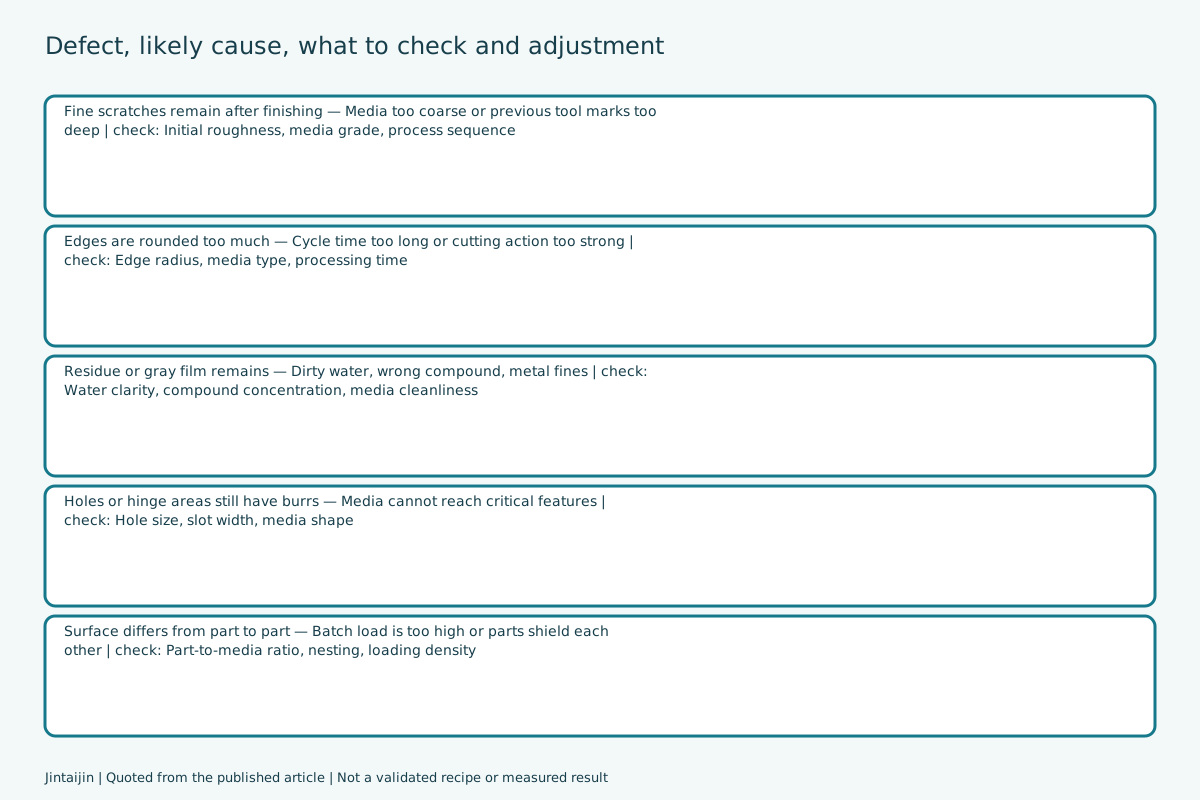
Defect, likely cause, what to check and recommended adjustment
| defect | likely cause | what to check | recommended adjustment |
|---|---|---|---|
| Fine scratches remain after finishing | Media too coarse or previous tool marks too deep | Initial roughness, media grade, process sequence | Add a controlled smoothing step before final polishing |
| Edges are rounded too much | Cycle time too long or cutting action too strong | Edge radius, media type, processing time | Reduce cutting time and test gentler media |
| Residue or gray film remains | Dirty water, wrong compound, metal fines | Water clarity, compound concentration, media cleanliness | Improve rinsing and use suitable finishing compound |
| Holes or hinge areas still have burrs | Media cannot reach critical features | Hole size, slot width, media shape | Test media shape and size against actual geometry |
| Surface differs from part to part | Batch load is too high or parts shield each other | Part-to-media ratio, nesting, loading density | Reduce load and improve media support around parts |
Source and its limits
Published reference article; captured 5 October 2026. SHA256: eeff0be97d839e169e99b8950f2c20d710ed2ccd86bf5822b732d6e83f652298.
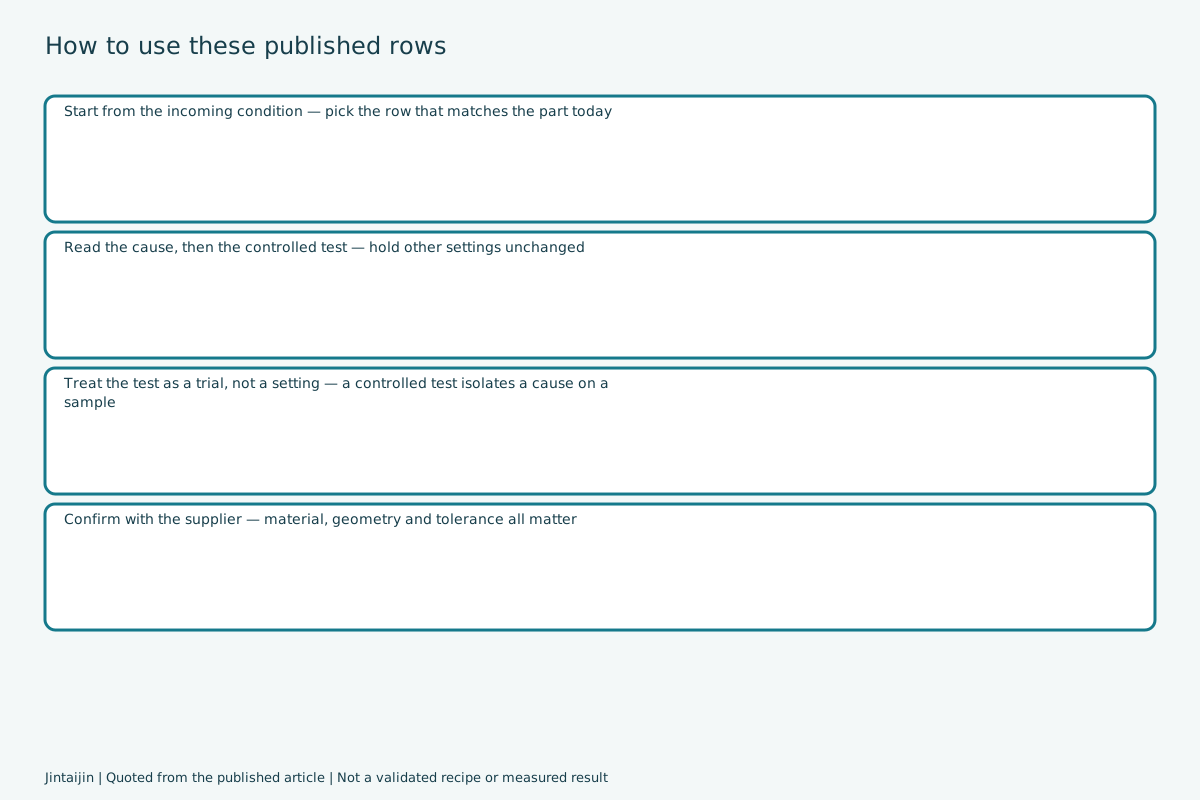
- Checks and adjustments are the published article own, reproduced verbatim. They are directions to test on a sample, not a validated recipe.
- Medical instrument parts carry their own regulatory and validation requirements. This page states none of them and is not a compliance guide.
- A defect cause is a likely direction, not a diagnosis.
Table headers as published
- Defect / Likely Cause / What to Check / Recommended Adjustment
Frequently asked questions
Does this give me a machine or a recipe?
No. These are the published article own rows reproduced verbatim. They describe equipment classes and trial methods, not a specific machine, and they are not a validated production recipe.
Does this page state regulatory or compliance requirements?
No. No standard, certification or regulatory requirement appears on this page or in its download. Validation requirements belong to your own quality system and to the intended use of the part.
Does it diagnose my part?
No. A defect lists a likely cause and a first check. The same visible mark can have more than one cause, and confirming it needs a controlled test on a sample.
Does it state cycle time, speed or temperature?
No. No cycle time, speed, amplitude, load ratio, concentration, temperature or removal result is stated or implied anywhere on this page or in its download.
Are the tables quoted exactly?
Yes. Every cell is taken from a single source table cell and verified against the captured page, including wording and punctuation.
 +86-592-2381506

 IPv6 network supported