Jintaijin | Magnetic-flat series
OBD-30 vs OBD-70 magnetic finisher comparison
Compare OBD-30 and OBD-70 published workpiece capacity, processing area, dimensions, net weight and motor rating. Export your comparison with sources.
This comparison starts with OBD-30 and OBD-70 in the on-floor magnetic-finishing family. Review what changes in the published loading reference, processing area, outer envelope and rating before requesting a representative-part trial. You can change the two models below and export the current selection. Catalogue values describe a reference configuration; they do not confirm usable loading or accepted output for your parts.
Compare two published model records
Optional mass must be positive with at most two decimal places; 1000000 kg is a software ceiling, not machine capability. Margins compare only the catalogue number, with no load approval.
OBD-30 vs OBD-70: source fields side by side
| Published field | OBD-30 | OBD-70 |
|---|---|---|
| Published workpiece capacity (kg) | 30.0 | 70.0 |
| Processing area dimensions (mm) | 1000 × 580 | 1900 × 680 |
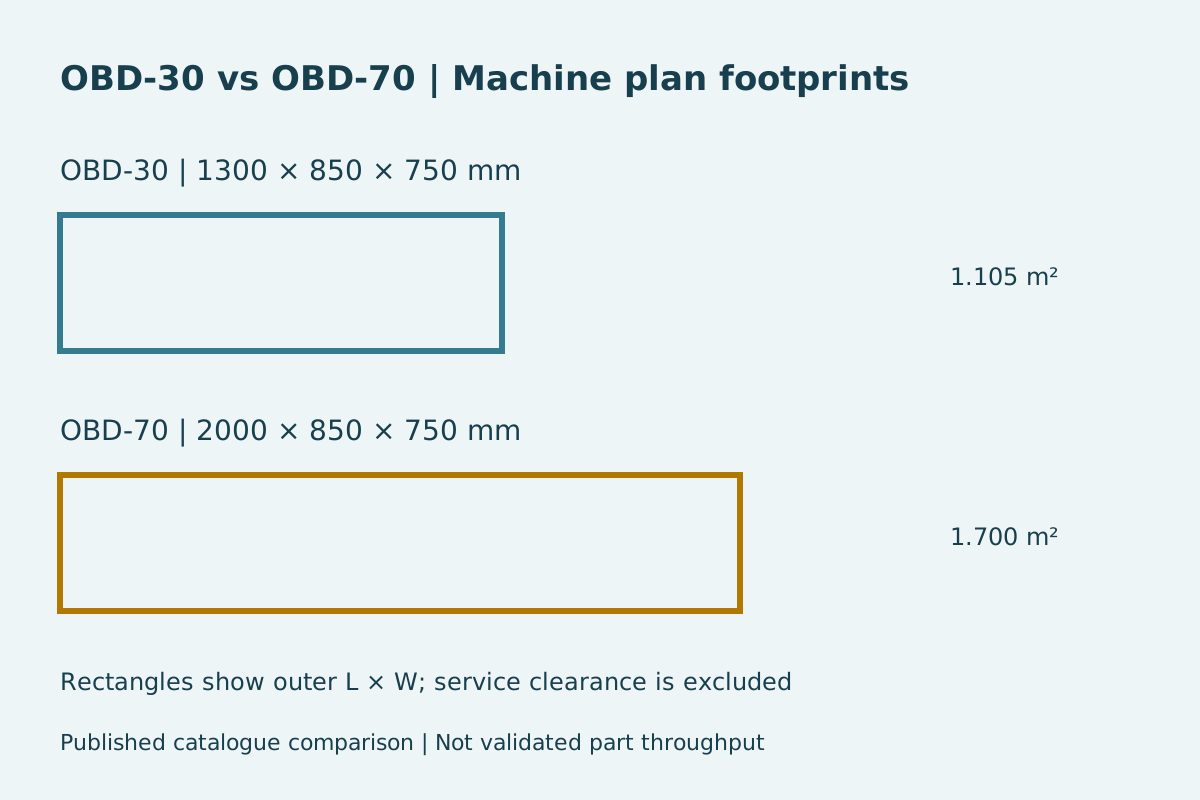
| Outer machine L × W × H (mm) | 1300 × 850 × 750 | 2000 × 850 × 750 |
| Net machine weight (kg) | 350.0 | 600.0 |
| Motor rating (kW) | 4.0 | 11.0 |
| Published speed range (RPM) | 0-1800 | 0-1800 |
Checked 3 October 2026 against matching tables on the OBD-30 product page and the OBD-100 product page. kg/mm/kW fields are read under their explicit row headings; imperial values are not converted into new data.
Interpret this pair's loading and layout differences
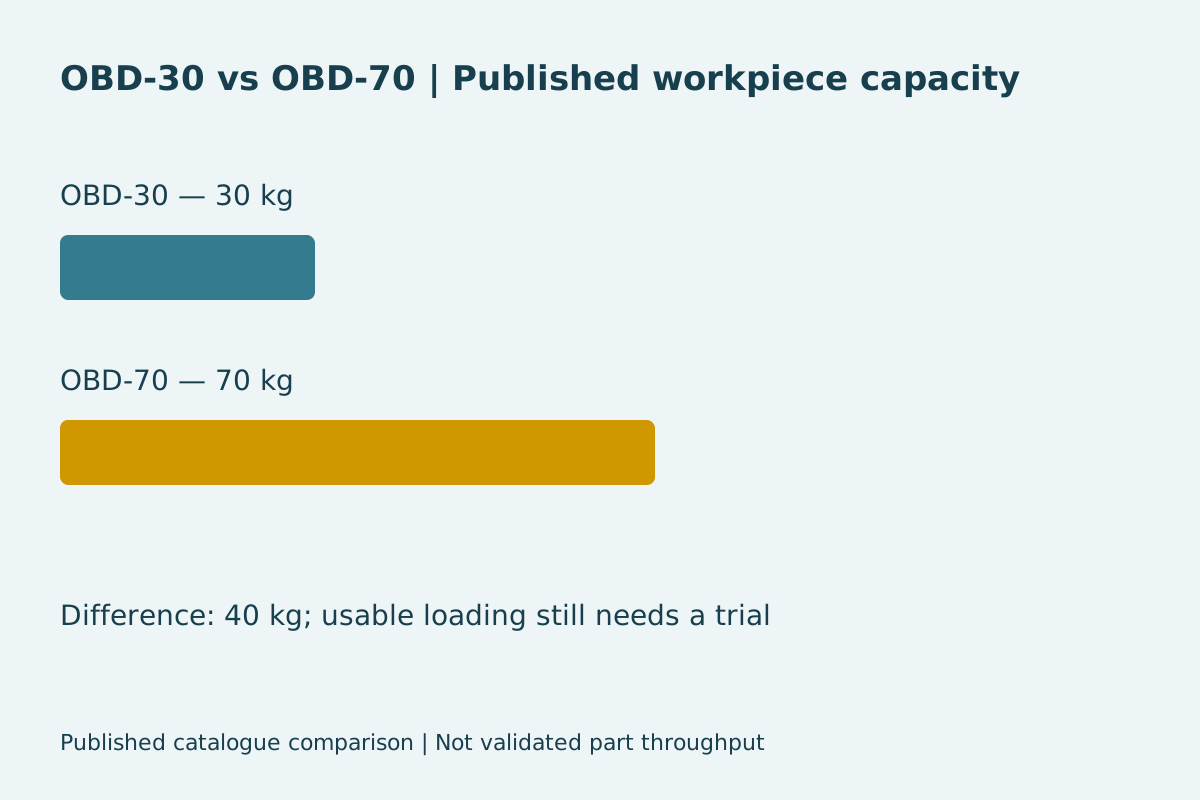
OBD-70 lists 70 kg against 30 kg for OBD-30: a 40 kg catalogue difference. The processing-area entries are 1000 × 580 mm and 1900 × 680 mm. A larger published area does not establish a permissible part envelope or guarantee movement with pins.
The published plan footprint changes from 1.105 m² for OBD-30 to 1.700 m² for OBD-70, a difference of 0.595 m². Check the actual supplied arrangement and required access space separately; this arithmetic is only outer length times width.
Keep drawing-sensitive surfaces, thread fit, pin retention and cleanliness inspection in the trial record. Supply actual part geometry and batch information when asking whether either published configuration can meet your requirement.
Rating and handling information to confirm
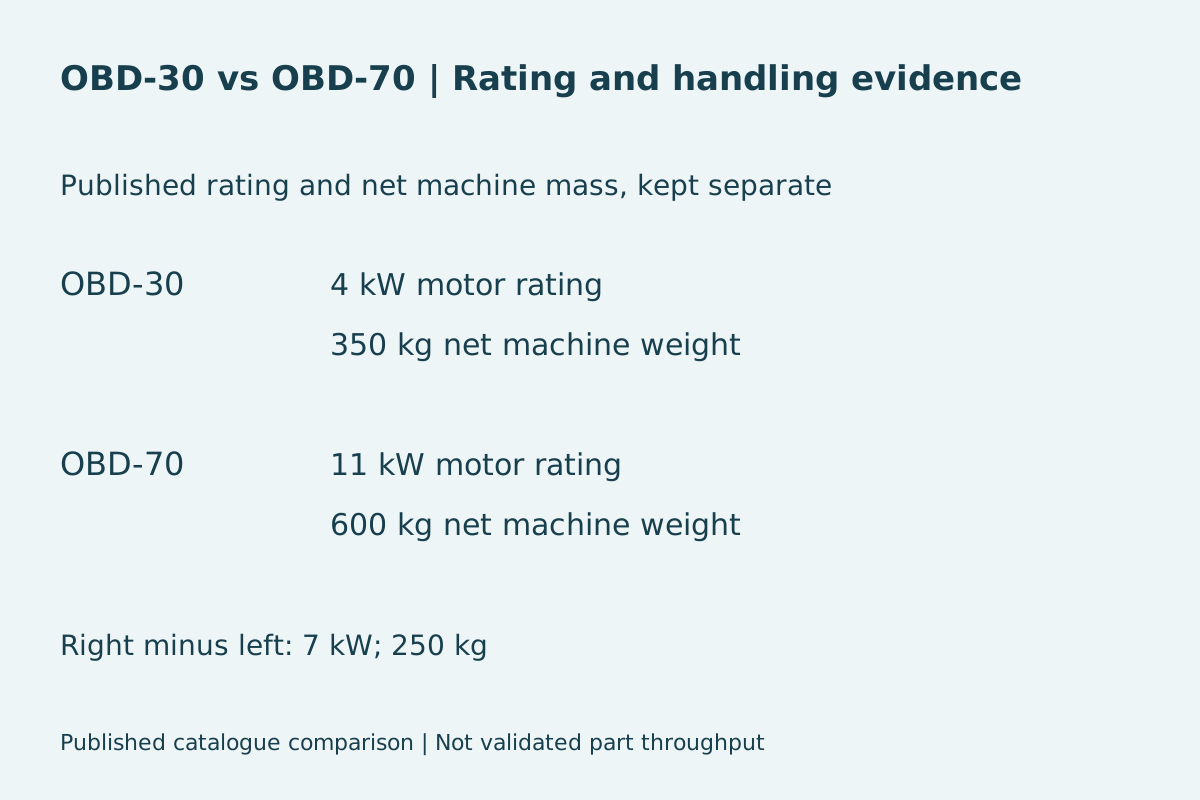
OBD-30 lists 4 kW and OBD-70 lists 11 kW; the nameplate difference is 7 kW. It is not an energy-saving estimate, required supply calculation or permission to connect a machine.
The catalogue net machine mass differs by 250 kg (350 vs 600 kg). Request packed gross mass and handling instructions; this table cannot approve a lift, floor or shipment.
Both tables list 0-1800 RPM. That published range does not select a finishing speed for any material. Ask for the current supplied configuration and a controlled trial with your representative parts.
Questions about OBD-30 vs OBD-70
Does OBD-70 require more plan floor area than OBD-30?
The published plan footprint changes from 1.105 m² for OBD-30 to 1.700 m² for OBD-70, a difference of 0.595 m². Check the actual supplied arrangement and required access space separately; this arithmetic is only outer length times width.
Does the 40 kg catalogue capacity difference prove more output?
No. It compares nominal workpiece-capacity entries. Geometry, movement, contact risk, pin access, cycle and acceptance must be validated on representative parts.
Does the 7 kW rating difference predict energy use?
No. Nameplate motor rating is separate from measured operating input power, load, run time and electrical installation requirements.
Can the processing areas determine the largest acceptable part?
No. Compare the published two-dimensional area entries, then confirm container, pin travel, access and actual part movement with the supplier.
Related references and inquiry
Browse all six magnetic-flat catalogue models. Review outer footprint arithmetic. Build a part-condition trial inspection plan.
Request a OBD-30 vs OBD-70 configuration review with your part drawing, trial target and current comparison export.
 +86-592-2381506

 IPv6 network supported