


Plastic Eyeglass Frame Polishing: Defect, Cause, Check and Adjustment
This page reproduces the published troubleshooting table for plastic eyeglass frames: the defects with their likely causes, what to check first and the adjustment to test. This table is written for plastic frames and does not transfer to acetate or metal. No media, compound, cycle time, temperature or finish value is stated, implied or supplied.
Browse the published rows
Choose a section or search the published rows, then read the article text.
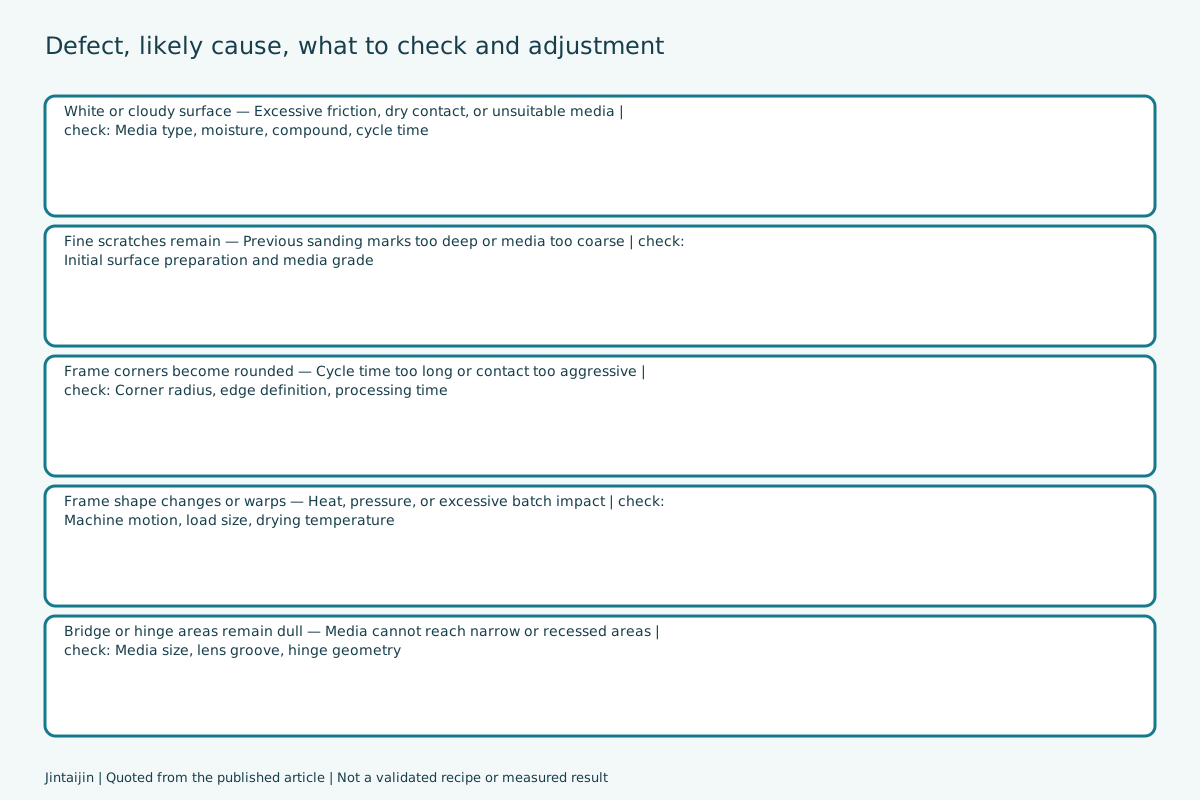
Defect, likely cause, what to check and recommended adjustment
| defect | likely cause | what to check | recommended adjustment |
|---|---|---|---|
| White or cloudy surface | Excessive friction, dry contact, or unsuitable media | Media type, moisture, compound, cycle time | Use gentler media and reduce heat or friction buildup |
| Fine scratches remain | Previous sanding marks too deep or media too coarse | Initial surface preparation and media grade | Add controlled smoothing before final polishing |
| Frame corners become rounded | Cycle time too long or contact too aggressive | Corner radius, edge definition, processing time | Shorten cutting stage and separate final polishing |
| Frame shape changes or warps | Heat, pressure, or excessive batch impact | Machine motion, load size, drying temperature | Reduce heat exposure and avoid heavy part-on-part contact |
| Bridge or hinge areas remain dull | Media cannot reach narrow or recessed areas | Media size, lens groove, hinge geometry | Test smaller or better-shaped media without causing lodging |
Why this page is separate from acetate frames
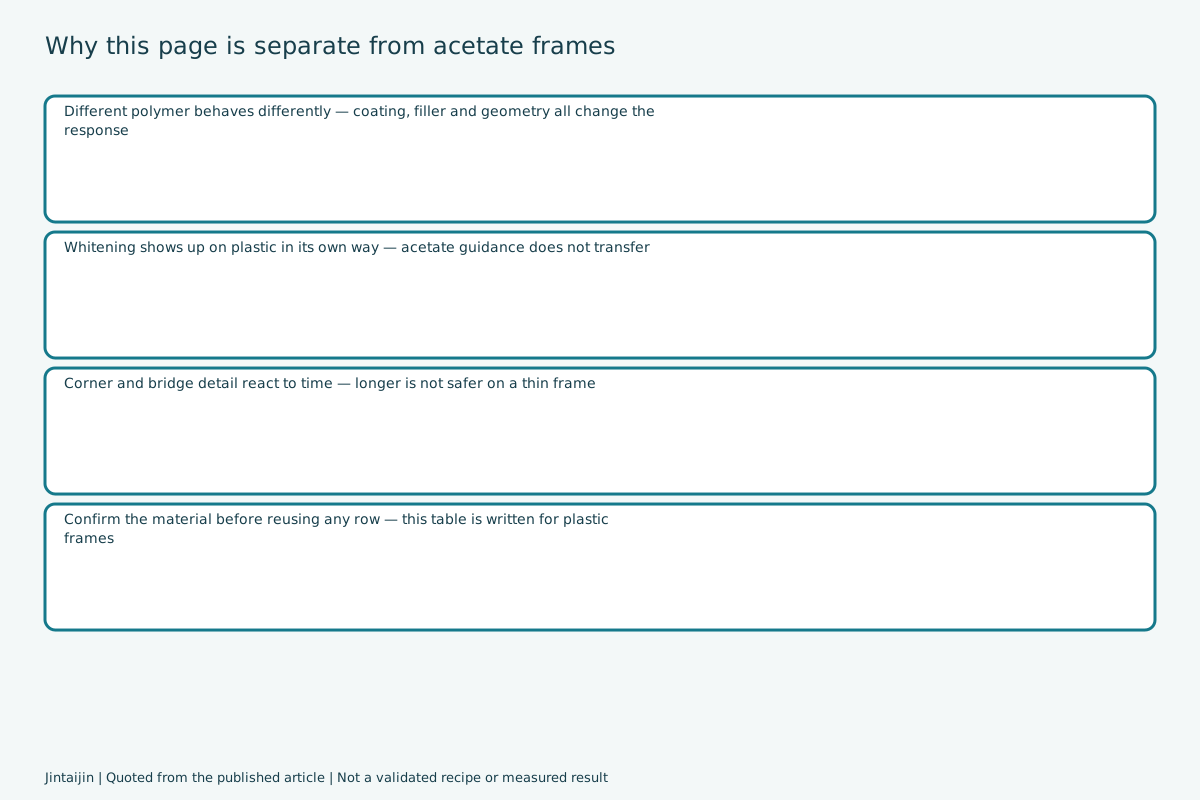
This table is written for plastic eyeglass frames. It is separate from acetate frame guidance, and the two are not interchangeable: polymer, coating and geometry differ, and whitening behaves differently between them.
Source and its limits
Published reference article; captured 5 October 2026. SHA256: 566a04f78308918fe4489eec33289e30b108af5be87532489f11a4176a1f7d11.
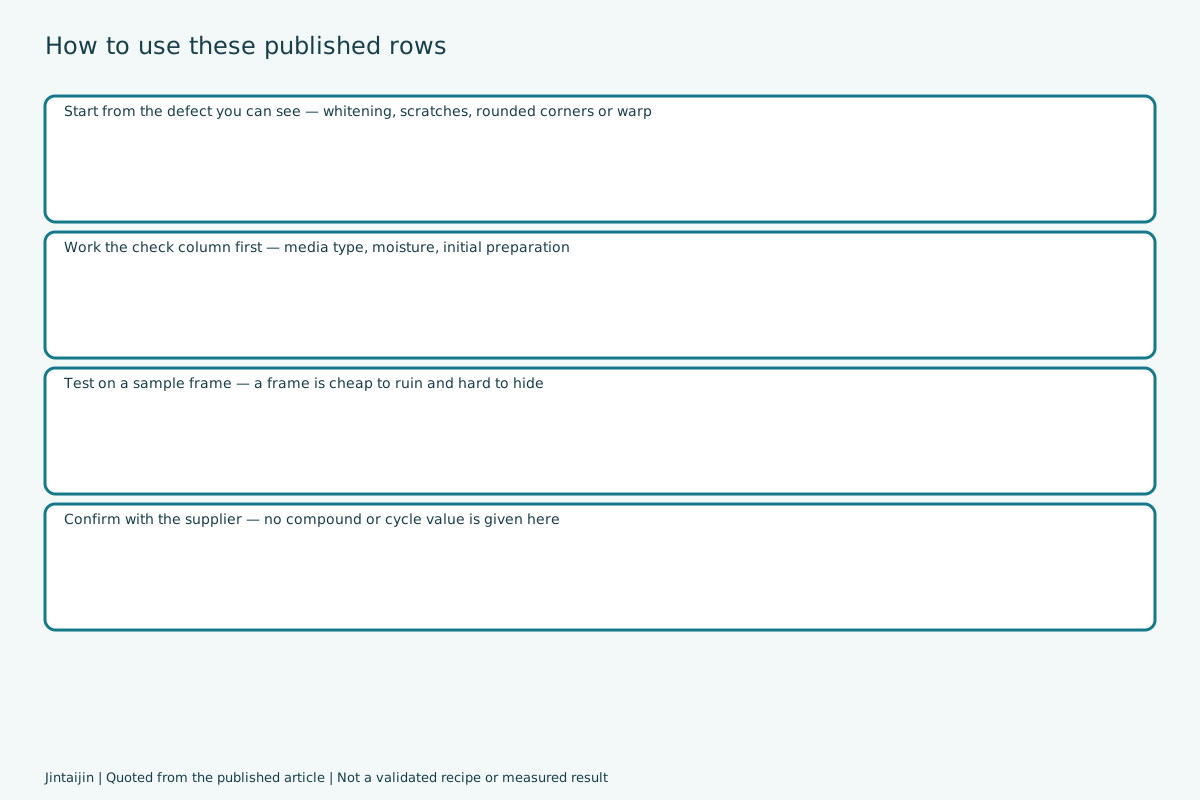
- Defects, checks and adjustments are the published article own, reproduced verbatim. They are directions to test on a sample, not a validated recipe.
- No media, compound, cycle time, temperature or finish value is stated, implied or supplied.
- Plastic frame guidance does not transfer to acetate or metal frames. Confirm for your own material.
Table headers as published
- Defect / Likely Cause / What to Check / Recommended Adjustment
Frequently asked questions
Does this guidance apply to acetate frames?
No. This table is written for plastic eyeglass frames. Polymer, coating and geometry differ, and whitening behaves differently, so do not reuse these rows for acetate or metal.
Is a longer polish safe on a plastic frame?
No. Longer is not safer: the published rows link corner rounding and warping to cycle time and contact aggression. Test the shortest cycle that meets your acceptance criteria.
Does it diagnose my part?
No. A defect lists a likely cause and a first check. The same visible mark can have more than one cause, and confirming it needs a controlled test on a sample.
Does it state cycle time, speed or temperature?
No. No cycle time, speed, amplitude, load ratio, concentration, temperature or removal result is stated or implied anywhere on this page or in its download.
Are the tables quoted exactly?
Yes. Every cell is taken from a single source table cell and verified against the captured page, including wording and punctuation.
 +86-592-2381506

 IPv6 network supported