Polishing Machine Troubleshooting: Symptom, What to Check First and Possible Direction
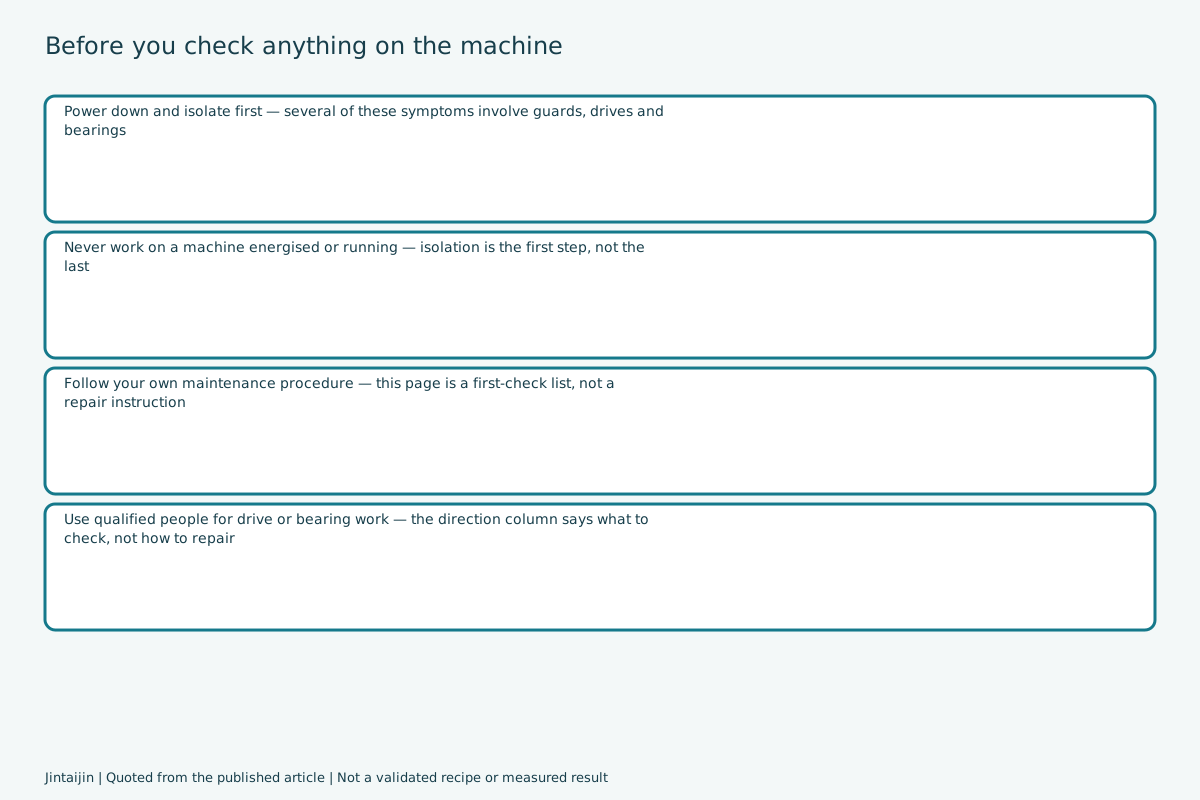
This page reproduces the published machine troubleshooting table: the observed symptom, what to check first and the possible direction. This is a first-check list, not a repair procedure. Power down and isolate before touching anything: several of these symptoms involve guards, drives and bearings that must not be worked on while the machine is energised or running.
Browse the published rows
Choose a section or search the published rows, then read the article text.
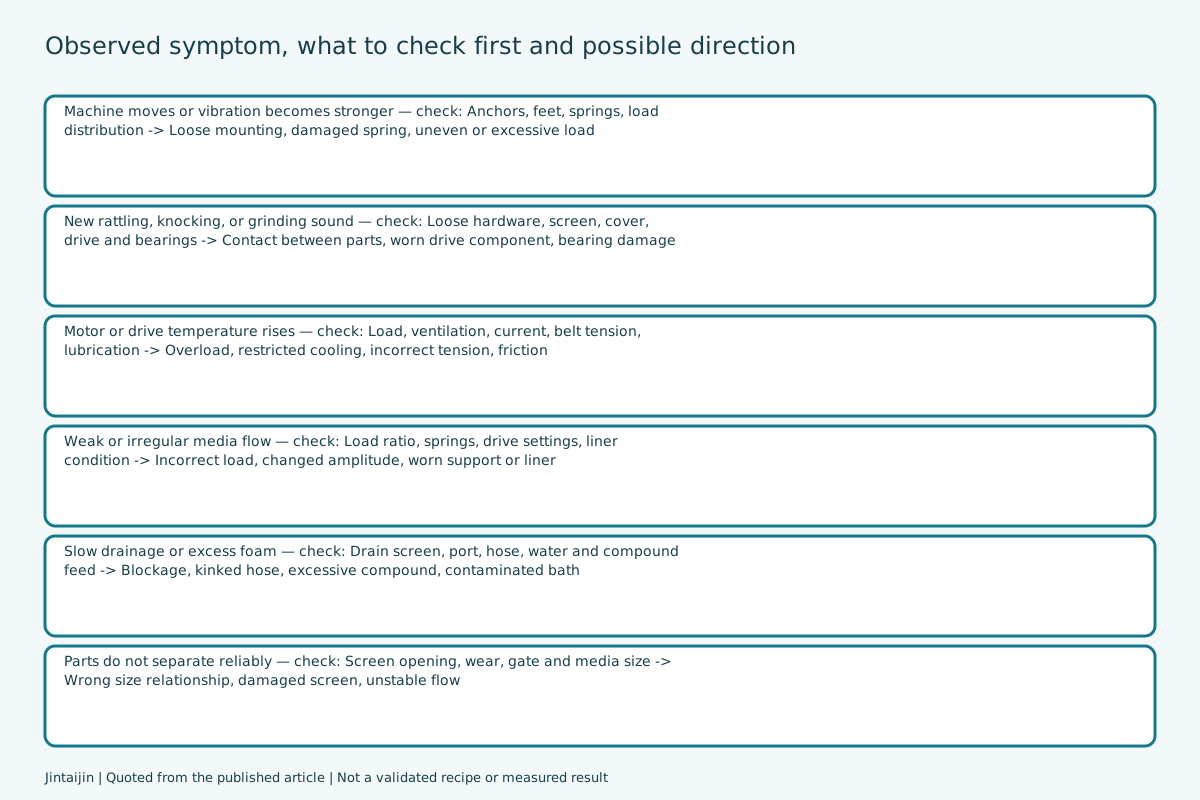
Observed symptom, what to check first and possible direction
| observed symptom | check first | possible direction |
|---|---|---|
| Machine moves or vibration becomes stronger | Anchors, feet, springs, load distribution | Loose mounting, damaged spring, uneven or excessive load |
| New rattling, knocking, or grinding sound | Loose hardware, screen, cover, drive and bearings | Contact between parts, worn drive component, bearing damage |
| Motor or drive temperature rises | Load, ventilation, current, belt tension, lubrication | Overload, restricted cooling, incorrect tension, friction |
| Weak or irregular media flow | Load ratio, springs, drive settings, liner condition | Incorrect load, changed amplitude, worn support or liner |
| Slow drainage or excess foam | Drain screen, port, hose, water and compound feed | Blockage, kinked hose, excessive compound, contaminated bath |
| Parts do not separate reliably | Screen opening, wear, gate and media size | Wrong size relationship, damaged screen, unstable flow |
Safety first
These rows are a first-check list, not a repair instruction. Power down, isolate and follow your own maintenance procedure before touching any machine; several of these symptoms involve guards, drives and bearings that must not be worked on while energised or running.
Source and its limits
Published reference page; captured 5 October 2026. SHA256: 7bd3939bfd6deb57f7732f8d24438b699fbb0a1134aa44ddd4c12a9eaed896f6.
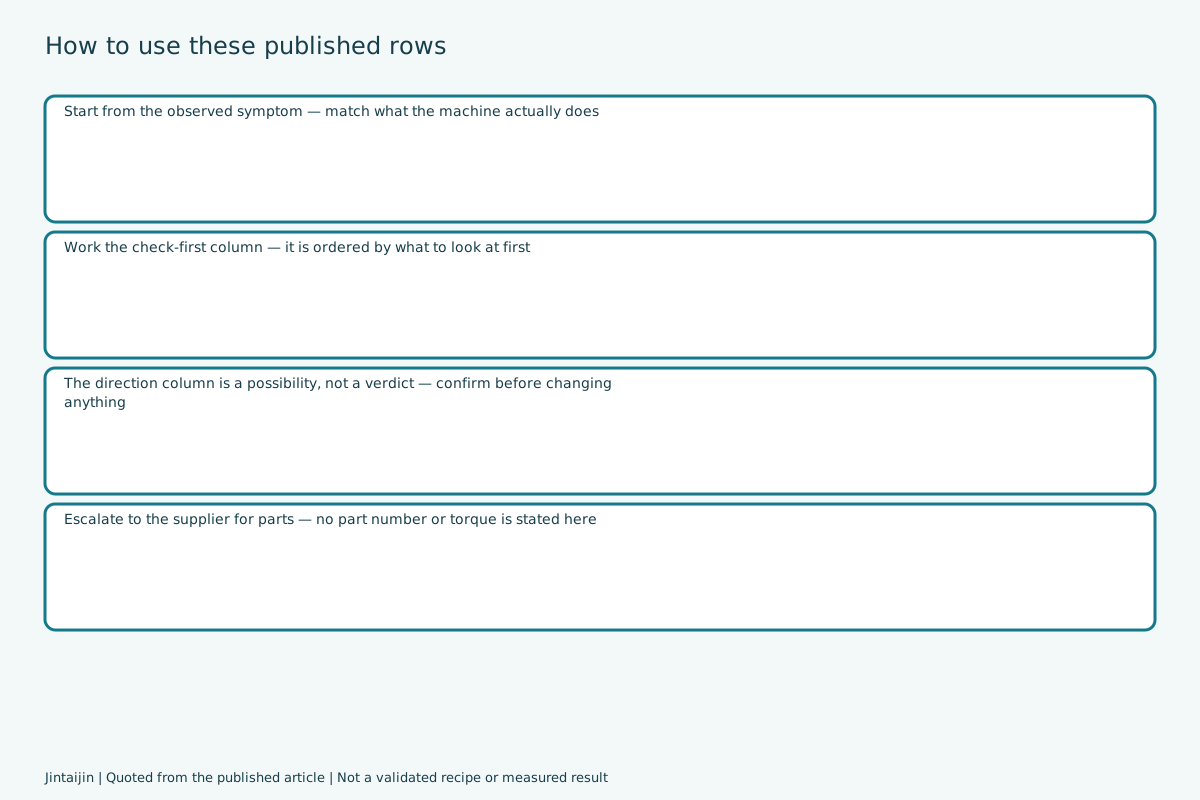
- Checks and possible directions are the published article own, reproduced verbatim. They are a first-check list, not a repair procedure.
- No machine model, part number, torque, temperature limit or replacement interval is stated, implied or supplied.
- Work on machinery only under your own maintenance procedure and applicable safety rules.
Table headers as published
- Observed symptom / Check first / Possible direction
Frequently asked questions
Is this a repair procedure?
No. It is a first-check list. Power down and isolate before touching anything, and follow your own maintenance procedure and safety rules.
Can I work on the machine while it is running?
No. Several of these symptoms involve guards, drives and bearings that must not be worked on while the machine is energised or running. Isolation is the first step.
Does it state cycle time, speed or temperature?
No. No cycle time, speed, amplitude, load ratio, concentration, temperature or removal result is stated or implied anywhere on this page or in its download.
Are the tables quoted exactly?
Yes. Every cell is taken from a single source table cell and verified against the captured page, including wording and punctuation.
Can I apply this to a different part or machine?
These rows describe what the article covers. Confirm every field and limit for your own part, drawing revision and equipment.
 +86-592-2381506

 IPv6 network supported