A buyer in Cologne, Germany in energy equipment has a forged F316 weld-neck flange whose bore and bolt-hole entry burrs must be removed without disturbing the serrated raised face. SurfacePolish supplies finishing machines, media and compounds across borders and runs a free sample trial, returning representative parts from Xiamen with an observation record and a proposed media, compound and cycle direction. This brief is written for a buyer in Cologne working on energy equipment; it describes equipment, media and a scoped sample review, not a local polishing service.
What must the part be clean of, and what method and limit does the buyer use to verify cleanliness before assembly, welding, coating or a leak test?
Is deburring done before or after heat treatment, and in what metallurgical and surface condition does the part arrive at the finishing step?
Does the drawing state an edge break or an edge round at each controlled edge, and what maximum radius applies where over-rounding is the risk?
Deburring specifications fail more often on the incoming condition than on the finishing parameters. Two machining suppliers can deliver the same part number with visibly different burr height, edge sharpness, tool marks and trapped chips, because feed, tool wear and coolant strategy differ. A cycle that clears one supplier's burr may leave the other's root attached. Before writing any requirement, record what arrives: where the burrs sit, how tall they are, how sharp the edges are, the roughness at named points and the mass of the part. Keep one as-received reject in the sample set so the route is tested against the worst credible input rather than an average one. When the requirement is written, state the starting condition it assumes.
A working charge is a consumable with a life curve, and most batch inconsistency is a media condition problem rather than a machine problem. Media wears down, changes size and shape, loses its cutting edge, and eventually fractures into smaller pieces and fines. As it wears, the cut rate falls and the finish improves, so a setting that was correct on a fresh charge drifts over a few hundred cycles. The charge mass also falls as media breaks, which changes the load ratio and the energy per part. Screen out broken pieces and fines, measure a sample against the size class originally specified, top up to a defined mass, and replace on a wear trigger rather than on appearance. Keep the media history with the batch record.
| Media | Best fit | Watch out for |
|---|---|---|
| Dry media, walnut shell with an abrasive or polishing compound | Light dry deburring, deflashing, drying and low-residue finishing of small parts and of features where a wet bath is difficult to remove | Low cutting energy so it cannot remove a substantial burr root, produces dust needing extraction, and consumption is high |
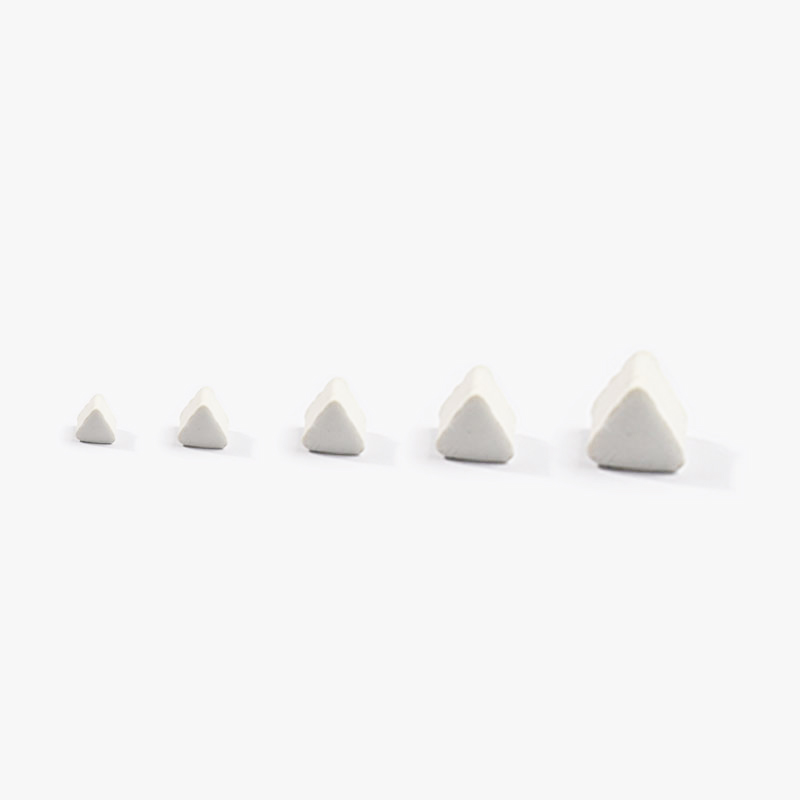
| Plastic media triangles and pyramids in a soft to medium grade | Deburring aluminium, brass and other soft or thin-walled parts where surface marking and edge rounding must stay minimal | Slow cut rate, media deforms and wears out of shape, and a worn charge behaves noticeably differently from a fresh one |
| Hardened steel media, balls and pins | Burnishing and bright finishing of stainless and hardened parts, and light edge consolidation where a cutting action is not wanted | Changes the surface by deformation rather than cutting, can work-harden or smear a soft surface, and needs corrosion protection and separation from acidic compounds |
| Heavy-cut ceramic, angle-cut triangles in a coarse size class | Removing a substantial or thick burr root from open external edges, flange corners, cast bosses and large tapped entries on steel and stainless parts | Cuts controlled edges and gasket lands as readily as burrs, leaves a coarse surface, and lodges in slots whose width approaches the media section |
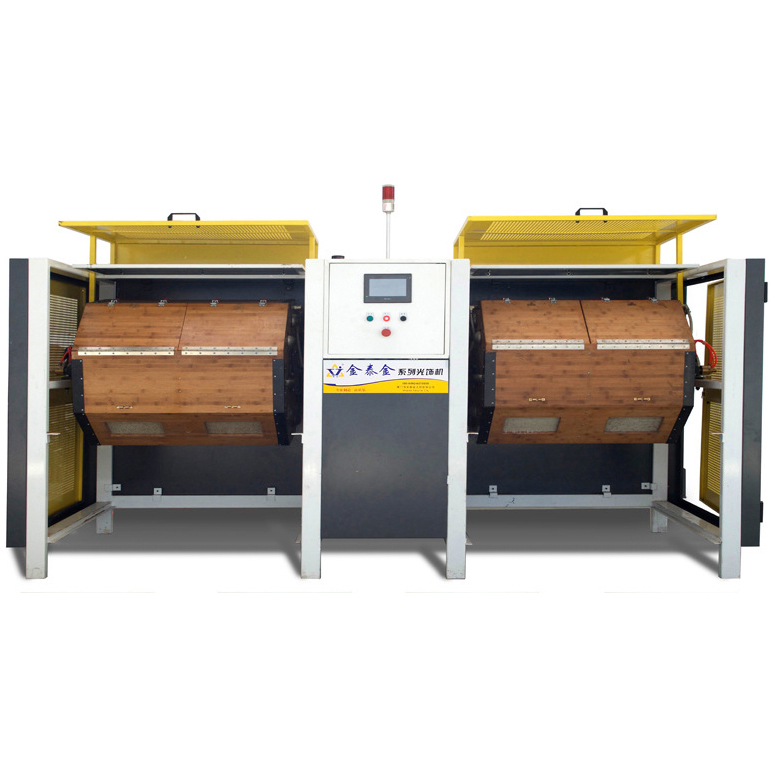
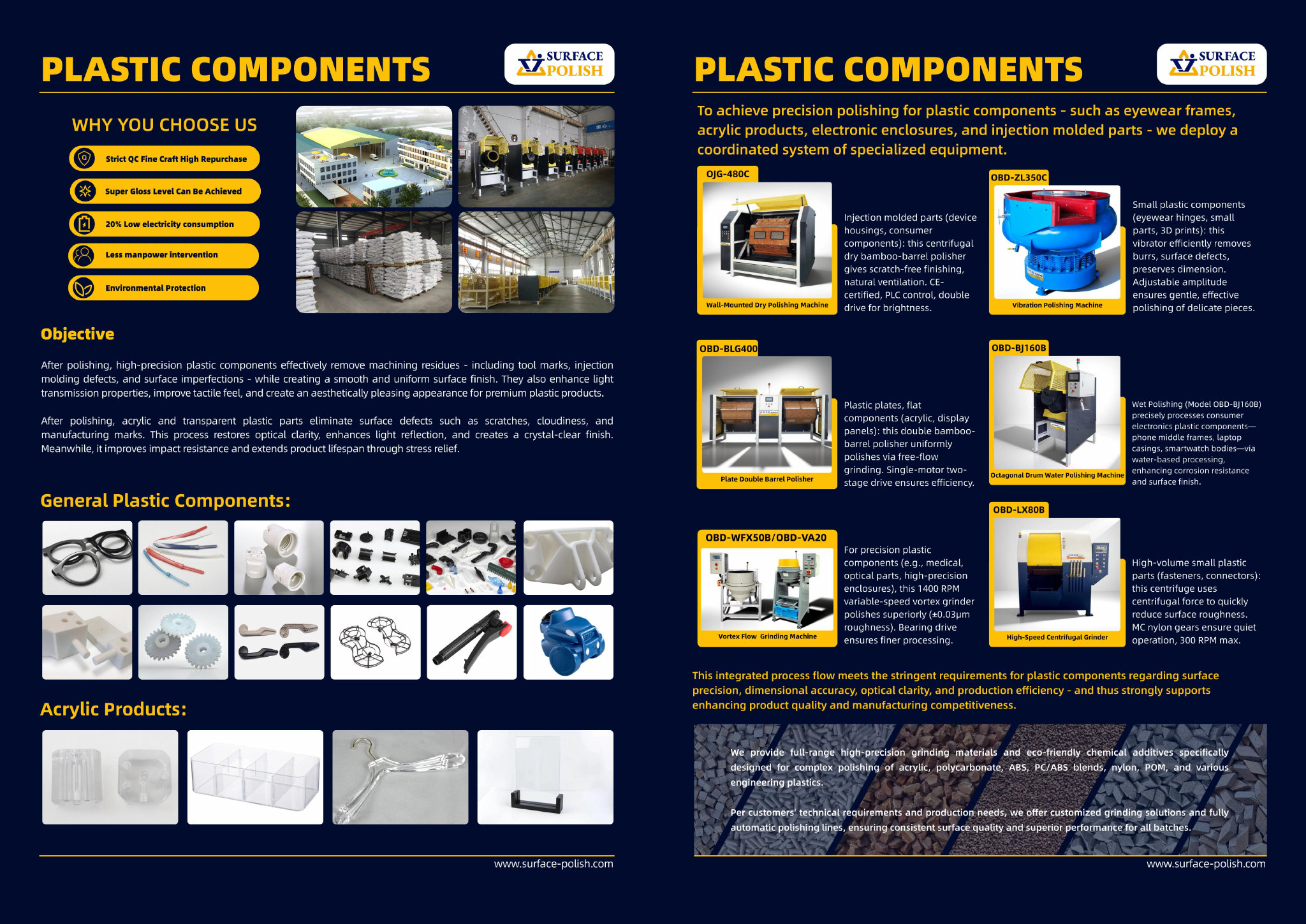
High-pressure routes, disc machines, grinding finishing machines and centrifugal barrels, earn their place when a heavy burr or a large batch makes the gentle options impractical. The trade is paid in three currencies. Edge rounding accelerates, so controlled edges need masking, orientation control or a shorter cycle. Distortion risk rises on thin walls, thin plates and unsupported sections, because the same pressure that cuts a burr can also move material. And the charge has to be balanced: centrifugal barrels in particular need an even barrel weight and a planned stop time, or the load shifts and results vary between barrels. Ask whether the part family has enough edge tolerance and section stiffness to absorb that energy. If it does not, the gentler route usually costs less overall.
| Machine route | Where it fits | What it will not do |
|---|---|---|
| Barrel finishing machine and rotary barrel tumbler | Gentle, low-impingement deburring of small, fragile or precision parts and mixed fitting batches where edge protection matters more than speed | Long cycles, no visibility while the barrel runs, and internal features can collect media and compound that must be retrieved at unload |
| Grinding finishing machine | Heavier stock removal and thick burr roots on robust parts where clearing material in a shorter cycle matters more than the surface result | Aggressive edge rounding and a coarser surface, so it fits lapped seats, thin sections and tight edge bands poorly |
| Tub vibrator | Long parts such as manifold rails, shafts, long housings and stacked plate sets that cannot tumble in a bowl, with support or rotation along their length | Lower energy per unit area so heavy burrs take longer, and the tub needs floor space plus a defined part support method |
| Magnetic finishing machine | Small precision parts with internal intersections, radial holes and thread entries that a bulk charge cannot reach | Limited by part size and material, pins must be retrieved and checked, and it does not level or refine large flat surfaces |
Mass finishing acts on the whole section, not only on the edge, so flatness and wall thickness deserve their own screening on thin and slender parts. Heat-exchanger plates, thin diaphragms, long unsupported shafts and thin-wall pump components can bend, dish or lose flatness under part-on-part impacts and fixture pressure even when the surface result looks correct. The distortion is often small and shows up later as an assembly problem, a gasket that will not seat, or a plate stack with uneven contact. Fixtures and masking solve some of it but introduce their own marks: a masked face keeps its as-machined condition and may show a boundary where the media reached, and a rack can leave contact witness marks. Screen those outcomes on the drawing.
| Failure mode | Likely cause | How to catch it |
|---|---|---|
| Thread entry deformation, a damaged lead thread or a burr folded into the first threads | Aggressive media at an unprotected thread entry, media lodging in the thread and working against it, or handling damage at load and unload | Run a go and no-go thread gauge on every tapped feature in the sample, inspect the first threads under magnification, and check the entry chamfer against the drawing |
| Burr still present on an internal cross-drilling intersection after finishing | No credible access route for the charge, a medium too large to enter the passage, or a cycle too short for the intersection to see enough contact | Borescope the intersection at the agreed angle on sample parts, section one representative part to expose the wall, and compare against the recorded as-received condition |
| Controlled edge rounded past the drawing limit, or an edge left sharper than the specified break | Cycle too long or energy too high for the edge allowance, dense or coarse media, an unmasked functional edge, or a drawing requirement that never stated a maximum radius | Measure a defined edge feature before and after with a radius gauge, optical comparator or moulded replica, compare against the maximum on the drawing, and check the same feature on parts from different positions in the load |
| Staining, pitting or a corrosion question on a hardened high-strength part after a wet cycle | Acid-bearing compound or contaminated rinse water, long dwell between finishing and drying, or no protective rinse for the interval before the buyer's next operation | Inspect within an agreed interval after drying, wipe a defined area with a white cloth, compare against a retained reference, and route any embrittlement question to whoever owns the downstream coating or plating specification |
Cologne is primarily a services city, but the city's own statistical office records 79,173 jobs in the secondary (production) sector in 2023 out of 586,747 socially insured jobs, and counts 'Verarbeitendes Gewerbe' (manufacturing) among the five core branches that together hold about half of all Cologne jobs. The largest manufacturing cluster sits in the northern districts: Ford-Werke has its headquarters and vehicle plant in Niehl, an area the city statistics office describes as having around 25,400 mainly industrial jobs, and in the south-east DEUTZ AG has its registered office in Köln-Porz. The economic development agency of the city (KölnBusiness) organises its sector work around logistics and wholesale, health and life sciences, ICT, insurance and research, and the Rheinland around Cologne is a specialised aerospace location. Cologne/Bonn Airport alone employs around 15,000 people in 130 companies and public bodies.
The nearest part of that base to this brief is machinery: DEUTZ AG, a manufacturer of drive systems and engines with more than 160 years of history, has its registered office in Cologne (Ottostraße 1, 51149 Köln-Porz), and manufacturing is one of Cologne's five core employment branches.
Cologne's production jobs are concentrated in vehicle assembly and engine manufacture (Ford in Niehl, DEUTZ in Porz) and in the machine-building supplier tier that serves them, where castings, gears, shafts, housings and machined edges must be deburred and given a defined surface finish before assembly or coating. Automotive and engine customers in this region normally specify cleanliness and edge conditions in the drawing or in a factory standard rather than leaving them open, so a Cologne buyer's process decision is usually about meeting an existing surface and cleanliness callout, not about choosing a finish freely.
Settle first which cleanliness and surface specification governs the part (VDA 19.1/ISO 16232 cleanliness class and the drawing's roughness/edge callout) and whether the process must be qualified and traceable as a safety-relevant automotive or engine component before comparing finishing equipment or media.
Freight context: Köln Bonn Airport (CGN), Köln/Bonn, RheinCargo Rhine ports and rail terminals in the Cologne area (Niehl/Deutz/Wesseling), Combined road/rail terminals operated by RheinCargo. RheinCargo moves more than 50 million tonnes a year by rail and port across its network, and Cologne/Bonn Airport handles both passenger and air freight traffic with around 15,000 people working in 130 companies and authorities on a roughly 1,000-hectare site. Incoming finishing machines and sample parts can therefore arrive by air freight at CGN or by inland vessel/rail through the Rhine port system.
German is the working language of drawings, contracts, test reports and conformity documentation, and German buyers normally expect English-language technical documentation to be supplied alongside it. Procurement is documentation-driven: the EU declaration of conformity, the technical file, and the identity of the EU-based importer or authorised representative are settled before the order, and the EORI registration and customs declaration are the importer's responsibility rather than the exporter's (c3, c4, c5). Germany is the world's leading machinery and equipment manufacturer, so quotations compete against established domestic builders on technical documentation and measurable process data rather than on price alone (c9). Payment, delivery and risk terms are normally fixed by written contract with a named Incoterm, and classification (commodity code) is commonly confirmed in writing before shipment because it drives the duty and the import declaration.
Germany sits inside the EU customs union, so Chinese-origin industrial machinery enters against the EU's common commercial tariff rather than a German national tariff, and the duty that applies is determined by the commodity code declared on the import declaration. China is one of the EU's largest goods trading partners and the EU has long run a goods deficit with it, while the Commission characterises the relationship as simultaneously partnership, competition and systemic rivalry (c1, c2). The Commission publishes the EU's trade agreements; no agreement with China appears in that overview, so Chinese-origin goods cannot claim a preferential origin rate and are assessed under the standard tariff (c8). German customs is administered by the Zoll under the Generalzolldirektion, and the importer must hold an EORI number - valid throughout the European Union and replacing the former German customs number - before goods can be cleared (c5, c6).
SurfacePolish supplies from Xiamen, China. The buyer's own destination rules, conformity marking, tariff classification and documentation responsibilities stay with the buyer; confirm them against the authorities named above before ordering.
Edge acceptance needs a reference object, because words like lightly broken or slightly rounded mean different things to different inspectors. Build a physical or photographic master at a stated magnification: a part or coupon showing the acceptable edge, the borderline case and the reject. For each controlled edge, express the requirement as either an edge break, meaning the sharp corner is removed to a small defined size, or an edge round, meaning a controlled radius band the edge must sit inside. Give a maximum where over-rounding is the risk, and a minimum where the edge must not stay sharp. State how the edge will be checked, whether by radius gauge, optical comparator, moulded replica or tactile comparison against the master, and at what frequency.
Results from a small trial machine do not transfer linearly to a production machine. A larger bowl, a longer tub or a bigger barrel changes the energy per part, the path a part travels and the ratio of media to part mass. Cycle time is not a simple scale factor: doubling the load does not double the time, and running the same time in a larger machine usually removes more material from the edges than expected. The load ratio, the media-to-part volume, the compound flow per unit of charge and the unloading method all shift. Treat scale-up as its own first-article exercise on the production machine, stepping up in load while checking the same features. A trial result is a direction to test at scale.
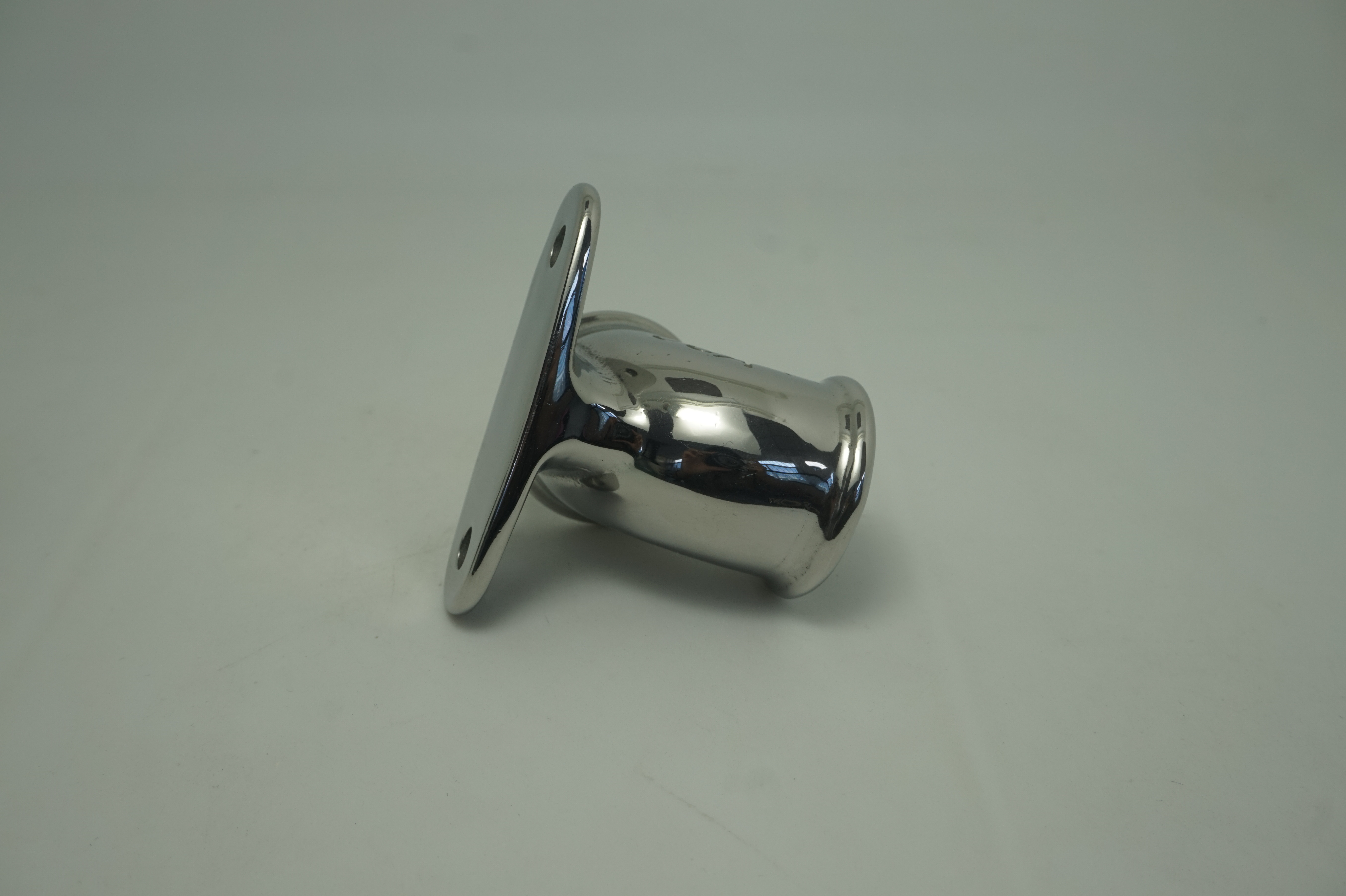
Use more than one method, because each misses something. Visual inspection under angled light at magnification catches obvious sharp edges, wire edges and remaining burr fragments. A tactile check with a probe, a fine needle or a lint-free wipe drawn along the edge catches lips that have been folded flat. A radius gauge, optical comparator or moulded replica gives an edge size, and a profilometer or surface roughness tester with a suitable cut-off and traversing direction gives a profile across the edge when the geometry allows it. Microscopy helps on small features and when documenting a dispute. Compare against a master agreed before the batch.
They can be run in the same equipment, but not safely in the same charge without a cleaning discipline. Carbon steel and cast iron leave fines and graphite that transfer to stainless parts, show up as rust staining or embedded particles, and are difficult to see at the machine. The practical approach is a dedicated charge per material family where volume allows, or a purge between families: run the machine with media and clean compound, flush the rinse tank, change or clean the drying medium and cloths, and inspect the media for embedded ferrous fines. Tell the finishing route which families will alternate, because changeover time is a real cost.
The finishing step is part of the route, and what it leaves behind matters to the next operation. Compound residue in a gasket groove or thread can interfere with welding, passivation or a coating bond, and a surface finished with an acid-bearing compound may need a defined rinse and neutralisation first. Mechanical work also changes the edge geometry a coating must cover, so an edge deliberately broken or rounded takes a coating differently from a sharp one. Tell the finishing route what comes next and agree the rinse, dry and handling between them. Where a hardened, high-strength steel is later plated, raise the embrittlement question with whoever owns that specification.
Use Cologne, Germany as the destination on the enquiry and state whether the deliverable is equipment, media and compound, a representative sample review or a line concept. A destination does not imply local stock, a local service point or a local delivery time.
A Cologne buyer in the vehicle and engine supply chain will normally work to IATF 16949 with VDA 6.3 process audits and to the technical-cleanliness regime VDA 19.1 / ISO 16232 for residual particle limits, alongside surface-texture specifications such as ISO 21920 and material certificates to EN 10204 (3.1). For the machines themselves, placement on the EU market requires CE marking under the EU Machinery Regulation.
Sources were retrieved on 2026-09-29 and describe the local industrial and trade context only. They do not evidence any SurfacePolish project, shipment, installation or service in Cologne.
The buyer must remove the machining burr at the bore and bolt-hole entries while leaving the serrated raised face untouched.
Send the material, dimensions, approximate weight, batch quantity, the incoming condition and photographs of the difficult features. Mark which features must not be contacted by media and state how the result will be inspected. This form carries source reference PSEO-0358; quote it if you prefer an additional manual reference.
Open the SurfacePolish enquiry form Email a prepared enquiry
No price, lead time, certification or result is promised here. Confirm whether a sample trial is available for the specific part and what the trial can and cannot show.
Page PSEO-0358 · revised 2026-09-29 · cross-border equipment, media and scoped sample review. City context is sourced and cited above.
Use this local checker to identify missing part and inspection information. It prepares a technical-review brief; it does not approve a machine, process recipe or production result.
Complete the part details to prepare a review brief.
Email : info@surface-polish.com


 IPv6 network supported


 +86-592-2381506