


Process Comparison Reference: Cycle Time, Surface Result, Part Suitability and Cost
This page reproduces the published comparison table across four variables: cycle time, surface result, part suitability and operating cost. The table is reproduced exactly as published, including the source own column labels. Media and process direction in that table is the article own, reproduced verbatim; it is not a specification for any machine and not a guaranteed result. No part material, geometry or batch size is supplied here.
Browse the published rows
Choose a section or search the published rows, then read the article text.
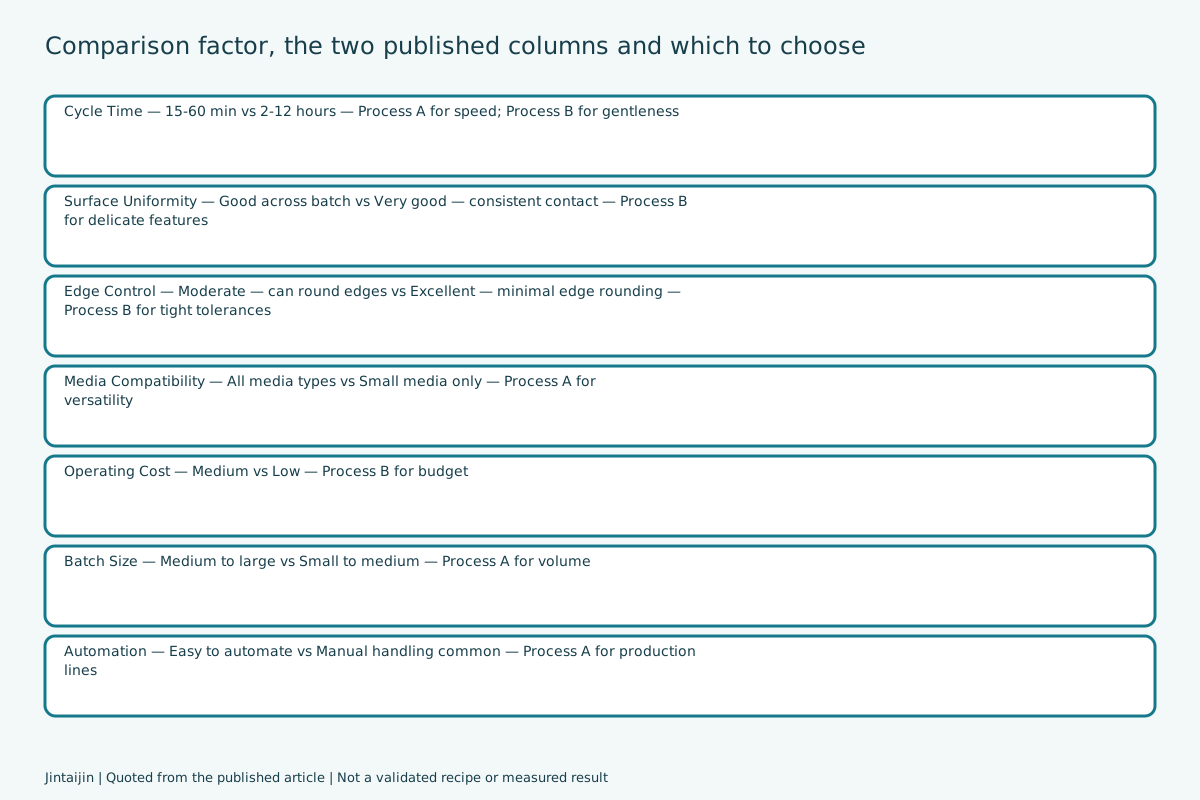
Comparison factor, the two published process columns and which to choose
| comparison factor | published column A | published column B | which to choose, as published |
|---|---|---|---|
| Cycle Time | 15-60 min | 2-12 hours | Process A for speed; Process B for gentleness |
| Surface Uniformity | Good across batch | Very good — consistent contact | Process B for delicate features |
| Edge Control | Moderate — can round edges | Excellent — minimal edge rounding | Process B for tight tolerances |
| Media Compatibility | All media types | Small media only | Process A for versatility |
| Operating Cost | Medium | Low | Process B for budget |
| Batch Size | Medium to large | Small to medium | Process A for volume |
| Automation | Easy to automate | Manual handling common | Process A for production lines |
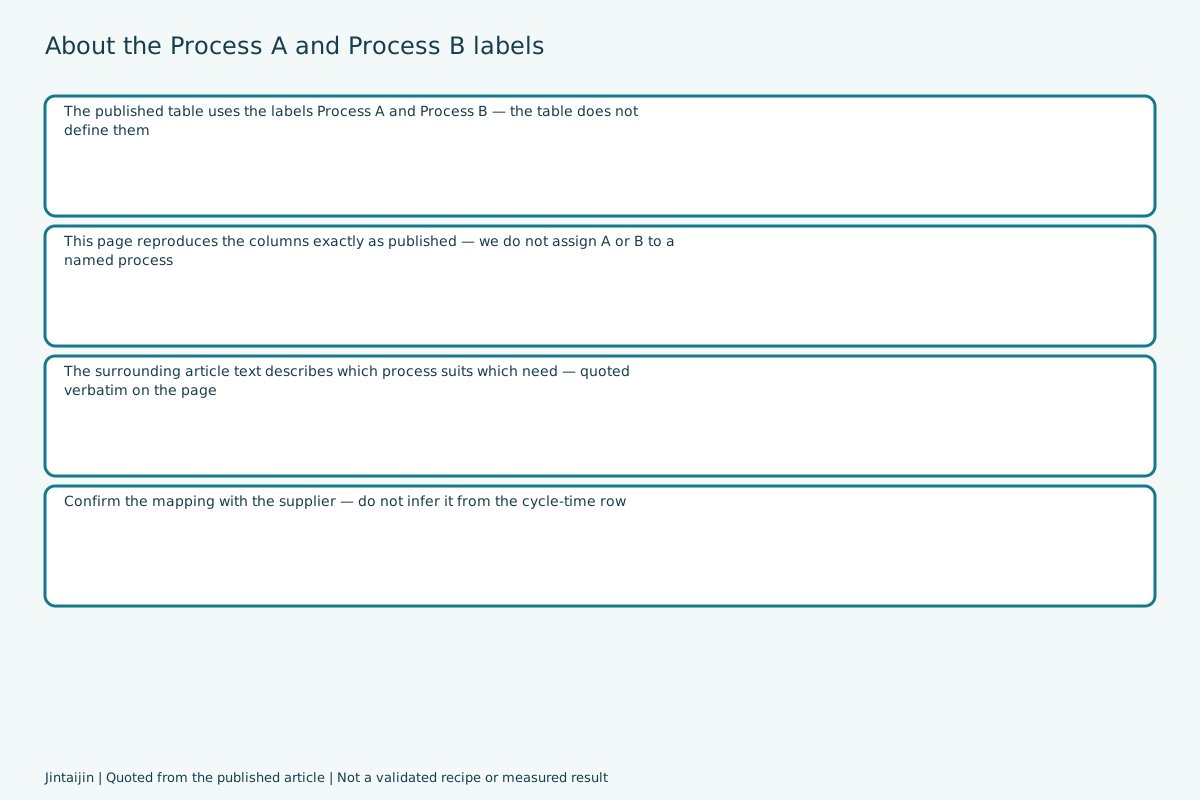
About the Process A and Process B labels
The published comparison table labels its two columns "Process A" and "Process B" and does not define those labels inside the table. The article text around the table states that vibratory finishing suits most metal parts needing moderate deburring within 30-60 minutes, and that barrel tumbling suits delicate parts, small batches or gentle action. This page reproduces the table columns exactly as published and does not assign the A and B labels to a named process, because the source does not make that assignment explicitly.
What the article says in its own words
“For most metal parts needing moderate deburring and uniform finish within 30-60 minutes, vibratory finishing is the more versatile choice.”
“For delicate parts, small batches, or gentle action, barrel tumbling still has clear advantages.”
Source and its limits
Published reference article; captured 5 October 2026. SHA256: d44daf43a93666b2c4634fe17898b5c1f9f09367d3152d1b756ac81fff4ac730.
- The table is reproduced with the source own Process A and Process B labels; see the label disclosure before using it.
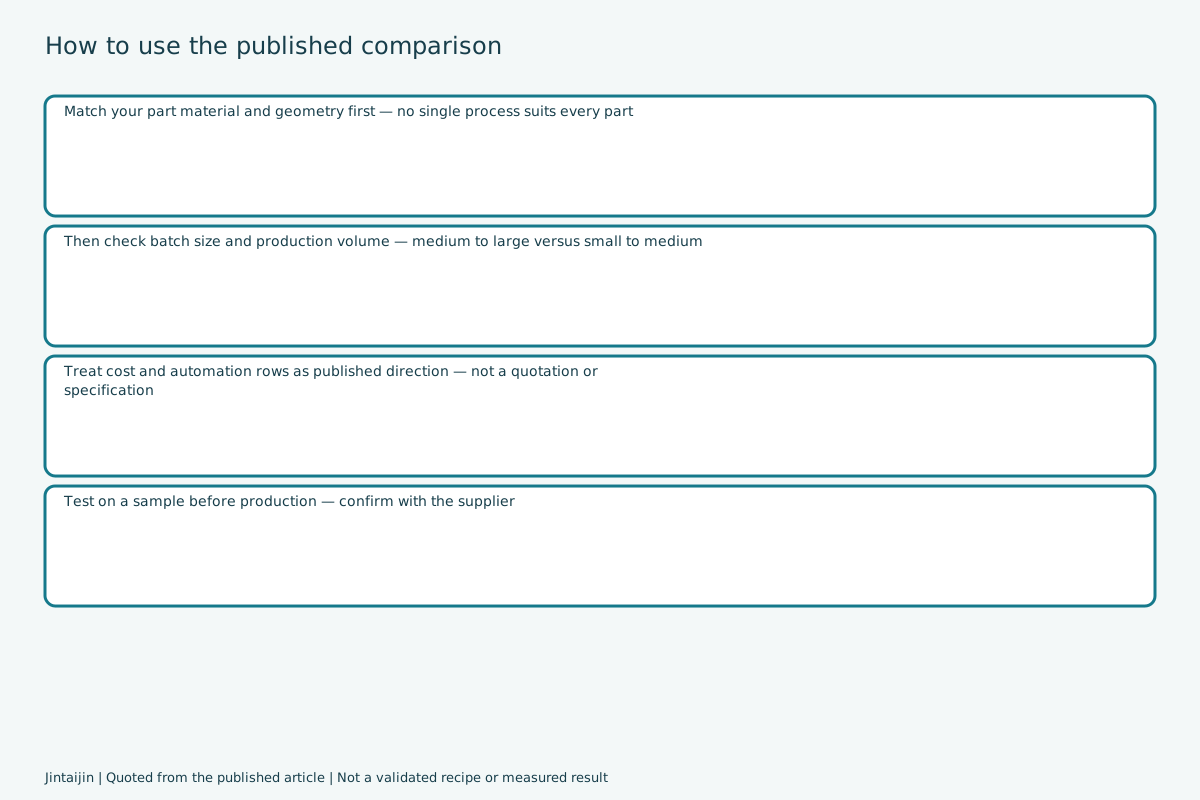
- Cycle times and outcomes are the published article own figures for the two processes it compares, reproduced verbatim. They are not a specification for any machine and not a guaranteed result.
- No part material, geometry or batch size is supplied by this page. Confirm the choice on a sample and with the supplier.
Table headers as published
- Factor / Process A / Process B / Which to Choose
Frequently asked questions
Does this give me a recipe or a machine for my part?
No. These are the published article own rows reproduced verbatim. They describe process or equipment classes, not a specific machine, and they are not a validated production recipe.
Which column is Process A and which is Process B?
The published table does not define those labels inside the table, and this page does not assign them to a named process. See the label disclosure section, which quotes the surrounding article text verbatim.
Does it state cycle time, capacity or price?
Only the cycle-time range the article itself publishes, reproduced verbatim. No machine model, capacity, load ratio or price is stated, implied or supplied.
Are the tables quoted exactly?
Yes. Every cell is taken from a single source table cell and verified against the captured page, including wording, units, ranges and punctuation.
Can I apply this to my part?
Confirm on a sample and with the supplier. Part material, geometry, batch size and acceptance criteria all affect the choice.
 +86-592-2381506

 IPv6 network supported