Vibratory Finishing Troubleshooting: Symptom, Cause, Check and Controlled Test
This page reproduces the reference tables published for vibratory finishing troubleshooting: the observed symptoms with their likely causes, what to check first, and the controlled test that isolates the cause; plus the process needs with a starting direction and the main risk to check. A controlled test is a way to isolate a cause on a sample, not a validated production setting. A symptom lists likely causes and a first check, not a diagnosis or a guarantee.
Browse the published rows
Choose a section or search the published rows, then read the article text.
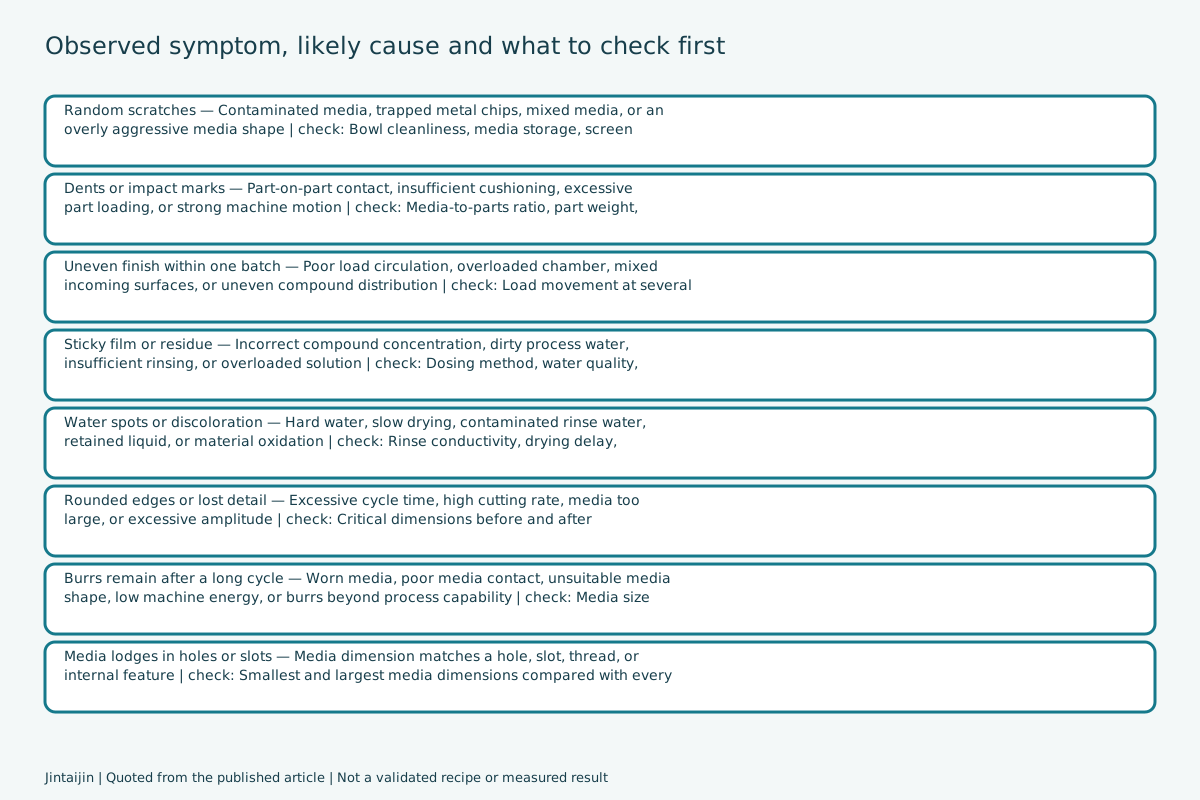
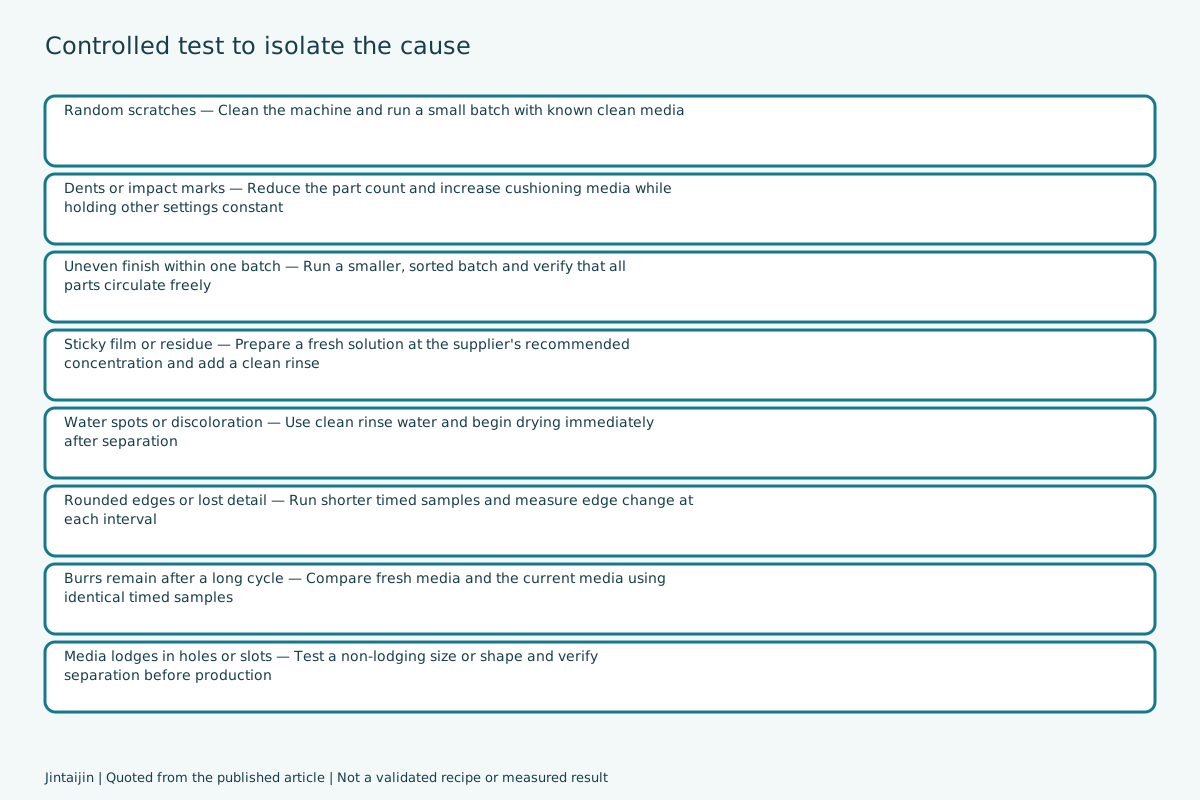
Observed symptom, likely causes, check and controlled test
| observed symptom | likely causes | check first | controlled test |
|---|---|---|---|
| Random scratches | Contaminated media, trapped metal chips, mixed media, or an overly aggressive media shape | Bowl cleanliness, media storage, screen condition, and recent part changes | Clean the machine and run a small batch with known clean media |
| Dents or impact marks | Part-on-part contact, insufficient cushioning, excessive part loading, or strong machine motion | Media-to-parts ratio, part weight, drop points, and circulation pattern | Reduce the part count and increase cushioning media while holding other settings constant |
| Uneven finish within one batch | Poor load circulation, overloaded chamber, mixed incoming surfaces, or uneven compound distribution | Load movement at several positions and incoming part consistency | Run a smaller, sorted batch and verify that all parts circulate freely |
| Sticky film or residue | Incorrect compound concentration, dirty process water, insufficient rinsing, or overloaded solution | Dosing method, water quality, foam level, odor, and rinse condition | Prepare a fresh solution at the supplier's recommended concentration and add a clean rinse |
| Water spots or discoloration | Hard water, slow drying, contaminated rinse water, retained liquid, or material oxidation | Rinse conductivity, drying delay, part pockets, and dryer temperature | Use clean rinse water and begin drying immediately after separation |
| Rounded edges or lost detail | Excessive cycle time, high cutting rate, media too large, or excessive amplitude | Critical dimensions before and after processing | Run shorter timed samples and measure edge change at each interval |
| Burrs remain after a long cycle | Worn media, poor media contact, unsuitable media shape, low machine energy, or burrs beyond process capability | Media size loss, burr orientation, load movement, and machine settings | Compare fresh media and the current media using identical timed samples |
| Media lodges in holes or slots | Media dimension matches a hole, slot, thread, or internal feature | Smallest and largest media dimensions compared with every opening | Test a non-lodging size or shape and verify separation before production |
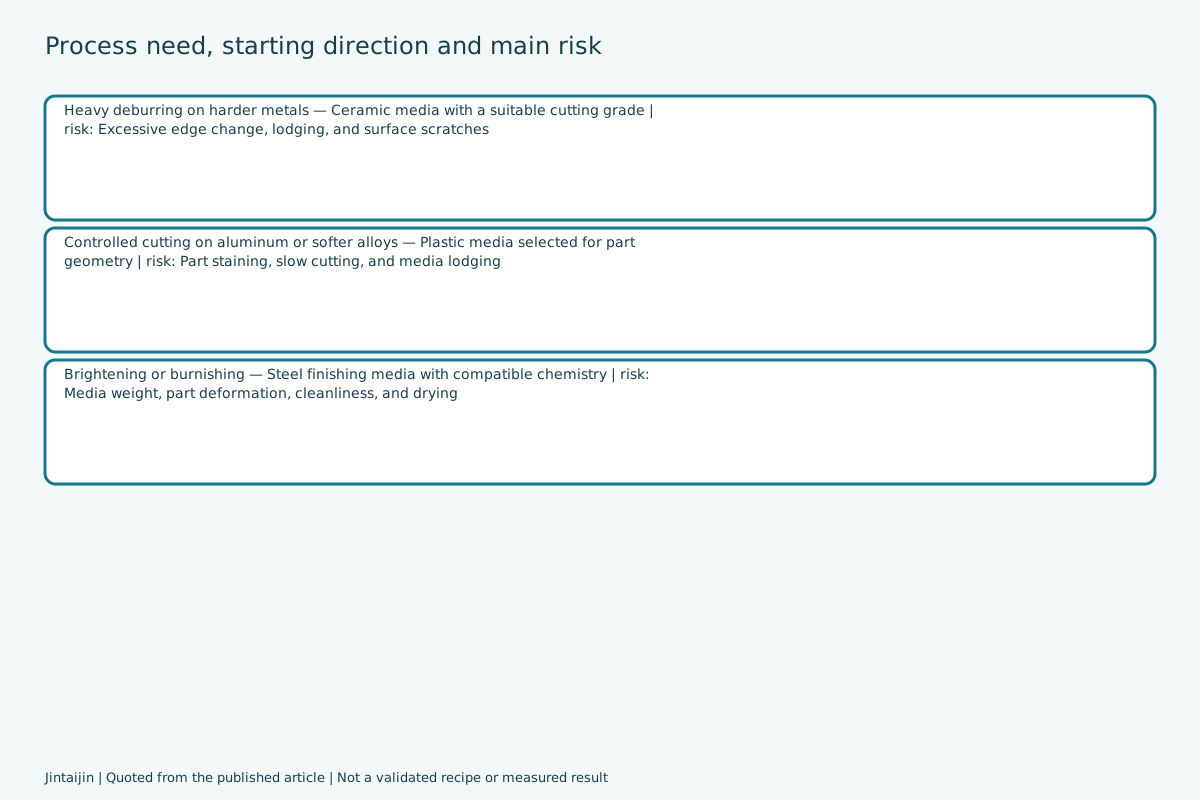
Process need, starting direction and main risk
| process need | typical starting direction | main risk to check |
|---|---|---|
| Heavy deburring on harder metals | Ceramic media with a suitable cutting grade | Excessive edge change, lodging, and surface scratches |
| Controlled cutting on aluminum or softer alloys | Plastic media selected for part geometry | Part staining, slow cutting, and media lodging |
| Brightening or burnishing | Steel finishing media with compatible chemistry | Media weight, part deformation, cleanliness, and drying |
Source and its limits
Published reference article; captured 5 October 2026. SHA256: 00da8cd2ae6c2fe4187f305b98d5f1046d1e02409bc616e3a7b363d8e22251e7.
- A controlled test is a way to isolate a cause on a sample, not a validated production setting.
- Media and compound directions are the published article's own, reproduced verbatim.
- A symptom lists likely causes and a first check, not a diagnosis or a guarantee.
Table headers as published
- Observed Symptom / Likely Causes / Check First / Controlled Test
- Process Need / Typical Starting Direction / Main Risk to Check
Frequently asked questions
Does this give me a recipe for my part?
No. These are the published article's rows reproduced verbatim. Media grades, compounds and process notes are a direction to confirm on a sample and with the supplier, not a validated production recipe.
Does it diagnose my defect?
No. A defect or symptom lists likely causes and what to check first. The same visible mark can have more than one cause, and confirming it needs a controlled test on a sample.
Does it state cycle time, speed or temperature?
No. No cycle time, speed, amplitude, load ratio, concentration, temperature or removal result is stated or implied anywhere on this page or in its download.
Are the tables quoted exactly?
Yes. Every cell is taken from a single source table cell and verified against the captured page, including wording, units and punctuation.
Can I apply this to a different material or machine?
These rows describe the material and process the article covers. AM surfaces vary with layer height, orientation, infill and post-cure, so confirm every value for your own part.
 +86-592-2381506

 IPv6 network supported