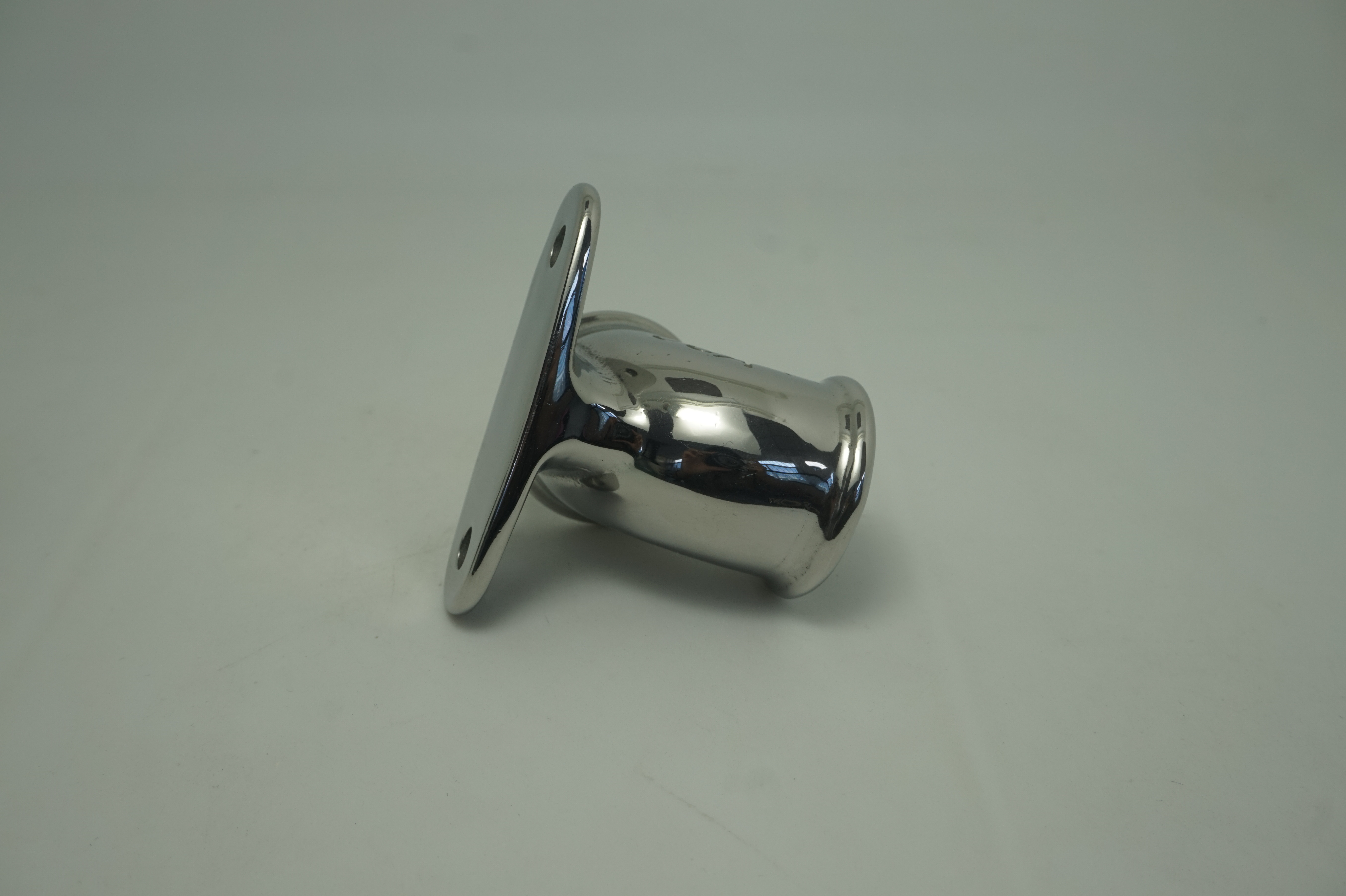
A buyer in Bergamo, Italy in marine components produces around 400 cast deck fittings a month in three sizes and is asking whether the finishing step is worth automating. SurfacePolish supplies finishing machines, media and compounds across borders and offers a free sample trial on representative castings, which return from Xiamen with an observed condition and a proposed media, compound and cycle direction and the handling pattern the volume implies. This brief is written for a buyer in Bergamo working on marine components; it describes equipment, media and a scoped sample review, not a local polishing service.
Which acceptance criteria, measurement locations and functional checks must exist before any route, robot or otherwise, can be compared fairly?
Does the part family repeat often enough, with stable geometry, to justify a cell rather than a batch machine or hand work?
What is the largest dimension and the greatest mass that must be presented, and can the part be turned or supported without distorting it?
Two 316L parts made to the same drawing can behave differently because of how they were produced. Cast material carries a skin and porosity; wrought plate has a rolling direction; duplex and super-duplex grades respond to heat input differently from austenitic grades, and a weld heat-affected zone finishes at a different rate from the parent metal. Hardfacing, weld overlay, and bronze or nickel-aluminium-bronze castings each cut in their own way. Record the grade, the product form, the heat treatment or stress relief, the welding process and the as-received condition, whether machined, plasma cut, grit blasted or still carrying mill scale and heat tint. Note who owns the pre-finish cleanliness step and what the part must be free of, because oil, marking ink and salt carry-over contaminate a charge and change how it cuts.
Vibratory finishing usually deserves the first look, because it removes the hand work a robot would otherwise have to reproduce. A bowl takes small and medium fittings, cast cleats, brackets, fasteners and machined valve internals and processes them in bulk with no part-specific path to teach. A tub takes long parts that cannot turn inside a bowl, such as rail sections, pipe spools and linear weldments, provided they can be supported along their length. Both routes trade part-on-part contact for simplicity, so visible faces need separation or racking. Their limits are geometric: no access to internal passages, no way to hold one radius precisely, and no tolerance for parts whose weight would crush the charge or be crushed by it. Where a bowl or tub reaches the surface, automating load and unload is a smaller problem than automating the finishing motion.
| Machine route | Where it fits | What it will not do |
|---|---|---|
| Grinding finishing machine | Taking off a heavy machining burr or a defined stock layer before a refinement pass on robust stainless and duplex work | High removal energy cuts functional edges fast, so geometry assessment and a short controlled cycle matter more than on any other route |
| Dry polishing machine and dryer | Drying parts after a wet stage and producing a dry polished surface with organic media where a wet residue would be hard to remove | No cutting action, needs dust extraction, and organic media must be kept dry and clean or it transfers contamination to the part |
| Rotary barrel finishing machine | Gentle deburring of small fragile components and mixed fitting batches with generous compound flow and low part-on-part energy | Long cycles with no visibility while running, and internal passages collect media and compound that must be retrieved at unload |
| Tub vibrator | Long parts that cannot rotate in a bowl, such as rail sections, pipe spools, linear weldments and long shafts, provided they can be supported along their length | Lower energy per unit area, so heavy weld dressing takes longer, and a long tub needs floor space plus a support method that does not mark the part |
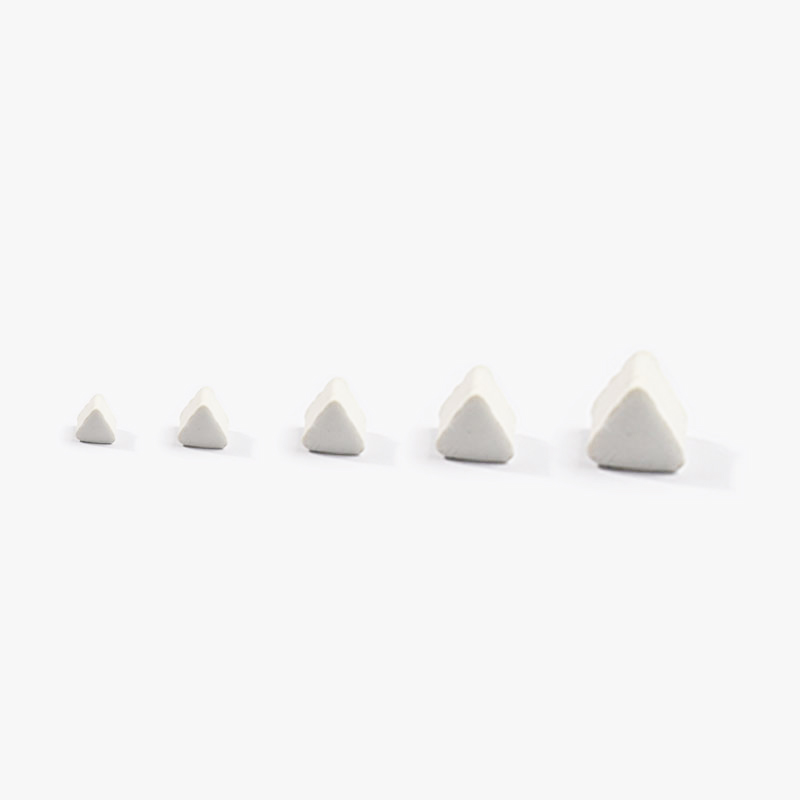
Plastic media suits parts whose surfaces must not be peened, marked or rounded aggressively. Aluminium brackets, bronze and nickel-aluminium-bronze castings, thin sheet components and any part with a cosmetic face respond better to plastic triangles, cones or pyramids in a soft to medium grade than to ceramic. The trade is removal rate: plastic cuts slowly, deforms as it wears, and a worn charge behaves noticeably differently from a fresh one, so cycles set on new media drift. Some shapes float or segregate in a bowl and starve part of the load. In marine work plastic media is often the right first stage where a light machining burr, an adhesive residue or a paint-adjacent edge has to come off without changing the geometry a gasket or a seal depends on.
| Media | Best fit | Watch out for |
|---|---|---|
| Steel media including balls, pins and shaped shot | Bright burnished finishing and edge blending on stainless components where appearance matters and stock removal must stay low | Transfers iron to stainless and leaves free iron that blooms in chloride service, so it needs a dedicated charge, an inhibiting compound and magnetic or screen separation |
| Plastic triangles, cones and pyramids in a soft to medium grade | Deburring aluminium brackets, bronze castings and cosmetic faces where marking and edge loss must stay small | Slow cut rate, media deforms as it wears, and a worn charge behaves quite differently from a fresh one |
| Dry media such as walnut shell and corn cob with a dry polishing machine | Drying, light polishing and luster on parts that must leave the line dry, and on assemblies where a wet residue would be difficult to remove | Generates dust and needs extraction, cannot cut a burr, and organic media can carry moisture and contamination into a clean area |
| Fine ceramic or porcelain shapes in a small size class | Refinement and light edge blending after a cutting stage, and reaching tighter external geometry on small valve parts and fittings | Small sizes enter and lodge in cross-drillings and fine slots, and media wear shrinks the charge so the finish drifts over its life |
Removing material releases residual stress, and on a large thin fabrication that means movement. A scrubber panel welded into a frame can lose flatness after weld dressing, a long shaft can bend slightly as a skin is taken off, and a bore can close or open as the surrounding metal is worked. Clamping makes this worse when force is used to pull a warped part onto a fixture, because the part springs back on release. Measure flatness, straightness and critical diameters at marked points before and after, and record the support and clamping scheme used. In a cell, gripper force and fixture datums are part of the process rather than peripheral equipment. Where drift matters, the buyer should decide whether stress relief, a reduced stock allowance or a different finishing route is the right answer.
| Failure mode | Likely cause | How to catch it |
|---|---|---|
| Medium or a broken medium fragment lodged in a seawater passage, drain boss or internal cavity | Media size class too close to the smallest opening, a worn charge breaking down into smaller pieces, or an enclosed feature that was never mapped before the route was chosen | Count the charge in and out where the batch allows, borescope the smallest passage at an agreed angle, and flush the passage into a filter so the discharge can be examined |
| Weld toe, bore lip or free edge rounded past the drawing limit | Cycle too long, high-energy route or coarse dense media, a robot path that dwells at a corner, or a weld toe that was never given a maximum radius on the drawing | Measure the same edge before and after with an optical comparator, radius gauge or moulded replica, and compare against the maximum radius or minimum remaining edge specified |
| Keyway, spline or taper geometry lost to edge rounding | The feature was exposed to the charge without masking, or a tool-carrier path ran along the flank of the feature instead of stopping short of it | Check width, flank angle and edge break with a gauge or comparator at marked stations before and after, and confirm the protected feature against the drawing tolerance |
| Rust bloom and tea staining appearing on a finished stainless surface within days | Free iron from carbon steel media or brushes, a machine shared with carbon steel work, airborne grinding dust on a wet surface, bare-hand handling, or chloride carried in rinse water | Wipe a defined area with a white cloth and record what it shows, run a free-iron check if the buyer wants one, and inspect welds, pits and thread roots under good light after the part has stood for a period |
Bergamo's manufacturing base is concentrated in mechanical engineering and transport technologies. Of 138 European patent applications from provincial applicants published in 2023, 65 (47.1%) were in mechanical engineering and transport technologies, the largest single technology block, followed by chemical and pharmaceutical technologies with 24 applications (s1). The Chamber of Commerce's quarterly survey puts industrial production up +2.0% year on year in the second quarter of 2026 and artisan manufacturing up +3.1%, with the industrial production index at 120.2 (2015=100) and export demand supporting expectations (s2). Provincial exports were EUR 5,417 million in that quarter, led by machinery (EUR 1,219 million), chemical products (EUR 870 million), base metals (EUR 652 million), transport equipment (EUR 578 million, +2.8%), rubber and plastics (EUR 495 million) and food products (EUR 361 million) (s3). An artisan and small-firm tier with at least three employees also grew production by +3.1% (s2).
The nearest part of that base to this brief is automotive: Transport equipment exports were EUR 578 million in the second quarter of 2026, up +2.8%, and transport technologies form part of the province's largest patent class.
A base built on mechanical engineering, base metals and transport equipment is exactly the kind of production where deburring and edge-radius control determine assembly fit and fatigue behaviour, and where vibratory or centrifugal finishing competes directly with manual benching on machined and stamped parts. Because the same province exports EUR 652 million of base metals and EUR 578 million of transport equipment, surface condition is a customer-visible quality characteristic rather than an internal detail. Artisan-scale machine shops, which the chamber counts separately and which grew production +3.1%, are typically the firms that still finish by hand and are the most likely to look for a batch process.
The question to settle first is whether the requirement is a burr-height and edge-radius limit on machined or stamped metal parts, or a surface-texture value on a functional face, because those two answers lead to different processes and different media. For a province where a large share of output leaves as base metals and transport equipment, it is worth deciding that on the customer's own drawing and inspection plan rather than on a supplier's default recipe.
Freight context: Aeroporto di Milano Bergamo Il Caravaggio (BGY), Intermodal and rail freight on the Milan-Venice corridor. Bergamo's freight position is documented in the sources fetched here by export value rather than by hub statistics: EUR 5,417 million in the second quarter of 2026, slightly below regional and national growth (s3). The airport and intermodal nodes named above are regional geography and were not verified against an authority page in this session, because the Milan Bergamo airport site returned HTTP 403 to every request made from here. For a buyer, the practical consequence is that a delivered machine normally arrives by road from an intermodal terminal or port outside the province, so the delivery term and the point at which unloading responsibility passes should be fixed in the order.
Italy applies the EU's common commercial policy to imports from China, so Chinese industrial machinery enters under the EU Common Customs Tariff, where the duty rate depends on the type and origin of the goods and the working tariff is TARIC. Istat's August 2026 extra-EU trade release records a 16.0% year-on-year increase in Italian purchases from China, alongside strong growth from India, OPEC and Mercosur, so China remains one of the fastest-growing sources of Italian imports. Anti-dumping and other trade-defence measures apply case by case to specific product categories rather than to finishing machinery in general, so the applicable rate must be checked against the specific commodity code before a quotation is finalised.
Business is conducted in Italian; quotations, drawings, technical dossiers and declarations of conformity are normally expected in Italian, and correspondence in English is workable but rarely sufficient for a purchase order or for a conformity file. Italian industrial buyers qualify suppliers through a documented process: a part drawing with surface-texture indications, a sample or trial batch, and written acceptance criteria are the usual gate before a machine or media is specified into production. Payment and documentation norms follow Italian/EU practice - the importing entity's VAT and EORI details, invoice data matching the customs declaration, and standard EU commercial terms - so a cross-border seller should expect the conformity documentation (declaration of conformity, technical file, material certificates) to be requested before, not after, delivery.
SurfacePolish supplies from Xiamen, China. The buyer's own destination rules, conformity marking, tariff classification and documentation responsibilities stay with the buyer; confirm them against the authorities named above before ordering.
Some checks decide whether the part works, and those belong to the buyer's engineering and quality functions. A pressure or leak test on a valve or pump body, a flow check through a passage, a fit check of a shaft in its bearing or a flange against its mate, a dye penetrant inspection of a dressed weld, and any corrosion or coating adhesion evaluation are buyer-side calls. The same applies to cleanliness: the buyer defines the method and the limit, and decides whether a mechanically finished part needs a passivation treatment afterwards. SurfacePolish can describe what was done to a part and what was observed on it, but it does not qualify a part for a class society, a coating specification or a service environment. Ask what evidence is needed before work starts, then plan the trial records to match.
Before a cell can be justified, the manual work has to be counted in a form a cell design can use. Time the finishing operation per unit of surface: per metre of weld, per square metre of panel, per edge, per bore. Separate that from handling, meaning finding the part, loading it, turning it, changing a belt, inspecting it and putting it down, because handling is often what a robot is really bought for. Note the variability: how long the same feature takes on a good part and on a difficult one. Then estimate the volume over which those hours recur, and compare it with a cell that earns only while it is running and loaded. Where setup and changeover dominate the hours, automating the finishing motion will not change the economics much.
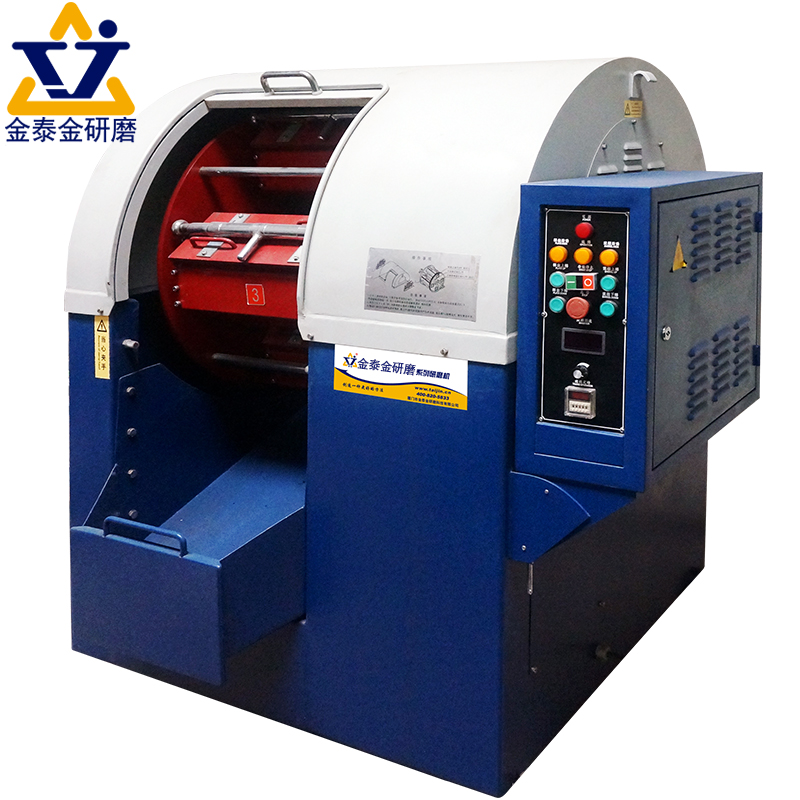
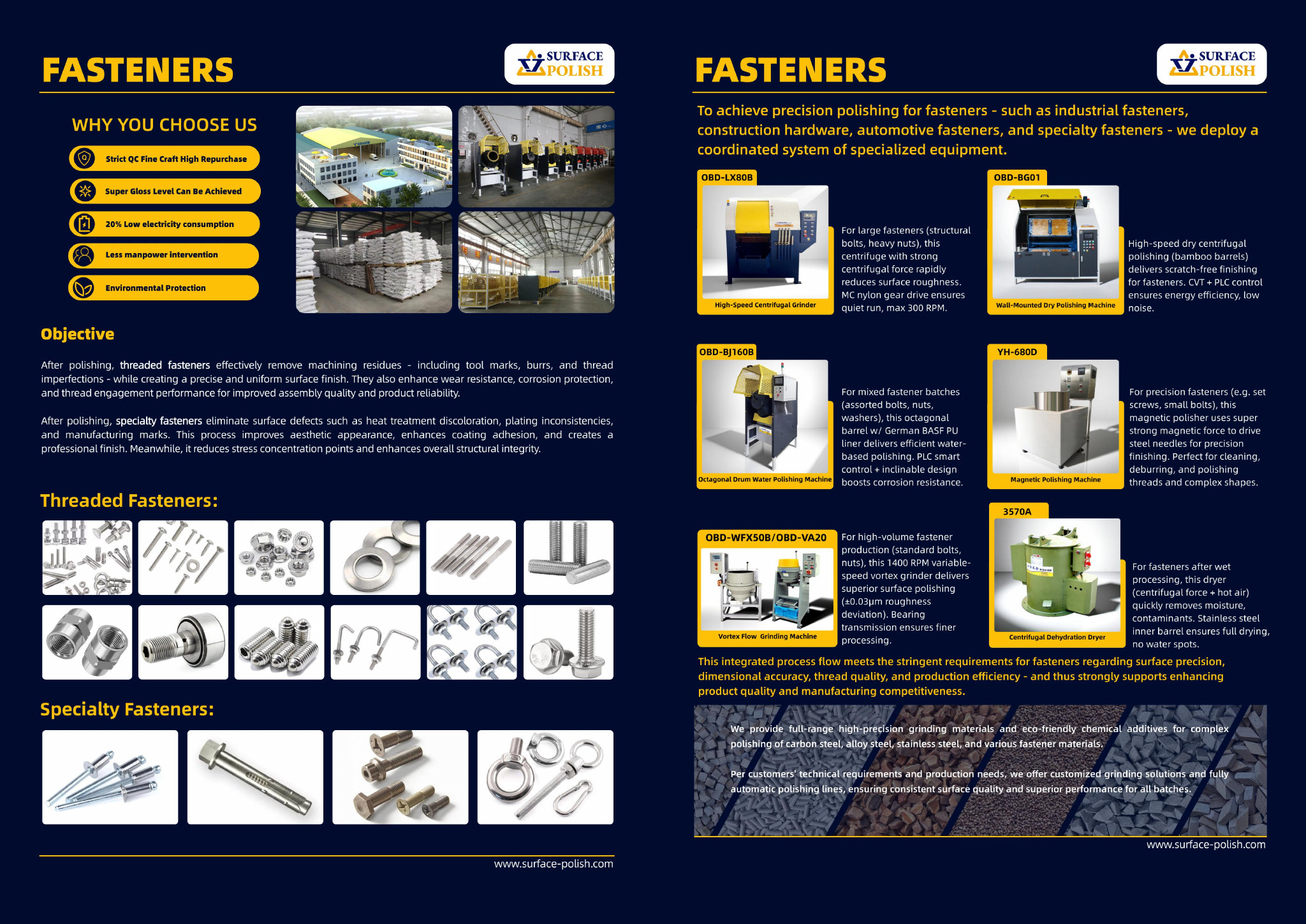
No. SurfacePolish supplies finishing machines, media and compounds across borders and discusses a finishing line concept within a defined scope. There is no robotic polishing cell to sell, install or commission, and no automation delivery promise attaches to anything described here. The robotic content is a feasibility and line-design discussion: what a robot can and cannot replace, what has to be fixed about a part, a fixture or a part family before automation is possible, and how a cell compares with a machine route or with hand work. Any cell a buyer builds is specified, integrated and accepted by the buyer and its own integrator, not by SurfacePolish.
Size the medium below the smallest opening it could enter, and treat every passage as a retrieval point rather than assuming it stays clear. Map the tightest hole, slot or cross-drilling first, then pick a size class against that feature instead of an average. Add defined checks: borescope the smallest passage at an agreed angle, pin gauge and thread gauge the holes, and rinse through a filter so the discharge can be examined. For a trial shipped from Italy, send the part with the smallest passage so the medium choice is tested on the real feature rather than on a convenient sample.
Mask or shield it, or choose a route that does not reach it. A taper and a keyway are usually damaged by the same edge rounding that improves the rest of the part, and a seal face suffers from peening or from a coarse medium. Practical options are a mechanical mask or boot, leaving a stock allowance that is finished later by a controlled operation, holding the part in a fixture that excludes the protected zone, or selecting a gentler medium and a shorter cycle. Measure the feature before and after at marked points, and put a maximum radius or a minimum remaining edge on the drawing.
Use Bergamo, Italy as the destination on the enquiry and state whether the deliverable is equipment, media and compound, a representative sample review or a line concept. A destination does not imply local stock, a local service point or a local delivery time.
Bergamo machine builders and their customers normally reference ISO/UNI surface-texture and geometrical-tolerancing standards on drawings, and suppliers into the transport-equipment chain are qualified to IATF 16949 with the cleanliness specifications their own customers impose on fluid-power and driveline parts. Bergamo Sviluppo, the special agency of the Chamber of Commerce, operates a UNI desk and runs standards-project activity for local firms, so the chamber system is the practical route to the applicable UNI reference in this province.
Sources were retrieved on 2026-09-29 and describe the local industrial and trade context only. They do not evidence any SurfacePolish project, shipment, installation or service in Bergamo.
The buyer has steady volume and a narrow part family and wants to know whether the finishing step is worth automating.
Send the material, dimensions, approximate weight, batch quantity, the incoming condition and photographs of the difficult features. Mark which features must not be contacted by media and state how the result will be inspected. This form carries source reference PSEO-0466; quote it if you prefer an additional manual reference.
Open the SurfacePolish enquiry form Email a prepared enquiry
No price, lead time, certification or result is promised here. Confirm whether a sample trial is available for the specific part and what the trial can and cannot show.
Page PSEO-0466 · revised 2026-09-29 · cross-border equipment, media and scoped sample review. City context is sourced and cited above.
Use this local checker to identify missing part and inspection information. It prepares a technical-review brief; it does not approve a machine, process recipe or production result.
Complete the part details to prepare a review brief.
Email : info@surface-polish.com


 IPv6 network supported


 +86-592-2381506