A buyer in Marseille, France working on marine components has a 4.2 m shaft whose taper, keyway and journals must come through finishing unchanged. SurfacePolish supplies finishing machines, media and compounds across borders and runs a free sample trial: a cut section travels to Xiamen and returns with an observed condition and a proposed media, compound and cycle direction for the buyer to evaluate before committing to a route. This brief is written for a buyer in Marseille working on marine components; it describes equipment, media and a scoped sample review, not a local polishing service.
What is the largest dimension and the greatest mass that must be presented, and can the part be turned or supported without distorting it?
Which features on this part are functional, such as seal faces, journals, tapers, keyways and weld toes, and which are only cosmetic?
Which acceptance criteria, measurement locations and functional checks must exist before any route, robot or otherwise, can be compared fairly?
Mass finishing works where a charge can flow across the surface. Sort the part into accessible and inaccessible zones and be literal about it. An open external weld run on a bracket, a cast cleat or the outside of a small valve body is reachable. The inside of a closed box section, the back of a stiffener, a narrow seawater passage and the root of a deep groove are not, whatever the medium is. Concave pockets hold media and release it slowly; sharp internal corners trap it. That map decides whether the whole part, or only some faces of it, can go to a tumbling route, and whether the remainder needs a tool that can be aimed at a surface, by hand or by an arm. Accessibility, more often than finish, is what ends the mass-finishing option.
There are two fundamentally different ways to place a robot in a finishing line, and they fail for different reasons. In the part-handler arrangement the arm grips the part and presents it to a fixed machine, belt or buffing wheel; the arm needs payload for the part plus the gripper, but its motion is simple and repeatable. In the tool-carrier arrangement the arm holds the grinder, sander or polishing head and moves it over a fixtured part; reach must now cover the whole surface, and the arm has to absorb the reaction force of the tool while holding controlled contact. Tool-carrier cells suit large fabrications that are impractical to lift and turn, and they are harder, because force control, tool wear and path accuracy all matter at once. Part-handler cells suit smaller, lighter parts with high volume.
| Machine route | Where it fits | What it will not do |
|---|---|---|
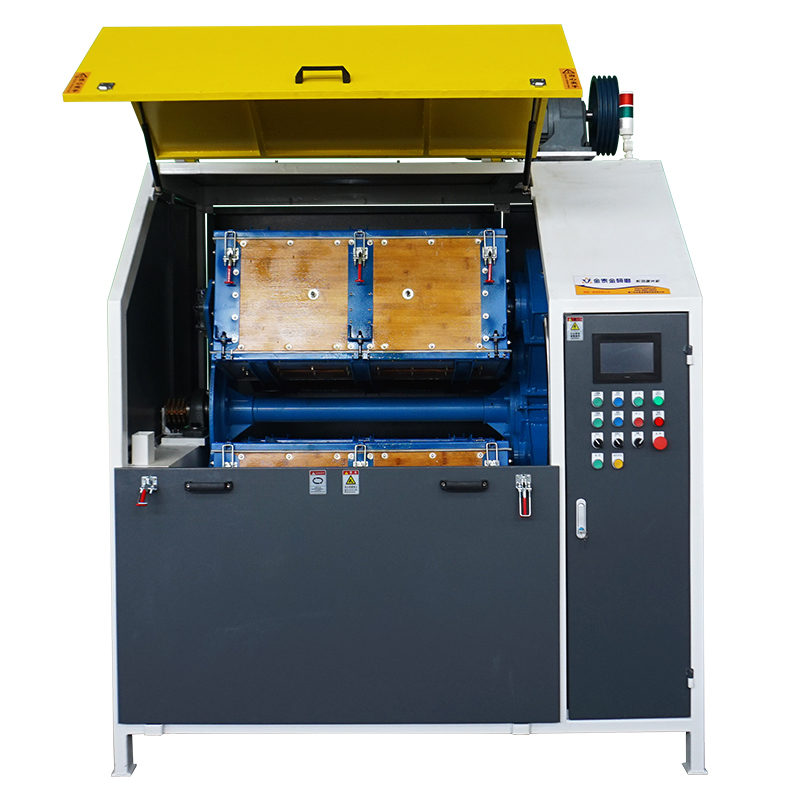
| Centrifugal barrel finishing machine | Short, aggressive cycles on small precision items such as valve trim, inserts and small stainless components with fine edge requirements | Rounds edges and can distort thin unsupported sections quickly, and results are sensitive to charge weight, speed and stop time |
| Grinding finishing machine | Taking off a heavy machining burr or a defined stock layer before a refinement pass on robust stainless and duplex work | High removal energy cuts functional edges fast, so geometry assessment and a short controlled cycle matter more than on any other route |
| Vibratory finishing machine (bowl) | Bulk deburring and refinement of small and medium marine fittings, cast cleats, brackets and machined valve internals that can tumble without racking | Continuous part-on-part contact and no access to internal passages; visible faces and heavy parts need separation, racking or a different route |
| Dry polishing machine and dryer | Drying parts after a wet stage and producing a dry polished surface with organic media where a wet residue would be hard to remove | No cutting action, needs dust extraction, and organic media must be kept dry and clean or it transfers contamination to the part |
Compound carries the work: it cleans the part and the media, holds fines in suspension, inhibits corrosion and controls foam. A mildly alkaline or near-neutral family is typical for ferrous work, and dose is set by measured concentration rather than by eye. On stainless and duplex marine parts the chloride content is the variable to control, because chlorides left in a pit, a crevice or a thread root can start pitting long after the part leaves the shop, and both tap water and recycled rinse water carry them. Confirm the water that will actually be used, add a rinse step that reaches the same features the finishing step reached, and dry the part rather than letting it drain and stain. Foam, residue and drag-out into a clean area are part of compound selection, not afterthoughts.
| Media | Best fit | Watch out for |
|---|---|---|
| Chloride-free mildly alkaline or near-neutral compound, liquid or powder | Cleaning, corrosion inhibition and fines suspension on stainless and duplex marine work where retained chlorides would risk pitting in service | Dose drifts with drag-out and water hardness, foam can hide the load, and rinse water must reach the same features the compound reached |
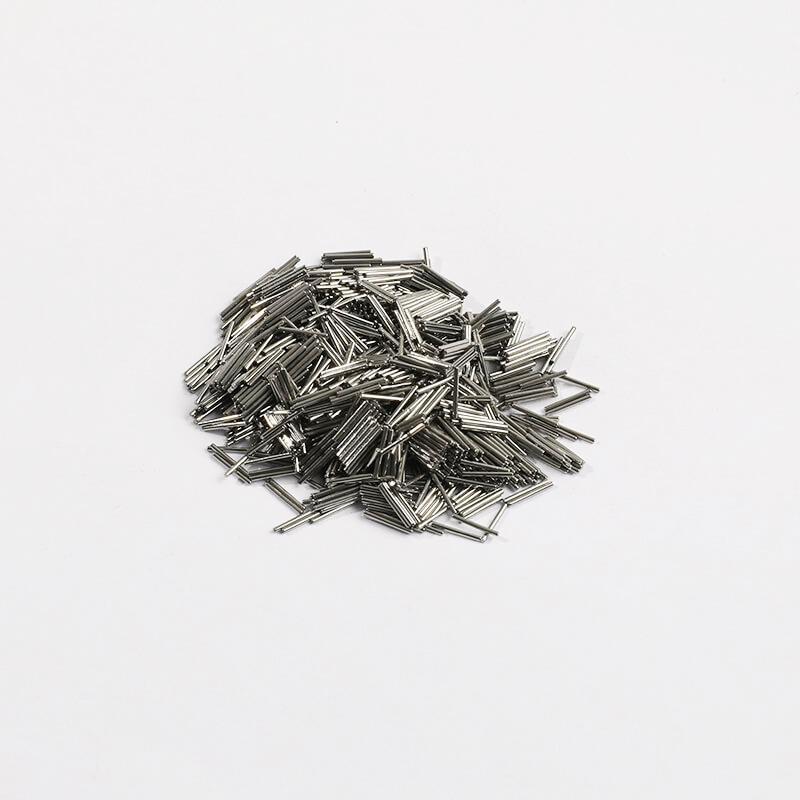
| Steel media including balls, pins and shaped shot | Bright burnished finishing and edge blending on stainless components where appearance matters and stock removal must stay low | Transfers iron to stainless and leaves free iron that blooms in chloride service, so it needs a dedicated charge, an inhibiting compound and magnetic or screen separation |
| Fine ceramic or porcelain shapes in a small size class | Refinement and light edge blending after a cutting stage, and reaching tighter external geometry on small valve parts and fittings | Small sizes enter and lodge in cross-drillings and fine slots, and media wear shrinks the charge so the finish drifts over its life |
| Aluminium oxide grinding media in a dense ceramic bond | Heavier stock removal or a more consistent cut on robust stainless and duplex parts with thick edges and cast skin | High removal energy rounds functional edges quickly and is a poor match for thin panels or a knife-edge seat |
Removing material releases residual stress, and on a large thin fabrication that means movement. A scrubber panel welded into a frame can lose flatness after weld dressing, a long shaft can bend slightly as a skin is taken off, and a bore can close or open as the surrounding metal is worked. Clamping makes this worse when force is used to pull a warped part onto a fixture, because the part springs back on release. Measure flatness, straightness and critical diameters at marked points before and after, and record the support and clamping scheme used. In a cell, gripper force and fixture datums are part of the process rather than peripheral equipment. Where drift matters, the buyer should decide whether stress relief, a reduced stock allowance or a different finishing route is the right answer.
| Failure mode | Likely cause | How to catch it |
|---|---|---|
| Medium or a broken medium fragment lodged in a seawater passage, drain boss or internal cavity | Media size class too close to the smallest opening, a worn charge breaking down into smaller pieces, or an enclosed feature that was never mapped before the route was chosen | Count the charge in and out where the batch allows, borescope the smallest passage at an agreed angle, and flush the passage into a filter so the discharge can be examined |
| Abrasive grain embedded in a soft or gummy surface | Coated abrasive or bonded wheel used on bronze, aluminium or a work-hardened surface at excessive pressure, or a loaded belt that has stopped cutting and started smearing | Inspect under low-angle light and a magnifier, wipe with a solvent-soaked cloth, and check the part after a light refinement pass rather than only as it leaves the coarse operation |
| Dimensional drift on a bearing journal, bore or machined fit | Too much stock removed at the feature, stress redistribution in a long or thin part, or clamping force that pulled the part out of shape during finishing | Micrometer or bore gauge the same stations before and after at a controlled temperature, and re-check after the clamps are released to separate clamping deflection from real drift |
| Rust bloom and tea staining appearing on a finished stainless surface within days | Free iron from carbon steel media or brushes, a machine shared with carbon steel work, airborne grinding dust on a wet surface, bare-hand handling, or chloride carried in rinse water | Wipe a defined area with a white cloth and record what it shows, run a free-iron check if the buyer wants one, and inspect welds, pits and thread roots under good light after the part has stood for a period |
Marseille's industrial identity is inseparable from the port: the Grand Port Maritime de Marseille operates the Fos-sur-Mer industrial-port zone, created by the State in 1964 and described by the port as one of the largest in Europe at 10 000 hectares, concentrating steel, energy and petrochemical plants including ArcelorMittal, Marcegaglia, KEM One, Air Liquide and Covestro, with two methane terminals and two wind farms, and the port is adding new industrial projects (H4 sustainable aviation fuel, Gravithy direct-reduced iron, a Marcegaglia electric steel plant, Neocarb e-fuels). In the commune, INSEE counted 31 646 establishments at the end of 2024, 4,2 % of them industrial, and 10,4 % in construction - the highest construction share of the ten cities studied. Marseille is also the Mediterranean's leading ship-repair centre, with ten repair forms in the Marseille basins and Forme 10, which the port describes as the third largest ship-repair dock in the world.
For this brief the relevant part of that base is marine: The port authority states Marseille Fos is the leading ship-repair centre in the Mediterranean, with ten repair forms in the Marseille basins, Forme 10 as the third largest ship-repair dock in the world, 76 ships docked dry and 53 afloat.
Fos and the Marseille basins are a heavy-metal environment: steel strip, tube and long products, welded structures, pumps, valves and process equipment need scale and heat-tint removal, weld dressing and controlled surface finish for coating adhesion and corrosion resistance. Ship repair adds a second, different surface problem - large-area preparation, weld seam dressing on hulls and tanks, and cleanliness before coating - carried out under tight dry-docking schedules. Both environments put a premium on equipment that is robust, dust- and slurry-tolerant, and simple to maintain, rather than on fine cosmetic polishing.
A buyer in Marseille should settle whether the finishing cell will work on large welded structures and repair work with variable geometry, or on repeatable machined components, because that determines whether the shop needs a flexible manual/barrel process with forgiving media or a tightly controlled, documented series process.
Freight context: Grand Port Maritime de Marseille (Marseille and Fos-sur-Mer), Marseille Provence Airport, Fos container and ro-ro terminals. Marseille-Fos is the Mediterranean deep-sea gateway for southern France, with container traffic up 9 % in 2024 to 1,45 MEVP and revenue of EUR 224,5 million; the port is multimodal (maritime, river, rail, road) and handles heavy and oversized industrial cargo. For a finishing-equipment buyer this is the natural discharge port for containerised machines and the natural export route for sample parts, with Fos better suited to heavy lifts than the city basins.
France applies the EU common commercial policy, so industrial machinery arriving from China enters under the Union Customs Code and the Common Customs Tariff rather than under any bilateral French regime; the EU has no free-trade agreement with China, so no preferential duty rate applies and normal third-country duties are due on the customs value. Importers classify the machine in the tariff nomenclature and lodge a customs declaration; French Customs publishes the common and national tariff through its RITA online service and states that three notions are fundamental: the tariff classification of the product, its origin or destination, and the value of the goods.
The French national standards body is AFNOR (Association francaise de normalisation), which coordinates French participation in standardisation and publishes the NF and NF EN standards that transpose ISO and CEN work; AFNOR also runs the certification activity attached to many of those standards. A French buyer of finishing equipment would normally reference ISO/NF EN surface-texture standards for roughness and profile parameters, ISO/NF EN cleanliness or residue specifications for critical parts, and management-system or sector schemes such as ISO 9001, IATF 16949 for automotive and EN 9100 for aerospace.
SurfacePolish supplies from Xiamen, China. The buyer's own destination rules, conformity marking, tariff classification and documentation responsibilities stay with the buyer; confirm them against the authorities named above before ordering.
Where a part sits in a charge changes what happens to it. Parts at the bottom carry more load and see more part-on-part contact; parts near the wall of a bowl can be bypassed; parts at the ends of a tub can be underworked. A sampling plan that draws from one position will not describe the lot. Agree the sample size, the positions sampled and the order in which parts are drawn, and include a control part measured only at the start and at the end. In a cell, the equivalent is the first part after a tool change, the first part of a shift and the part after a fixture change. Keep each sampled part with its settings record, and define in advance what happens to a lot when one sample falls outside the acceptance band.
Automation repeats a result; it does not create one. The first question in a feasibility study is whether any route can produce the required condition on this geometry at all, and that question is answered on a bench or in a machine, not in a cell. Establish the achievable condition and its sensitivity to pressure, speed and time on plain samples of the actual material. Only when a surface can be reproduced by hand under recorded settings does it make sense to ask whether an arm can hold those settings over a whole part. Many projects invert this order, buy the arm first and then discover the requirement was never attainable on the geometry in question. A short process trial on real coupons is cheap compared with a cell designed around a surface that cannot be produced.
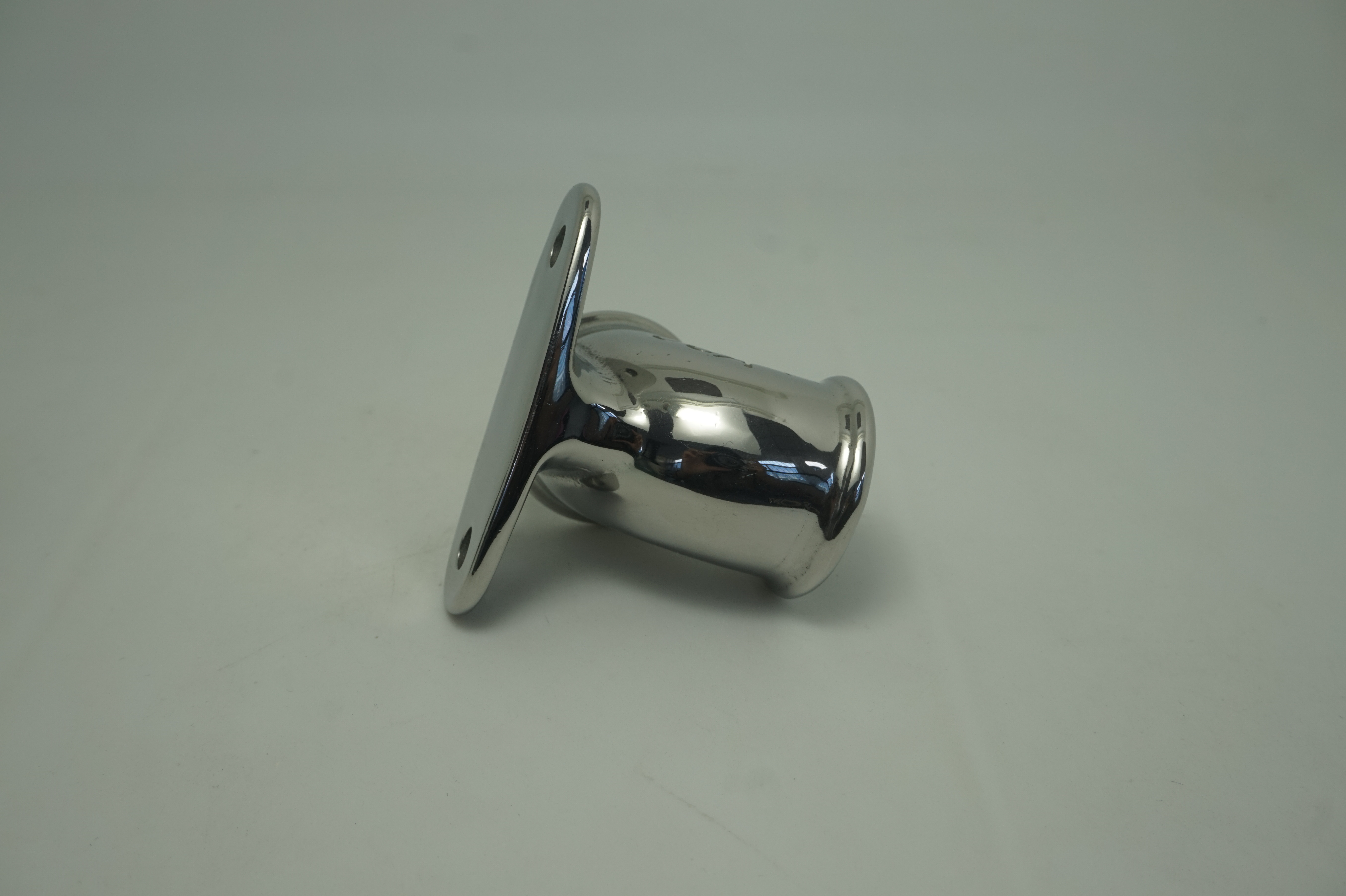
Send parts that represent the extremes of the family: the tightest internal passage, the thinnest section, the largest surface, the worst access, and one weld made with the production procedure. Add an as-received reject so the starting condition is documented, and mark the controlled features and measurement points before shipping. Include a note of the material grade, product form, heat treatment and the cleanliness requirement the part must eventually meet. Parts travel to the factory in Xiamen from France and come back with an observed condition and a proposed media, compound and cycle direction for the buyer to evaluate.
A free-form surface gives the tool no straight reference, so the tool has to follow changing curvature while holding constant contact pressure and surface speed. On a large blade the arm must reach the whole face, which pushes against reach and stiffness limits, and the wheel or belt wears as it travels, so pressure has to be adjusted along the path. Heat builds wherever the tool dwells. Hand polishing works because an operator feels all of this continuously. Automating it needs force control, a path generated from a model, and tool-wear compensation, and it still needs a process that has first been proved by hand at the bench.
Mask or shield it, or choose a route that does not reach it. A taper and a keyway are usually damaged by the same edge rounding that improves the rest of the part, and a seal face suffers from peening or from a coarse medium. Practical options are a mechanical mask or boot, leaving a stock allowance that is finished later by a controlled operation, holding the part in a fixture that excludes the protected zone, or selecting a gentler medium and a shorter cycle. Measure the feature before and after at marked points, and put a maximum radius or a minimum remaining edge on the drawing.
Use Marseille, France as the destination on the enquiry and state whether the deliverable is equipment, media and compound, a representative sample review or a line concept. A destination does not imply local stock, a local service point or a local delivery time.
A Marseille buyer would reference ISO/NF EN surface-texture standards for finish, the EN 1090 and pressure-equipment regimes for welded steel structures and vessels, and coating-system specifications where surface preparation precedes painting; marine and offshore work is normally governed by classification-society and owner specifications on top of the ISO 9001 baseline. Material conformity certificates and traceability are standard requirements in the steel and petrochemical supply chain.
Sources were retrieved on 2026-09-29 and describe the local industrial and trade context only. They do not evidence any SurfacePolish project, shipment, installation or service in Marseille.
The buyer needs the journals and taper protected while surface defects on the intermediate shaft body are blended out before assembly.
Send the material, dimensions, approximate weight, batch quantity, the incoming condition and photographs of the difficult features. Mark which features must not be contacted by media and state how the result will be inspected. This form carries source reference PSEO-0536; quote it if you prefer an additional manual reference.
Open the SurfacePolish enquiry form Email a prepared enquiry
No price, lead time, certification or result is promised here. Confirm whether a sample trial is available for the specific part and what the trial can and cannot show.
Page PSEO-0536 · revised 2026-09-29 · cross-border equipment, media and scoped sample review. City context is sourced and cited above.
Use this local checker to identify missing part and inspection information. It prepares a technical-review brief; it does not approve a machine, process recipe or production result.
Complete the part details to prepare a review brief.
Email : info@surface-polish.com


 IPv6 network supported


 +86-592-2381506