A buyer in Bordeaux, France working on marine components has a 316L manifold whose cross-drillings must be deburred without lodging media in blind ports or peening the seal faces. SurfacePolish supplies finishing machines, media and compounds across borders and runs a free sample trial: the part goes to Xiamen and returns with an observed condition and a proposed media, compound and cycle direction for the buyer to verify. This brief is written for a buyer in Bordeaux working on marine components; it describes equipment, media and a scoped sample review, not a local polishing service.
Does the part family repeat often enough, with stable geometry, to justify a cell rather than a batch machine or hand work?
Which acceptance criteria, measurement locations and functional checks must exist before any route, robot or otherwise, can be compared fairly?
What starting condition and cleanliness baseline will the part arrive in, and who owns the pre-finish step?
Automation needs repetition more than it needs difficulty. A family with stable geometry, a fixed set of controlled features and demand that recurs every week is a candidate; a one-off fabrication with a different weld layout each time is not, however much hand work it consumes. Establish the annual and monthly quantity, how many variants sit in the family, the size difference between the largest and smallest variant, and the takt a cell would have to meet. Then count the manual hours honestly: finishing, setup and fixture change, handling, inspection and rework. If setup and changeover dominate those hours, a robot may reproduce the same inefficiency with more capital behind it. If a few stable variants consume predictable hours, the arithmetic changes and a feasibility discussion is worth having.
When a robot carries the tool, the consumable list changes from loose media to bonded abrasive, nonwoven and buffing products. Coated belts and flap wheels cut weld toes and blend edges; nonwoven wheels and discs refine and satin-finish; stitched or loose cotton wheels with a polishing compound build luster. Each type has a working speed, a contact pressure and a wear curve, and each wears in a way the cell must compensate for or an operator must adjust. Abrasive grain can embed in soft or gummy material such as bronze or aluminium, and a loaded belt cuts less and heats more. Polishing compound leaves a film that has to be removed before coating, passivation or a cleanliness check, so the tool set cannot be chosen separately from the path that carries it.
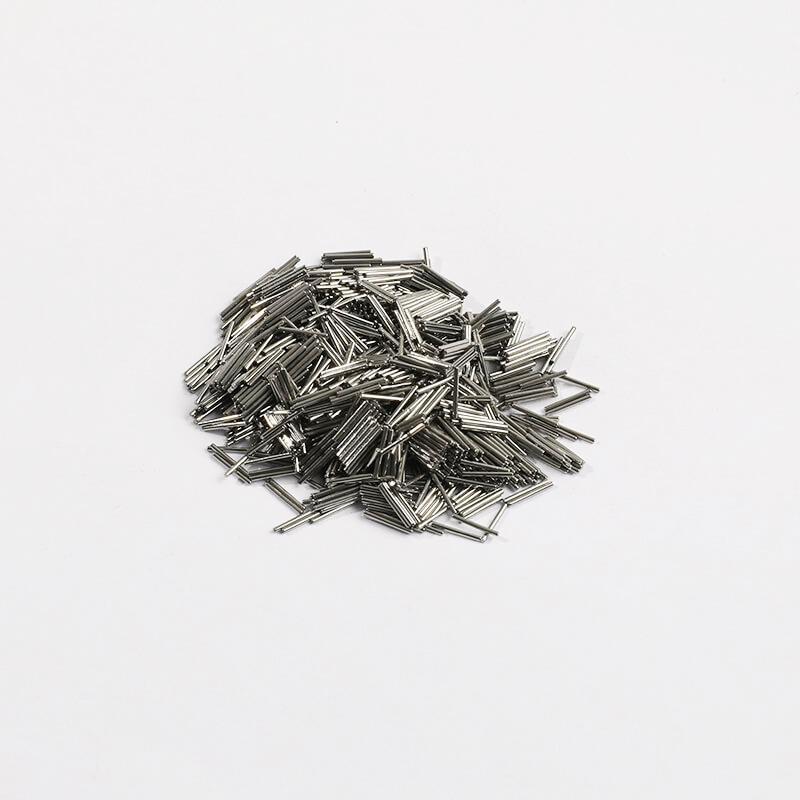
| Media | Best fit | Watch out for |
|---|---|---|
| Steel media including balls, pins and shaped shot | Bright burnished finishing and edge blending on stainless components where appearance matters and stock removal must stay low | Transfers iron to stainless and leaves free iron that blooms in chloride service, so it needs a dedicated charge, an inhibiting compound and magnetic or screen separation |
| Aluminium oxide grinding media in a dense ceramic bond | Heavier stock removal or a more consistent cut on robust stainless and duplex parts with thick edges and cast skin | High removal energy rounds functional edges quickly and is a poor match for thin panels or a knife-edge seat |
| Chloride-free mildly alkaline or near-neutral compound, liquid or powder | Cleaning, corrosion inhibition and fines suspension on stainless and duplex marine work where retained chlorides would risk pitting in service | Dose drifts with drag-out and water hardness, foam can hide the load, and rinse water must reach the same features the compound reached |
| Dry media such as walnut shell and corn cob with a dry polishing machine | Drying, light polishing and luster on parts that must leave the line dry, and on assemblies where a wet residue would be difficult to remove | Generates dust and needs extraction, cannot cut a burr, and organic media can carry moisture and contamination into a clean area |
There are two fundamentally different ways to place a robot in a finishing line, and they fail for different reasons. In the part-handler arrangement the arm grips the part and presents it to a fixed machine, belt or buffing wheel; the arm needs payload for the part plus the gripper, but its motion is simple and repeatable. In the tool-carrier arrangement the arm holds the grinder, sander or polishing head and moves it over a fixtured part; reach must now cover the whole surface, and the arm has to absorb the reaction force of the tool while holding controlled contact. Tool-carrier cells suit large fabrications that are impractical to lift and turn, and they are harder, because force control, tool wear and path accuracy all matter at once. Part-handler cells suit smaller, lighter parts with high volume.
| Machine route | Where it fits | What it will not do |
|---|---|---|
| Grinding finishing machine | Taking off a heavy machining burr or a defined stock layer before a refinement pass on robust stainless and duplex work | High removal energy cuts functional edges fast, so geometry assessment and a short controlled cycle matter more than on any other route |
| Disc finishing machine | Fast, high-energy edge breaking and surface refinement on small robust fittings and uniform batches where cycle time matters | High impingement and edge-loss risk on thin or soft parts, and the geometry must suit the disc working gap rather than a large weldment |
| Vibratory finishing machine (bowl) | Bulk deburring and refinement of small and medium marine fittings, cast cleats, brackets and machined valve internals that can tumble without racking | Continuous part-on-part contact and no access to internal passages; visible faces and heavy parts need separation, racking or a different route |
| Magnetic finishing machine | Fine deburring and light refinement of small precise features such as narrow slots, small bores and stainless fittings | A small working envelope that excludes large fabrications, with pin media that can lodge in fine passages and must be retrieved |
Removing material releases residual stress, and on a large thin fabrication that means movement. A scrubber panel welded into a frame can lose flatness after weld dressing, a long shaft can bend slightly as a skin is taken off, and a bore can close or open as the surrounding metal is worked. Clamping makes this worse when force is used to pull a warped part onto a fixture, because the part springs back on release. Measure flatness, straightness and critical diameters at marked points before and after, and record the support and clamping scheme used. In a cell, gripper force and fixture datums are part of the process rather than peripheral equipment. Where drift matters, the buyer should decide whether stress relief, a reduced stock allowance or a different finishing route is the right answer.
| Failure mode | Likely cause | How to catch it |
|---|---|---|
| Clamping indentations and part-on-part impact marks on a visible face | Gripper or fixture force applied on a finished or visible surface, no protective interface at the contact point, or parts left free to collide in a batch charge | Inspect all contact points and visible faces under raking light against a reference part, and record the fixture contact scheme used so marks can be traced to a specific clamp or pocket |
| Over-grind step or gouge at a path transition or belt change | Two passes overlapping at different pressures, a fresh belt run at the setting that suited a worn one, or an operator touching up a transition by hand without recording it | Inspect each transition zone at a fixed viewing distance under consistent lighting, and compare the zone against the surrounding surface with a roughness reading on both sides |
| Medium wedged in tube-sheet holes or perforated plate openings | Hole diameter close to the media section, cylindrical or conical media that aligns with the hole, or a charge left to drain in the part at unload | Pin gauge a sample of holes across the plate, tap and back-flush each sample, and inspect the plate under oblique light for a medium sitting flush with the surface |
| Dwell mark or flat spot where a robot-held tool paused, slowed or changed direction | Waypoint spacing or path speed poorly set, a tool change or program transition in the middle of a visible surface, or missing compensation for tool wear along the path | Photograph the surface under raking light and compare first and last parts of a run, and measure at fixed points along the path to locate any step or band |
Bordeaux combines an Atlantic port economy with an aerospace and defence industrial base: the Port de Bordeaux operates seven specialised terminals along the Gironde estuary and Garonne, receives close to a thousand vessels a year, and states that the industrial-port complex accounts for 8 620 jobs, with a stated strategic aim of building a new industrial-port model around energy transition. INSEE counted 14 432 establishments in the commune at the end of 2024, 3,2 % in industry, and 211 556 jobs at the place of work in 2023. The wider Gironde industrial base includes aeronautics and defence (Dassault Aviation, Thales and ArianeGroup sites around Merignac, Saint-Medard-en-Jalles and Le Haillan), naval and yacht refit activity in the port, and food and wine-related manufacturing.
For this brief the relevant part of that base is marine: The Port de Bordeaux runs a dedicated maintenance and ship-repair line covering refit, retrofit, maintenance and wintering, supported by its own port workshops and quays.
Aerostructures, space hardware and defence equipment built in the Bordeaux area need controlled edge quality on machined and formed parts, deburring of fluid and pneumatic components, and surface preparation for bonding and coating, all with the traceability that EN 9100 work demands. The port's naval refit and yacht activity adds a second, very different requirement - large-surface preparation, weld dressing and finish on hulls and superstructures in a marine corrosion environment. Food and wine equipment in the region adds stainless fabrication where surface roughness and residue-free cleaning matter hygienically.
A Bordeaux buyer should settle whether the finishing operation supports a bonded or coated surface, because in that case surface chemistry and cleanliness, not just roughness, decide whether the process is acceptable - and those parameters must be specified before a machine or media is selected.
Freight context: Port de Bordeaux (7 terminals: Bassens, Bacalan, Le Verdon, Blaye, Pauillac, Ambares, Bordeaux), Bordeaux-Merignac Airport. The port operates 24 hours a day, 365 days a year and states that its seven specialised terminals along the Gironde and Garonne receive close to a thousand vessels a year, with the industrial-port complex supporting 8 620 jobs. For equipment imports this means the machine can be landed directly on the estuary at Bassens or Verdon and moved by road, with Bordeaux-Merignac handling urgent parts and media samples.
France applies the EU common commercial policy, so industrial machinery arriving from China enters under the Union Customs Code and the Common Customs Tariff rather than under any bilateral French regime; the EU has no free-trade agreement with China, so no preferential duty rate applies and normal third-country duties are due on the customs value. Importers classify the machine in the tariff nomenclature and lodge a customs declaration; French Customs publishes the common and national tariff through its RITA online service and states that three notions are fundamental: the tariff classification of the product, its origin or destination, and the value of the goods.
The working language of French industrial procurement is French: tenders, drawings, inspection plans and technical dossiers are normally issued and answered in French, and quotations that omit French documentation slow down qualification. Buyers qualify a machine against a written specification and expect traceable material certificates, machine safety documentation and, where applicable, a CE declaration of conformity and a risk assessment; acceptance is often staged (documentary review, factory acceptance test, then commissioning). Payment and documentation norms are conventional EU practice: euro invoicing, SEPA or SWIFT bank transfer, Incoterms agreed in writing, and customs paperwork (commercial invoice, packing list, transport document, proof of origin where a preference is claimed) prepared for the declarant or customs representative. Because customs and tax authorisations are handled jointly through SOPRANO, non-EU sellers are normally advised to sell to an established French/EU importing entity rather than to act as importer of record themselves.
SurfacePolish supplies from Xiamen, China. The buyer's own destination rules, conformity marking, tariff classification and documentation responsibilities stay with the buyer; confirm them against the authorities named above before ordering.
Acceptance should exist before finishing starts, on the drawing or in a document the drawing references. Name every controlled surface, the parameter and the cut-off to be used, the measurement direction and the locations where readings are taken, because a seal face, a bore and an outer wall respond differently to the same charge. State the maximum edge radius or the minimum remaining edge at any weld toe, bore lip, keyway or seat. Say what is acceptable visually and under what lighting and viewing distance. Add the functional checks and the cleanliness requirement, together with who performs them. Without this the first argument about a rejected lot becomes a discussion about opinion. A buyer who writes the criteria can also compare two route options on the same basis, whether the work is done in a machine, by hand or by an arm.
Automation repeats a result; it does not create one. The first question in a feasibility study is whether any route can produce the required condition on this geometry at all, and that question is answered on a bench or in a machine, not in a cell. Establish the achievable condition and its sensitivity to pressure, speed and time on plain samples of the actual material. Only when a surface can be reproduced by hand under recorded settings does it make sense to ask whether an arm can hold those settings over a whole part. Many projects invert this order, buy the arm first and then discover the requirement was never attainable on the geometry in question. A short process trial on real coupons is cheap compared with a cell designed around a surface that cannot be produced.
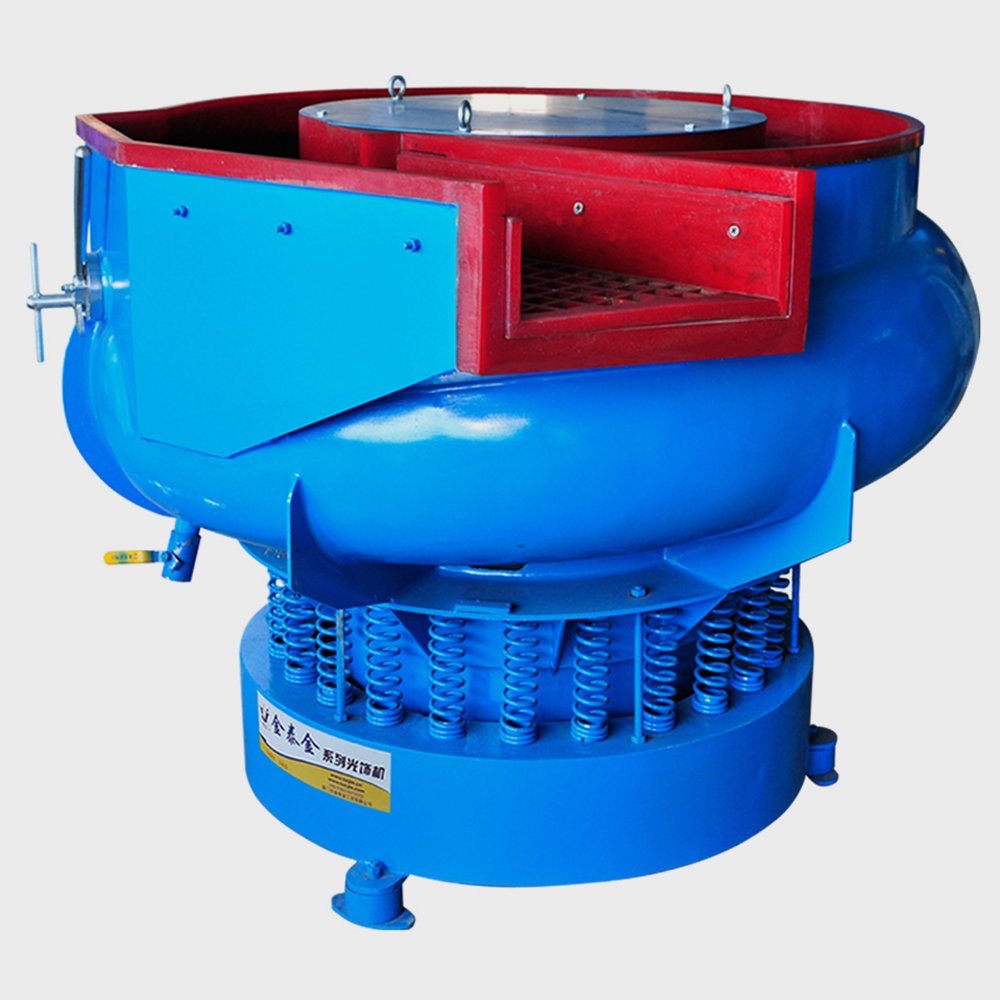
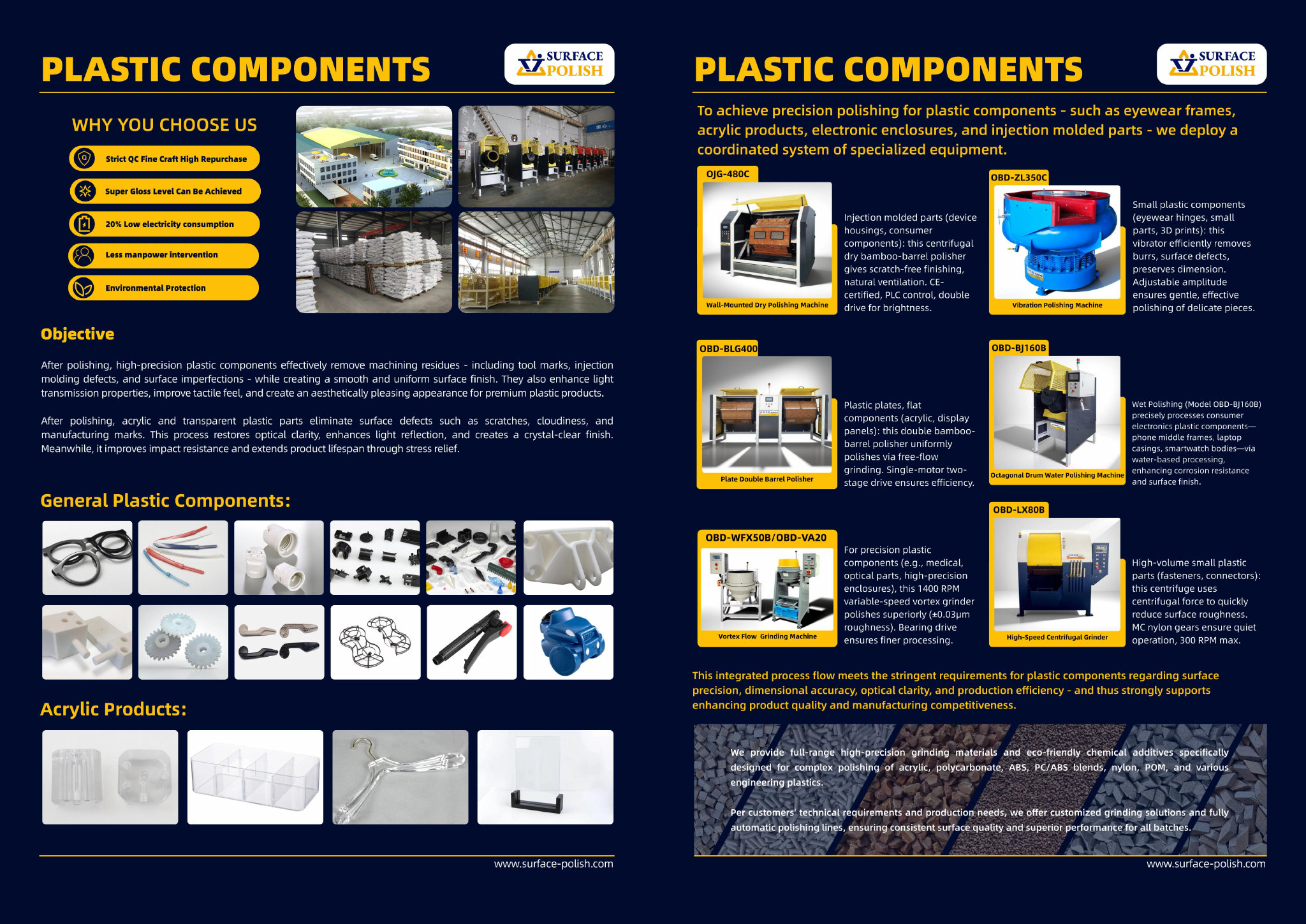
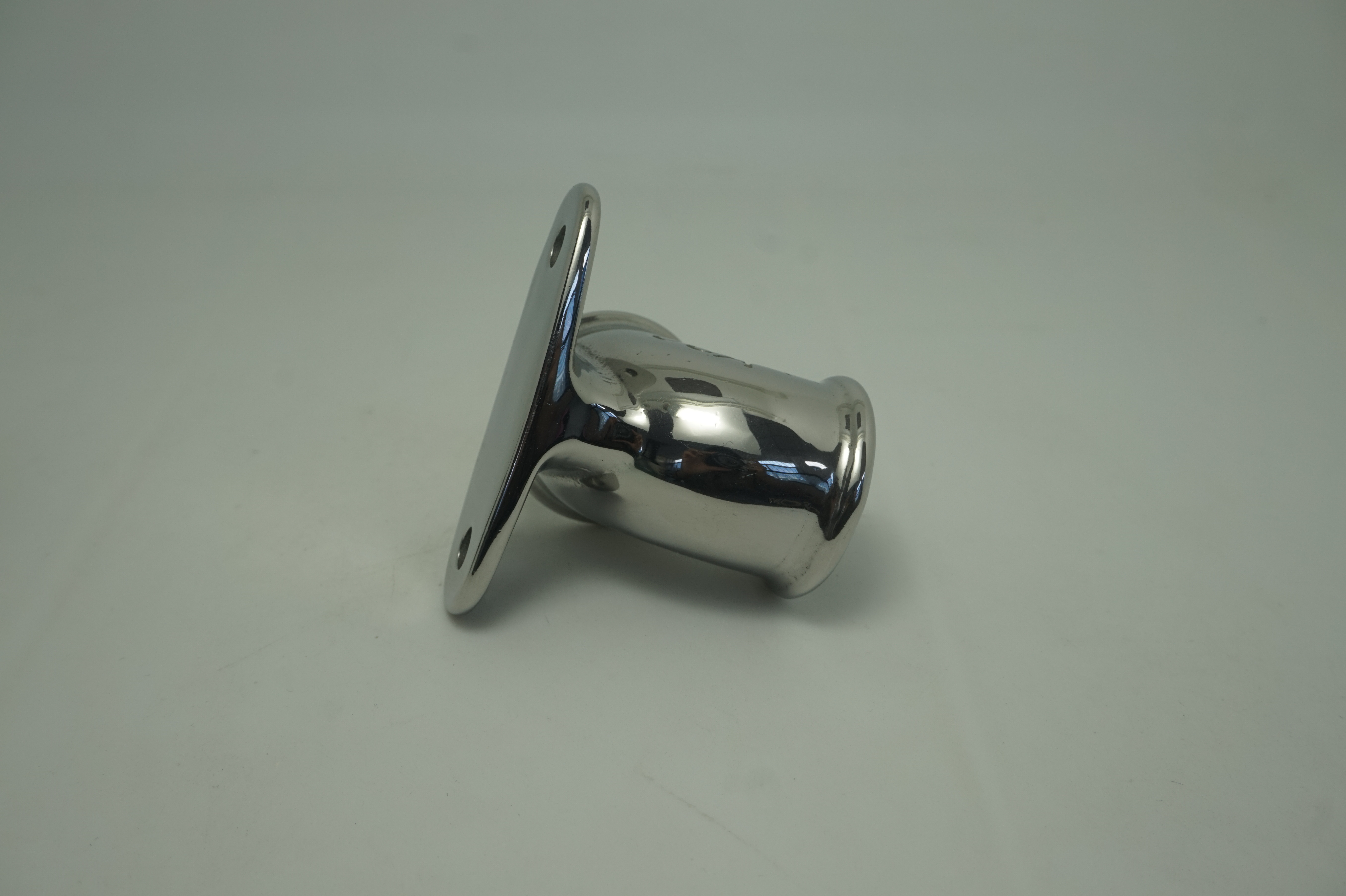
The part has to arrive in a repeatable position and condition. That means a defined locating datum, a fixture or positioner that holds the part without distorting it, a starting condition that varies within a stated band, and a family whose geometry does not change on every job. The controlled features should be the same on every variant, and the part should be clean enough that oil or marking ink does not change how a tool cuts. If the part arrives different each time, the cell will spend its hours being adjusted rather than finishing, and the cost per part will not behave the way the original estimate assumed.
There is no universal number, but the shape of the answer is consistent: a small number of stable variants, each repeating often enough to amortise setup, with a predictable manual time content. Count the hours over a year, then subtract the hours a cell would still spend on loading, fixture changes, tool changes and inspection. If the remainder is small, a batch machine or a fixture change may be the better buy. Where a finishing route near Bordeaux already produces an acceptable surface in bulk, automating load and unload is usually the smaller and more certain step than automating the finishing motion itself.
A positioner is often the cheaper answer to reach. Turning the part to present a new face to a fixed tool or to a smaller machine can remove the need for a long-reach arm and reduce the payload the arm must carry. The trade is an extra axis with its own repeatability, and a fixture that has to locate on every face it turns to. A robot arm earns its place where the tool must travel over a surface that cannot practicably be turned, or where the same motion repeats on many parts. Decide from geometry and volume, not from technology, and prove the surface before either is bought.
Use Bordeaux, France as the destination on the enquiry and state whether the deliverable is equipment, media and compound, a representative sample review or a line concept. A destination does not imply local stock, a local service point or a local delivery time.
A Bordeaux buyer would reference ISO/NF EN surface-texture standards for finish and EN 9100 for aerospace and defence work, plus customer specifications for bonding, sealing and cleanliness; ISO 9001 is the general baseline and marine work is governed by classification-society and owner requirements on top. Material conformity certificates and process traceability are standard expectations in the aerospace and naval supply chains here.
Sources were retrieved on 2026-09-29 and describe the local industrial and trade context only. They do not evidence any SurfacePolish project, shipment, installation or service in Bordeaux.
The buyer needs internal burrs removed from the cross-drillings while the seal faces and thread flanks stay clean and free of lodged media.
Send the material, dimensions, approximate weight, batch quantity, the incoming condition and photographs of the difficult features. Mark which features must not be contacted by media and state how the result will be inspected. This form carries source reference PSEO-0576; quote it if you prefer an additional manual reference.
Open the SurfacePolish enquiry form Email a prepared enquiry
No price, lead time, certification or result is promised here. Confirm whether a sample trial is available for the specific part and what the trial can and cannot show.
Page PSEO-0576 · revised 2026-09-29 · cross-border equipment, media and scoped sample review. City context is sourced and cited above.
Use this local checker to identify missing part and inspection information. It prepares a technical-review brief; it does not approve a machine, process recipe or production result.
Complete the part details to prepare a review brief.
Email : info@surface-polish.com


 IPv6 network supported


 +86-592-2381506