A buyer in Brescia, Italy in marine components has 6 m rail assemblies whose weld dressing and visible finish must be consistent along the whole run. SurfacePolish supplies finishing machines, media and compounds across borders and offers a free sample trial: tube sections and a welded junction go to Xiamen and come back with an observed condition and a proposed media, compound and cycle direction for the buyer's own evaluation. This brief is written for a buyer in Brescia working on marine components; it describes equipment, media and a scoped sample review, not a local polishing service.
Which acceptance criteria, measurement locations and functional checks must exist before any route, robot or otherwise, can be compared fairly?
What is the largest dimension and the greatest mass that must be presented, and can the part be turned or supported without distorting it?
Can the charge or the tool reach the surfaces that matter, and which enclosed passages and blind holes can never be reached at all?
Two 316L parts made to the same drawing can behave differently because of how they were produced. Cast material carries a skin and porosity; wrought plate has a rolling direction; duplex and super-duplex grades respond to heat input differently from austenitic grades, and a weld heat-affected zone finishes at a different rate from the parent metal. Hardfacing, weld overlay, and bronze or nickel-aluminium-bronze castings each cut in their own way. Record the grade, the product form, the heat treatment or stress relief, the welding process and the as-received condition, whether machined, plasma cut, grit blasted or still carrying mill scale and heat tint. Note who owns the pre-finish cleanliness step and what the part must be free of, because oil, marking ink and salt carry-over contaminate a charge and change how it cuts.
Do the arithmetic before drawing a cell. Reach is measured to the tool centre point, not to the mounting flange, and it must cover the far corner of the largest part with the arm still in a posture that has authority; a five-metre nominal reach does not mean a five-metre useful envelope. Payload is rated at the flange and includes the gripper, the tool, cable management and any offset that creates a moment. Stiffness matters more than the payload figure once a tool pushes against a surface, because compliance and lost motion appear as variation in depth of cut and as chatter on thin panels. Arm repeatability is not the same as accuracy of the finished surface, since the part, the fixture and any positioner each add error. Compliant or force-controlled tooling changes the requirement substantially and belongs in the discussion from the start.
| Machine route | Where it fits | What it will not do |
|---|---|---|
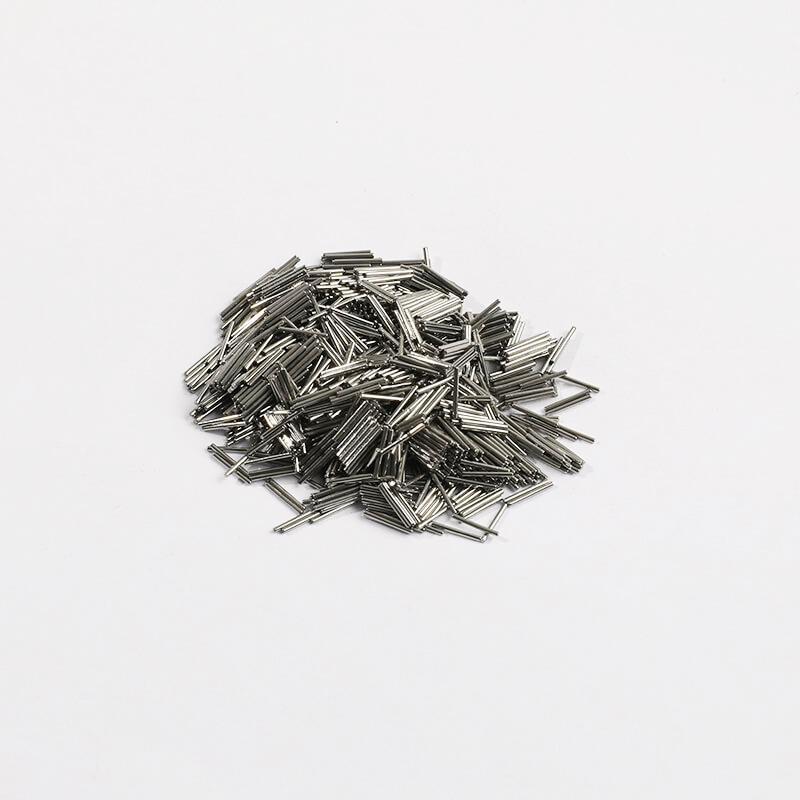
| Magnetic finishing machine | Fine deburring and light refinement of small precise features such as narrow slots, small bores and stainless fittings | A small working envelope that excludes large fabrications, with pin media that can lodge in fine passages and must be retrieved |
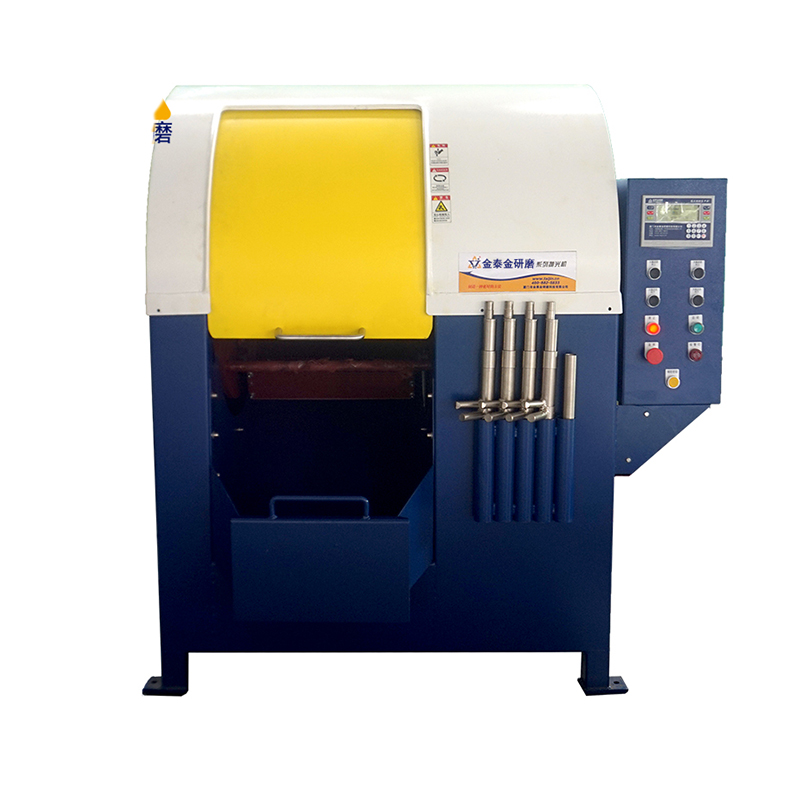
| Centrifugal barrel finishing machine | Short, aggressive cycles on small precision items such as valve trim, inserts and small stainless components with fine edge requirements | Rounds edges and can distort thin unsupported sections quickly, and results are sensitive to charge weight, speed and stop time |
| Vibratory finishing machine (bowl) | Bulk deburring and refinement of small and medium marine fittings, cast cleats, brackets and machined valve internals that can tumble without racking | Continuous part-on-part contact and no access to internal passages; visible faces and heavy parts need separation, racking or a different route |
| Tub vibrator | Long parts that cannot rotate in a bowl, such as rail sections, pipe spools, linear weldments and long shafts, provided they can be supported along their length | Lower energy per unit area, so heavy weld dressing takes longer, and a long tub needs floor space plus a support method that does not mark the part |
Steel media produces a bright, burnished surface on stainless components with low stock removal and good edge blending. On marine work the contamination question comes first. Carbon steel media and carbon steel brushes leave free iron on an austenitic or duplex surface, and free iron in a chloride environment is where rust bloom begins. A steel charge needs its own machine or a documented separation protocol, a corrosion-inhibiting compound, magnetic or screen separation at unload, and a finishing sequence that removes transferred iron before the part ships. Stainless steel media reduces the risk but does not remove it. Whether the part is then passivated is the buyer's decision; a recognised practice such as ASTM B912 describes a passivation treatment for stainless steel and belongs in the requirements the buyer defines and verifies.
| Media | Best fit | Watch out for |
|---|---|---|
| Chloride-free mildly alkaline or near-neutral compound, liquid or powder | Cleaning, corrosion inhibition and fines suspension on stainless and duplex marine work where retained chlorides would risk pitting in service | Dose drifts with drag-out and water hardness, foam can hide the load, and rinse water must reach the same features the compound reached |
| Heavy-cut ceramic angle-cut triangles in a coarse size class | Breaking the edge of a machined or cast marine fitting and removing a substantial burr on robust stainless before a refinement stage | Cuts corners and weld toes aggressively and can round a seat or keyway, and the coarse section may not enter narrow passages at all |
| Steel media including balls, pins and shaped shot | Bright burnished finishing and edge blending on stainless components where appearance matters and stock removal must stay low | Transfers iron to stainless and leaves free iron that blooms in chloride service, so it needs a dedicated charge, an inhibiting compound and magnetic or screen separation |
| Aluminium oxide grinding media in a dense ceramic bond | Heavier stock removal or a more consistent cut on robust stainless and duplex parts with thick edges and cast skin | High removal energy rounds functional edges quickly and is a poor match for thin panels or a knife-edge seat |
A pump or valve body has seawater passages, a drain boss and a row of blind tapped flange holes. A welded fabrication has an enclosed stiffener cavity or an open-ended box section. Each of these is a place where a medium, a broken fragment of medium or a slug of compound can settle and stay. The part passes a visual check on the outside and the problem appears after assembly, when a passage is restricted or a fastener will not seat. Size the medium below the smallest opening it can enter, count the charge in and out where the batch allows, borescope the smallest passage at an agreed angle, pin gauge or thread gauge the holes, and rinse through a filter so the discharge can be inspected. Blind features that were never mapped are the usual source.
| Failure mode | Likely cause | How to catch it |
|---|---|---|
| Dwell mark or flat spot where a robot-held tool paused, slowed or changed direction | Waypoint spacing or path speed poorly set, a tool change or program transition in the middle of a visible surface, or missing compensation for tool wear along the path | Photograph the surface under raking light and compare first and last parts of a run, and measure at fixed points along the path to locate any step or band |
| Keyway, spline or taper geometry lost to edge rounding | The feature was exposed to the charge without masking, or a tool-carrier path ran along the flank of the feature instead of stopping short of it | Check width, flank angle and edge break with a gauge or comparator at marked stations before and after, and confirm the protected feature against the drawing tolerance |
| Over-grind step or gouge at a path transition or belt change | Two passes overlapping at different pressures, a fresh belt run at the setting that suited a worn one, or an operator touching up a transition by hand without recording it | Inspect each transition zone at a fixed viewing distance under consistent lighting, and compare the zone against the surrounding surface with a roughness reading on both sides |
| Weld toe, bore lip or free edge rounded past the drawing limit | Cycle too long, high-energy route or coarse dense media, a robot path that dwells at a corner, or a weld toe that was never given a maximum radius on the drawing | Measure the same edge before and after with an optical comparator, radius gauge or moulded replica, and compare against the maximum radius or minimum remaining edge specified |
Brescia is one of Lombardy's most industrial provinces. The Camera di Commercio di Brescia reports that industrial production in the province grew 2.6% year on year in the second quarter of 2026, above the Lombardy average of 2.1%, with industry turnover up 5.7% on the year and export orders up 8.9%. Foreign sales carry the local economy: the chamber's economy report estimates that 45.2% of the province's value added derives from exports and that exports cover 173.8% of imports. The chamber's manufacturing surveys break the local industrial fabric into steel (siderurgia), mechanical engineering (meccanica), food (alimentari), chemicals and rubber-plastics, and its 2026 investment survey shows food, transport equipment and steel among the branches that invested most in 2025.
The nearest part of that base to this brief is automotive: Transport equipment (mezzi di trasporto) is one of the branches tracked in the Brescia chamber's industrial investment survey, with 85.7% of firms in that branch having invested in 2025, behind only chemicals and food.
A production mix built on steel, metalworking, mechanical engineering and food processing generates a continuous flow of parts that need deburring, edge rounding, descaling or a controlled surface before assembly, coating or sale. In that kind of metalworking supply chain, metal treatment and surface finishing sit upstream of assembly, so cycle time, media wear and the ability to reproduce the same finish from batch to batch are the practical qualification issues - which is why consumable cost per part, rather than machine price alone, is normally the deciding number for a steel-working buyer.
The first question is whether the requirement is metallurgical and functional (removing scale and burrs, establishing an edge radius on a forged or machined steel part) or visual, and how the works will verify it on incoming inspection - because a steel-working buyer needs a process window that holds across changing part geometry and batch size, not a single demonstration part.
Freight context: Aeroporto di Brescia (airport of national interest per ENAC), Road and rail freight (no commercial seaport in the province). Brescia has no commercial seaport in the province; the national civil aviation authority ENAC lists Brescia among Italy's airports of national interest, and the province's heavy export orientation (45.2% of value added, exports covering 173.8% of imports) means freight moves mainly by road and rail to EU gateways. Non-EU machinery or sample parts therefore clear customs at their EU point of entry and are then trucked to Brescia.
The national standards body is UNI - Ente Italiano di Normazione, a private non-profit association founded over a century ago, which develops, publishes and disseminates voluntary technical standards and adopts the European and international standards as Italian editions. For finishing work the operative references are the surface-texture series UNI EN ISO 21920-1:2022, which fixes how the surface state (roughness, waviness, primary profile) is indicated on technical product documentation, and UNI EN ISO 21920-2:2022, which defines the terms, definitions and parameters used with profile methods. Machinery safety requirements come from the EU machinery legislation rather than from UNI alone: Machinery Directive 2006/42/EC applies to machinery placed on the EU market before 20 January 2027, after which Machinery Regulation (EU) 2023/1230 takes over.
Italy applies the EU's common commercial policy to imports from China, so Chinese industrial machinery enters under the EU Common Customs Tariff, where the duty rate depends on the type and origin of the goods and the working tariff is TARIC. Istat's August 2026 extra-EU trade release records a 16.0% year-on-year increase in Italian purchases from China, alongside strong growth from India, OPEC and Mercosur, so China remains one of the fastest-growing sources of Italian imports. Anti-dumping and other trade-defence measures apply case by case to specific product categories rather than to finishing machinery in general, so the applicable rate must be checked against the specific commodity code before a quotation is finalised.
SurfacePolish supplies from Xiamen, China. The buyer's own destination rules, conformity marking, tariff classification and documentation responsibilities stay with the buyer; confirm them against the authorities named above before ordering.
Treat the first article as the reference, not as a formality. Approve it against the written criteria, keep it with the settings used, and use it to reset expectations whenever a variable changes. Records worth having for each lot include the machine or cell identifier, the media type, size class, charge mass and charge age, the compound and its measured concentration, the cycle or path program and revision, the tool or belt type and its life counter, the fixture and datum scheme, and the inspection results with their measurement locations. For work done on a trial basis, the record should say plainly that the result applies to the parts and settings tested. Parts received without a settings record cannot be separated from the process that produced them, and repeatability becomes guesswork.
Send parts that represent the extremes, not the average. Include the part with the tightest internal passage, the thinnest section, the largest surface to be finished and the most restricted access. Include one weld sample made with the production welding procedure, because a weld toe finishes differently from parent metal. Include an as-received reject so the starting condition is documented, and mark the measurement points and controlled features on each part before shipping. Record the material grade, product form, heat treatment, as-received condition and the cleanliness requirement the part must eventually meet. Label everything and pack it so nothing is damaged in transit. A trial run on a convenient sample answers a question the buyer did not ask.
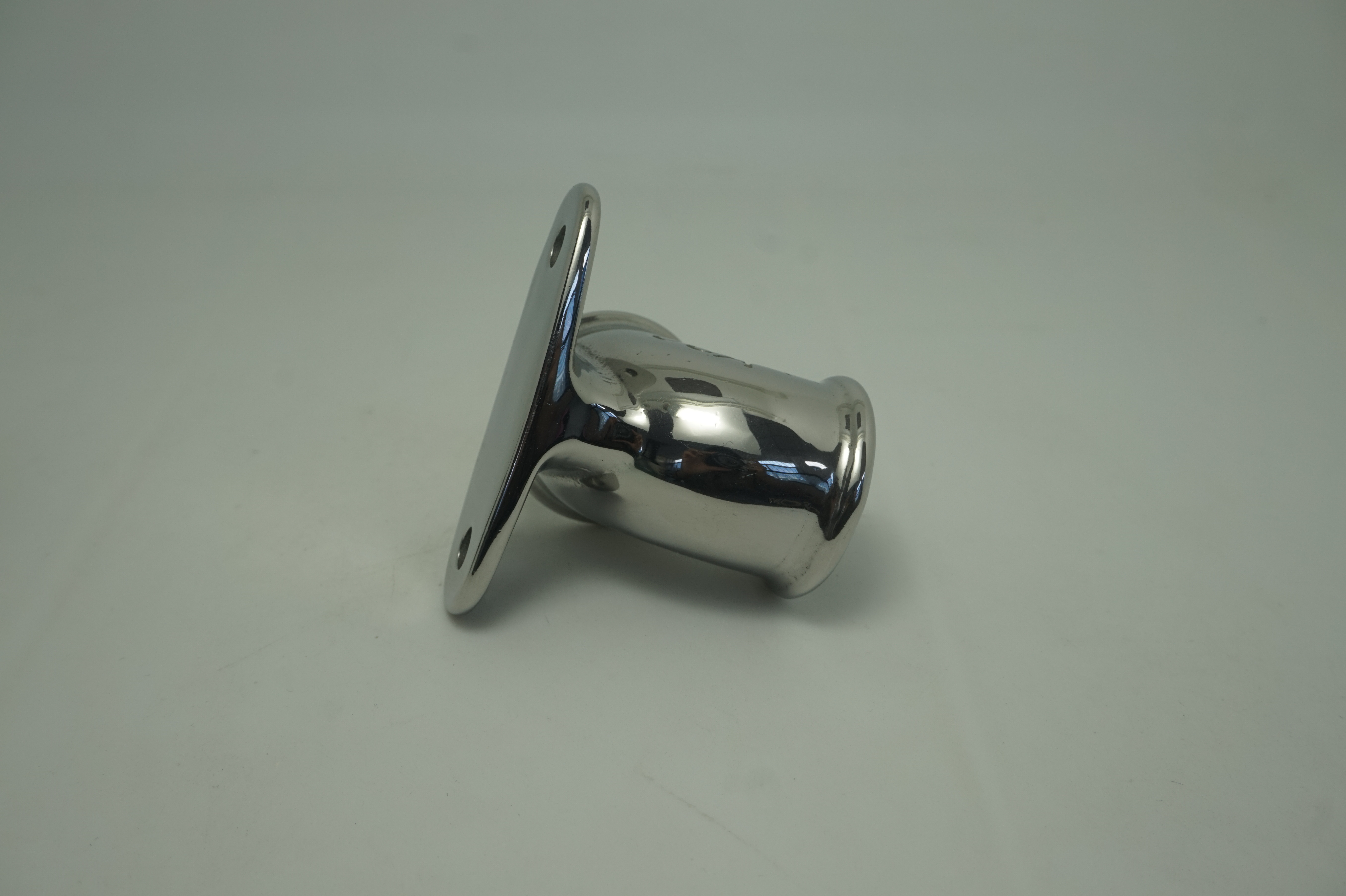
Usually contamination rather than the material itself. Carbon steel media, carbon steel brushes, a machine also used for carbon steel work, grinding dust settling on a wet surface, bare-hand handling and chloride carried in rinse water can all leave something behind that starts to stain. It often appears first at a weld, a pit or a thread root. Segregate stainless work, use dedicated tooling, control the rinse water, dry the part promptly, and check with a wipe test or a free-iron check if the buyer wants one. Whether passivation follows mechanical finishing is the buyer's decision and its own requirement to define in Italy.
There is no universal number, but the shape of the answer is consistent: a small number of stable variants, each repeating often enough to amortise setup, with a predictable manual time content. Count the hours over a year, then subtract the hours a cell would still spend on loading, fixture changes, tool changes and inspection. If the remainder is small, a batch machine or a fixture change may be the better buy. Where a finishing route near Brescia already produces an acceptable surface in bulk, automating load and unload is usually the smaller and more certain step than automating the finishing motion itself.
No. SurfacePolish does not issue certification, qualification or approval for any regulated application, and nothing described here may be treated as such a claim. Requirements set by a classification society, a coating manufacturer or an end user are defined and verified by the buyer and its own inspection function. What SurfacePolish provides is equipment, media and compounds, a scoped discussion of a line concept, and observations from a sample trial on the parts tested under the settings used. Those observations can feed the buyer's own qualification work, but they do not replace it or shorten it.
Use Brescia, Italy as the destination on the enquiry and state whether the deliverable is equipment, media and compound, a representative sample review or a line concept. A destination does not imply local stock, a local service point or a local delivery time.
Finish is specified through UNI, the Italian standards body, whose Italian editions of the EN/ISO surface-texture series (UNI EN ISO 21920-1 and -2:2022) govern drawing indications and measurement parameters, and the Camera di Commercio di Brescia is the local body that issues the certificates of origin, export visas and free-sale attestations companies need for foreign trade. Machinery supplied into the province must also satisfy the EU machinery legislation.
Sources were retrieved on 2026-09-29 and describe the local industrial and trade context only. They do not evidence any SurfacePolish project, shipment, installation or service in Brescia.
The buyer wants weld dressing and a consistent visible finish across long tubes that cannot be turned in a bowl.
Send the material, dimensions, approximate weight, batch quantity, the incoming condition and photographs of the difficult features. Mark which features must not be contacted by media and state how the result will be inspected. This form carries source reference PSEO-0436; quote it if you prefer an additional manual reference.
Open the SurfacePolish enquiry form Email a prepared enquiry
No price, lead time, certification or result is promised here. Confirm whether a sample trial is available for the specific part and what the trial can and cannot show.
Page PSEO-0436 · revised 2026-09-29 · cross-border equipment, media and scoped sample review. City context is sourced and cited above.
Use this local checker to identify missing part and inspection information. It prepares a technical-review brief; it does not approve a machine, process recipe or production result.
Complete the part details to prepare a review brief.
Email : info@surface-polish.com


 IPv6 network supported


 +86-592-2381506