A buyer in Fukuoka, Japan working on marine components has a 220 kg 316L pump casing whose flange face and seawater passage must survive weld dressing intact. SurfacePolish supplies finishing machines, media and compounds across borders and runs a free sample trial: representative parts ship to the factory in Xiamen and come back with an observed condition and a proposed media, compound and cycle direction for the buyer's own review. This brief is written for a buyer in Fukuoka working on marine components; it describes equipment, media and a scoped sample review, not a local polishing service.
Does the part family repeat often enough, with stable geometry, to justify a cell rather than a batch machine or hand work?
What is the largest dimension and the greatest mass that must be presented, and can the part be turned or supported without distorting it?
What starting condition and cleanliness baseline will the part arrive in, and who owns the pre-finish step?
Automation needs repetition more than it needs difficulty. A family with stable geometry, a fixed set of controlled features and demand that recurs every week is a candidate; a one-off fabrication with a different weld layout each time is not, however much hand work it consumes. Establish the annual and monthly quantity, how many variants sit in the family, the size difference between the largest and smallest variant, and the takt a cell would have to meet. Then count the manual hours honestly: finishing, setup and fixture change, handling, inspection and rework. If setup and changeover dominate those hours, a robot may reproduce the same inefficiency with more capital behind it. If a few stable variants consume predictable hours, the arithmetic changes and a feasibility discussion is worth having.
Compound carries the work: it cleans the part and the media, holds fines in suspension, inhibits corrosion and controls foam. A mildly alkaline or near-neutral family is typical for ferrous work, and dose is set by measured concentration rather than by eye. On stainless and duplex marine parts the chloride content is the variable to control, because chlorides left in a pit, a crevice or a thread root can start pitting long after the part leaves the shop, and both tap water and recycled rinse water carry them. Confirm the water that will actually be used, add a rinse step that reaches the same features the finishing step reached, and dry the part rather than letting it drain and stain. Foam, residue and drag-out into a clean area are part of compound selection, not afterthoughts.
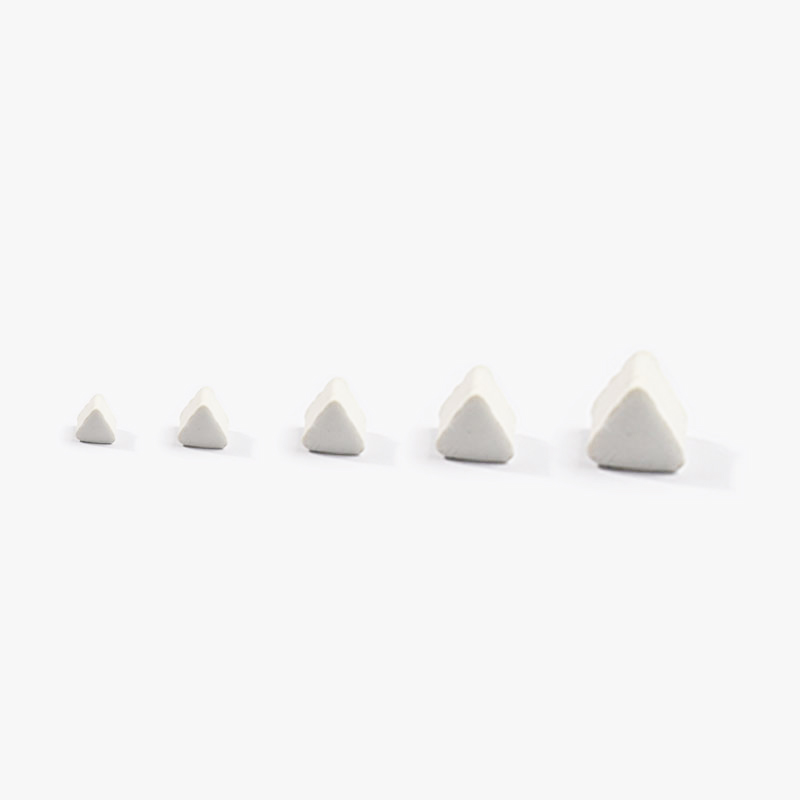
| Media | Best fit | Watch out for |
|---|---|---|
| Heavy-cut ceramic angle-cut triangles in a coarse size class | Breaking the edge of a machined or cast marine fitting and removing a substantial burr on robust stainless before a refinement stage | Cuts corners and weld toes aggressively and can round a seat or keyway, and the coarse section may not enter narrow passages at all |
| Steel media including balls, pins and shaped shot | Bright burnished finishing and edge blending on stainless components where appearance matters and stock removal must stay low | Transfers iron to stainless and leaves free iron that blooms in chloride service, so it needs a dedicated charge, an inhibiting compound and magnetic or screen separation |
| Chloride-free mildly alkaline or near-neutral compound, liquid or powder | Cleaning, corrosion inhibition and fines suspension on stainless and duplex marine work where retained chlorides would risk pitting in service | Dose drifts with drag-out and water hardness, foam can hide the load, and rinse water must reach the same features the compound reached |
| Dry media such as walnut shell and corn cob with a dry polishing machine | Drying, light polishing and luster on parts that must leave the line dry, and on assemblies where a wet residue would be difficult to remove | Generates dust and needs extraction, cannot cut a burr, and organic media can carry moisture and contamination into a clean area |
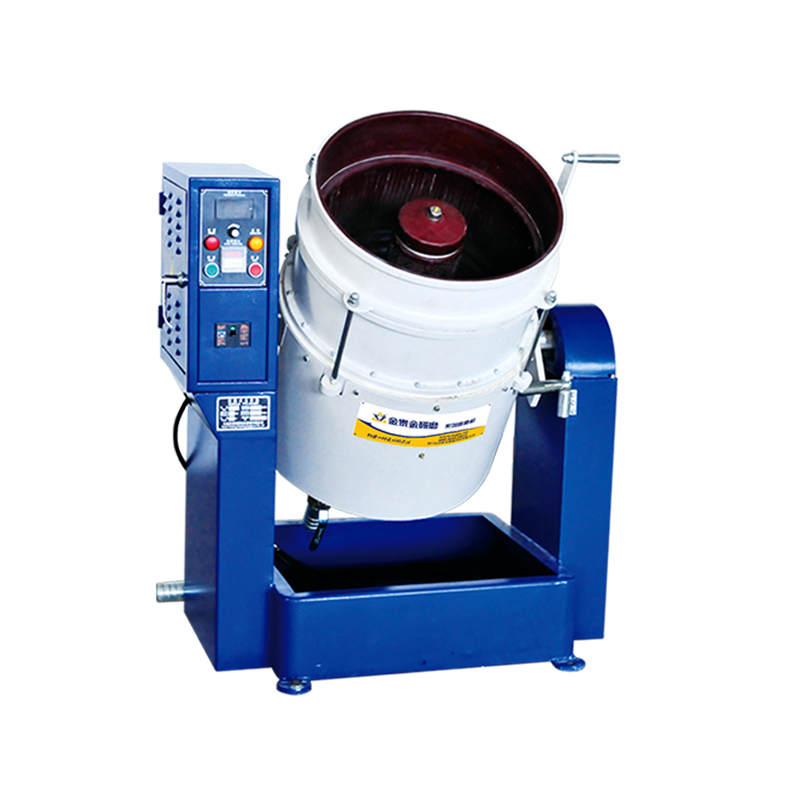
Rotary barrels, disc machines and centrifugal barrel machines cover the high-energy end. A disc machine cuts quickly on small robust parts and suits uniform batches of fittings, while a centrifugal barrel machine produces short, aggressive cycles on small precision items. A rotary barrel is gentler on fragile or thin components but runs long and hides the part while it runs. All three require the part to fit a defined working volume and to tolerate contact with other parts or with a rotating disc. None of them accepts a four-metre shaft or a two-hundred-kilogram casting. In a marine part mix they handle the small-part tail of the family, such as fasteners, small fittings, inserts and valve trim, while the large fabrications go to a tub, a hand-held tool or a considered robot cell.
| Machine route | Where it fits | What it will not do |
|---|---|---|
| Rotary barrel finishing machine | Gentle deburring of small fragile components and mixed fitting batches with generous compound flow and low part-on-part energy | Long cycles with no visibility while running, and internal passages collect media and compound that must be retrieved at unload |
| Grinding finishing machine | Taking off a heavy machining burr or a defined stock layer before a refinement pass on robust stainless and duplex work | High removal energy cuts functional edges fast, so geometry assessment and a short controlled cycle matter more than on any other route |
| Dry polishing machine and dryer | Drying parts after a wet stage and producing a dry polished surface with organic media where a wet residue would be hard to remove | No cutting action, needs dust extraction, and organic media must be kept dry and clean or it transfers contamination to the part |
| Magnetic finishing machine | Fine deburring and light refinement of small precise features such as narrow slots, small bores and stainless fittings | A small working envelope that excludes large fabrications, with pin media that can lodge in fine passages and must be retrieved |
Rounding is the purpose of most finishing and also the most common way a marine part is ruined. A weld toe that should retain a defined radius, a bore lip a gasket seals against, a knife edge on a valve seat and the flank of a keyway all lose geometry when a charge or a belt works them too long. The failure is progressive rather than sudden: early passes improve the surface and later passes quietly cross the limit. Set a maximum radius or a minimum remaining edge on the drawing, shield or mask the features that must hold it, and measure the same edge before and after with an optical comparator, a radius gauge or a moulded replica. On a robot-held tool, edge exposure is a function of path and pressure, so a few extra seconds in one corner is enough.
| Failure mode | Likely cause | How to catch it |
|---|---|---|
| Dwell mark or flat spot where a robot-held tool paused, slowed or changed direction | Waypoint spacing or path speed poorly set, a tool change or program transition in the middle of a visible surface, or missing compensation for tool wear along the path | Photograph the surface under raking light and compare first and last parts of a run, and measure at fixed points along the path to locate any step or band |
| Weld toe, bore lip or free edge rounded past the drawing limit | Cycle too long, high-energy route or coarse dense media, a robot path that dwells at a corner, or a weld toe that was never given a maximum radius on the drawing | Measure the same edge before and after with an optical comparator, radius gauge or moulded replica, and compare against the maximum radius or minimum remaining edge specified |
| Rust bloom and tea staining appearing on a finished stainless surface within days | Free iron from carbon steel media or brushes, a machine shared with carbon steel work, airborne grinding dust on a wet surface, bare-hand handling, or chloride carried in rinse water | Wipe a defined area with a white cloth and record what it shows, run a free-iron check if the buyer wants one, and inspect welds, pits and thread roots under good light after the part has stood for a period |
| Medium or a broken medium fragment lodged in a seawater passage, drain boss or internal cavity | Media size class too close to the smallest opening, a worn charge breaking down into smaller pieces, or an enclosed feature that was never mapped before the route was chosen | Count the charge in and out where the batch allows, borescope the smallest passage at an agreed angle, and flush the passage into a filter so the discharge can be examined |
Fukuoka City is the economic core of Fukuoka Prefecture on Kyushu's north coast, and the prefecture's industrial policy is organised around two formally designated clusters: it has published regional industrial cluster plans for the semiconductor field and the advanced-mobility field under the national Regional Future Strategy, presented as promoting a total of JPY 600 billion of investment, and it maintains an annual map and database of automotive and car-electronics suppliers that listed 1,251 companies across Kyushu in December 2025, 647 of them in Fukuoka Prefecture. The city promotes hydrogen-related industry through its Hydrogen Leader City Project, and states that it opened a hydrogen station producing hydrogen from municipal sewage biogas for fuel-cell vehicles in 2015, which it describes as a world first.
The nearest part of that base to this brief is energy: Fukuoka City runs the Hydrogen Leader City Project and states it opened a station producing hydrogen from municipal sewage biogas for fuel-cell vehicles in 2015, described on the city page as a world first.
Automotive and car-electronics suppliers in the prefecture machine metal parts and housings where burrs and edge condition affect fit, electrical contact and coating adhesion, so deburring and edge control sit on the normal production route rather than in rework. Semiconductor-related equipment work adds a cleanliness requirement, and the city's hydrogen and environmental-equipment activity adds valve, manifold and plate components whose sealing faces depend on surface finish.
For a Fukuoka-area semiconductor-equipment or automotive supplier the first question is which specification governs the feature in question - a JIS or customer-drawing callout for edge condition and surface roughness on a sealing face, an electrical contact or a cosmetic surface - because that decides whether a vibratory or centrifugal barrel process, a disc finishing machine, or a scoped media-and-compound sample trial is the right starting point.
Freight context: 博多港 (Port of Hakata), including the Island City container terminal, 博多港 中央ふ頭 (Chuo Pier). The city's port pages state that Hakata Port is the sea gateway for Kyushu and western Japan and that about 910,000 TEU of international maritime containers were handled in 2025 (Reiwa 7), with Island City and Chuo Pier serving as logistics gateways. Hakata Port is therefore the practical point of entry for incoming finishing machines and for outbound sample parts.
The customs authority is Japan Customs, the Customs and Tariff Bureau of the Ministry of Finance, with regional customs at Tokyo, Yokohama, Nagoya, Osaka and Kobe. Any person importing goods must declare them to the Director-General of Customs and obtain an import permit after examination and payment of customs duty and consumption tax. The declaration is normally filed by the importer or by a customs broker acting as proxy, on a triplicate import (customs duty payment) declaration form (Customs form C-5020) supported by the invoice, the bill of lading or air waybill, a certificate of origin where a WTO rate applies, certificates of origin for preferential rates, packing lists and freight and insurance documents where required, plus any licence or certificate demanded by laws other than the Customs Law. More than 90 per cent of import procedures are computerised. A JIS Mark certificate is a separate, voluntary third-party scheme; foreign exporters are eligible to apply, and certification bodies must comply with ISO/IEC 17065.
The national standards body is the Japanese Industrial Standards Committee (JISC), which states that JIS covers industrial and mineral products, data, services and management systems under the Industrial Standardization Act. Its technical divisions include mechanical engineering, ferrous materials and metallurgy, nonferrous materials and metallurgy, ceramics, medical equipment and safety appliances, and aircraft and aviation, which are the divisions a finishing or deburring requirement is normally read against. Product certification runs through the JIS Mark Certification Scheme, operated by accredited certification bodies compliant with ISO/IEC 17065; as of March 2019 there were 24 JIS-accredited bodies, three of them outside Japan, with about 8,700 certifications issued, and the scheme explicitly covers foreign manufacturers, processors and exporters.
SurfacePolish supplies from Xiamen, China. The buyer's own destination rules, conformity marking, tariff classification and documentation responsibilities stay with the buyer; confirm them against the authorities named above before ordering.
Where a part sits in a charge changes what happens to it. Parts at the bottom carry more load and see more part-on-part contact; parts near the wall of a bowl can be bypassed; parts at the ends of a tub can be underworked. A sampling plan that draws from one position will not describe the lot. Agree the sample size, the positions sampled and the order in which parts are drawn, and include a control part measured only at the start and at the end. In a cell, the equivalent is the first part after a tool change, the first part of a shift and the part after a fixture change. Keep each sampled part with its settings record, and define in advance what happens to a lot when one sample falls outside the acceptance band.
A sample trial reports what was observed on the parts tested under the settings used, and that is the limit of it. It cannot promise a roughness value, an edge radius, a tolerance, a cycle time, a capacity or a cost. It cannot verify the reach, payload or path accuracy of a robot the buyer has not yet chosen, nor the behaviour of a gripper, fixture or positioner that does not exist. It cannot qualify a process for a classification society, a coating specification or a service environment, and it cannot demonstrate corrosion performance or coating adhesion. Nor can it show production uniformity, because a few parts do not describe variation across a lot, a shift or a media charge. Those gaps close only through the buyer's own line trials, first-article discipline and acceptance testing.

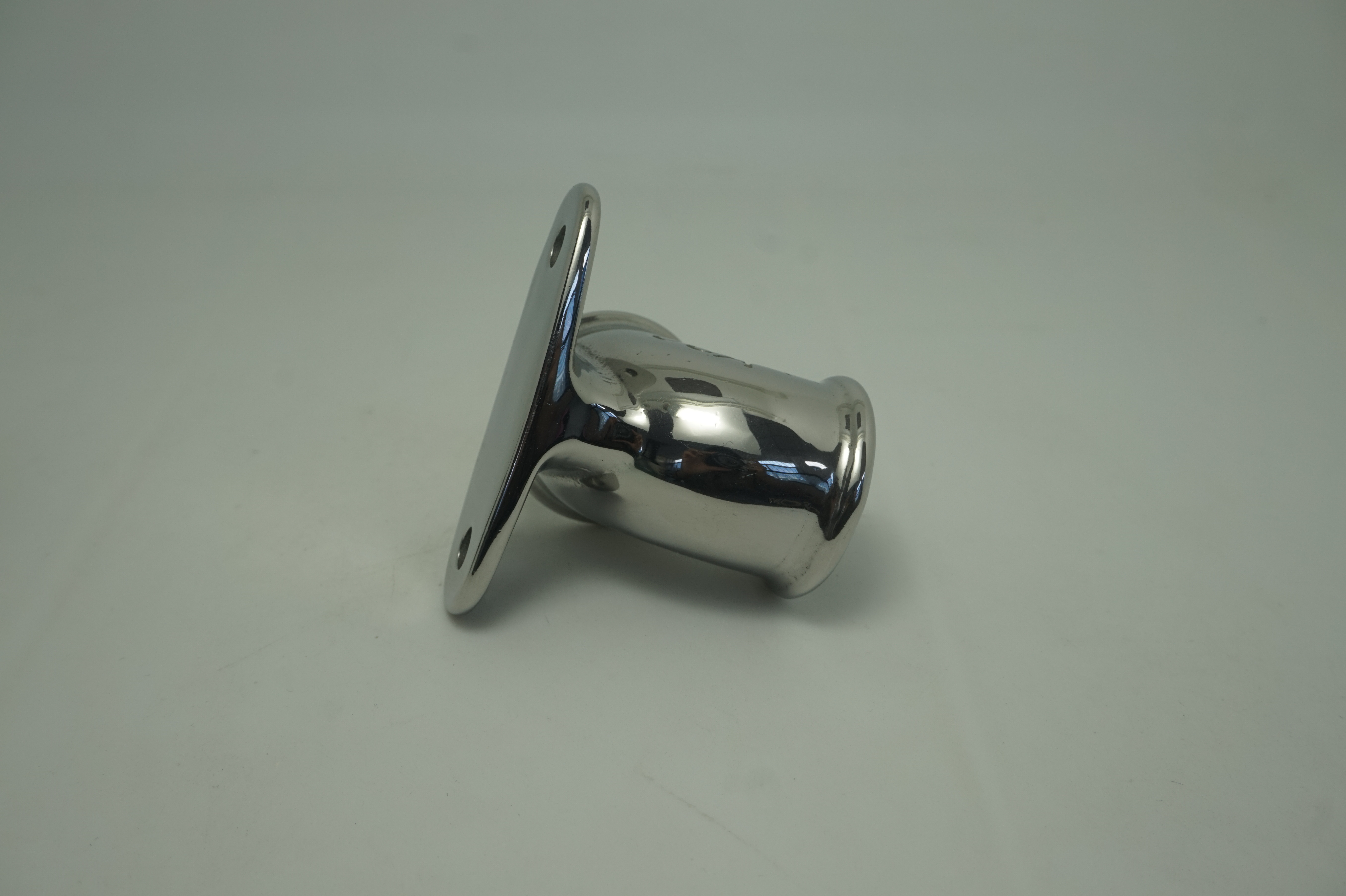
Send parts that represent the extremes of the family: the tightest internal passage, the thinnest section, the largest surface, the worst access, and one weld made with the production procedure. Add an as-received reject so the starting condition is documented, and mark the controlled features and measurement points before shipping. Include a note of the material grade, product form, heat treatment and the cleanliness requirement the part must eventually meet. Parts travel to the factory in Xiamen from Japan and come back with an observed condition and a proposed media, compound and cycle direction for the buyer to evaluate.
Mask or shield it, or choose a route that does not reach it. A taper and a keyway are usually damaged by the same edge rounding that improves the rest of the part, and a seal face suffers from peening or from a coarse medium. Practical options are a mechanical mask or boot, leaving a stock allowance that is finished later by a controlled operation, holding the part in a fixture that excludes the protected zone, or selecting a gentler medium and a shorter cycle. Measure the feature before and after at marked points, and put a maximum radius or a minimum remaining edge on the drawing.
Usually contamination rather than the material itself. Carbon steel media, carbon steel brushes, a machine also used for carbon steel work, grinding dust settling on a wet surface, bare-hand handling and chloride carried in rinse water can all leave something behind that starts to stain. It often appears first at a weld, a pit or a thread root. Segregate stainless work, use dedicated tooling, control the rinse water, dry the part promptly, and check with a wipe test or a free-iron check if the buyer wants one. Whether passivation follows mechanical finishing is the buyer's decision and its own requirement to define in Japan.
Use Fukuoka, Japan as the destination on the enquiry and state whether the deliverable is equipment, media and compound, a representative sample review or a line concept. A destination does not imply local stock, a local service point or a local delivery time.
Japanese buyers work to JIS (Japanese Industrial Standards), enacted and revised under the Industrial Standardization Act and administered through the Japanese Industrial Standards Committee (JISC) at METI; the JISC site publishes JIS enactments and revisions while allowing JIS documents to be read but not printed. Surface-finish and material requirements are normally cited on drawings as JIS or as customer-specific specifications, and management-system certification to ISO 9001 is commonly requested as general industry practice.
Sources were retrieved on 2026-09-29 and describe the local industrial and trade context only. They do not evidence any SurfacePolish project, shipment, installation or service in Fukuoka.
The buyer wants the weld repairs dressed and the outside cleaned up without rounding the flange face or leaving medium in the seawater passage.
Send the material, dimensions, approximate weight, batch quantity, the incoming condition and photographs of the difficult features. Mark which features must not be contacted by media and state how the result will be inspected. This form carries source reference PSEO-0876; quote it if you prefer an additional manual reference.
Open the SurfacePolish enquiry form Email a prepared enquiry
No price, lead time, certification or result is promised here. Confirm whether a sample trial is available for the specific part and what the trial can and cannot show.
Page PSEO-0876 · revised 2026-09-29 · cross-border equipment, media and scoped sample review. City context is sourced and cited above.
Use this local checker to identify missing part and inspection information. It prepares a technical-review brief; it does not approve a machine, process recipe or production result.
Complete the part details to prepare a review brief.
Email : info@surface-polish.com


 IPv6 network supported


 +86-592-2381506