A buyer in Geelong, Australia working on marine components has a duplex tube sheet with 800 drilled holes whose edges must be broken evenly without trapping medium. SurfacePolish supplies finishing machines, media and compounds across borders and runs a free sample trial: a cut section of the tube sheet travels to Xiamen and returns with an observed condition and a proposed media, compound and cycle direction for the buyer's own inspection. This brief is written for a buyer in Geelong working on marine components; it describes equipment, media and a scoped sample review, not a local polishing service.
What is the largest dimension and the greatest mass that must be presented, and can the part be turned or supported without distorting it?
Does the part family repeat often enough, with stable geometry, to justify a cell rather than a batch machine or hand work?
Which acceptance criteria, measurement locations and functional checks must exist before any route, robot or otherwise, can be compared fairly?
Marine fabrications are large and heavy in a way that narrows every route. A pump casing may weigh several hundred kilograms, a shaft can run past four metres, and a scrubber panel can be thin sheet welded into a stiffening frame. Three numbers decide the shortlist: the largest dimension that must be reached, the mass that has to be supported and turned, and how much of that dimension can be presented without the part sagging under its own weight. Long shafts and thin panels behave differently in a fixture than on a bench, and residual weld stress released by material removal moves the part afterwards. Measure the envelope and the mass, note where supports and clamps may touch, and record whether the part is stress-relieved before anyone claims a dimension will hold through finishing.
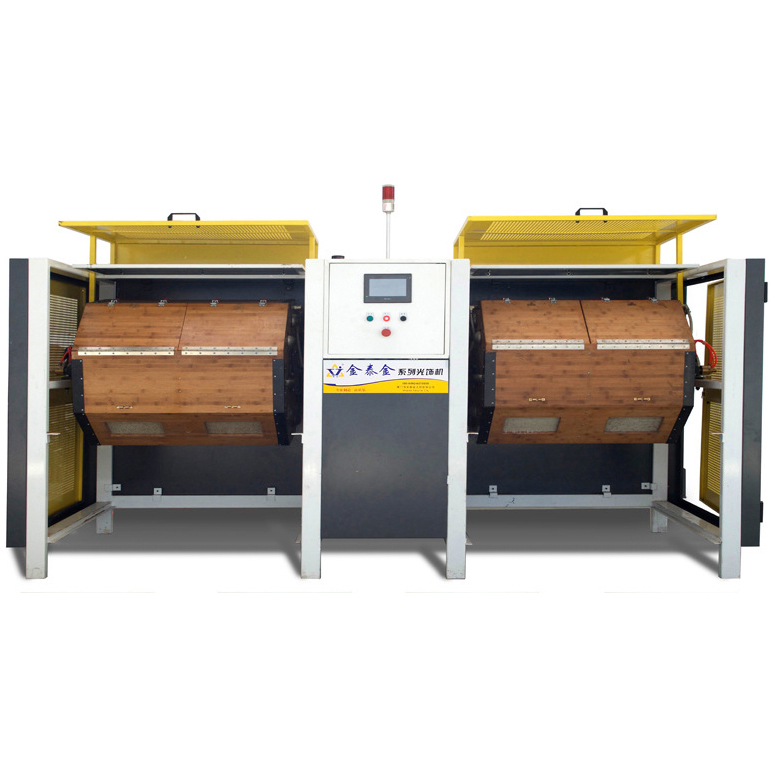
Rotary barrels, disc machines and centrifugal barrel machines cover the high-energy end. A disc machine cuts quickly on small robust parts and suits uniform batches of fittings, while a centrifugal barrel machine produces short, aggressive cycles on small precision items. A rotary barrel is gentler on fragile or thin components but runs long and hides the part while it runs. All three require the part to fit a defined working volume and to tolerate contact with other parts or with a rotating disc. None of them accepts a four-metre shaft or a two-hundred-kilogram casting. In a marine part mix they handle the small-part tail of the family, such as fasteners, small fittings, inserts and valve trim, while the large fabrications go to a tub, a hand-held tool or a considered robot cell.
| Machine route | Where it fits | What it will not do |
|---|---|---|
| Rotary barrel finishing machine | Gentle deburring of small fragile components and mixed fitting batches with generous compound flow and low part-on-part energy | Long cycles with no visibility while running, and internal passages collect media and compound that must be retrieved at unload |
| Disc finishing machine | Fast, high-energy edge breaking and surface refinement on small robust fittings and uniform batches where cycle time matters | High impingement and edge-loss risk on thin or soft parts, and the geometry must suit the disc working gap rather than a large weldment |
| Tub vibrator | Long parts that cannot rotate in a bowl, such as rail sections, pipe spools, linear weldments and long shafts, provided they can be supported along their length | Lower energy per unit area, so heavy weld dressing takes longer, and a long tub needs floor space plus a support method that does not mark the part |
| Grinding finishing machine | Taking off a heavy machining burr or a defined stock layer before a refinement pass on robust stainless and duplex work | High removal energy cuts functional edges fast, so geometry assessment and a short controlled cycle matter more than on any other route |
Steel media produces a bright, burnished surface on stainless components with low stock removal and good edge blending. On marine work the contamination question comes first. Carbon steel media and carbon steel brushes leave free iron on an austenitic or duplex surface, and free iron in a chloride environment is where rust bloom begins. A steel charge needs its own machine or a documented separation protocol, a corrosion-inhibiting compound, magnetic or screen separation at unload, and a finishing sequence that removes transferred iron before the part ships. Stainless steel media reduces the risk but does not remove it. Whether the part is then passivated is the buyer's decision; a recognised practice such as ASTM B912 describes a passivation treatment for stainless steel and belongs in the requirements the buyer defines and verifies.
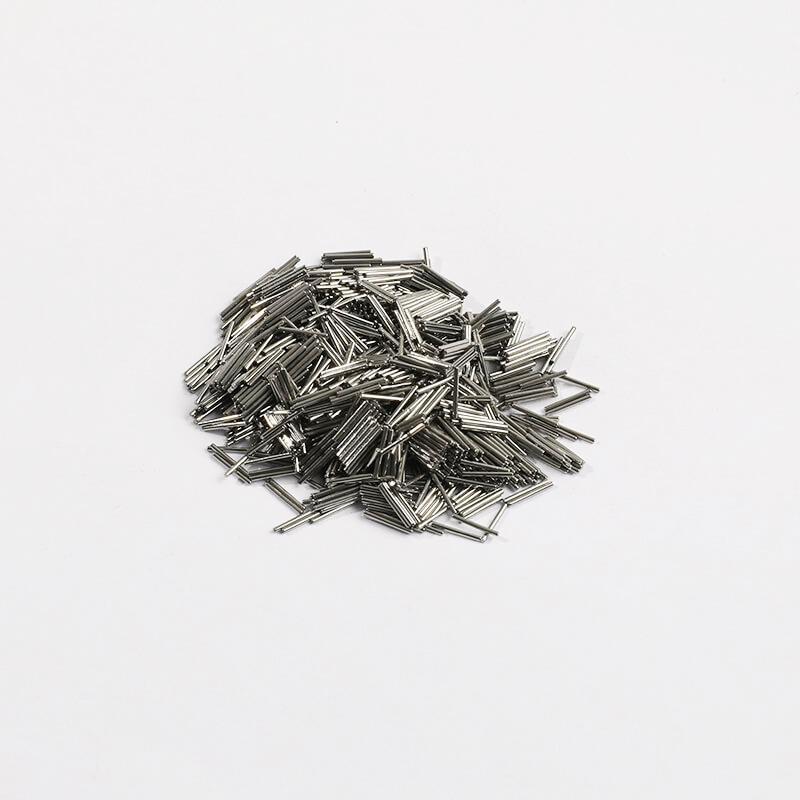
| Media | Best fit | Watch out for |
|---|---|---|
| Heavy-cut ceramic angle-cut triangles in a coarse size class | Breaking the edge of a machined or cast marine fitting and removing a substantial burr on robust stainless before a refinement stage | Cuts corners and weld toes aggressively and can round a seat or keyway, and the coarse section may not enter narrow passages at all |
| Chloride-free mildly alkaline or near-neutral compound, liquid or powder | Cleaning, corrosion inhibition and fines suspension on stainless and duplex marine work where retained chlorides would risk pitting in service | Dose drifts with drag-out and water hardness, foam can hide the load, and rinse water must reach the same features the compound reached |
| Fine ceramic or porcelain shapes in a small size class | Refinement and light edge blending after a cutting stage, and reaching tighter external geometry on small valve parts and fittings | Small sizes enter and lodge in cross-drillings and fine slots, and media wear shrinks the charge so the finish drifts over its life |
| Aluminium oxide grinding media in a dense ceramic bond | Heavier stock removal or a more consistent cut on robust stainless and duplex parts with thick edges and cast skin | High removal energy rounds functional edges quickly and is a poor match for thin panels or a knife-edge seat |
A finished stainless or duplex part that develops brown bloom within days is usually showing contamination rather than a material fault. Sources include carbon steel media or brushes, a machine that also runs carbon steel, grinding dust settling on a wet surface, handling with bare or dirty gloves, and chloride carried in rinse water or left standing in a crevice. The staining often starts at a weld, a pit or a thread root, where the surface is already disturbed. Segregate stainless work, use dedicated or stainless tooling, keep the part wet only with controlled water, dry it promptly, and check with a wipe test or a free-iron check if the buyer wants one. Pitting from retained chlorides is a slower relative of the same problem, so the rinse step deserves the attention the finishing step gets.
| Failure mode | Likely cause | How to catch it |
|---|---|---|
| Clamping indentations and part-on-part impact marks on a visible face | Gripper or fixture force applied on a finished or visible surface, no protective interface at the contact point, or parts left free to collide in a batch charge | Inspect all contact points and visible faces under raking light against a reference part, and record the fixture contact scheme used so marks can be traced to a specific clamp or pocket |
| Weld toe, bore lip or free edge rounded past the drawing limit | Cycle too long, high-energy route or coarse dense media, a robot path that dwells at a corner, or a weld toe that was never given a maximum radius on the drawing | Measure the same edge before and after with an optical comparator, radius gauge or moulded replica, and compare against the maximum radius or minimum remaining edge specified |
| Dimensional drift on a bearing journal, bore or machined fit | Too much stock removed at the feature, stress redistribution in a long or thin part, or clamping force that pulled the part out of shape during finishing | Micrometer or bore gauge the same stations before and after at a controlled temperature, and re-check after the clamps are released to separate clamping deflection from real drift |
| Distortion and loss of flatness on a thin welded panel after dressing | Residual weld stress released by material removal, heat from a grinding or polishing pass, or a support scheme that allowed the panel to deflect while it was worked | Measure flatness with a straightedge and feeler or a dial gauge on a stand at marked grid points before and after, with the same support scheme used both times |
Geelong is one of Australia's foremost manufacturing centres with a long industrial history, and manufacturing is again its fastest-growing employment sector after the closures of the Alcoa aluminium smelter and the Ford engine plant. The Geelong Manufacturing Council reports that Greater Geelong reached a record 147,234 local jobs in 2024-25, with manufacturing recording the fastest expansion for the second consecutive year, rising 12.1 per cent to more than 11,400 jobs — a level not seen since before the Alcoa and Ford closures. The region has about 700 manufacturers across transport equipment, metals, extractive industries, chemicals and petroleum, cement, engineering, textiles, timber and food, contributing more than $1.7 billion in value add and around $5.8 billion in annual output; manufacturing categories tracked by the council include advanced manufacturing, automotive, metals, engineering, chemicals and refining, food, textiles and clean economy. Research infrastructure includes Deakin University, the Geelong Technology Precinct, CSIRO facilities, the Institute for Frontier Materials and Carbon Nexus. Defence manufacturing is a growing focus: Hanwha Defence Australia will build 129 Redback infantry fighting vehicles at its Avalon Airport Industrial Precinct facility, supported by local firms including Marand, UMS, Air Radiators, RPC Technologies, IXL Group and Carbon Revolution.
The nearest part of that base to this brief is automotive: The Geelong Manufacturing Council states that Geelong's manufacturing employment has reached 'a level not seen since before the Alcoa and Ford closures', confirming Geelong's historical automotive manufacturing base, and the council tracks Automotive as an active industry category with about 700 manufacturers across sectors including transport equipment.
Geelong's mix of metals, engineering, transport equipment and defence manufacturing produces machined and fabricated metal components in steel, aluminium and stainless where deburring, edge radiusing and surface preparation directly affect coating adhesion, weld quality and assembly fit. The defence vehicle programme at Avalon and its local supply chain impose documented process and inspection requirements on supplied parts, so finishing steps need to be repeatable and traceable rather than operator-judged. Food processing equipment manufacturers in the region add a further requirement: stainless surfaces must be finished without leaving media residue or embedded particles that could create hygiene or corrosion problems.
A Geelong buyer should decide whether the finishing process must produce evidence suitable for a defence or automotive customer's quality system — documented media, cycle parameters and inspection records — or whether a general engineering finish is sufficient, because the documentation burden and the resulting equipment and media choice differ substantially.
Freight context: Port of Geelong (Victoria's second-largest port), Avalon Airport (international airport and Avalon Airport Industrial Precinct), Road and rail links to Melbourne, Ballarat, Colac and the Melbourne CBD, 75 km away. The Geelong Manufacturing Council states the region 'is well connected by road, rail, sea and air, and is home to Victoria's second-largest port and an international airport that supports national and international supply chains and logistics'. Avalon Airport also hosts the industrial precinct where Hanwha Defence Australia is building the Redback infantry fighting vehicles, so the airport precinct is both a freight gateway and a defence manufacturing site. Incoming finishing machines can arrive by sea through the Port of Geelong or by air through Avalon, with Melbourne's port and airport an alternative via the 75 km road and rail corridor.
Australia and China are parties to the China-Australia Free Trade Agreement (ChAFTA), signed on 17 June 2015 and in force since 20 December 2015; the Australian Border Force maintains a dedicated ChAFTA page and working tariff schedule, and FTAs give importers a route to preferential rates of duty where the rules of origin are met. China was Australia's largest source of imports in 2025 at $130.2b, up 12.5% on 2024, and 56% (69,567) of Australian business importers traded at least once with China in 2020-21. A Chinese supplier of finishing machines, media or compounds is therefore shipping into Australia's single largest import stream, and preferential duty depends on origin documentation rather than on a blanket zero-tariff guarantee for every product line.
Business is conducted in English and Australian industrial buyers are normally registered companies with an ABN that contract through a local importer or a licensed customs broker rather than directly with an overseas manufacturer. Because the first Australian supplier of in-scope electrical equipment becomes the legally responsible supplier, Chinese manufacturers are typically asked to provide test evidence, a compliance folder and a declaration so that their Australian importer can register and mark the product. Quotation and contracting expectations centre on a clear commercial entity, correct HS/tariff classification, documented country of origin for preferential duty, and an explicit statement of what is included in the delivered price and what is not.
SurfacePolish supplies from Xiamen, China. The buyer's own destination rules, conformity marking, tariff classification and documentation responsibilities stay with the buyer; confirm them against the authorities named above before ordering.
Treat the first article as the reference, not as a formality. Approve it against the written criteria, keep it with the settings used, and use it to reset expectations whenever a variable changes. Records worth having for each lot include the machine or cell identifier, the media type, size class, charge mass and charge age, the compound and its measured concentration, the cycle or path program and revision, the tool or belt type and its life counter, the fixture and datum scheme, and the inspection results with their measurement locations. For work done on a trial basis, the record should say plainly that the result applies to the parts and settings tested. Parts received without a settings record cannot be separated from the process that produced them, and repeatability becomes guesswork.
Before a cell can be justified, the manual work has to be counted in a form a cell design can use. Time the finishing operation per unit of surface: per metre of weld, per square metre of panel, per edge, per bore. Separate that from handling, meaning finding the part, loading it, turning it, changing a belt, inspecting it and putting it down, because handling is often what a robot is really bought for. Note the variability: how long the same feature takes on a good part and on a difficult one. Then estimate the volume over which those hours recur, and compare it with a cell that earns only while it is running and loaded. Where setup and changeover dominate the hours, automating the finishing motion will not change the economics much.
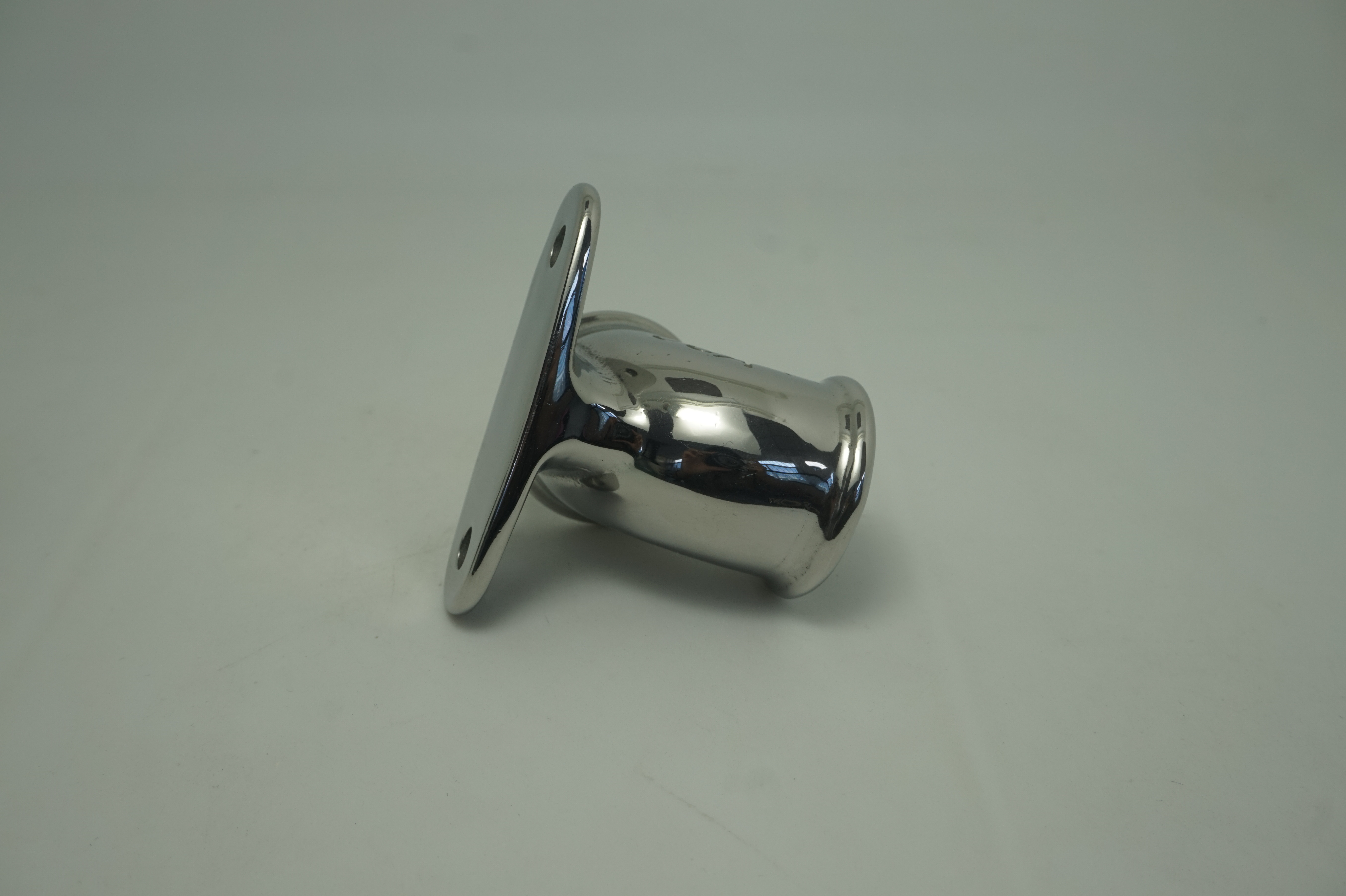
Size the medium below the smallest opening it could enter, and treat every passage as a retrieval point rather than assuming it stays clear. Map the tightest hole, slot or cross-drilling first, then pick a size class against that feature instead of an average. Add defined checks: borescope the smallest passage at an agreed angle, pin gauge and thread gauge the holes, and rinse through a filter so the discharge can be examined. For a trial shipped from Australia, send the part with the smallest passage so the medium choice is tested on the real feature rather than on a convenient sample.
A trial cannot promise a roughness value, an edge radius, a tolerance, a cycle time, a capacity or a cost, and it does not qualify a process for a classification society or any regulated use. It also cannot verify the reach, payload or accuracy of a robot the buyer has not yet selected, or the behaviour of a fixture that does not exist. One or a few parts do not describe variation across a lot, a shift or a media charge. Treat the trial as evidence about the parts tested, then close the remaining gaps with the buyer's own line trials and first-article discipline.
No. SurfacePolish does not issue certification, qualification or approval for any regulated application, and nothing described here may be treated as such a claim. Requirements set by a classification society, a coating manufacturer or an end user are defined and verified by the buyer and its own inspection function. What SurfacePolish provides is equipment, media and compounds, a scoped discussion of a line concept, and observations from a sample trial on the parts tested under the settings used. Those observations can feed the buyer's own qualification work, but they do not replace it or shorten it.
Use Geelong, Australia as the destination on the enquiry and state whether the deliverable is equipment, media and compound, a representative sample review or a line concept. A destination does not imply local stock, a local service point or a local delivery time.
Geelong manufacturers work to Australian Standards administered by Standards Australia, and defence suppliers in the Avalon/Geelong Defence Alliance supply chain additionally work to Commonwealth defence procurement specifications and quality-management requirements. Electrically powered machinery must comply with the EESS and be marked with the Regulatory Compliance Mark under AS/NZS 4417.1 and AS/NZS 4417.2 where in scope.
Sources were retrieved on 2026-09-29 and describe the local industrial and trade context only. They do not evidence any SurfacePolish project, shipment, installation or service in Geelong.
The buyer needs the drilled hole edges broken consistently without medium wedging in the holes or damaging the gasket face.
Send the material, dimensions, approximate weight, batch quantity, the incoming condition and photographs of the difficult features. Mark which features must not be contacted by media and state how the result will be inspected. This form carries source reference PSEO-0786; quote it if you prefer an additional manual reference.
Open the SurfacePolish enquiry form Email a prepared enquiry
No price, lead time, certification or result is promised here. Confirm whether a sample trial is available for the specific part and what the trial can and cannot show.
Page PSEO-0786 · revised 2026-09-29 · cross-border equipment, media and scoped sample review. City context is sourced and cited above.
Use this local checker to identify missing part and inspection information. It prepares a technical-review brief; it does not approve a machine, process recipe or production result.
Complete the part details to prepare a review brief.
Email : info@surface-polish.com


 IPv6 network supported


 +86-592-2381506