A buyer in Lyon, France in marine components needs a duplex 2205 valve body cleaned up while its overlaid seat face holds dimension. SurfacePolish supplies finishing machines, media and compounds across borders, and offers a free sample trial in which representative parts are shipped to Xiamen and returned with an observed condition and a proposed media, compound and cycle direction for the buyer to assess against its own requirements. This brief is written for a buyer in Lyon working on marine components; it describes equipment, media and a scoped sample review, not a local polishing service.
Can the charge or the tool reach the surfaces that matter, and which enclosed passages and blind holes can never be reached at all?
What starting condition and cleanliness baseline will the part arrive in, and who owns the pre-finish step?
Which features on this part are functional, such as seal faces, journals, tapers, keyways and weld toes, and which are only cosmetic?
Marine fabrications are large and heavy in a way that narrows every route. A pump casing may weigh several hundred kilograms, a shaft can run past four metres, and a scrubber panel can be thin sheet welded into a stiffening frame. Three numbers decide the shortlist: the largest dimension that must be reached, the mass that has to be supported and turned, and how much of that dimension can be presented without the part sagging under its own weight. Long shafts and thin panels behave differently in a fixture than on a bench, and residual weld stress released by material removal moves the part afterwards. Measure the envelope and the mass, note where supports and clamps may touch, and record whether the part is stress-relieved before anyone claims a dimension will hold through finishing.
Compound carries the work: it cleans the part and the media, holds fines in suspension, inhibits corrosion and controls foam. A mildly alkaline or near-neutral family is typical for ferrous work, and dose is set by measured concentration rather than by eye. On stainless and duplex marine parts the chloride content is the variable to control, because chlorides left in a pit, a crevice or a thread root can start pitting long after the part leaves the shop, and both tap water and recycled rinse water carry them. Confirm the water that will actually be used, add a rinse step that reaches the same features the finishing step reached, and dry the part rather than letting it drain and stain. Foam, residue and drag-out into a clean area are part of compound selection, not afterthoughts.
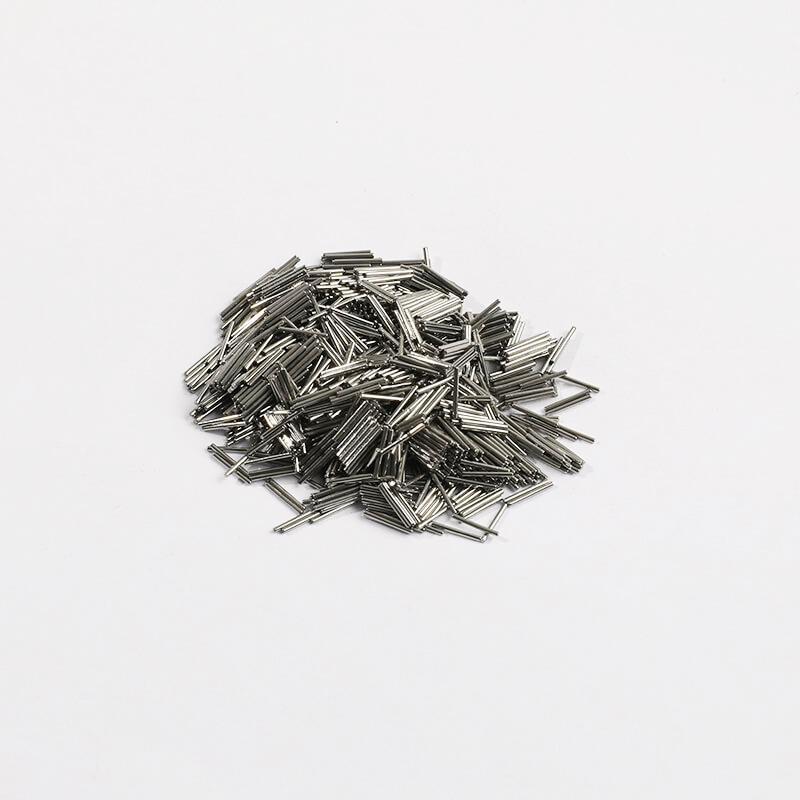
| Media | Best fit | Watch out for |
|---|---|---|
| Heavy-cut ceramic angle-cut triangles in a coarse size class | Breaking the edge of a machined or cast marine fitting and removing a substantial burr on robust stainless before a refinement stage | Cuts corners and weld toes aggressively and can round a seat or keyway, and the coarse section may not enter narrow passages at all |
| Dry media such as walnut shell and corn cob with a dry polishing machine | Drying, light polishing and luster on parts that must leave the line dry, and on assemblies where a wet residue would be difficult to remove | Generates dust and needs extraction, cannot cut a burr, and organic media can carry moisture and contamination into a clean area |
| Aluminium oxide grinding media in a dense ceramic bond | Heavier stock removal or a more consistent cut on robust stainless and duplex parts with thick edges and cast skin | High removal energy rounds functional edges quickly and is a poor match for thin panels or a knife-edge seat |
| Fine ceramic or porcelain shapes in a small size class | Refinement and light edge blending after a cutting stage, and reaching tighter external geometry on small valve parts and fittings | Small sizes enter and lodge in cross-drillings and fine slots, and media wear shrinks the charge so the finish drifts over its life |
Do the arithmetic before drawing a cell. Reach is measured to the tool centre point, not to the mounting flange, and it must cover the far corner of the largest part with the arm still in a posture that has authority; a five-metre nominal reach does not mean a five-metre useful envelope. Payload is rated at the flange and includes the gripper, the tool, cable management and any offset that creates a moment. Stiffness matters more than the payload figure once a tool pushes against a surface, because compliance and lost motion appear as variation in depth of cut and as chatter on thin panels. Arm repeatability is not the same as accuracy of the finished surface, since the part, the fixture and any positioner each add error. Compliant or force-controlled tooling changes the requirement substantially and belongs in the discussion from the start.
| Machine route | Where it fits | What it will not do |
|---|---|---|
| Vibratory finishing machine (bowl) | Bulk deburring and refinement of small and medium marine fittings, cast cleats, brackets and machined valve internals that can tumble without racking | Continuous part-on-part contact and no access to internal passages; visible faces and heavy parts need separation, racking or a different route |
| Centrifugal barrel finishing machine | Short, aggressive cycles on small precision items such as valve trim, inserts and small stainless components with fine edge requirements | Rounds edges and can distort thin unsupported sections quickly, and results are sensitive to charge weight, speed and stop time |
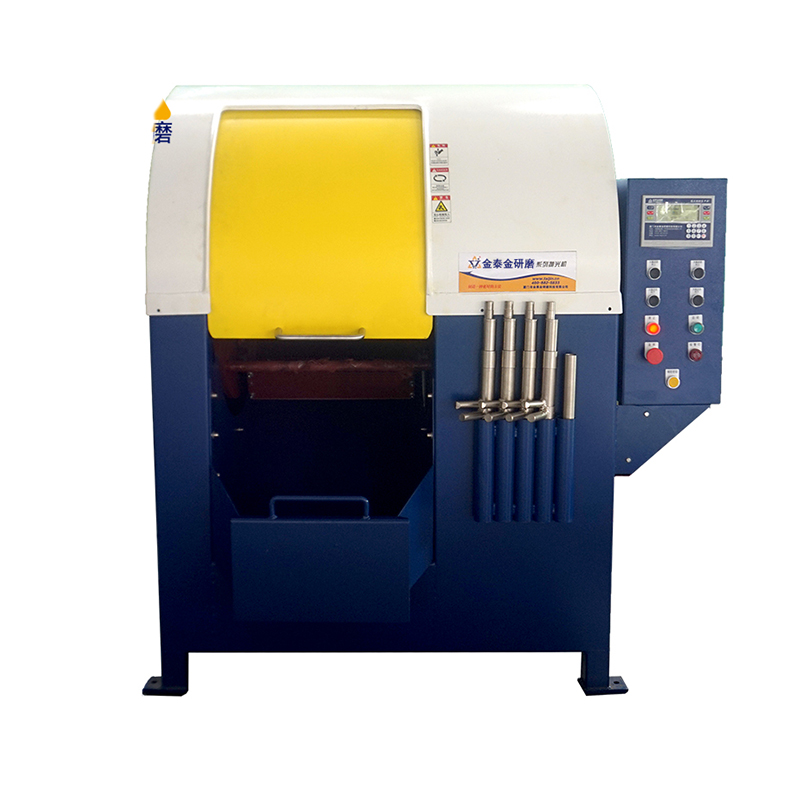
| Magnetic finishing machine | Fine deburring and light refinement of small precise features such as narrow slots, small bores and stainless fittings | A small working envelope that excludes large fabrications, with pin media that can lodge in fine passages and must be retrieved |
| Grinding finishing machine | Taking off a heavy machining burr or a defined stock layer before a refinement pass on robust stainless and duplex work | High removal energy cuts functional edges fast, so geometry assessment and a short controlled cycle matter more than on any other route |
A finished stainless or duplex part that develops brown bloom within days is usually showing contamination rather than a material fault. Sources include carbon steel media or brushes, a machine that also runs carbon steel, grinding dust settling on a wet surface, handling with bare or dirty gloves, and chloride carried in rinse water or left standing in a crevice. The staining often starts at a weld, a pit or a thread root, where the surface is already disturbed. Segregate stainless work, use dedicated or stainless tooling, keep the part wet only with controlled water, dry it promptly, and check with a wipe test or a free-iron check if the buyer wants one. Pitting from retained chlorides is a slower relative of the same problem, so the rinse step deserves the attention the finishing step gets.
| Failure mode | Likely cause | How to catch it |
|---|---|---|
| Medium wedged in tube-sheet holes or perforated plate openings | Hole diameter close to the media section, cylindrical or conical media that aligns with the hole, or a charge left to drain in the part at unload | Pin gauge a sample of holes across the plate, tap and back-flush each sample, and inspect the plate under oblique light for a medium sitting flush with the surface |
| Over-grind step or gouge at a path transition or belt change | Two passes overlapping at different pressures, a fresh belt run at the setting that suited a worn one, or an operator touching up a transition by hand without recording it | Inspect each transition zone at a fixed viewing distance under consistent lighting, and compare the zone against the surrounding surface with a roughness reading on both sides |
| Abrasive grain embedded in a soft or gummy surface | Coated abrasive or bonded wheel used on bronze, aluminium or a work-hardened surface at excessive pressure, or a loaded belt that has stopped cutting and started smearing | Inspect under low-angle light and a magnifier, wipe with a solvent-soaked cloth, and check the part after a light refinement pass rather than only as it leaves the coarse operation |
| Distortion and loss of flatness on a thin welded panel after dressing | Residual weld stress released by material removal, heat from a grinding or polishing pass, or a support scheme that allowed the panel to deflect while it was worked | Measure flatness with a straightedge and feeler or a dial gauge on a stand at marked grid points before and after, with the same support scheme used both times |
The Lyon conurbation is the chemical and process-industry capital of France: AXELERA, the national competitiveness cluster for chemistry, process industries and environment, is headquartered at Solaize in the Lyon chemical corridor and reports 411 member organisations, 700 labelled and financed projects and EUR 2,5 billion of project financing, with founding members Arkema, CNRS, Engie, IFP Energies nouvelles, Suez and Syensqo. The city itself counted 27 316 establishments at the end of 2024 (3,4 % in industry) and 343 084 jobs at the place of work in 2023, so the operating plants sit in the surrounding industrial-port corridor on the Rhone while Lyon concentrates engineering, R&D and headquarters functions. The Rhone axis is also France's second largest industrial river corridor, running south to the Grand Port Maritime de Marseille, whose 2024 container traffic grew 9 % to 1,45 MEVP.
The nearest part of that base to this brief is automation: The Lyon-area chemistry and process-industry ecosystem includes a dedicated 'usine eco-efficiente' (eco-efficient plant) strategic axis covering industrial process and plant efficiency, and Minalogic covers the Auvergne-Rhone-Alpes Industrie du Futur theme that supports automation projects in the region.
Process-industry and equipment manufacturing in the Lyon corridor involve large welded and machined components - pump and valve bodies, heat-exchanger parts, reactor and vessel internals, and stainless assemblies - where weld dressing, edge rounding and pickling-free surface preparation directly affect corrosion behaviour and cleanability. Because much of the output is stainless and alloy steel, surface contamination and residual heat tint are functional concerns, not cosmetic ones. Lyon's mechanical subcontracting and machine-building base also deburrs high-mix small parts, so media selection and process repeatability matter as much as machine throughput.
A buyer in Lyon should first decide whether the finishing step is a weld-dressing/corrosion-preparation operation on large assemblies or a high-volume small-part deburring operation, because those two answers lead to different machine types, media and - most importantly - different fixture and handling requirements.
Freight context: Port Edouard Herriot (Lyon, Rhone-Saone axis), Lyon-Saint Exupery Airport, Grand Port Maritime de Marseille (Fos) as the sea gateway. Lyon is served by the Rhone-Saone waterway and its own river terminal at Port Edouard Herriot, and by Lyon-Saint Exupery airport; sea freight for the region typically lands at Marseille-Fos or via the northern ports and moves up by rail or road, so inland-container logistics is the planning item. The Marseille port authority reported container traffic up 9 % in 2024 to 1,45 MEVP, confirming the southern gateway's capacity for containerised machinery.
For imports from outside the EU the declarant must file a customs declaration whose form and content are fixed by the Union Customs Code and its implementing provisions; French Customs identifies classification, origin and value as the three fundamental notions and makes the common/national tariff consultable via RITA. The customs authority is the Direction generale des douanes et droits indirects (DGDDI), which also runs the Info Douane Service for formalities questions. Buyers should expect to need an EORI number and an EU VAT treatment, because customs and tax authorisations are handled together (SOPRANO). For machinery, the CE marking and the applicable EU product-safety directives are the compliance gate items to settle before shipment, and the French market surveillance authority is the DGCCRF; the tariff rate itself must be confirmed per HS code in RITA or the EU Access2Markets tariff tool, since it varies by machine type.
France applies the EU common commercial policy, so industrial machinery arriving from China enters under the Union Customs Code and the Common Customs Tariff rather than under any bilateral French regime; the EU has no free-trade agreement with China, so no preferential duty rate applies and normal third-country duties are due on the customs value. Importers classify the machine in the tariff nomenclature and lodge a customs declaration; French Customs publishes the common and national tariff through its RITA online service and states that three notions are fundamental: the tariff classification of the product, its origin or destination, and the value of the goods.
SurfacePolish supplies from Xiamen, China. The buyer's own destination rules, conformity marking, tariff classification and documentation responsibilities stay with the buyer; confirm them against the authorities named above before ordering.
Treat the first article as the reference, not as a formality. Approve it against the written criteria, keep it with the settings used, and use it to reset expectations whenever a variable changes. Records worth having for each lot include the machine or cell identifier, the media type, size class, charge mass and charge age, the compound and its measured concentration, the cycle or path program and revision, the tool or belt type and its life counter, the fixture and datum scheme, and the inspection results with their measurement locations. For work done on a trial basis, the record should say plainly that the result applies to the parts and settings tested. Parts received without a settings record cannot be separated from the process that produced them, and repeatability becomes guesswork.
A sample trial reports what was observed on the parts tested under the settings used, and that is the limit of it. It cannot promise a roughness value, an edge radius, a tolerance, a cycle time, a capacity or a cost. It cannot verify the reach, payload or path accuracy of a robot the buyer has not yet chosen, nor the behaviour of a gripper, fixture or positioner that does not exist. It cannot qualify a process for a classification society, a coating specification or a service environment, and it cannot demonstrate corrosion performance or coating adhesion. Nor can it show production uniformity, because a few parts do not describe variation across a lot, a shift or a media charge. Those gaps close only through the buyer's own line trials, first-article discipline and acceptance testing.
Usually contamination rather than the material itself. Carbon steel media, carbon steel brushes, a machine also used for carbon steel work, grinding dust settling on a wet surface, bare-hand handling and chloride carried in rinse water can all leave something behind that starts to stain. It often appears first at a weld, a pit or a thread root. Segregate stainless work, use dedicated tooling, control the rinse water, dry the part promptly, and check with a wipe test or a free-iron check if the buyer wants one. Whether passivation follows mechanical finishing is the buyer's decision and its own requirement to define in France.
A free-form surface gives the tool no straight reference, so the tool has to follow changing curvature while holding constant contact pressure and surface speed. On a large blade the arm must reach the whole face, which pushes against reach and stiffness limits, and the wheel or belt wears as it travels, so pressure has to be adjusted along the path. Heat builds wherever the tool dwells. Hand polishing works because an operator feels all of this continuously. Automating it needs force control, a path generated from a model, and tool-wear compensation, and it still needs a process that has first been proved by hand at the bench.
No. SurfacePolish supplies finishing machines, media and compounds across borders and discusses a finishing line concept within a defined scope. There is no robotic polishing cell to sell, install or commission, and no automation delivery promise attaches to anything described here. The robotic content is a feasibility and line-design discussion: what a robot can and cannot replace, what has to be fixed about a part, a fixture or a part family before automation is possible, and how a cell compares with a machine route or with hand work. Any cell a buyer builds is specified, integrated and accepted by the buyer and its own integrator, not by SurfacePolish.
Use Lyon, France as the destination on the enquiry and state whether the deliverable is equipment, media and compound, a representative sample review or a line concept. A destination does not imply local stock, a local service point or a local delivery time.
A Lyon buyer would specify surface condition against ISO/NF EN surface-texture standards and the EN 13445 / EN 1090 and pressure-equipment regimes where vessels and steel structures are involved, with ISO 9001 or IATF 16949 depending on the customer chain. In the chemical and energy supply chain, material conformity and traceability (3.1/3.2 inspection certificates) are usually demanded alongside roughness and cleanliness limits.
Sources were retrieved on 2026-09-29 and describe the local industrial and trade context only. They do not evidence any SurfacePolish project, shipment, installation or service in Lyon.
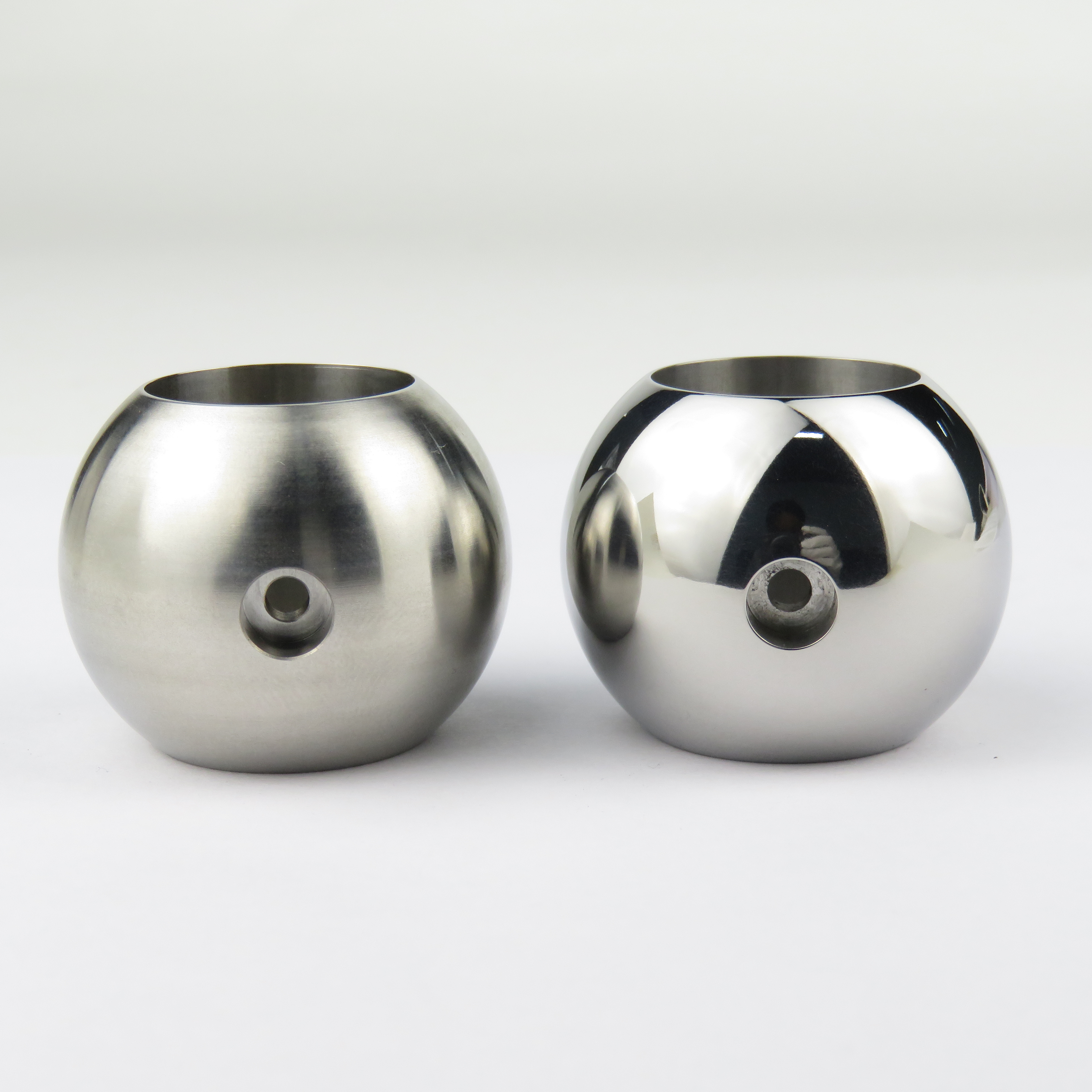
The buyer must blend the overlay without disturbing the seat geometry and remove casting skin on the outside without contaminating the duplex surface.
Send the material, dimensions, approximate weight, batch quantity, the incoming condition and photographs of the difficult features. Mark which features must not be contacted by media and state how the result will be inspected. This form carries source reference PSEO-0516; quote it if you prefer an additional manual reference.
Open the SurfacePolish enquiry form Email a prepared enquiry
No price, lead time, certification or result is promised here. Confirm whether a sample trial is available for the specific part and what the trial can and cannot show.
Page PSEO-0516 · revised 2026-09-29 · cross-border equipment, media and scoped sample review. City context is sourced and cited above.
Use this local checker to identify missing part and inspection information. It prepares a technical-review brief; it does not approve a machine, process recipe or production result.
Complete the part details to prepare a review brief.
Email : info@surface-polish.com


 IPv6 network supported


 +86-592-2381506