A buyer in Ottawa, Canada working on marine components needs a thin duplex panel dressed before coating without losing its flatness. SurfacePolish supplies finishing machines, media and compounds across borders and runs a free sample trial: a representative panel section and a production weld travel to Xiamen and return with an observed condition and a proposed media, compound and cycle direction for the buyer to check against its coating requirements. This brief is written for a buyer in Ottawa working on marine components; it describes equipment, media and a scoped sample review, not a local polishing service.
Which acceptance criteria, measurement locations and functional checks must exist before any route, robot or otherwise, can be compared fairly?
What is the largest dimension and the greatest mass that must be presented, and can the part be turned or supported without distorting it?
Which features on this part are functional, such as seal faces, journals, tapers, keyways and weld toes, and which are only cosmetic?
Mass finishing works where a charge can flow across the surface. Sort the part into accessible and inaccessible zones and be literal about it. An open external weld run on a bracket, a cast cleat or the outside of a small valve body is reachable. The inside of a closed box section, the back of a stiffener, a narrow seawater passage and the root of a deep groove are not, whatever the medium is. Concave pockets hold media and release it slowly; sharp internal corners trap it. That map decides whether the whole part, or only some faces of it, can go to a tumbling route, and whether the remainder needs a tool that can be aimed at a surface, by hand or by an arm. Accessibility, more often than finish, is what ends the mass-finishing option.
Do the arithmetic before drawing a cell. Reach is measured to the tool centre point, not to the mounting flange, and it must cover the far corner of the largest part with the arm still in a posture that has authority; a five-metre nominal reach does not mean a five-metre useful envelope. Payload is rated at the flange and includes the gripper, the tool, cable management and any offset that creates a moment. Stiffness matters more than the payload figure once a tool pushes against a surface, because compliance and lost motion appear as variation in depth of cut and as chatter on thin panels. Arm repeatability is not the same as accuracy of the finished surface, since the part, the fixture and any positioner each add error. Compliant or force-controlled tooling changes the requirement substantially and belongs in the discussion from the start.
| Machine route | Where it fits | What it will not do |
|---|---|---|
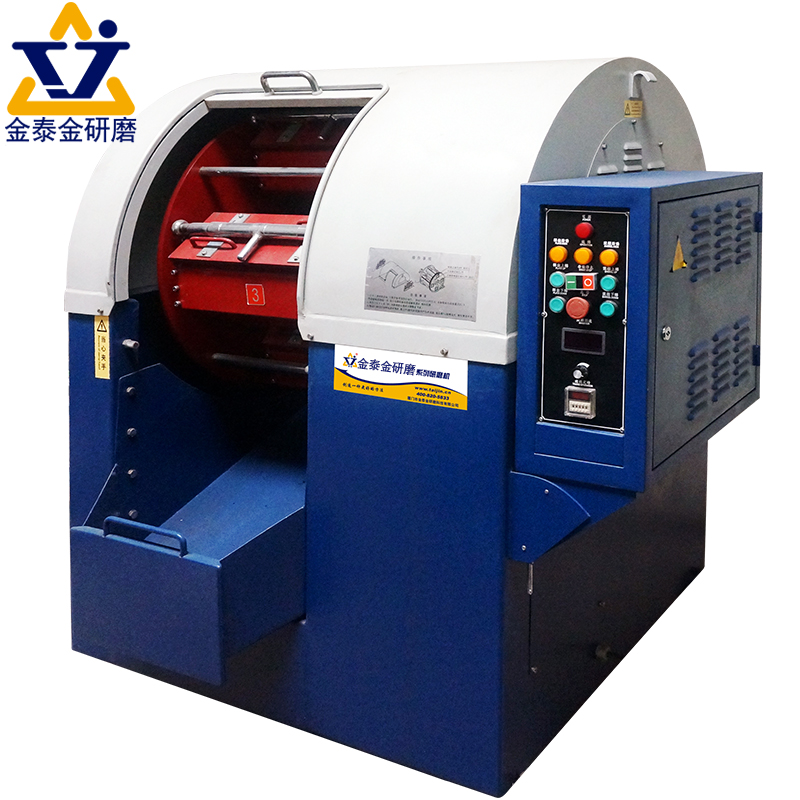
| Grinding finishing machine | Taking off a heavy machining burr or a defined stock layer before a refinement pass on robust stainless and duplex work | High removal energy cuts functional edges fast, so geometry assessment and a short controlled cycle matter more than on any other route |
| Magnetic finishing machine | Fine deburring and light refinement of small precise features such as narrow slots, small bores and stainless fittings | A small working envelope that excludes large fabrications, with pin media that can lodge in fine passages and must be retrieved |
| Vibratory finishing machine (bowl) | Bulk deburring and refinement of small and medium marine fittings, cast cleats, brackets and machined valve internals that can tumble without racking | Continuous part-on-part contact and no access to internal passages; visible faces and heavy parts need separation, racking or a different route |
| Tub vibrator | Long parts that cannot rotate in a bowl, such as rail sections, pipe spools, linear weldments and long shafts, provided they can be supported along their length | Lower energy per unit area, so heavy weld dressing takes longer, and a long tub needs floor space plus a support method that does not mark the part |
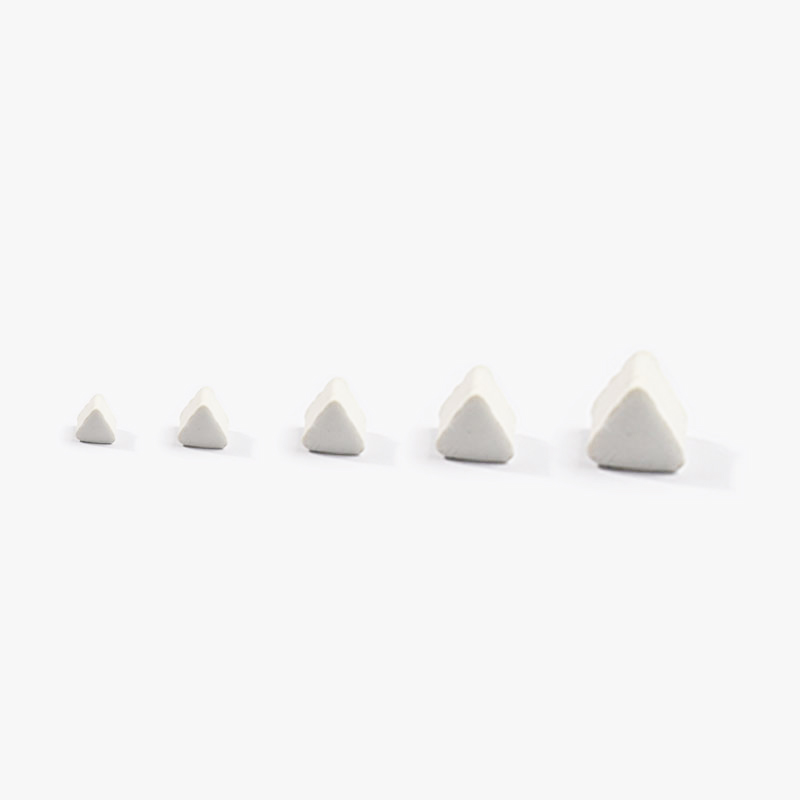
Plastic media suits parts whose surfaces must not be peened, marked or rounded aggressively. Aluminium brackets, bronze and nickel-aluminium-bronze castings, thin sheet components and any part with a cosmetic face respond better to plastic triangles, cones or pyramids in a soft to medium grade than to ceramic. The trade is removal rate: plastic cuts slowly, deforms as it wears, and a worn charge behaves noticeably differently from a fresh one, so cycles set on new media drift. Some shapes float or segregate in a bowl and starve part of the load. In marine work plastic media is often the right first stage where a light machining burr, an adhesive residue or a paint-adjacent edge has to come off without changing the geometry a gasket or a seal depends on.
| Media | Best fit | Watch out for |
|---|---|---|
| Dry media such as walnut shell and corn cob with a dry polishing machine | Drying, light polishing and luster on parts that must leave the line dry, and on assemblies where a wet residue would be difficult to remove | Generates dust and needs extraction, cannot cut a burr, and organic media can carry moisture and contamination into a clean area |
| Bonded abrasive, nonwoven and buffing tool set for an arm or hand tool | Cutting weld toes, blending edges and building luster on large fabrications and free-form surfaces that no batch machine can reach | Each belt, wheel and compound has its own wear curve and pressure window; grain can embed in soft metal and polishing compound leaves a film that must be removed before coating or passivation |
| Plastic triangles, cones and pyramids in a soft to medium grade | Deburring aluminium brackets, bronze castings and cosmetic faces where marking and edge loss must stay small | Slow cut rate, media deforms as it wears, and a worn charge behaves quite differently from a fresh one |
| Steel media including balls, pins and shaped shot | Bright burnished finishing and edge blending on stainless components where appearance matters and stock removal must stay low | Transfers iron to stainless and leaves free iron that blooms in chloride service, so it needs a dedicated charge, an inhibiting compound and magnetic or screen separation |
Rounding is the purpose of most finishing and also the most common way a marine part is ruined. A weld toe that should retain a defined radius, a bore lip a gasket seals against, a knife edge on a valve seat and the flank of a keyway all lose geometry when a charge or a belt works them too long. The failure is progressive rather than sudden: early passes improve the surface and later passes quietly cross the limit. Set a maximum radius or a minimum remaining edge on the drawing, shield or mask the features that must hold it, and measure the same edge before and after with an optical comparator, a radius gauge or a moulded replica. On a robot-held tool, edge exposure is a function of path and pressure, so a few extra seconds in one corner is enough.
| Failure mode | Likely cause | How to catch it |
|---|---|---|
| Keyway, spline or taper geometry lost to edge rounding | The feature was exposed to the charge without masking, or a tool-carrier path ran along the flank of the feature instead of stopping short of it | Check width, flank angle and edge break with a gauge or comparator at marked stations before and after, and confirm the protected feature against the drawing tolerance |
| Compound film, burnished residue or dried detergent left on a sealing face | Rinse that did not reach the same features the finishing step reached, compound drag-out from the charge, or a part allowed to drain and dry in position instead of being dried deliberately | Wipe the sealing face with a clean white cloth and a defined solvent, inspect the wipe, and borescope any groove or land the rinse may not have reached |
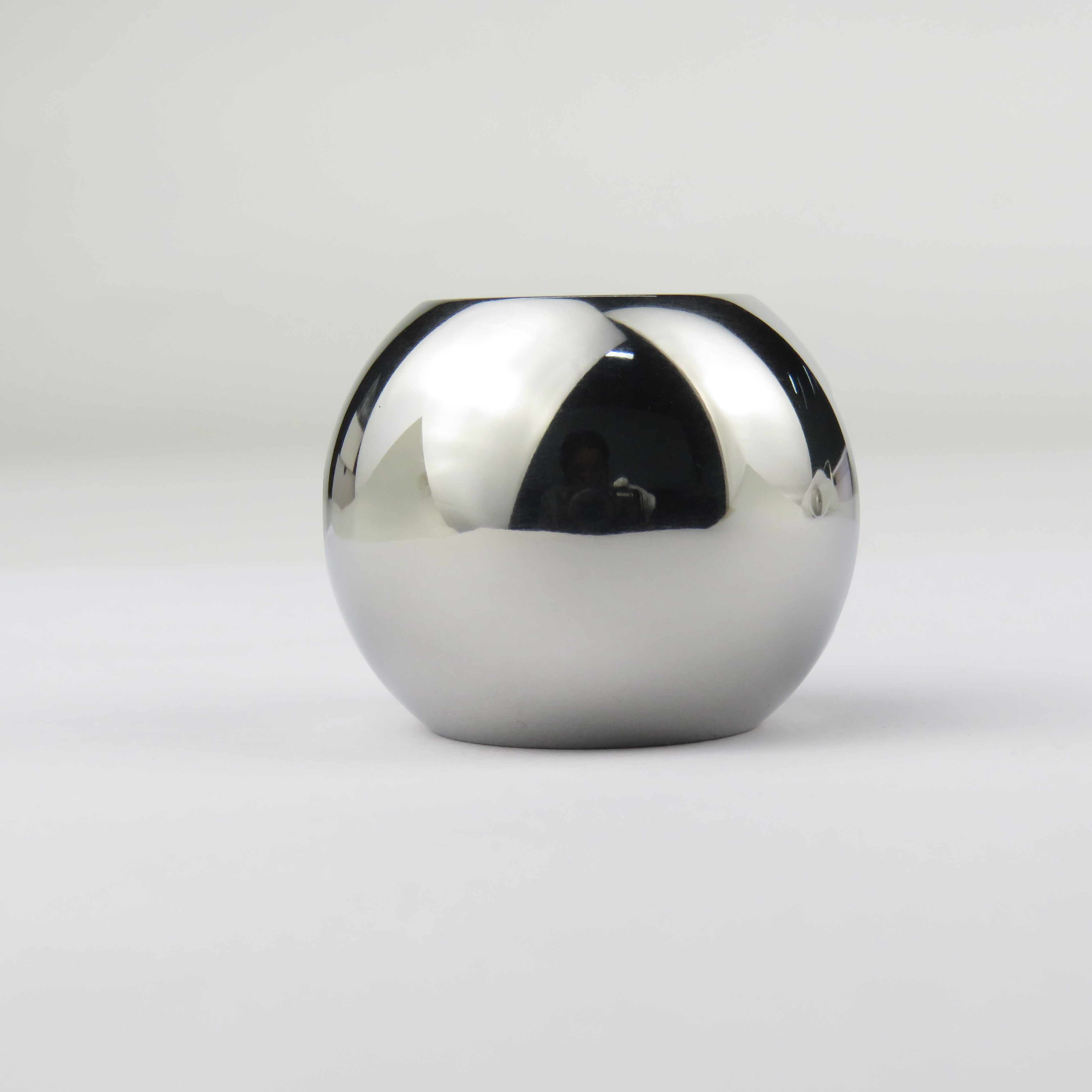
| Rust bloom and tea staining appearing on a finished stainless surface within days | Free iron from carbon steel media or brushes, a machine shared with carbon steel work, airborne grinding dust on a wet surface, bare-hand handling, or chloride carried in rinse water | Wipe a defined area with a white cloth and record what it shows, run a free-iron check if the buyer wants one, and inspect welds, pits and thread roots under good light after the part has stood for a period |
| Dimensional drift on a bearing journal, bore or machined fit | Too much stock removed at the feature, stress redistribution in a long or thin part, or clamping force that pulled the part out of shape during finishing | Micrometer or bore gauge the same stations before and after at a controlled temperature, and re-check after the clamps are released to separate clamping deflection from real drift |
Ottawa's economy is built on technology and on the federal government, and its manufacturing base is concentrated in aerospace and defence, telecommunications, cybersecurity and semiconductors. Ottawa Economic Development (Invest Ottawa) states its position directly: "Canada's Capital Region Mobilizes to Lead as a Global Defence Innovation Hub", and the national defence industry association that head offices in Ottawa reports that Canada's defence and security sector generated close to CAD 17.3 billion in revenues in 2024, contributed CAD 11.1 billion in GDP and supported 81,800 jobs, with 538-plus enterprises operating across every region. Ontario accounts for 35 per cent of that national defence industry footprint, with aircraft mission systems and simulation systems, combat vehicle manufacturing, and aircraft and aircraft parts manufacturing among the key Ontario activities. Ottawa's public research and testing infrastructure is part of the industrial story, including Bayview Yards and Area X.O, which the city's economic development agency describes as a secure R&D complex for next-generation smart mobility, autonomy and connectivity technologies built for all-weather experimentation.
The nearest part of that base to this brief is automation: Invest Ottawa operates and promotes Area X.O as "a technology-rich, secure R&D complex for next-gen smart mobility, autonomy and connectivity technologies created for all-weather experimentation", and Bayview Yards as a facility equipping technology firms with technical, business and market capabilities.
Ottawa's aerospace, defence and photonics manufacturing is characterised by small, high-value machined and optical parts where burrs are functionally unacceptable: a burr on a waveguide, a sensor housing, a connector face or a machined mounting surface changes electrical or optical performance rather than just appearance. Defence and space work also imposes cleanliness and contamination control, which makes the choice of finishing media and the completeness of media separation a quality-control question rather than a housekeeping one. Because volumes are low and part values are high, the practical requirement is a process that can be set up and documented for a small lot without risking damage to the part.
An Ottawa buyer should settle the contamination and media-residue question before selecting equipment, because in this market a part that is dimensionally correct but carries embedded media or a smear of compound is a defect, and the media-separation and rinse stages therefore need to be specified as carefully as the finishing machine itself. The second question is documentation and traceability: if the part serves a defence or space programme, the finishing process needs a controlled specification and records that the customer's quality system will accept, and that has to be designed in rather than retrofitted.
Freight context: Ottawa Macdonald-Cartier International Airport, Via Rail and freight rail corridors, Highway 417 corridor to Toronto and Montreal, Ottawa River / St. Lawrence corridor connections to Montreal. Ottawa has no seaport, so equipment arrives by air or through a coastal or St. Lawrence container port with onward truck or rail movement, and the city's position on the Highway 417 corridor between Toronto and Montreal gives it practical access to both of Canada's central freight networks. For high-value, low-volume components the airport and the Montreal and Toronto air-cargo gateways are the relevant nodes, while sample parts and media can move by courier.
Canada's national standards system is coordinated by the Standards Council of Canada (SCC), which accredits standards-development organizations, certification bodies and testing laboratories; the SCC and CSA Group websites could not be retrieved for citation during this research, so this entry rests on the accessible Government of Canada and CCOHS material below. The Canadian Centre for Occupational Health and Safety describes standards as documents that "establish specifications and procedures to ensure the reliability of the products, methods, and services people use every day on the job", and Innovation, Science and Economic Development Canada (ISED) maintains the federal entry point for "[t]he different types of standards and certifying bodies that can be used by your business". In practice a Canadian buyer of finishing equipment references (a) the Canadian electrical safety certification of the machine and its control panel, (b) provincial occupational health and safety regulation for machine guarding, lockout and dust/ventilation control, which in Canada is enforced by the provinces rather than by a single federal inspectorate, and (c) the buyer's own customer-specific surface finish, edge-condition and cleanliness specifications, which are contractual rather than national standards. Finishing-process standards in the ISO 25.080 machine-tool and ISO 8500-series surface-preparation families are the usual technical reference points, but product-level standards sold by CSA Group were not retrievable for verification here.
Canada is a bilingual market for selling purposes: English is the working language of procurement outside Quebec, while Quebec buyers (Montreal, Quebec City) normally expect French-language quotations, technical documentation and after-sales support, and Quebec's Charter of the French Language makes French the default for commercial documentation in the province. Procurement expectations are formal and auditable: a Canadian industrial buyer will typically ask for the tariff classification and country of origin up front, expect a commercial invoice that satisfies the CBSA invoice requirements, and expect the seller to provide proof of origin for any preferential claim. Payment norms are bank-to-bank, with wire transfer or letter of credit rather than platform payment, and Canadian buyers commonly net-30 to net-60 from invoice, so a cross-border seller should price the working-capital gap into the offer. Certificates of origin for export documentation are issued through chambers of commerce, which is why chambers such as the Hamilton Chamber of Commerce and the Winnipeg Chamber of Commerce offer document certification. The current trade environment adds policy risk to landed cost: Canadian federal programs are explicitly framed around responding to U.S. tariffs, with the FedDev Ontario Regional Tariff Response Initiative described as supporting "businesses to respond to tariff pressures" in southern Ontario, and tariff and surtax measures can change by Order in Council, so quotations should state the tariff basis and the date on which the landed-cost calculation was made.
SurfacePolish supplies from Xiamen, China. The buyer's own destination rules, conformity marking, tariff classification and documentation responsibilities stay with the buyer; confirm them against the authorities named above before ordering.
Acceptance should exist before finishing starts, on the drawing or in a document the drawing references. Name every controlled surface, the parameter and the cut-off to be used, the measurement direction and the locations where readings are taken, because a seal face, a bore and an outer wall respond differently to the same charge. State the maximum edge radius or the minimum remaining edge at any weld toe, bore lip, keyway or seat. Say what is acceptable visually and under what lighting and viewing distance. Add the functional checks and the cleanliness requirement, together with who performs them. Without this the first argument about a rejected lot becomes a discussion about opinion. A buyer who writes the criteria can also compare two route options on the same basis, whether the work is done in a machine, by hand or by an arm.
Send parts that represent the extremes, not the average. Include the part with the tightest internal passage, the thinnest section, the largest surface to be finished and the most restricted access. Include one weld sample made with the production welding procedure, because a weld toe finishes differently from parent metal. Include an as-received reject so the starting condition is documented, and mark the measurement points and controlled features on each part before shipping. Record the material grade, product form, heat treatment, as-received condition and the cleanliness requirement the part must eventually meet. Label everything and pack it so nothing is damaged in transit. A trial run on a convenient sample answers a question the buyer did not ask.
Mask or shield it, or choose a route that does not reach it. A taper and a keyway are usually damaged by the same edge rounding that improves the rest of the part, and a seal face suffers from peening or from a coarse medium. Practical options are a mechanical mask or boot, leaving a stock allowance that is finished later by a controlled operation, holding the part in a fixture that excludes the protected zone, or selecting a gentler medium and a shorter cycle. Measure the feature before and after at marked points, and put a maximum radius or a minimum remaining edge on the drawing.
Partly, and the split is the useful part of the question. A robot can hold a grinder, sander or polishing head over a repeatable path with controlled pressure, which suits long weld runs, flat panels and consistent edges. It struggles where access is restricted, where the surface is free-form and required pressure changes continuously, and where a person compensates for part-to-part variation by feel. Work out which features recur in the same place on every part and which move; automate the first group and leave the second with an operator, or send parts to a machine route that already produces the surface in bulk.
No. SurfacePolish supplies finishing machines, media and compounds across borders and discusses a finishing line concept within a defined scope. There is no robotic polishing cell to sell, install or commission, and no automation delivery promise attaches to anything described here. The robotic content is a feasibility and line-design discussion: what a robot can and cannot replace, what has to be fixed about a part, a fixture or a part family before automation is possible, and how a cell compares with a machine route or with hand work. Any cell a buyer builds is specified, integrated and accepted by the buyer and its own integrator, not by SurfacePolish.
Use Ottawa, Canada as the destination on the enquiry and state whether the deliverable is equipment, media and compound, a representative sample review or a line concept. A destination does not imply local stock, a local service point or a local delivery time.
An Ottawa buyer in aerospace, defence or space supply chains works to the prime contractor's or programme's process specification, contamination-control and traceability requirements, plus controlled-goods obligations where the item is defence-controlled under the Defence Production Act. On the plant floor, Ontario occupational health and safety rules and Canadian electrical certification apply as elsewhere in the province.
Sources were retrieved on 2026-09-29 and describe the local industrial and trade context only. They do not evidence any SurfacePolish project, shipment, installation or service in Ottawa.
The buyer needs weld toes and spatter dressed without losing panel flatness or introducing contamination before a coating step.
Send the material, dimensions, approximate weight, batch quantity, the incoming condition and photographs of the difficult features. Mark which features must not be contacted by media and state how the result will be inspected. This form carries source reference PSEO-0176; quote it if you prefer an additional manual reference.
Open the SurfacePolish enquiry form Email a prepared enquiry
No price, lead time, certification or result is promised here. Confirm whether a sample trial is available for the specific part and what the trial can and cannot show.
Page PSEO-0176 · revised 2026-09-29 · cross-border equipment, media and scoped sample review. City context is sourced and cited above.
Use this local checker to identify missing part and inspection information. It prepares a technical-review brief; it does not approve a machine, process recipe or production result.
Complete the part details to prepare a review brief.
Email : info@surface-polish.com


 IPv6 network supported


 +86-592-2381506