


Surface Rust Removal and Precision Polishing for Brass and Woodwind Instruments
This page reproduces the published article on this subject: its section-by-section guidance and the questions it answers. The source contains no numeric specification at all: no dimension, angle, speed, pressure or capacity figure appears in it, and none is supplied or inferred here. A gauge, a drawing requirement or your own acceptance plan decides whether a part is acceptable, not this page.
Browse the published passages
Choose a section or search the published text, then read the article wording.
Step 1: Initial Assessment of Parts
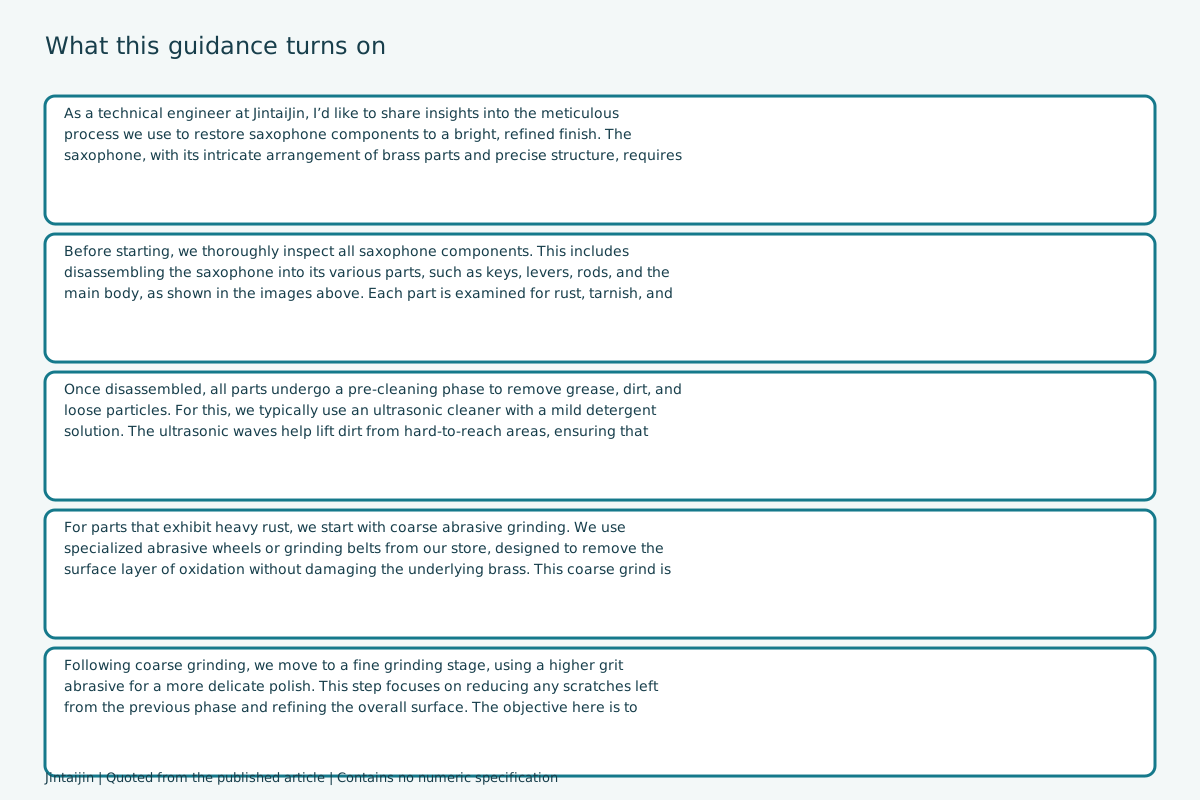
Before starting, we thoroughly inspect all saxophone components. This includes disassembling the saxophone into its various parts, such as keys, levers, rods, and the main body, as shown in the images above. Each part is examined for rust, tarnish, and surface impurities, allowing us to determine the degree of treatment required. The goal is to identify areas with severe oxidation or deep scratches that might require more intensive grinding.
Step 2: Pre-Cleaning and Degreasing
Once disassembled, all parts undergo a pre-cleaning phase to remove grease, dirt, and loose particles. For this, we typically use an ultrasonic cleaner with a mild detergent solution. The ultrasonic waves help lift dirt from hard-to-reach areas, ensuring that all surfaces are free from contaminants before the main polishing process. After cleaning, each part is rinsed with distilled water and dried thoroughly to prevent new rust formation.
Step 3: Rust Removal with Coarse Abrasive Grinding
For parts that exhibit heavy rust, we start with coarse abrasive grinding. We use specialized abrasive wheels or grinding belts from our store, designed to remove the surface layer of oxidation without damaging the underlying brass. This coarse grind is crucial for parts with pitting, as it smooths the surface to prepare it for fine polishing. Equipment Used: For this stage, we recommend a vibratory deburring machine or a belt sander with coarse-grit abrasive belts, available in our 'Products' section. The abrasive material should be suitable for brass to prevent any unnecessary wear on the saxophone parts.
Step 4: Precision Fine Grinding
Following coarse grinding, we move to a fine grinding stage, using a higher grit abrasive for a more delicate polish. This step focuses on reducing any scratches left from the previous phase and refining the overall surface. The objective here is to achieve a smooth base that will allow for a high gloss during the final polish. Equipment Used: We switch to a finer abrasive wheel or sandpaper in the range of 600-800 grit. For small or intricate parts, we may use handheld rotary tools to access tight spaces, ensuring all parts are uniformly treated.
Step 5: Intermediate Polishing with Polishing Compounds
At this point, we use a polishing compound that is slightly abrasive to further refine the surface. This compound helps to remove micro-scratches left by the fine grinding stage and gives the brass a slight shine. The intermediate polish prepares the surface for the final high-gloss finish. Equipment Used: We use a bench polisher with a felt or cotton polishing wheel, applying the compound lightly across each part. This process may require multiple rounds of polishing to achieve an even pre-polish on all components.
Step 6: Final Polishing for Mirror Finish
For the final step, we use a non-abrasive polishing compound to achieve a mirror-like finish. This stage is where the saxophone's brass parts get their professional shine, making them look as good as new. We carefully apply the polishing compound with a high-speed polisher, focusing on ensuring that the finish is consistent across all surfaces. Equipment Used: A high-speed buffing wheel or rotary polisher, fitted with a soft polishing pad, is ideal for this step. We use premium polishing compounds specifically designed for brass, as listed in our store’s 'Products' section, to ensure a flawless shine.
Step 7: Assembly and Final Inspection
After polishing, each part is meticulously cleaned to remove any leftover polishing residues, ensuring there are no abrasive particles that could cause damage over time. We then reassemble the saxophone, carefully fitting each part back into place. Once assembled, we perform a final inspection to check for uniformity in the finish, smoothness in the action of keys, and overall aesthetic quality.
Optional Step: Protective Coating Application
To preserve the polish and protect the saxophone from future oxidation, we recommend applying a clear lacquer or a thin layer of protective wax to the brass. This optional coating acts as a barrier against moisture, preventing tarnish and extending the life of the polished surface. Equipment Used: A spray gun can be used for applying a lacquer finish, or a soft cloth can be used for wax application.
Conclusion
The process of rust removal and polishing for saxophones involves multiple stages, each requiring precision and care. By following these steps with the right equipment from our store, musicians and collectors alike can restore the shine and functionality of their saxophones. For a professional-quality finish, it’s essential to use specialized tools and compounds, as described, to bring out the natural beauty of brass. For further details on each step or to inquire about specific equipment for saxophone polishing, feel free to visit our website's ' Products ' section or contact us directly.
Tags :
Electropolishing vs. Mechanical Vibratory Polishing for Titanium Medical Devices: A Comprehensive Technical and Cost Analysis
How to Efficiently Polish Metal Jewelry in Bulk | Discover Automated Polishing Solutions
+86-592-2381506
Email : info@surface-polish.com
Access exclusive offers, news, and more.
click here to leave a message
Preparing secure enquiry form…
Home
Products
contact
Read our Privacy Policy
Source and its limits
Published reference article; captured 7 October 2026. SHA256: b2785bd1546cdf19665a34d0cf1aeff97d673993ac68a3fc301fce3a91218447. Source shape: prose guidance under section headings with a question block; no tables.
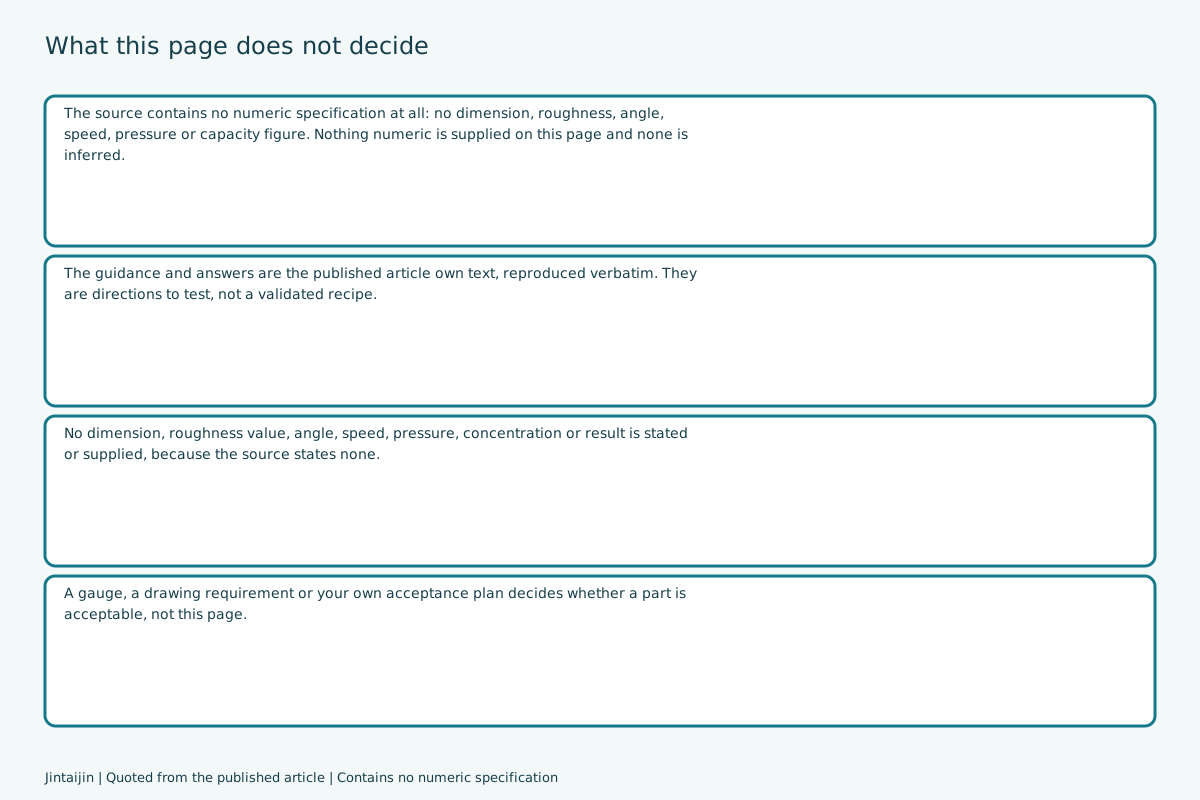
The source contains no numeric specification at all: no dimension, roughness, angle, speed, pressure or capacity figure. Nothing numeric is supplied on this page and none is inferred.
- The guidance and answers are the published article own text, reproduced verbatim. They are directions to test, not a validated recipe.
- No dimension, roughness value, angle, speed, pressure, concentration or result is stated or supplied, because the source states none.
- A gauge, a drawing requirement or your own acceptance plan decides whether a part is acceptable, not this page.
Frequently asked questions
Has the rust been removed without changing the part profile or the polish it was given before?
This page does not decide that for you. It reproduces the article own guidance. A gauge, a check on the protected feature or a drawing requirement decides whether a part is acceptable.
Does this page tell me what speed or setting to use?
No. The source article states no dimension, angle, speed, pressure or capacity figure at all, so none appears here and none is inferred.
Does it choose a machine or media for my part?
It describes the choices and trade-offs the source describes. It does not select one for your part.
Can I copy this straight into production?
No. It is a direction to test. Alloy, geometry, burr origin and your own loading all change the outcome. Confirm on a sample.
Are the passages quoted exactly?
Yes. Every passage and every answer is reproduced verbatim from the captured page and verified against it in the unit tests.
Does this page state or imply a result?
No. No cycle time, stock removal, finish value or outcome is stated or implied anywhere on this page or in its download.
What would you need from me to advise on my part?
Material, dimensions, the feature that must not change, the required finish and the production volume. That is what the source article says to send.
Is this a customer case study?
No. It reproduces a published reference article. It documents no SurfacePolish project, shipment, audit or result.
 +86-592-2381506


 IPv6 network supported