


Deburring Stamped Metal Parts Without Tangling, Distortion or Part-on-Part Damage
This page reproduces the published article on this subject: its section-by-section guidance and the questions it answers. The source contains no numeric specification at all: no dimension, burr height, angle, speed, pressure or torque figure appears in it, and none is supplied or inferred here. A gauge, a check on the protected feature, a drawing requirement or your own acceptance plan decides whether a part is acceptable, not this page.
Browse the published passages
Choose a section or search the published text, then read the article wording.
Start with the Burr, Not the Machine
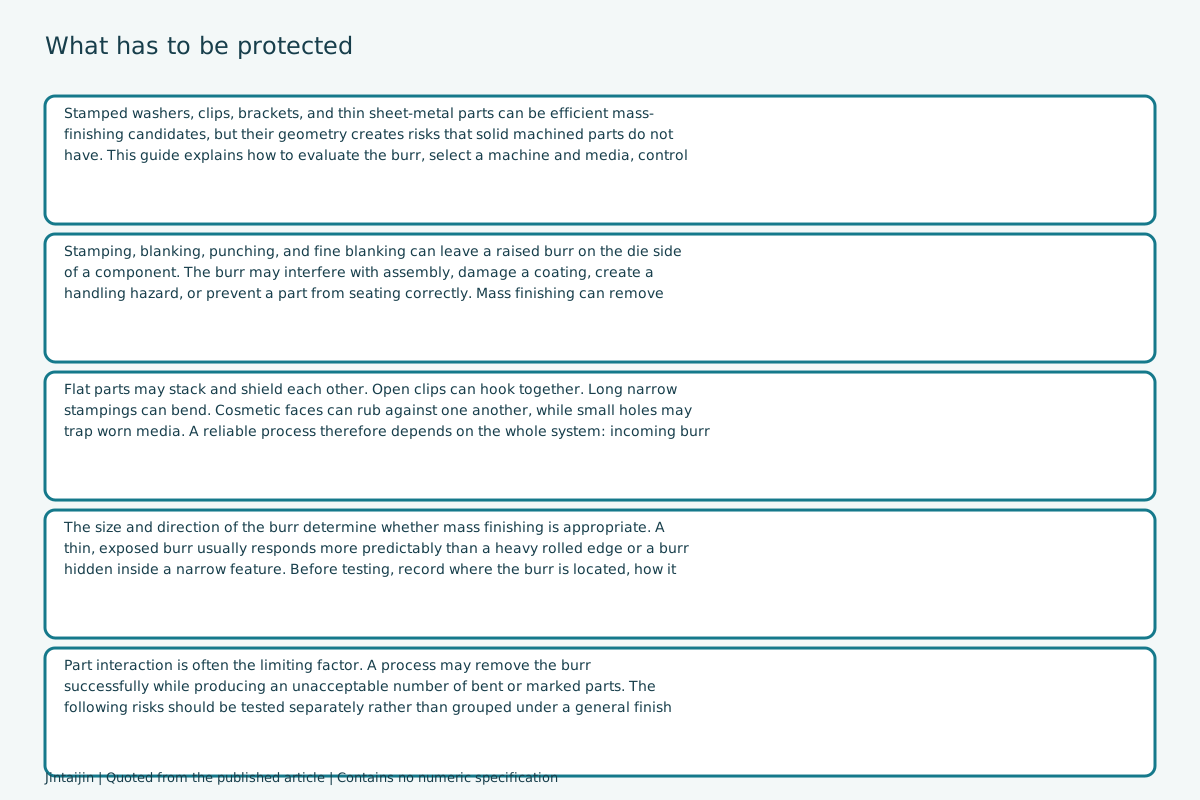
The size and direction of the burr determine whether mass finishing is appropriate. A thin, exposed burr usually responds more predictably than a heavy rolled edge or a burr hidden inside a narrow feature. Before testing, record where the burr is located, how it varies across the batch, and which edges must remain sharp or dimensionally controlled.
Why Stamped Parts Tangle, Stack, or Distort
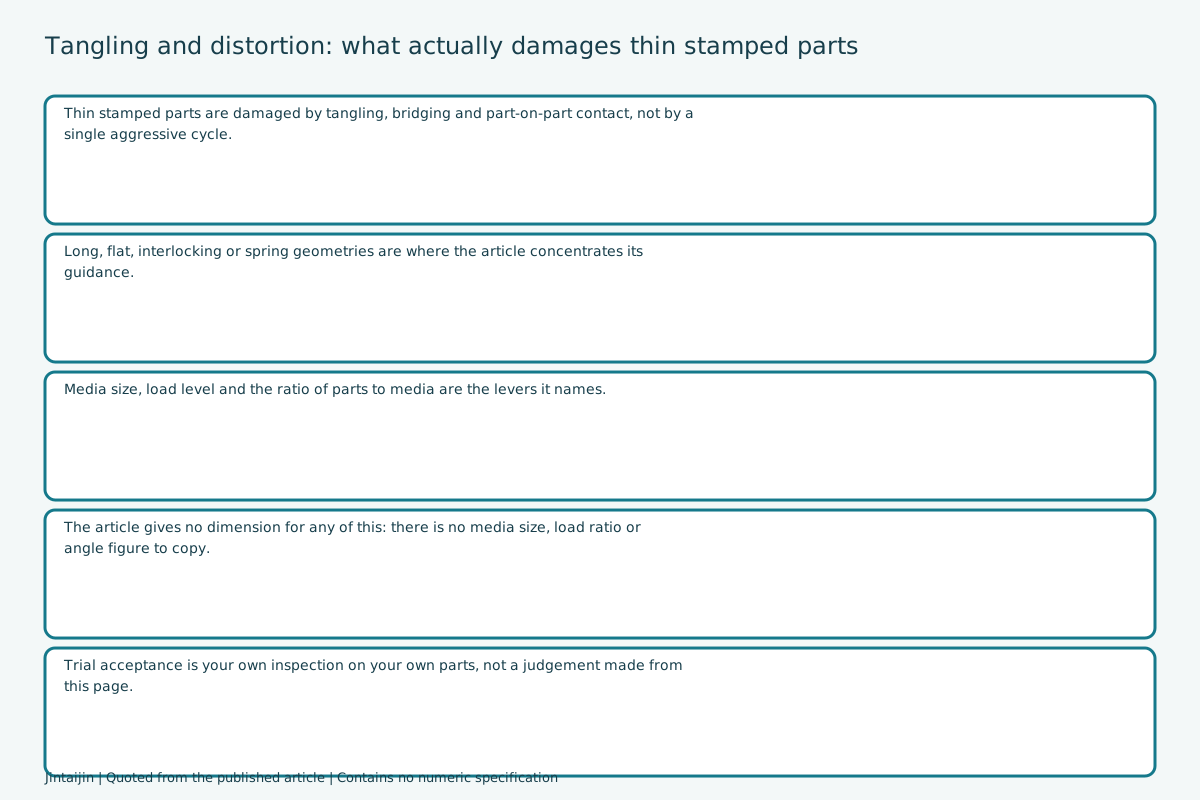
Part interaction is often the limiting factor. A process may remove the burr successfully while producing an unacceptable number of bent or marked parts. The following risks should be tested separately rather than grouped under a general finish inspection.
A small controlled batch should include the most fragile geometry and the widest expected range of incoming burrs. If the sample contains only the strongest or easiest parts, the result will not represent production.
Choose the Machine Around Part Motion
Machine choice affects how the parts circulate, how much energy reaches the edges, and how easily the batch can be separated. A vibratory finishing machine is a practical starting point for many stampings because its action is controllable and compatible with wet compounds and automated separation.
For a broader comparison of machine motion, review vibratory finishing versus barrel tumbling . Long stampings and parts that need dividers should also be evaluated in tub vibrators rather than assuming that a round bowl is the only option.
Select Media by Edge Access and Contact Risk
Media must reach the burr without entering features where it can lodge. It must also create enough space between parts to reduce direct impact. Shape is therefore as important as abrasive strength.
Ceramic media can provide stronger cutting action for harder alloys and more persistent burrs. Plastic media is often a useful starting point for thin, soft, or cosmetic parts because it generally offers a gentler cut and lower bulk density. The correct choice still depends on alloy, thickness, burr height, desired edge radius, and cycle time.
Avoid a media dimension that can enter a hole or slot and rotate into a locked position. Worn media should be screened because its dimensions change during use. The practical method is to compare the smallest worn-media dimension against every opening in the part, not only the nominal dimensions printed on a media specification sheet. See the detailed guide to parts and media separation .
Control the Load Before Increasing Aggressiveness
When burr removal is slow, increasing amplitude or switching to a harder media may appear to be the fastest solution. For thin stampings, that change can increase impact marks and deformation. First confirm that the load is circulating freely and that parts are not forming bundles or stacks.
A suitable finishing compound helps keep removed metal and abrasive fines suspended, improves wetting, and supports consistent rinsing. Compound concentration should be controlled rather than estimated by appearance or foam level.
Build a Production Trial That Measures More Than Appearance
A visually smooth sample is not enough to approve a stamped-part process. The trial should protect the downstream function that matters to the buyer.
If the process develops scratches, residue, uneven cutting, or poor circulation, use a structured vibratory finishing troubleshooting workflow instead of changing multiple settings at once.
When Another Deburring Method Is Safer
Mass finishing is not the correct answer for every stamped component. Consider brushing, precision grinding, thermal or electrochemical methods, or a dedicated trimming operation when the burr is extremely heavy, the edge is inaccessible, the part cannot tolerate bulk contact, or a critical feature requires selective material removal. A combined route may also work: remove the heavy defect first, then use mass finishing for edge smoothing, cleaning, and surface consistency.
Test the Part Before Selecting the Production System
Send representative stamped parts and your acceptance criteria. Jintaijin can evaluate machine motion, media access, tangling risk, separation, and process time before recommending a finishing configuration.
Tags :
How to Deburr Small Fasteners Without Damaging Threads, Points, or Recesses
How to Deburr Plastic and Rubber Parts: Mass Finishing, Media, and Process Limits
+86-592-2381506
Email : info@surface-polish.com
Access exclusive offers, news, and more.
click here to leave a message
Preparing secure enquiry form…
Home
Products
contact
Read our Privacy Policy
Questions the source answers
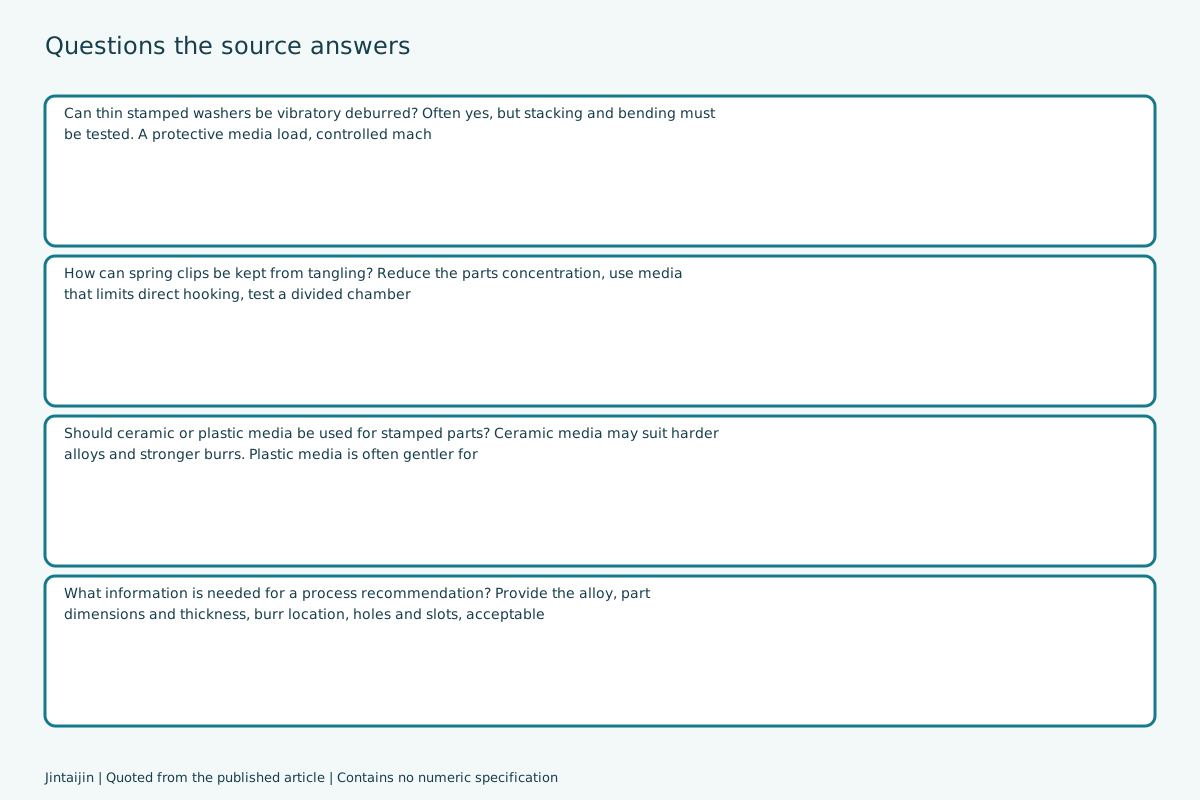
Can thin stamped washers be vibratory deburred?
Often yes, but stacking and bending must be tested. A protective media load, controlled machine intensity, and a screen that separates both parts and worn media are important.
How can spring clips be kept from tangling?
Reduce the parts concentration, use media that limits direct hooking, test a divided chamber or compartmented process, and measure the number of tangled parts per batch. Some geometries may require individual compartments.
Should ceramic or plastic media be used for stamped parts?
Ceramic media may suit harder alloys and stronger burrs. Plastic media is often gentler for thin or cosmetic parts. Final selection requires a trial using the actual alloy, burr, geometry, and finish requirement.
What information is needed for a process recommendation?
Provide the alloy, part dimensions and thickness, burr location, holes and slots, acceptable edge radius, critical tolerances, batch quantity, desired cycle time, and clear photos of the incoming and target condition.
Source and its limits
Published reference article; captured 7 October 2026. SHA256: 56ec155313e46ce80fbee92529c34efdbc89c0434bd52a2e86dadbf25d1ff59a. Source shape: prose guidance under section headings with a question block; no tables.
The source contains no numeric specification at all: no dimension, angle, speed, pressure or torque figure. Nothing numeric is supplied on this page and none is inferred.
- The guidance and answers are the published article own text, reproduced verbatim. They are directions to test, not a validated recipe.
- No dimension, burr height, angle, speed, pressure, torque, concentration or result is stated or supplied, because the source states none.
- A thread gauge, sealing-face check, drawing requirement or your own acceptance plan decides whether a part is acceptable, not this page.
Frequently asked questions
What is actually being damaged: the burr, or the flatness, tangling or part-to-part contact?
This page does not decide that for you. It reproduces the article own guidance and its own questions. A gauge, a check on the protected feature or a drawing requirement decides whether a part is acceptable.
Does this page tell me what burr height or speed to use?
No. The source article states no dimension, burr height, angle, speed, pressure or torque figure at all, so none appears here and none is inferred.
Does it choose a machine or media for my part?
It describes the machine classes and media considerations the source describes. It does not select one for your part.
Can I copy this straight into production?
No. It is a direction to test. Alloy, geometry, burr origin and your own loading all change the outcome. Confirm on a sample.
Are the passages quoted exactly?
Yes. Every passage and every answer is reproduced verbatim from the captured page and verified against it in the unit tests.
 +86-592-2381506


 IPv6 network supported