


Separating Small Parts from Tumbling Media: Screen Methods and Failure Directions
This page reproduces the published tables for separating small parts from tumbling media: the screening methods with their best fit and main validation point, and the failures with the direction to check. These describe screening approaches, not a machine specification. No screen aperture size, mesh number, throughput or cycle time is stated, implied or supplied: choose openings against your own smallest part dimension.
Browse the published rows
Choose a section or search the published rows, then read the article text.
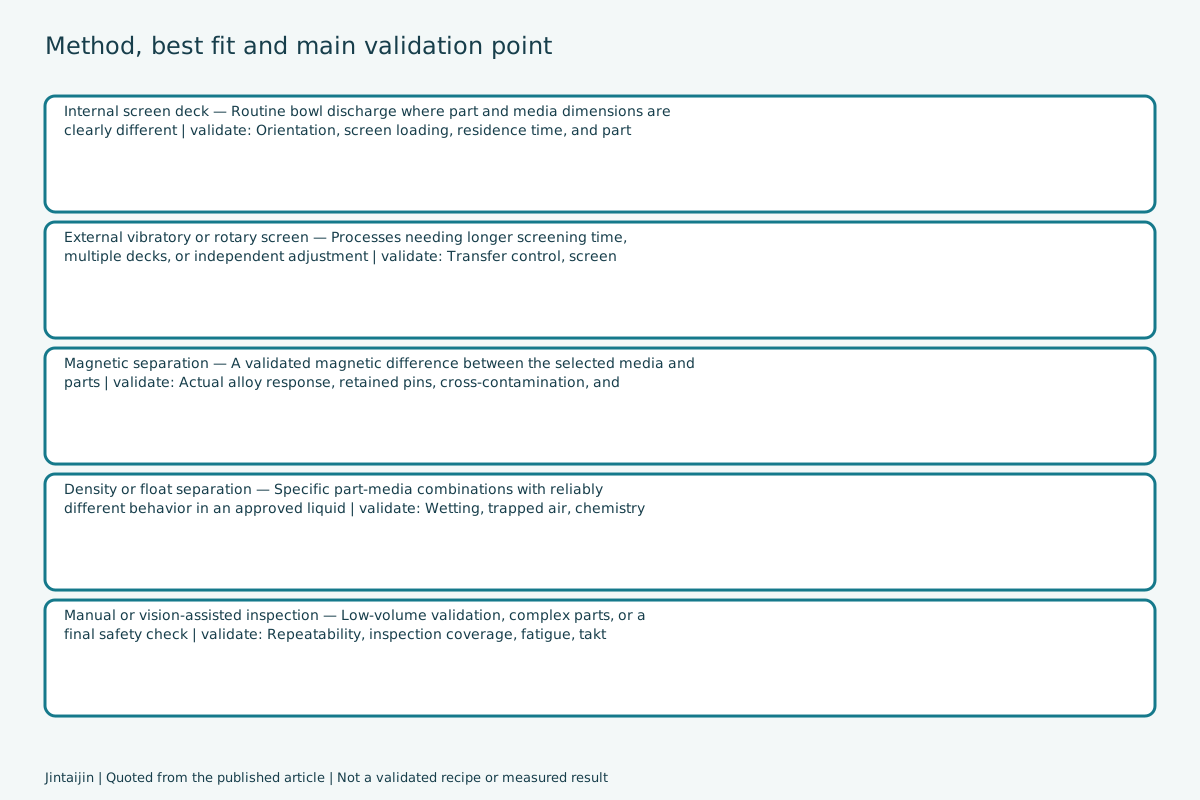
Method, best fit and main validation point
| method | best fit | main validation point |
|---|---|---|
| Internal screen deck | Routine bowl discharge where part and media dimensions are clearly different | Orientation, screen loading, residence time, and part damage during discharge |
| External vibratory or rotary screen | Processes needing longer screening time, multiple decks, or independent adjustment | Transfer control, screen blinding, throughput, and collection of undersize fragments |
| Magnetic separation | A validated magnetic difference between the selected media and parts | Actual alloy response, retained pins, cross-contamination, and demagnetization needs |
| Density or float separation | Specific part-media combinations with reliably different behavior in an approved liquid | Wetting, trapped air, chemistry compatibility, cleaning, and wastewater handling |
| Manual or vision-assisted inspection | Low-volume validation, complex parts, or a final safety check | Repeatability, inspection coverage, fatigue, takt time, and documented acceptance |
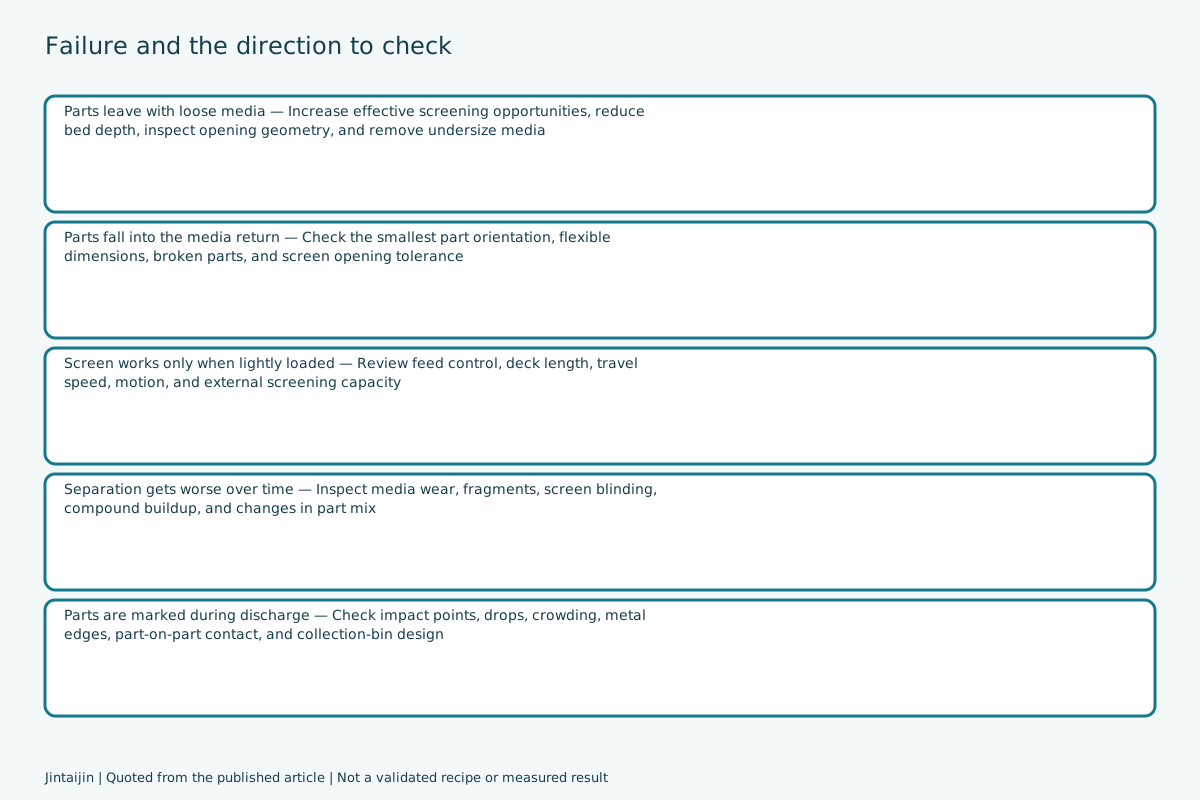
Failure and the direction to check
| failure | direction to check |
|---|---|
| Parts leave with loose media | Increase effective screening opportunities, reduce bed depth, inspect opening geometry, and remove undersize media |
| Parts fall into the media return | Check the smallest part orientation, flexible dimensions, broken parts, and screen opening tolerance |
| Screen works only when lightly loaded | Review feed control, deck length, travel speed, motion, and external screening capacity |
| Separation gets worse over time | Inspect media wear, fragments, screen blinding, compound buildup, and changes in part mix |
| Parts are marked during discharge | Check impact points, drops, crowding, metal edges, part-on-part contact, and collection-bin design |
Source and its limits
Published reference article; captured 5 October 2026. SHA256: bf0022c3109501ea79de3c57499212760acf0d4b2a8f8f7f0af91858719cfbf6.
- Methods and directions are the published article own, reproduced verbatim. They describe screening approaches, not a machine specification.
- No screen aperture size, mesh number, throughput or cycle time is stated, implied or supplied. Choose openings against your own smallest part dimension.
- A failure row lists a direction to check, not a diagnosis.
Table headers as published
- Method / Best Fit / Main Validation Point
- Failure / Direction to Check
Frequently asked questions
Does this give me a recipe for my part?
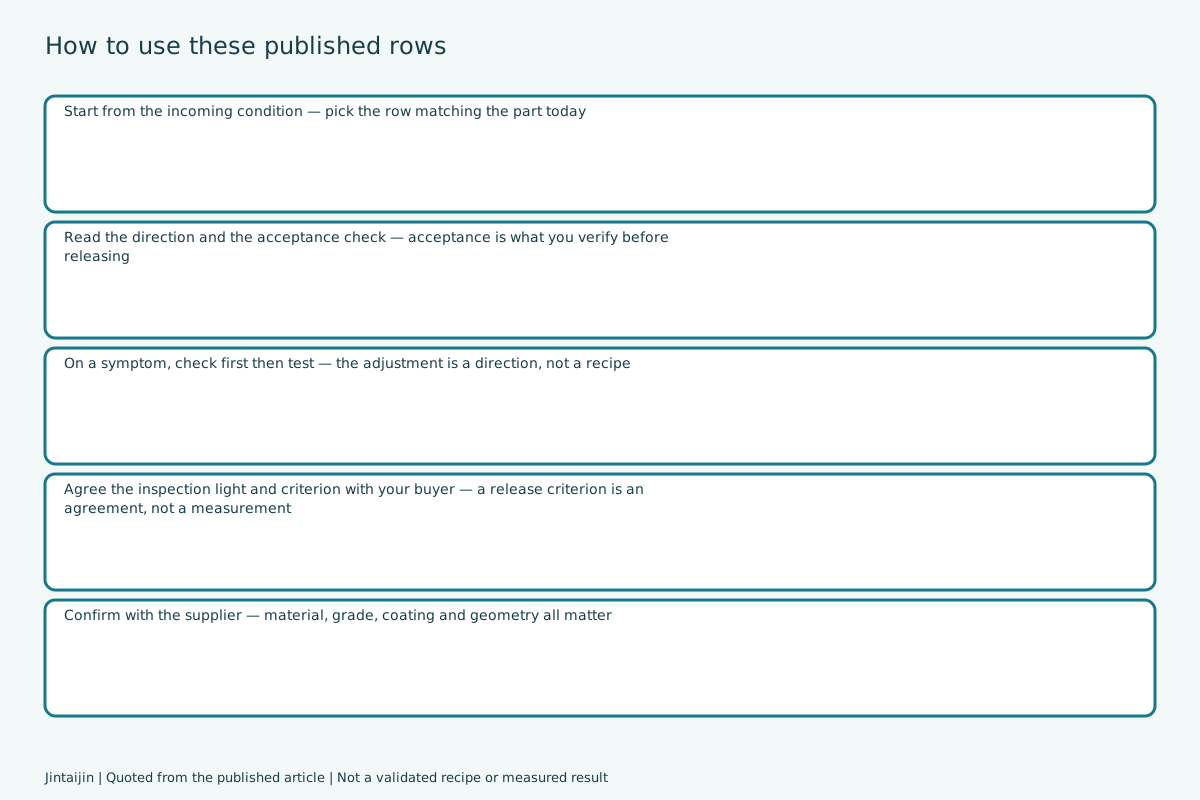
No. These are the published article own rows reproduced verbatim. They are a direction to confirm on a sample and with the supplier, not a validated production recipe.
Is a release criterion a measured result?
No. A release criterion is the article own criterion wording. It is something to agree with your inspection, not a measurement and not an approval.
Does it state cycle time, speed or temperature?
No. No cycle time, speed, amplitude, load ratio, concentration, temperature or removal result is stated or implied anywhere on this page or in its download.
Are the tables quoted exactly?
Yes. Every cell is taken from a single source table cell and verified against the captured page, including wording and punctuation.
Can I apply this to a different material?
These rows describe the material the article covers. Polymer grade, coating, geometry, wall thickness and part size all matter, so confirm every value for your own part.
 +86-592-2381506

 IPv6 network supported