A gripper and tooling maker in Marseille, France working in robotics and automation has a recurring batch of small machined jaws where the edge break has to be consistent without losing the pivot hole or the serrated face. SurfacePolish supplies finishing machines, media and compounds across borders and runs a free sample trial, returning a representative batch with observations and a proposed media, compound and cycle direction for the buyer to compare. This brief is written for a buyer in Marseille working on robotics and automation; it describes equipment, media and a scoped sample review, not a local polishing service.
What does the finishing step actually have to deliver before the next operation, whether that is assembly, anodising, painting or a functional test, and who defines that requirement?
What is the size and mass spread inside one part family, and does one machine have to cover both a heavy casting and a small gripper jaw?
What is the smallest hole, slot, keyway or cross-drilling the charge must not enter or plug, and how will a lodged medium be detected and removed?
Automation work mixes scales in a way that catches buyers out. The same shop may finish a 40 kg robot base casting and a 30 g gripper jaw, and a machine sized for the casting will over-work the jaw. Load ratio, the mass of parts against the mass of the charge, is the variable that usually decides whether small parts come out even or rounded. Screen the family on its extremes: the heaviest part, the largest envelope, the thinnest unsupported wall and the smallest part that must meet the same appearance. Long linear-axis beams and thin cover plates distort under their own weight in a deep bed, while heavy castings need a chamber large enough to keep them moving. A shortlist built on the average part will miss both ends of the range.
Compound carries debris away, keeps the media from loading and buffers the chemistry against the metal. Alkaline and neutral families are common for general deburring and cleaning; acidic families may be chosen where a descale or brightening effect is wanted; silicate-bearing products can leave a tenacious film that is hard to remove from a bore or a sealing land. On aluminium an effective corrosion inhibitor usually matters, because the wrong chemistry darkens the surface during or after the cycle. Concentration, flow and temperature shift the result, so dosing should be metered rather than judged by eye, and rinse water hardness, chloride content and suspended solids all affect foaming and what remains behind. Where an anodise or paint step follows, the film and smut left by the cycle become the buyer's problem, so define how the surface will be checked.
| Media | Best fit | Watch out for |
|---|---|---|
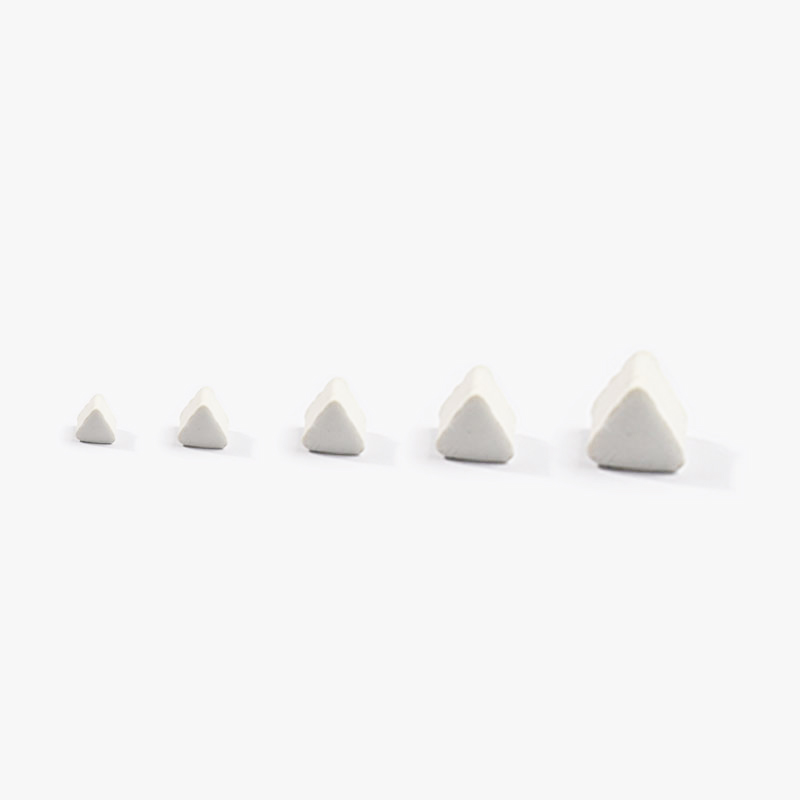
| Plastic cylinders and cones in a harder, denser grade | Longer cycles on mixed batches of small fittings and screw-machine parts where a repeatable light edge break is wanted without ceramic impact | Can float or segregate by shape in a bowl, and cylindrical forms can wedge in slots, keyways and cross-drillings |
| Dry media such as walnut shell and corn cob | Drying assistance and light surface polish after a wet cycle, particularly on parts with pockets and threads that must not stay wet | Does not deburr or refine metal significantly, generates dust, and must not be treated as a cleanliness step |
| Aluminium oxide grinding media in a dense ceramic bond | Heavier stock removal or a more consistent cut on robust steel and stainless parts with thick edges and a defined layer to remove | High removal energy rounds functional edges quickly and is a poor match for thin aluminium plates, cast housings and bore lips |
| Plastic triangles, cones and pyramids in a soft to medium grade | Deburring aluminium housings, gripper plates and other soft alloy parts where surface marking and edge rounding must be kept to a minimum | Slow cut rate, media deforms and wears, and a worn charge behaves noticeably differently from a fresh one |
A round vibratory bowl is the usual starting point for machined automation parts that fit comfortably and can tumble without a fixture. Media circulates in a toroidal path and reaches external faces, open pockets and edges at moderate energy, and the open chamber lets an operator pull a part mid-cycle to look at a sensitive feature. Contact between parts is continuous, so finished mounting faces, thin cover plates and bright cosmetic panels need separation or compartmentalising within the charge. A bowl reaches external geometry only: internal passages, deep pockets and the underside of a flange depend on media size, compound flow and how the part sits in the load. Where a heavy milled burr has to come off first, a machine with higher removal energy may take the bulk of it, at the cost of faster edge loss.
| Machine route | Where it fits | What it will not do |
|---|---|---|
| Centrifugal barrel finishing machine | Small precise parts and short cycles with high contact pressure, such as spools, small inserts and compact machined components | Rounds edges and can distort thin unsupported sections quickly; results are sensitive to charge weight, speed and stop time |
| Magnetic finishing machine | Fine deburring and light refinement of small precise features such as small bores, narrow slots and fine internal radii | Small working envelope that excludes housings and long parts, with pin media that can lodge in the fine features it reaches |
| Barrel finishing machine, rotary barrel tumbling | Gentle deburring of small fragile parts and mixed batches of screw-machine components with a generous compound flow | Long cycles, no visibility while running, and internal features can collect media and compound that must be retrieved at unload |
| Dry polishing machine and dryer | Removing residual moisture after a wet cycle and reducing water spotting on aluminium and stainless surfaces with pockets and threads | A finishing step only; a dry part can still carry compound film, fines and media dust, so it is not a cleanliness release |
Edge rounding beyond limit is the failure that most often turns a finished automation part into scrap, because the features that round first are the ones that set position. A bearing bore lip, a dowel hole edge, a seal groove corner or the edge of a ground mounting land can lose a fraction of its geometry under a high-energy charge and still look uniform and polished. Coarse or dense media, an over-long cycle and a heavy load ratio all accelerate it, and aluminium rounds faster than stainless under the same conditions. Because the damage is invisible to a casual look, checking has to be deliberate: measure the feature before and after with an optical comparator, a radius gauge or a moulded replica, and compare the result with the limit on the drawing. Masking, a shielding fixture or a gentler medium are the usual mitigations to test.
| Failure mode | Likely cause | How to catch it |
|---|---|---|
| A ceramic, plastic or steel medium lodged in a tapped hole, keyway, cross-drilling or seal groove | Media size class too close to the opening, a charge that has worn or fractured into smaller pieces, or a retention feature that was never mapped | Count the charge in and out where practical, pin or thread gauge every hole, borescope the smallest passages at an agreed angle, and rinse through a filter for a visual check |
| Uneven finish with unrefined pockets, internal corners or the shielded side of a flange | Media cannot reach the feature at the chosen size or orientation, charge circulation is blocked, or the part was never repositioned during the cycle | Inspect at defined locations rather than judging the whole part, photograph the same feature before and after, and measure roughness only at the surfaces the drawing controls |
| Rust spotting on stainless parts appearing hours or days after finishing | Ferrous transfer from steel media, a machine or tooling that has held carbon steel, or insufficient corrosion inhibition and drying | Inspect after a defined dwell time rather than immediately, look for pinpoint spots on and near edges, and trace the media and machine history for the lot |
| Water spotting, mineral rings or haze left after wet processing and drying | Hard or high-chloride rinse water, slow or uneven drying, or parts stacked wet so moisture is trapped in pockets and threads | Inspect dried parts under angled light for rings and haze, check the rinse water source and the drying method, and confirm that pockets and tapped holes drain before packing |
Marseille's industrial identity is inseparable from the port: the Grand Port Maritime de Marseille operates the Fos-sur-Mer industrial-port zone, created by the State in 1964 and described by the port as one of the largest in Europe at 10 000 hectares, concentrating steel, energy and petrochemical plants including ArcelorMittal, Marcegaglia, KEM One, Air Liquide and Covestro, with two methane terminals and two wind farms, and the port is adding new industrial projects (H4 sustainable aviation fuel, Gravithy direct-reduced iron, a Marcegaglia electric steel plant, Neocarb e-fuels). In the commune, INSEE counted 31 646 establishments at the end of 2024, 4,2 % of them industrial, and 10,4 % in construction - the highest construction share of the ten cities studied. Marseille is also the Mediterranean's leading ship-repair centre, with ten repair forms in the Marseille basins and Forme 10, which the port describes as the third largest ship-repair dock in the world.
The nearest part of that base to this brief is marine: The port authority states Marseille Fos is the leading ship-repair centre in the Mediterranean, with ten repair forms in the Marseille basins, Forme 10 as the third largest ship-repair dock in the world, 76 ships docked dry and 53 afloat.
Fos and the Marseille basins are a heavy-metal environment: steel strip, tube and long products, welded structures, pumps, valves and process equipment need scale and heat-tint removal, weld dressing and controlled surface finish for coating adhesion and corrosion resistance. Ship repair adds a second, different surface problem - large-area preparation, weld seam dressing on hulls and tanks, and cleanliness before coating - carried out under tight dry-docking schedules. Both environments put a premium on equipment that is robust, dust- and slurry-tolerant, and simple to maintain, rather than on fine cosmetic polishing.
A buyer in Marseille should settle whether the finishing cell will work on large welded structures and repair work with variable geometry, or on repeatable machined components, because that determines whether the shop needs a flexible manual/barrel process with forgiving media or a tightly controlled, documented series process.
Freight context: Grand Port Maritime de Marseille (Marseille and Fos-sur-Mer), Marseille Provence Airport, Fos container and ro-ro terminals. Marseille-Fos is the Mediterranean deep-sea gateway for southern France, with container traffic up 9 % in 2024 to 1,45 MEVP and revenue of EUR 224,5 million; the port is multimodal (maritime, river, rail, road) and handles heavy and oversized industrial cargo. For a finishing-equipment buyer this is the natural discharge port for containerised machines and the natural export route for sample parts, with Fos better suited to heavy lifts than the city basins.
For imports from outside the EU the declarant must file a customs declaration whose form and content are fixed by the Union Customs Code and its implementing provisions; French Customs identifies classification, origin and value as the three fundamental notions and makes the common/national tariff consultable via RITA. The customs authority is the Direction generale des douanes et droits indirects (DGDDI), which also runs the Info Douane Service for formalities questions. Buyers should expect to need an EORI number and an EU VAT treatment, because customs and tax authorisations are handled together (SOPRANO). For machinery, the CE marking and the applicable EU product-safety directives are the compliance gate items to settle before shipment, and the French market surveillance authority is the DGCCRF; the tariff rate itself must be confirmed per HS code in RITA or the EU Access2Markets tariff tool, since it varies by machine type.
The working language of French industrial procurement is French: tenders, drawings, inspection plans and technical dossiers are normally issued and answered in French, and quotations that omit French documentation slow down qualification. Buyers qualify a machine against a written specification and expect traceable material certificates, machine safety documentation and, where applicable, a CE declaration of conformity and a risk assessment; acceptance is often staged (documentary review, factory acceptance test, then commissioning). Payment and documentation norms are conventional EU practice: euro invoicing, SEPA or SWIFT bank transfer, Incoterms agreed in writing, and customs paperwork (commercial invoice, packing list, transport document, proof of origin where a preference is claimed) prepared for the declarant or customs representative. Because customs and tax authorisations are handled jointly through SOPRANO, non-EU sellers are normally advised to sell to an established French/EU importing entity rather than to act as importer of record themselves.
SurfacePolish supplies from Xiamen, China. The buyer's own destination rules, conformity marking, tariff classification and documentation responsibilities stay with the buyer; confirm them against the authorities named above before ordering.
Some failures never show on a surface. Measure the features that can move: bore diameters and roundness with a bore gauge or CMM, dowel hole position, flatness of a mounting face on a surface plate or CMM, wall thickness on a thin housing, and thread condition with go and no-go gauges, since edge finishing can open or gall a thread crest. Where the part carries a pneumatic or hydraulic passage, a flow or pressure check against a reference part catches a lodged medium or a burr that visual inspection misses. Where a seal or gasket seats, the buyer's own leak or assembly check is the only test that sees a rounded land or a residue film. These checks belong to the buyer's quality function against the buyer's own limits; a finishing report is supporting evidence rather than a release.
Scale-up is mostly about holding what produced the trial result. In production that means a media charge kept at a target mass, screened on a schedule with undersize and broken pieces removed and fresh media added to a recorded level. Compound should be metered to a concentration rather than poured by eye, and rinse water quality should be known and stable. Every lot needs an identity: part numbers, quantity, machine, media charge, compound, cycle time, operator, inspection result and disposition. Where the same machine handles aluminium and stainless, define the changeover, including media purge, machine cleaning and compound replacement, and record when it happened. Cycle counting is a simple control that is often skipped: a charge that has run a known number of hours can be scheduled for replacement before wear starts producing lodged media or a drifting finish.
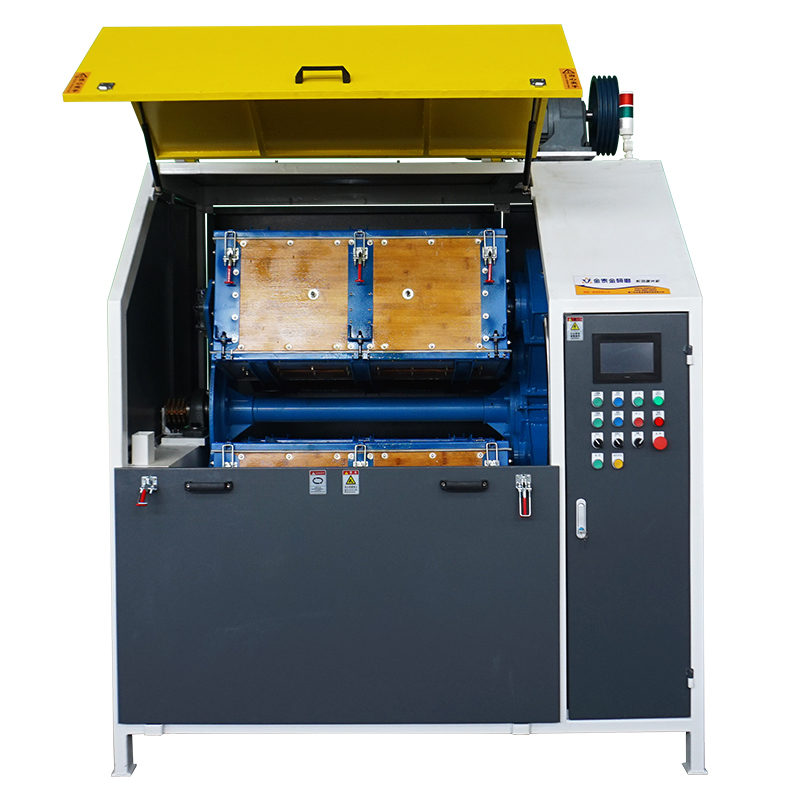
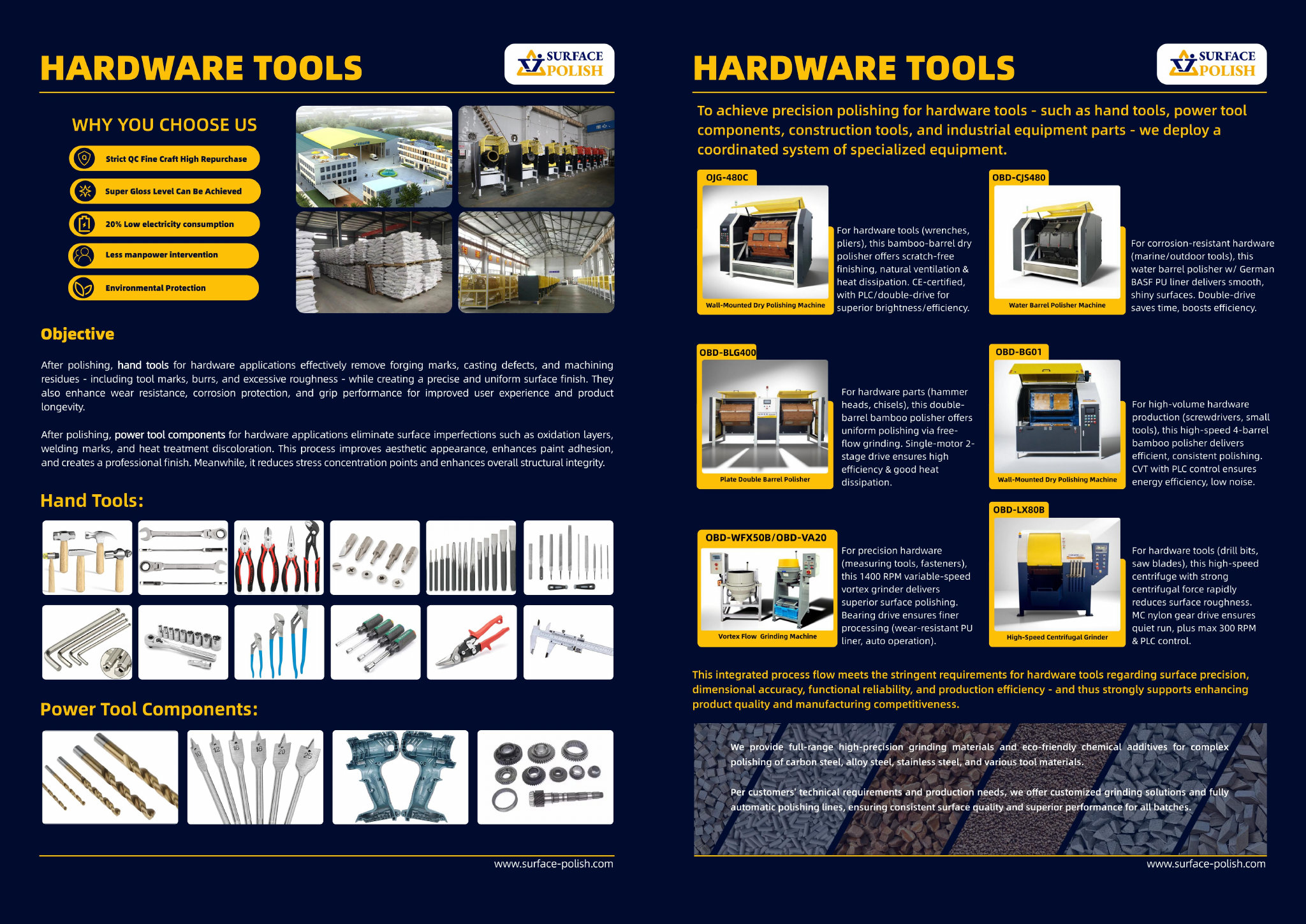
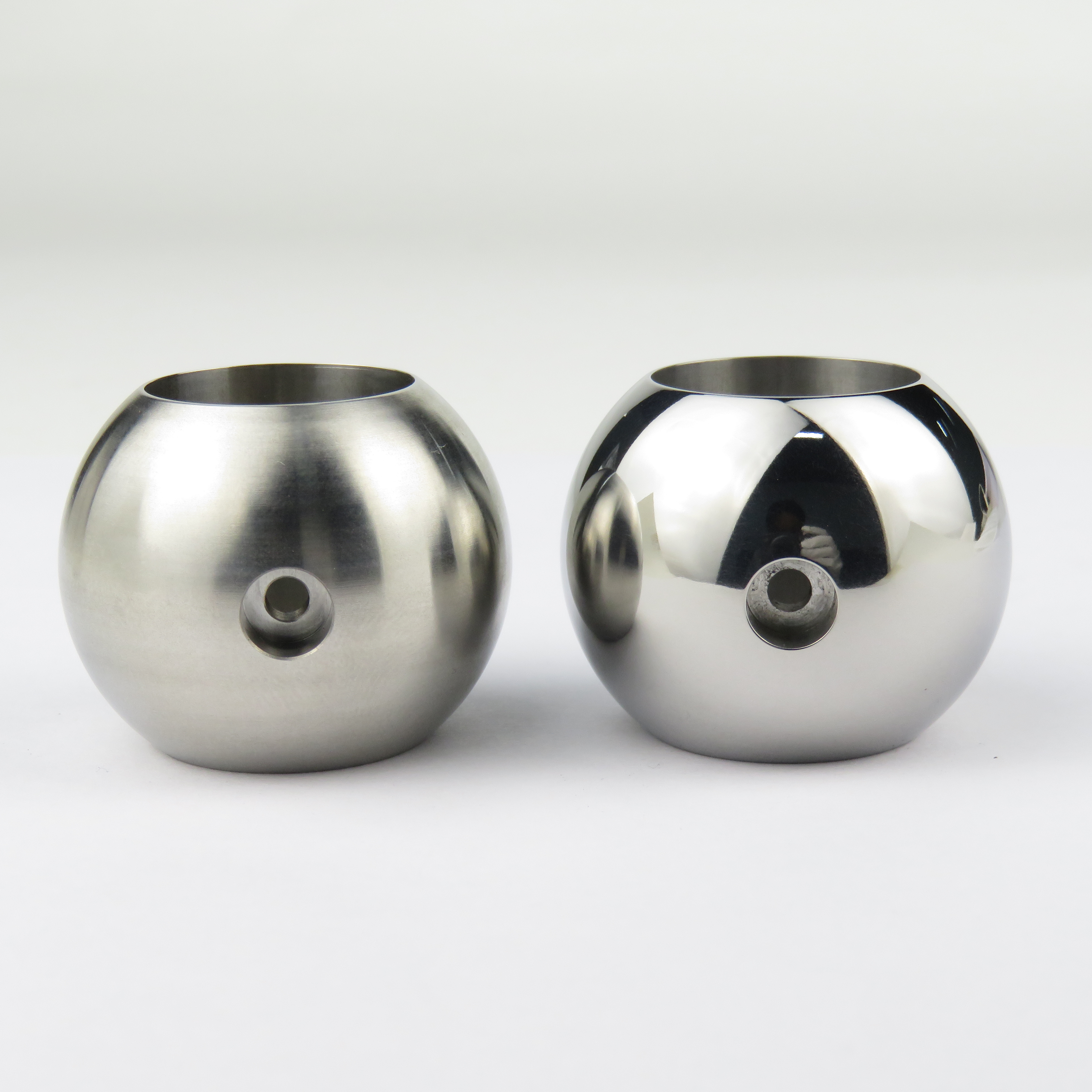
Yes. The offer is cross-border supply of finishing machines, media and compounds, together with a free sample trial and a scoped discussion of a finishing line concept. That means machine class, media and compound are considered as one question rather than three purchases, since a charge that suits one chamber may not suit another. The buyer keeps ownership of the part, the drawing and the acceptance criteria, and we do not verify the material, the upstream machining or the heat treatment. Bring the part family, the alloys, the size range and the features that must be protected into the discussion, along with the condition the parts arrive in.
There is no single best medium, because aluminium is soft and the trade-off is between cut rate and surface damage. Plastic media is often the safer starting point where a machined face, a thin wall or a bore lip must be preserved, while a fine ceramic cuts faster if the edges tolerate more energy. The deciding variables are the smallest opening a medium could enter, the smallest radius that must not be rounded, and the surface condition the next operation needs. Media size class usually matters more than the broad material name. Send a marked-up part with its tightest feature and one controlled face, and let the trial compare two size classes.
No. SurfacePolish does not supply or carry out electropolishing. Where an electrochemical treatment is part of a specification, it appears here only as a comparison point and as a reason to examine what a mechanical route can achieve on the same part, and the mechanical route can be discussed in terms of machine, media and compound options. A mechanical finish should not be presented as equivalent to an electropolished surface, and it does not reproduce what that process does. Where an electropolished finish is mandatory in your specification, that requirement stays with your own supply chain and your own engineering decision.
Use Marseille, France as the destination on the enquiry and state whether the deliverable is equipment, media and compound, a representative sample review or a line concept. A destination does not imply local stock, a local service point or a local delivery time.
A Marseille buyer would reference ISO/NF EN surface-texture standards for finish, the EN 1090 and pressure-equipment regimes for welded steel structures and vessels, and coating-system specifications where surface preparation precedes painting; marine and offshore work is normally governed by classification-society and owner specifications on top of the ISO 9001 baseline. Material conformity certificates and traceability are standard requirements in the steel and petrochemical supply chain.
Sources were retrieved on 2026-09-29 and describe the local industrial and trade context only. They do not evidence any SurfacePolish project, shipment, installation or service in Marseille.
The buyer needs a consistent light edge break across the batch without rounding the pivot hole or blunting the serrations.
Send the material, dimensions, approximate weight, batch quantity, the incoming condition and photographs of the difficult features. Mark which features must not be contacted by media and state how the result will be inspected. This form carries source reference PSEO-0540; quote it if you prefer an additional manual reference.
Open the SurfacePolish enquiry form Email a prepared enquiry
No price, lead time, certification or result is promised here. Confirm whether a sample trial is available for the specific part and what the trial can and cannot show.
Page PSEO-0540 · revised 2026-09-29 · cross-border equipment, media and scoped sample review. City context is sourced and cited above.
Use this local checker to identify missing part and inspection information. It prepares a technical-review brief; it does not approve a machine, process recipe or production result.
Complete the part details to prepare a review brief.
Email : info@surface-polish.com


 IPv6 network supported


 +86-592-2381506