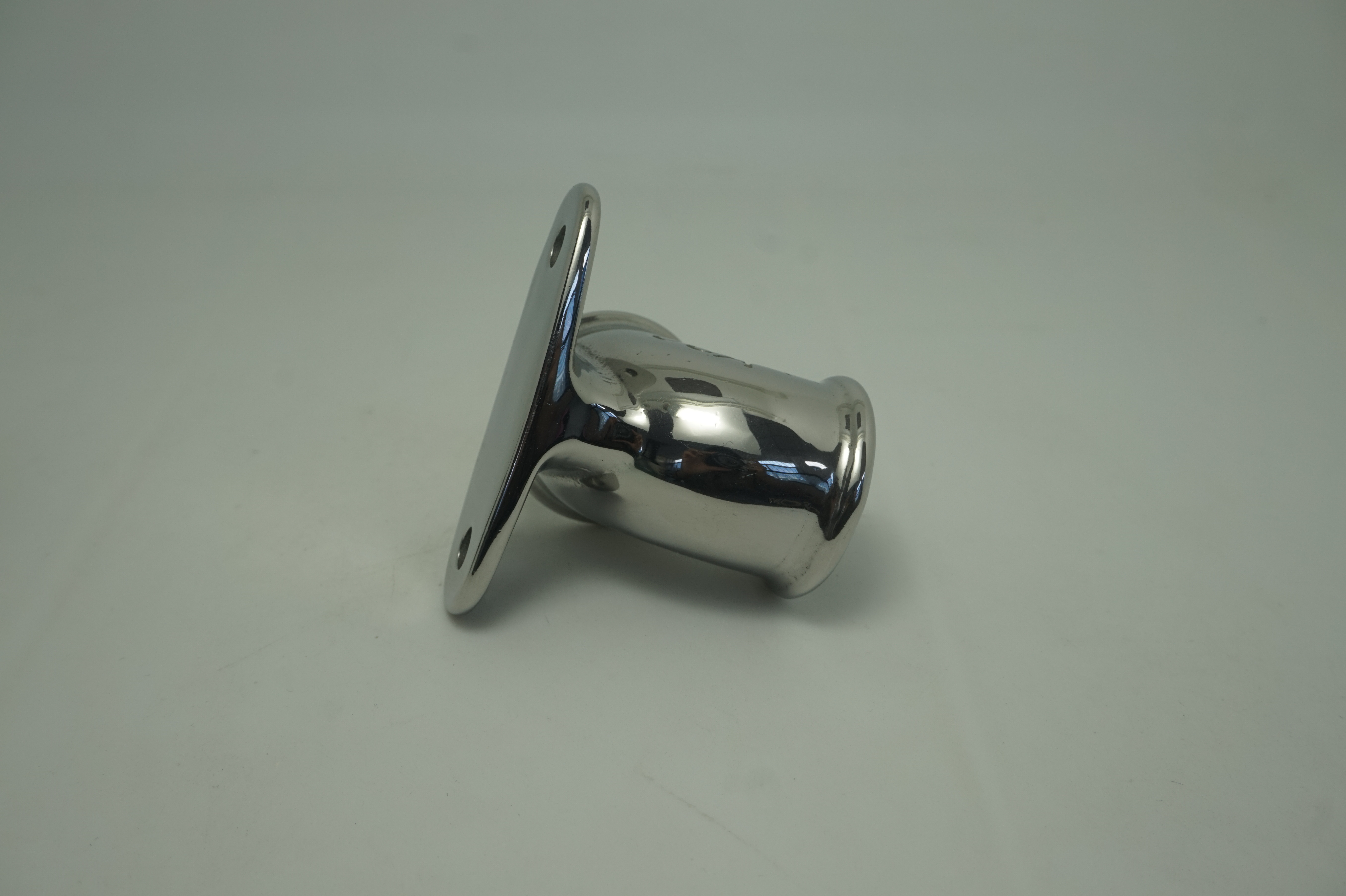
A pneumatics maker in Turin, Italy working in robotics and automation has a stainless actuator body whose bore lip and port threads must not be rounded or galled by edge finishing. SurfacePolish supplies finishing machines, media and compounds across borders and runs a free sample trial: the part goes to Xiamen, is processed under recorded settings, and returns with observations and a proposed media, compound and cycle direction for the buyer to verify. This brief is written for a buyer in Turin working on robotics and automation; it describes equipment, media and a scoped sample review, not a local polishing service.
What is the size and mass spread inside one part family, and does one machine have to cover both a heavy casting and a small gripper jaw?
Which alloys and tempers run through the shop, and how will media, machines and compounds be purged between aluminium, stainless and steel work?
Which surfaces on the part are functional, such as bearing bores, dowel holes, seal lands, ground mounting faces and threads, and which are only cosmetic?
Two housings made to the same drawing can need different routes because of alloy and temper. A 6061-T6 machined body is soft enough to smear and peen under a heavy ceramic charge, and it marks where a steel charge has transferred iron. A 7075 part is stronger and cuts differently. Austenitic stainless work-hardens at the surface and responds to media pressure rather than to sharp cutting. Hardened 4140 or a nitrided seat may tolerate only a light edge break, because the finishing step cannot be allowed to remove the case. Castings can open porosity that machining had closed. Record the temper, the hardness range and the heat treatment, and establish whether an anodise, passivation or paint step follows, because that step usually sets the residue and smut limits the finishing cycle has to respect.
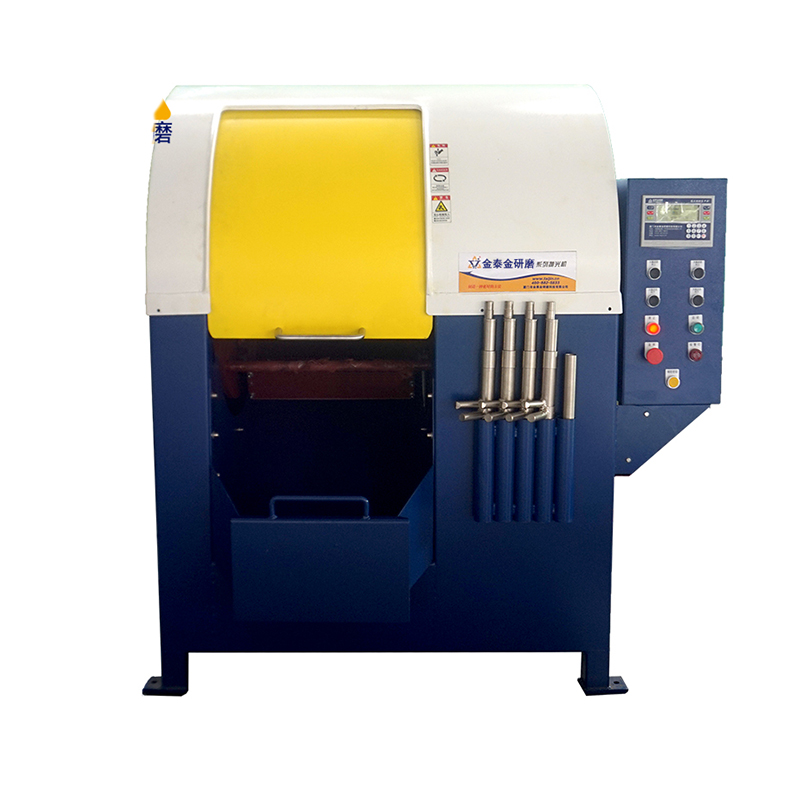
Disc finishing machines and centrifugal barrel machines deliver far more energy per unit of time than a bowl. A disc machine works the gap between rotating discs, which suits batches of small robust parts such as gripper jaws, mounting blocks and machined brackets where a consistent edge break is wanted quickly. Centrifugal barrel finishing multiplies the effective gravity acting on the charge, so cycles shorten and contact pressure rises sharply, which suits small precise parts and can round a thin section or deform a soft aluminium wall within a short over-run. Both routes depend on charge weight, speed, fill level and stop time being held to a record. They are a poor match for thin-walled housings, long beams and any part whose functional edge or bore lip must keep a tight radius.
| Machine route | Where it fits | What it will not do |
|---|---|---|
| Vibratory finishing machine, bowl type | General deburring and refinement of machined housings, plates and brackets that fit and can tumble without racking, with easy mid-cycle inspection | Continuous part-on-part contact and no access to deep internal passages; thin plates and finished mounting faces need separation |
| Centrifugal barrel finishing machine | Small precise parts and short cycles with high contact pressure, such as spools, small inserts and compact machined components | Rounds edges and can distort thin unsupported sections quickly; results are sensitive to charge weight, speed and stop time |
| Tub vibrator | Long parts such as linear-axis beams, manifolds and welded frames that cannot rotate in a bowl | Lower energy per unit area so heavy burrs take longer, and large tubs need floor space and a reliable part support method |
| Magnetic finishing machine | Fine deburring and light refinement of small precise features such as small bores, narrow slots and fine internal radii | Small working envelope that excludes housings and long parts, with pin media that can lodge in the fine features it reaches |
Steel media produces the brightest appearance of the common charges and the highest contact pressure, and it brings a contamination question with it. On aluminium it can embed iron-bearing fragments that show up later as rust spots or as particles in a wiped sample, so a shop that runs both materials needs a changeover discipline, dedicated charges or a different route for the aluminium work. Separation at unload matters as much as the choice: steel media is dense, retains in blind holes and slots, and can only be recovered magnetically if the equipment and the procedure are set up for it. The compound has to keep the charge clean and inhibit corrosion on the parts. A bright result from a steel charge is an observation about a surface, not evidence about cleanliness or fitness for a downstream process.
| Media | Best fit | Watch out for |
|---|---|---|
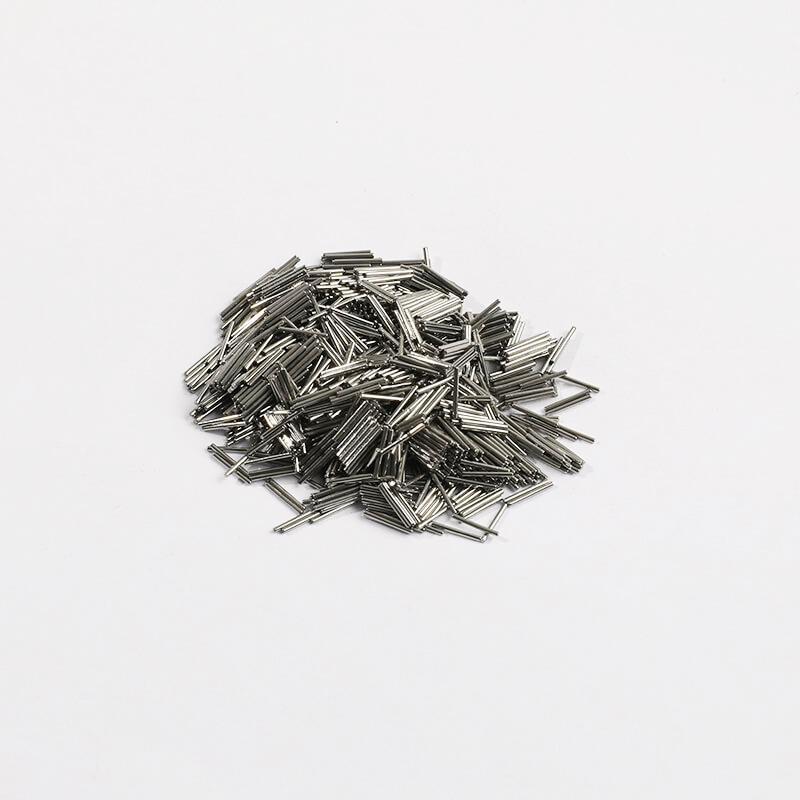
| Dry media such as walnut shell and corn cob | Drying assistance and light surface polish after a wet cycle, particularly on parts with pockets and threads that must not stay wet | Does not deburr or refine metal significantly, generates dust, and must not be treated as a cleanliness step |
| Magnetic finishing pins and fine magnetic media | Small precise items such as spools, orifice plates, small valve parts and fine slot arrays where tumbling media cannot reach the feature | Limited working envelope, pins lodge in the same fine features they are chosen to reach, and the surface signature differs from tumbling |
| Steel media, including balls and shaped pins | Bright finishing and edge blending on stainless automation components where appearance and a burnished surface matter | Transfers iron to aluminium and carbon steel, needs a corrosion-inhibiting compound, and must be separated magnetically or by screen at unload |
| Plastic triangles, cones and pyramids in a soft to medium grade | Deburring aluminium housings, gripper plates and other soft alloy parts where surface marking and edge rounding must be kept to a minimum | Slow cut rate, media deforms and wears, and a worn charge behaves noticeably differently from a fresh one |
Edge rounding beyond limit is the failure that most often turns a finished automation part into scrap, because the features that round first are the ones that set position. A bearing bore lip, a dowel hole edge, a seal groove corner or the edge of a ground mounting land can lose a fraction of its geometry under a high-energy charge and still look uniform and polished. Coarse or dense media, an over-long cycle and a heavy load ratio all accelerate it, and aluminium rounds faster than stainless under the same conditions. Because the damage is invisible to a casual look, checking has to be deliberate: measure the feature before and after with an optical comparator, a radius gauge or a moulded replica, and compare the result with the limit on the drawing. Masking, a shielding fixture or a gentler medium are the usual mitigations to test.
| Failure mode | Likely cause | How to catch it |
|---|---|---|
| Compound film, smut or tenacious residue left on a face or in a bore | A film-forming or silicate-bearing compound, insufficient rinse volume, or drying a part before it is genuinely clean | Magnify the suspect surface, wipe a defined area with solvent against a clean reference, and confirm with the buyer's own cleanliness method |
| Colour change or darkening on an aluminium face after the cycle | Compound chemistry unsuitable for aluminium, no effective corrosion inhibitor, or a delay between finishing and drying | Compare the finished face with an unprocessed coupon of the same alloy under the agreed light, and review the compound product, dose and rinse sequence for the lot |
| Bearing bore, bore lip or dowel hole edge rounded past the drawing limit | High-energy route, over-long cycle, dense or coarse media, or a functional edge run without masking or a shielding fixture | Measure the defined edge feature before and after with an optical comparator, radius gauge or moulded replica, and compare it with the maximum radius on the drawing |
| Impact marks, dents or a peened, rippled appearance on a visible aluminium face | Charge mass or load ratio too high, light parts left loose among heavy neighbours, or a soft alloy run on a route chosen for steel parts | Look for repeating mark patterns under angled light, compare a part run loose with the same part compartmentalised, and review the batch mix and load recorded for the lot |
Turin is the centre of Piedmont's metalworking and automotive supply base. The Camera di commercio di Torino's quarterly Torino Congiuntura survey describes the metropolitan area's manufacturing output in mid-2026 as still favourable but progressively slowing: in the second quarter mechanical industries fell 3.3% year on year and transport-equipment industries recorded no change against the same quarter of the previous year, while food industries rose 6.3% and electrical and electronic industries rose 5.0%, with textile, clothing and footwear the best-performing branch at +11.1%. The same chamber compiles the national observatory on the Italian automotive-components industry, whose 2025 edition covers 2,134 companies with legal headquarters in Italy, about 168,000 employees and roughly EUR 55.5 billion of turnover directly attributable to the automotive sector in 2024.
The nearest part of that base to this brief is automotive: The Camera di commercio di Torino compiles the national automotive-components observatory, covering 2,134 Italian component companies, about 168,000 employees and about EUR 55.5 billion of automotive turnover, and its quarterly survey tracks transport-equipment production in the Turin area.
In automotive-component and mechanical subcontracting work, deburring and edge break are normally drawing requirements rather than cosmetic choices, because burrs and uncontrolled radii affect fatigue behaviour, coating and paint adhesion, and assembly fit. Turin's survey shows mechanical and transport-equipment producers under margin pressure in 2026, and that is exactly the situation in which media consumption, compound use and cycle time per batch - rather than the purchase price of the machine - decide whether a finishing process change is worth making.
The buyer should settle the acceptance test first: which parameter (Ra, Rz, edge radius or a visual class), measured with which instrument, on how many parts, and whether the requirement is on the whole batch or on a sample - because in a mechanical and automotive supply base that, not the machine's headline capacity, determines the process window, the media and the cycle time.
Freight context: Aeroporto di Torino (Torino Caselle) - listed by ENAC among Italy's strategic airports of national interest, Road and rail freight (no commercial seaport in the metropolitan area). Turin is an inland industrial city with no commercial seaport; ENAC, the national civil aviation authority, lists Turin among Italy's strategic airports of national interest, and the metropolitan area's freight otherwise moves by road and rail towards the northern Italian gateways. Incoming non-EU equipment or sample parts clear customs at their EU point of entry and are then delivered to Turin by road or rail, so the point of entry - not the final destination - governs the documentation.
The customs authority is the Agenzia delle Dogane e dei Monopoli (ADM), which is the regulatory, supervisory and control authority for customs and collects the duties. Goods arriving from China are cleared by customs before they can enter the single market and are released into free circulation by means of a customs declaration; the date of acceptance of that declaration is the date used to calculate and apply the import duty and any VAT or excise duty. Importers should settle in advance who lodges the declaration and under which VAT and EORI arrangements, and must ensure the machine carries CE marking and is supported by the EU declaration of conformity and technical file. Because the CE mark is compulsory for machinery covered by the EU machinery legislation and forbidden for products outside it, the conformity route must be settled before shipment rather than at the border.
The national standards body is UNI - Ente Italiano di Normazione, a private non-profit association founded over a century ago, which develops, publishes and disseminates voluntary technical standards and adopts the European and international standards as Italian editions. For finishing work the operative references are the surface-texture series UNI EN ISO 21920-1:2022, which fixes how the surface state (roughness, waviness, primary profile) is indicated on technical product documentation, and UNI EN ISO 21920-2:2022, which defines the terms, definitions and parameters used with profile methods. Machinery safety requirements come from the EU machinery legislation rather than from UNI alone: Machinery Directive 2006/42/EC applies to machinery placed on the EU market before 20 January 2027, after which Machinery Regulation (EU) 2023/1230 takes over.
SurfacePolish supplies from Xiamen, China. The buyer's own destination rules, conformity marking, tariff classification and documentation responsibilities stay with the buyer; confirm them against the authorities named above before ordering.
Ask for a record that says what was actually done, rather than one that asserts a result. A useful batch record lists the part numbers and quantities in the lot, the machine used, the media type and size class, the charge mass and its age since the last screen or top-up, the compound product and dose, the rinse water source, the cycle time and any interruption, plus the inspection results and the lot disposition. Request the media and compound data sheets offered by the supplier. Where aluminium and stainless run in the same shop, ask for the changeover note covering media purge, machine cleaning and compound replacement. This is process documentation from a finishing operation, not a certificate of compliance with any standard, and it supports the buyer's own traceability.
A trial can only be read against a documented starting point, so record the incoming condition before shipping. Photograph each critical feature at a fixed scale, measure roughness at marked locations with the instrument, cut-off and direction noted, check edge condition with a radius gauge or comparator, and record mass and critical dimensions. Note the as-received burr, existing scratches, cutting oil or coolant and the condition of any tapped hole. Keep one piece unprocessed as the baseline. When the parts come back, compare them against those records rather than against memory or photographs taken on a different day under different light. That pairing is also how the buyer distinguishes a change produced by the process from a feature the material already carried.
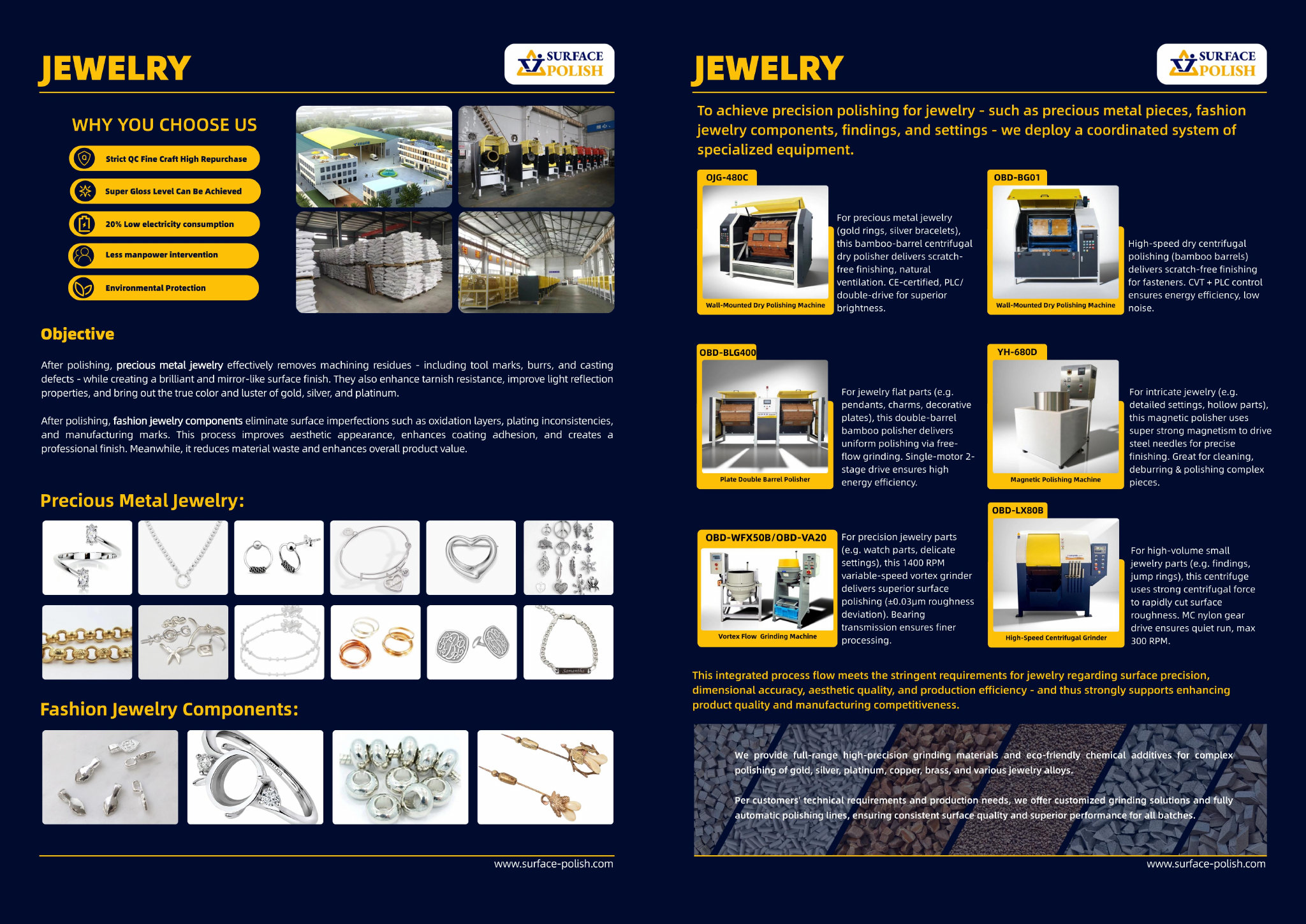
Change one variable at a time. Hold the machine, load, compound, cycle time and part mix constant and change only the medium. Use parts from the same production lot so the only difference is the variable under test. Label the pieces before they run and have the returned parts judged in one session, under the same light and at the same marked measurement points, rather than one at a time. Where several people judge appearance, ask each to rank the pieces before discussion. Where a cut stage is followed by a refinement stage, score the stages separately, because a good final result can hide an unremoved burr or an over-coarse first stage.
Yes. The offer is cross-border supply of finishing machines, media and compounds, together with a free sample trial and a scoped discussion of a finishing line concept. That means machine class, media and compound are considered as one question rather than three purchases, since a charge that suits one chamber may not suit another. The buyer keeps ownership of the part, the drawing and the acceptance criteria, and we do not verify the material, the upstream machining or the heat treatment. Bring the part family, the alloys, the size range and the features that must be protected into the discussion, along with the condition the parts arrive in.
No. SurfacePolish supplies finishing machines, media and compounds across borders and runs a free sample trial on parts shipped to the factory in Xiamen. We do not design, integrate, program or commission robotic cells or automated handling lines, and no robotic polishing cell is offered here. What can be discussed is the part itself, the features that must be protected and the finishing step, and which loose-part machine and media route is worth testing. How parts are presented, loaded, unloaded and transferred is engineering scope you define and verify, and any machine or medium suggestion remains a starting point for your evaluation in Turin.
Use Turin, Italy as the destination on the enquiry and state whether the deliverable is equipment, media and compound, a representative sample review or a line concept. A destination does not imply local stock, a local service point or a local delivery time.
The national reference for finish is UNI, the Italian standards body, which publishes the Italian editions of the EN/ISO surface-texture standards (UNI EN ISO 21920-1 and -2:2022); machinery supplied into Italy must additionally meet the EU machinery legislation, with Directive 2006/42/EC applying to machinery placed on the market before 20 January 2027 and Regulation (EU) 2023/1230 from that date.
Sources were retrieved on 2026-09-29 and describe the local industrial and trade context only. They do not evidence any SurfacePolish project, shipment, installation or service in Turin.
The buyer needs the external edges and port threads cleaned up while the bore and its lip keep the geometry the seal depends on.
Send the material, dimensions, approximate weight, batch quantity, the incoming condition and photographs of the difficult features. Mark which features must not be contacted by media and state how the result will be inspected. This form carries source reference PSEO-0420; quote it if you prefer an additional manual reference.
Open the SurfacePolish enquiry form Email a prepared enquiry
No price, lead time, certification or result is promised here. Confirm whether a sample trial is available for the specific part and what the trial can and cannot show.
Page PSEO-0420 · revised 2026-09-29 · cross-border equipment, media and scoped sample review. City context is sourced and cited above.
Use this local checker to identify missing part and inspection information. It prepares a technical-review brief; it does not approve a machine, process recipe or production result.
Complete the part details to prepare a review brief.
Email : info@surface-polish.com


 IPv6 network supported


 +86-592-2381506