


Vibratory Bowl or Tub: Selection Factors and Process Goals
This page reproduces the published tables that compare vibratory bowl and vibratory tub equipment: the selection factors for each, and the process goals with the media direction, the key machine feature and the main risk to control. These describe equipment classes, not a specific machine. No machine model, capacity, cycle time or price is stated, implied or supplied here.
Browse the published rows
Choose a section or search the published rows, then read the article text.
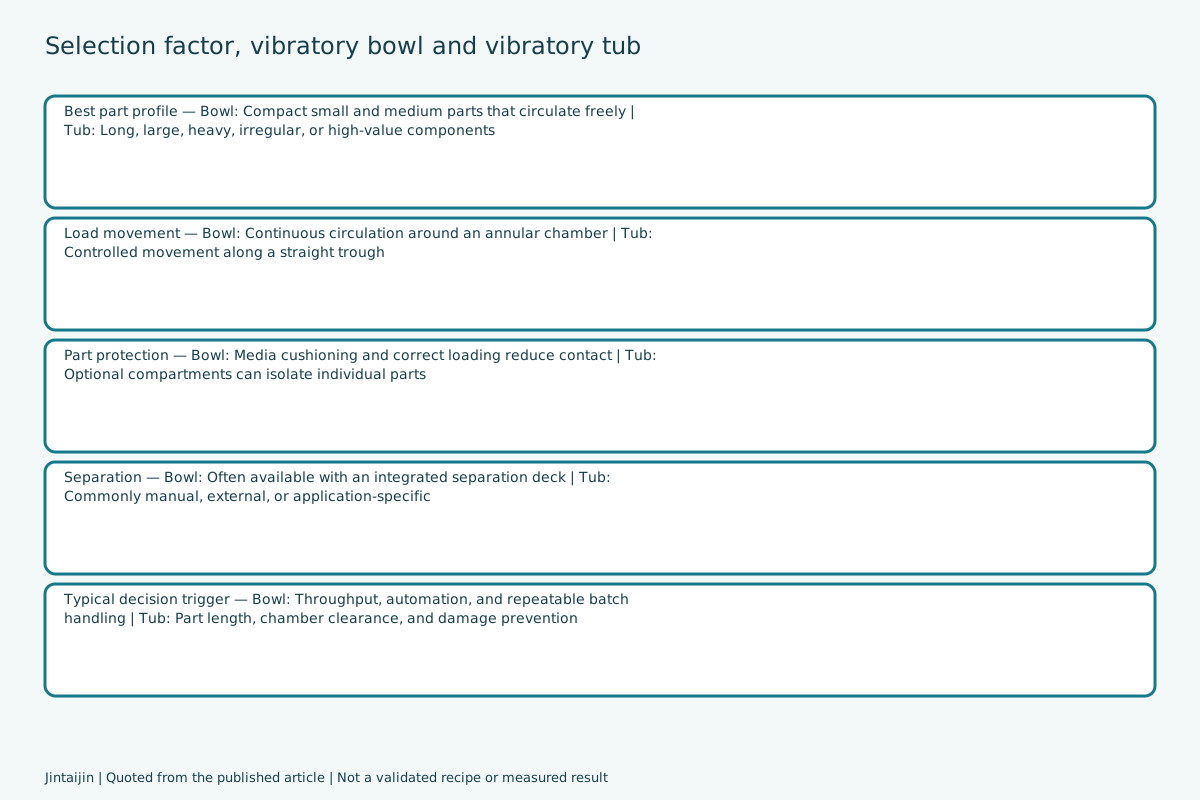
Selection factor, vibratory bowl and vibratory tub
| selection factor | vibratory bowl | vibratory tub |
|---|---|---|
| Best part profile | Compact small and medium parts that circulate freely | Long, large, heavy, irregular, or high-value components |
| Load movement | Continuous circulation around an annular chamber | Controlled movement along a straight trough |
| Part protection | Media cushioning and correct loading reduce contact | Optional compartments can isolate individual parts |
| Separation | Often available with an integrated separation deck | Commonly manual, external, or application-specific |
| Typical decision trigger | Throughput, automation, and repeatable batch handling | Part length, chamber clearance, and damage prevention |
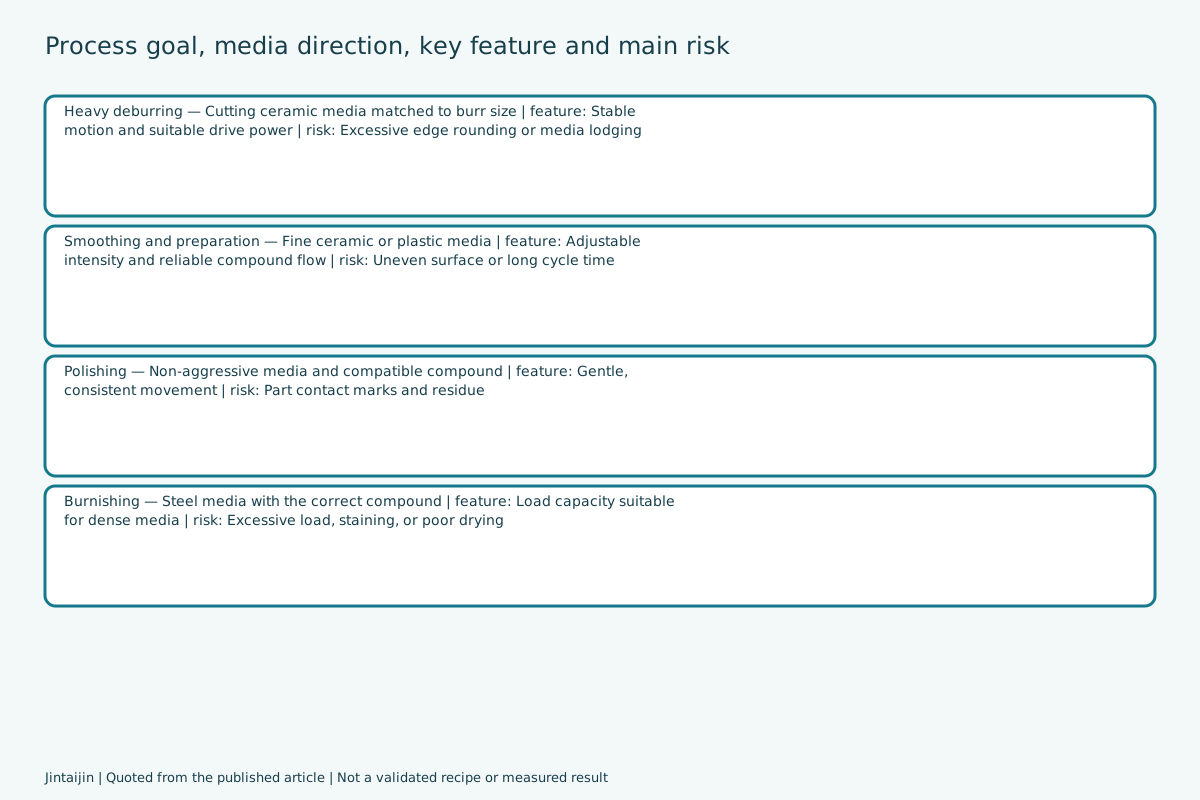
Process goal, media direction, key machine feature and main risk
| process goal | media direction | key machine feature | main risk to control |
|---|---|---|---|
| Heavy deburring | Cutting ceramic media matched to burr size | Stable motion and suitable drive power | Excessive edge rounding or media lodging |
| Smoothing and preparation | Fine ceramic or plastic media | Adjustable intensity and reliable compound flow | Uneven surface or long cycle time |
| Polishing | Non-aggressive media and compatible compound | Gentle, consistent movement | Part contact marks and residue |
| Burnishing | Steel media with the correct compound | Load capacity suitable for dense media | Excessive load, staining, or poor drying |
Source and its limits
Published reference article; captured 5 October 2026. SHA256: 838d9e267c4f5002aef18682f8c9afa04a7b304dd2216a01312dfafcee8bb681.
- Selection factors and media direction are the published article own, reproduced verbatim. They describe equipment classes, not a specific machine.
- No machine model, capacity, cycle time or price is stated, implied or supplied.
- Media direction is a starting direction to test on a sample, not a validated recipe.
Table headers as published
- Selection Factor / Vibratory Bowl / Vibratory Tub
- Process Goal / Media Direction / Key Machine Feature / Main Risk to Control
Frequently asked questions
Does this give me a recipe or a machine for my part?
No. These are the published article own rows reproduced verbatim. They describe process or equipment classes, not a specific machine, and they are not a validated production recipe.
Which column is Process A and which is Process B?
The published table does not define those labels inside the table, and this page does not assign them to a named process. See the label disclosure section, which quotes the surrounding article text verbatim.
Does it state cycle time, capacity or price?
Only the cycle-time range the article itself publishes, reproduced verbatim. No machine model, capacity, load ratio or price is stated, implied or supplied.
Are the tables quoted exactly?
Yes. Every cell is taken from a single source table cell and verified against the captured page, including wording, units, ranges and punctuation.
Can I apply this to my part?
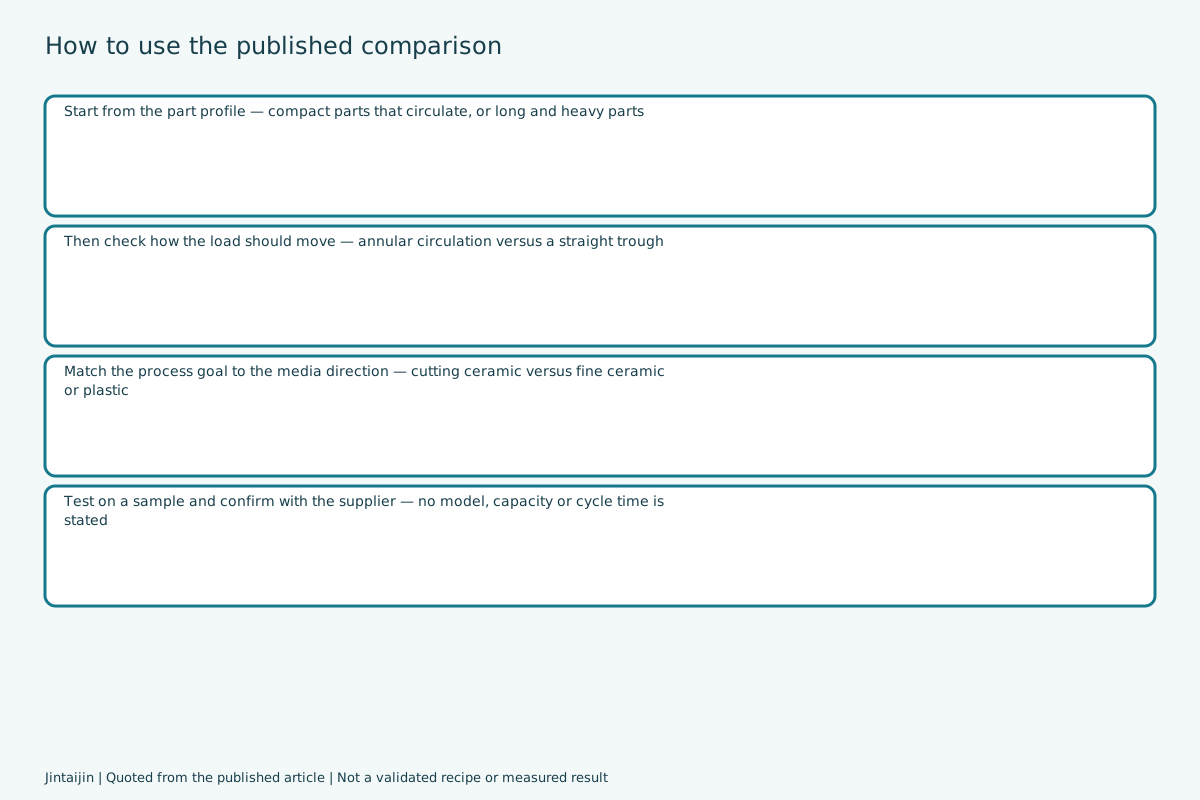
Confirm on a sample and with the supplier. Part material, geometry, batch size and acceptance criteria all affect the choice.
 +86-592-2381506

 IPv6 network supported