


Walnut Shell Tumbling for Wood Parts: Starting Condition, Role and Risk
This page reproduces the reference tables published for walnut shell tumbling of wood parts: the starting condition with the role walnut shell tumbling plays and the main risk to validate, and the symptoms with what to check first and the adjustment to test. Media role and adjustments are the article's own direction reproduced verbatim. Wood parts vary in species, grain, moisture and coating, so confirm any of this on a sample and with the supplier.
Browse the published rows
Choose a section or search the published rows, then read the article text.
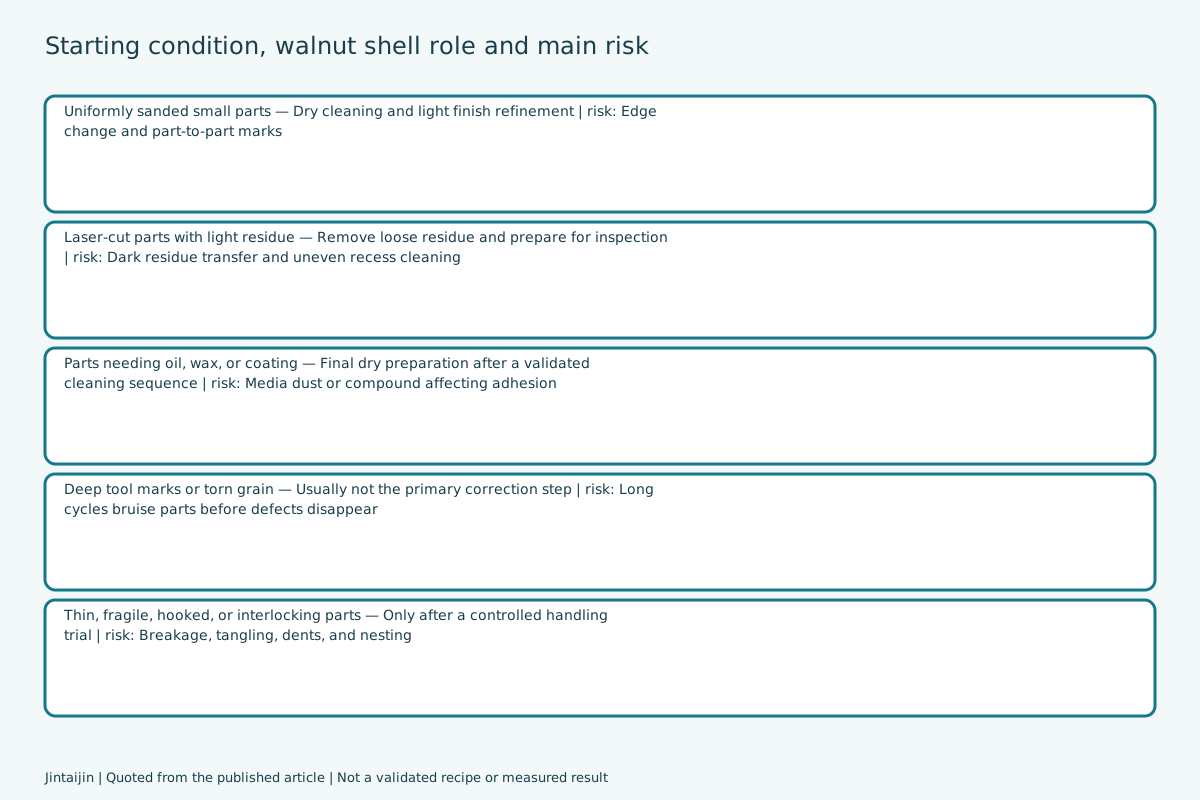
Starting condition, walnut shell role and main risk
| starting condition | walnut shell tumbling role | main risk to validate |
|---|---|---|
| Uniformly sanded small parts | Dry cleaning and light finish refinement | Edge change and part-to-part marks |
| Laser-cut parts with light residue | Remove loose residue and prepare for inspection | Dark residue transfer and uneven recess cleaning |
| Parts needing oil, wax, or coating | Final dry preparation after a validated cleaning sequence | Media dust or compound affecting adhesion |
| Deep tool marks or torn grain | Usually not the primary correction step | Long cycles bruise parts before defects disappear |
| Thin, fragile, hooked, or interlocking parts | Only after a controlled handling trial | Breakage, tangling, dents, and nesting |
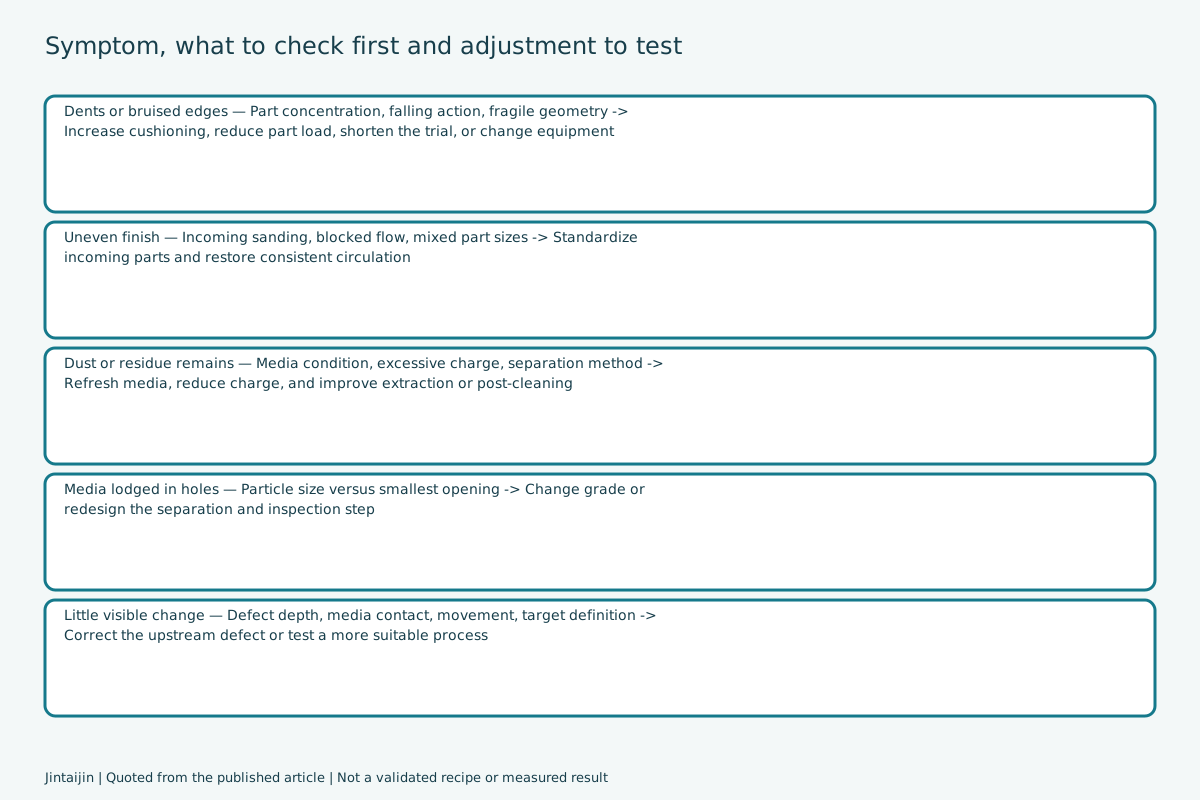
Symptom, what to check first and adjustment to test
| symptom | what to check first | possible adjustment to test |
|---|---|---|
| Dents or bruised edges | Part concentration, falling action, fragile geometry | Increase cushioning, reduce part load, shorten the trial, or change equipment |
| Uneven finish | Incoming sanding, blocked flow, mixed part sizes | Standardize incoming parts and restore consistent circulation |
| Dust or residue remains | Media condition, excessive charge, separation method | Refresh media, reduce charge, and improve extraction or post-cleaning |
| Media lodged in holes | Particle size versus smallest opening | Change grade or redesign the separation and inspection step |
| Little visible change | Defect depth, media contact, movement, target definition | Correct the upstream defect or test a more suitable process |
Source and its limits
Published reference article; captured 5 October 2026. SHA256: 4f3a410fff33cb1571afd5221ac2a597f2b4d4a7d388fd010163f27cc4b06186.
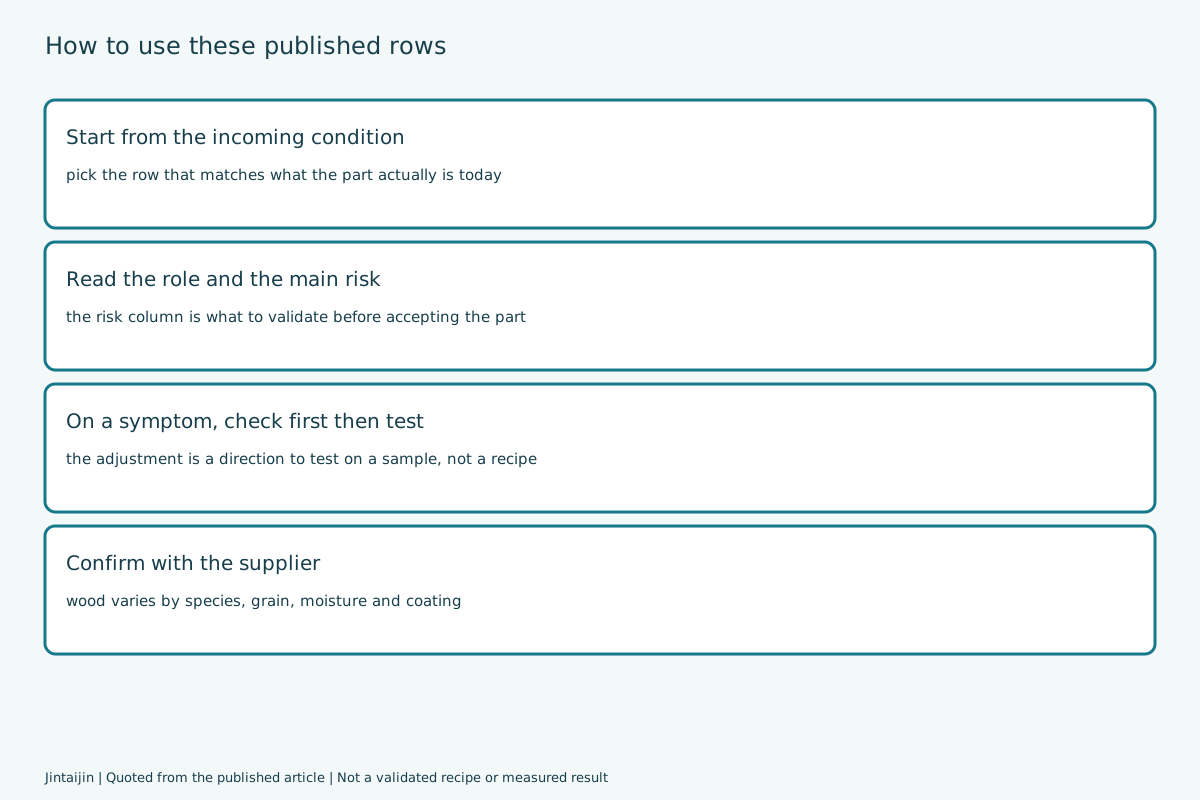
- Media role and adjustments are the published article's own direction reproduced verbatim, not a validated recipe.
- Wood parts vary in species, grain, moisture and coating. Confirm on a sample and with the supplier.
- A symptom lists what to check first and an adjustment to test, not a diagnosis.
Table headers as published
- Starting condition / Walnut shell tumbling role / Main risk to validate
- Symptom / What to check first / Possible adjustment to test
Frequently asked questions
Does this give me a recipe for my part?
No. These are the published article's rows reproduced verbatim. Media role and adjustments are a direction to confirm on a sample and with the supplier, not a validated production recipe.
Is a validation point a prediction?
No. A validation point is what to verify before accepting the part. It does not predict the outcome, and the same visible condition can have more than one cause.
Does it state cycle time, speed or temperature?
No. No cycle time, speed, amplitude, load ratio, concentration, temperature or removal result is stated or implied anywhere on this page or in its download.
Are the tables quoted exactly?
Yes. Every cell is taken from a single source table cell and verified against the captured page, including wording, units and punctuation.
Can I apply this to a different material?
These rows describe the material the article covers. Parts vary in species, grain, moisture, coating, thickness, burr height and flatness, so confirm every value for your own part.
 +86-592-2381506

 IPv6 network supported