
Perspex Polishing Compound: Clarity Is the Requirement, and a Residue Is a Defect
Perspex — acrylic, PMMA, or 有机玻璃 depending on where you buy it — is the material where the compound is judged by a different criterion from any metal.
On metal, the compound helps the abrasive and then rinses off. A slight residue is a cosmetic nuisance that a wipe removes. On perspex, the residue is the defect. A transparent part is checked by looking through it, so anything left on the surface, in a scratch, or in a micro-crack reads as a fault — and a compound that does not clear completely has failed the job even if the surface profile measures correctly.
That inversion is the whole subject of this page.
Why transparency changes every decision
Four consequences follow from the part being see-through:
1. The acceptance criterion is clarity, not roughness. A roughness figure describes the surface texture; it does not describe whether the part transmits light evenly. A part can hit a roughness target and still be hazy, and a hazy part is scrap. The judge is a visual comparison against a boundary sample, under a defined light.
2. A residue is a defect, not a smudge. Any compound left in a scratch, a tool mark or a micro-crack shows as a bright or cloudy line. This is why the rinse is part of the compound decision on perspex and a nuisance on steel.
3. Heat is permanent. Perspex softens and stress-crazes at temperatures well below what a metal part tolerates. A compound run hot — or a cycle that generates heat through friction — does not just mark the part, it changes the material. That damage cannot be polished out, because the material at that point is no longer the same material.
4. A scratch cannot be filled. Polishing removes material; it does not fill. On a transparent part a scratch that is deeper than the polishing stage can reach stays visible, because there is nothing behind it to hide the line.
The order that follows: stop generating heat → do not create new scratches → remove only what has to be removed → rinse completely. The compound serves all four, and it fails the job if it serves only the third.
What a perspex compound has to do
| Requirement | What goes wrong if it is missed |
|---|---|
| Lubricate enough to stop the charge generating heat | Stress-crazing, whitening, or distortion that cannot be reversed |
| Cut gently and progressively | A deep scratch that the next stage cannot reach; a frosted surface |
| Rinse completely, leaving nothing in a scratch | A cloudy line or a bloom that appears after drying |
| Not attack the polymer | Etching, a white haze, or a change in the surface chemistry |
| Come off a transparent part in one pass | A residue that has to be wiped — and wiping a soft surface adds scratches |
The fourth row is the one that is specific to plastics. A compound formulated for metal is often too alkaline or too aggressive for PMMA, and the failure is a haze rather than a scratch. It looks like a polishing problem and it is a chemistry problem.
Wet or dry — the decision that comes first
On perspex the wet-or-dry question is not a preference; it decides what the compound has to be.
Dry processes (walnut shell, corn cob, or a dry plastic body) avoid the rinse problem entirely — there is no water to trap residue in a scratch, and the risk of a bloom is much lower. They are the usual choice for a final polish on a transparent part.
Wet processes cut faster and reach into features better, but they leave water and compound in exactly the places a transparent part shows it. A wet process on perspex needs a rinse and a dry that are designed for a transparent part, not inherited from the metal line.
The cycle bands tell you which stage you are in. On the loose-media side, a light edge or deburr stage runs about 10 to 20 minutes while a brightening stage runs 2 to 8 hours — and on a transparent part the long wet brightening cycle is exactly the one that risks a bloom. That is the practical argument for putting the final stage on a dry process, where there is no water to carry the residue in.
The practical rule: if the part has a scratch or a feature that will hold liquid, prefer dry for the final stage; if it needs material removed, a wet cut followed by a dry final stage is the usual sequence.
What a residue actually looks like — and why it is hard to find
Three failure appearances, and they are different problems:
| What you see | What it usually is |
|---|---|
| A uniform milky haze over the whole part | Compound chemistry attacking the polymer, or a charge too coarse for PMMA |
| A cloudy bloom that appears after drying | Residue left in a scratch or a micro-crack, drying into the surface |
| Bright streaks or lines | A scratch that the compound has filled with residue — it will reappear |
| Localised white crazing | Heat: stress-crazing from a cycle that ran too hot or too dry |
All four look similar at a glance and have different causes. That is why the first diagnostic on a hazy perspex part is not "change the compound" but "which of these four is it" — and the second is "was the part wet or dry at the end".
Where this compound will not help
The part is crazed from heat. Once the material has stress-crazed, no compound restores it. The fix is upstream: lower energy, shorter cycle, better lubrication, or a different process.
The part has a scratch deeper than the polishing stage can reach. A transparent part cannot hide a scratch behind surface texture. If the scratch is deeper than the material the stage removes, the part has to go back to a coarser stage — or be rejected.
The part is a different plastic. Perspex, polycarbonate, polystyrene and acetate behave differently in the same compound. Polycarbonate in particular is more sensitive to some chemistries and to stress. A compound specified for one is not automatically right for another.
The part is assembled or has an insert. A wet process and a rinse on an assembly traps liquid at the joint, and the residue appears in the one place it cannot be wiped.
The requirement is a matte or textured finish. A polishing compound produces clarity. A deliberate matte surface is a different specification and a different consumable.
The products we actually supply
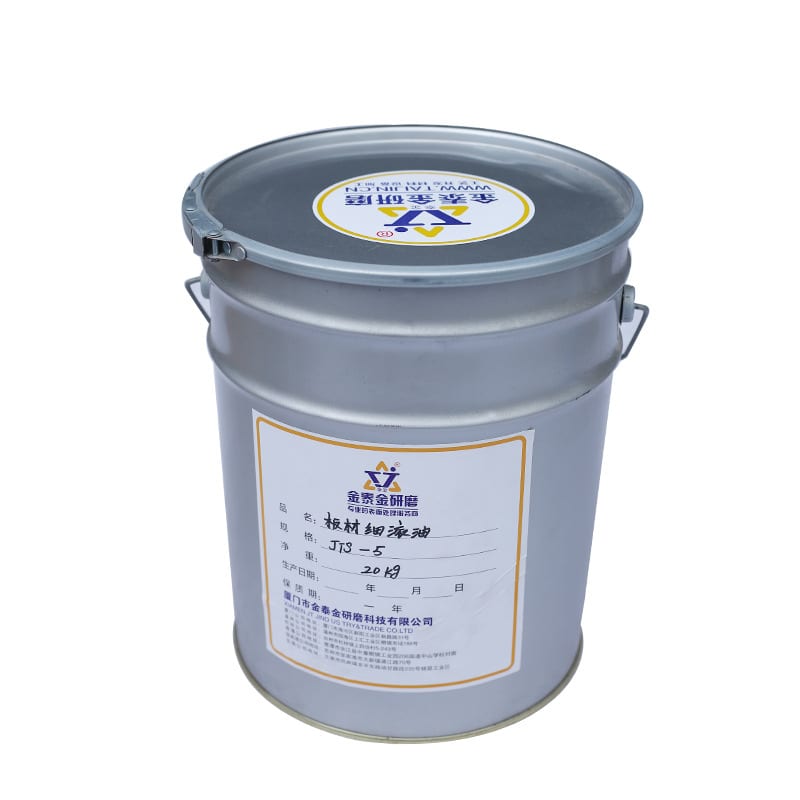
We manufacture compounds and fluids for transparent plastics and supply them at a working scale — the acetate fluid in our range ships in 20 kg barrels, which is the unit for a shop running a machine rather than a lab running a sample.
What we do not publish is a formulation. The pH, the concentration and the additive package are set by the polymer and by the process, and we specify them against a part and a sample rather than quoting a universal number. A supplier who gives you a perspex compound "grade" without asking which polymer and which process has given you a number rather than a specification.
The specification question that matters: which polymer, wet or dry, and what surface the part has to be at the end. Those three answers decide the product, and they are the three questions a quotation should start with.
What to send with an enquiry
- The polymer by name — perspex (PMMA), polycarbonate, polystyrene or acetate. They are not interchangeable.
- Wet or dry, and which machine family, because the compound is specified for the process rather than for the material alone.
- The defect being removed: a haze, a scratch, an edge burr, or a tool mark. Each one sets a different cut.
- The clarity target, and how it is judged — a boundary sample under a defined light is worth more than a roughness number.
- The features that will hold liquid: engraved detail, a bore, an assembly joint. On those, the rinse problem is the deciding factor.
- The media size if a loose charge is used. Media should never be larger than about one third of the smallest feature; on a frame with a thin rim and a small screw hole that rule usually points at the finer end of the ceramic band, roughly 3 to 10 mm, or at a plastic body in the 10 to 25 mm range.
- The site, if a machine is involved: three-phase 380 V or 415 V at 50 Hz, the 75 to 85 dB(A) at one metre band, and a standard configuration shipping in 25 to 35 days from the deposit.
- What happens after — printing, coating, assembly, or packing. A residue that is invisible now can bloom under a coating.
FAQ
What is perspex, and is it the same as acrylic? Yes. Perspex is a trade name for acrylic (PMMA); the same material is sold as acrylic, plexiglass and 有机玻璃. It is a different polymer from polycarbonate, polystyrene and acetate, and the compound has to be specified for the one you actually run.
Why does my perspex part come out hazy? Four possible causes, and they need separating before changing anything: compound chemistry attacking the polymer (uniform haze), residue in a scratch drying into the surface (bloom after drying), a charge too coarse for PMMA (frosting), or heat (localised crazing). Only the chemistry and the cut are compound decisions.
Can I use a metal polishing compound on perspex? Not safely. A compound formulated for metal is often too alkaline or too aggressive for acrylic, and the failure is a white haze rather than a scratch. It reads as a polishing problem and is a chemistry problem.
Wet or dry for perspex? Dry avoids the residue problem entirely, so it is the usual choice for a final polish on a transparent part. Wet cuts faster and reaches features better, but needs a rinse and a dry designed for a transparent part. A common sequence is a wet cut followed by a dry final stage.
Does the compound protect against scratching? No. It lubricates, cuts and rinses. A scratch after polishing is either a scratch that was not removed or one created in handling — and on a soft transparent part the handling is where most of them happen.
What pack size does the compound come in? The acetate fluid in our range ships in 20 kg barrels. The pack size is a working unit rather than a minimum; the specification is set against your part and sample.
Max Xu, Sales — Xiamen Jin Tai Jin Grinding Technology Co.,Ltd.
No. 31, Xinchang Road, Xinyang Industrial Zone, Haicang District, Xiamen
info@surface-polish.com
This article describes how a compound for transparent plastics is specified; it is not a claim about any specific part's achievable result and we do not publish formulations. A finishing process is set by the material, the stock to be removed and the finish required, so the compound for a specific part is confirmed against a trial on that part. We manufacture finishing equipment and the media and compounds that run in it; we do not offer a job-shop finishing service.
 +86-592-2381506


 IPv6 network supported
