
Aluminium and Steel Polishing Compound: The Chemistry Runs in Opposite Directions
A shop that runs both aluminium and steel is a shop where one drum of compound gets used for both, and where the results are inconsistent in a way nobody can explain.
The reason is that the two metals want opposite things from the chemistry. Aluminium is amphoteric — it reacts with both acids and alkalis — so the pH band that protects steel is the band that attacks aluminium. And the additive package that keeps steel from rusting between stages is not the package that keeps aluminium from going black.
This is not a matter of grade or concentration. It is the one place where a "universal" metal compound is a contradiction, and it is why a compound range is specified by metal rather than by cut.
The conflict, in one table
| Aluminium | Steel (carbon / alloy) | |
|---|---|---|
| The metal's weakness | Amphoteric — attacked by strong alkali; smears rather than chips | Corrodes within hours of being wet and exposed |
| What the bath must avoid | A high pH band; heat; aggressive chemistry | Nothing specific — steel tolerates a wide band |
| What the bath must provide | A gentle cut, swarf kept in suspension, no residue that oxidises | A corrosion package for the interval to the next step |
| The characteristic failure | Blackening, blotching, a smeared grey surface | Flash rust in blind holes and on cut edges |
| What a buyer sees first | A colour change during the cycle | Rust the next morning |
Read the second and third rows together: the requirement that makes a compound good for steel — an alkaline bath with corrosion control — is precisely the requirement that makes it wrong for aluminium. That is the conflict, and no concentration adjustment resolves it.
What each metal actually needs
Aluminium
Three requirements, and the first one is a limit rather than a benefit:
1. The pH has to stay inside the aluminium-safe band. Outside it, the bath etches the metal rather than the oxide on it. The visible result is a darkened or blotchy surface that polishing cannot lift, because the metal has been chemically attacked.
2. The swarf has to stay in suspension. Aluminium smears rather than chips, so the smeared layer traps compound and metal fines. A bath that does not clear lets that mixture re-polish the surface back dull — the aluminium version of the grey haze that plagues stainless.
3. Nothing may be left behind that traps water. Aluminium holds water in blind features, thread roots and rolled edges, and a residue there oxidises. This is a rinse-and-dry requirement as much as a compound one.
Steel
Two requirements, and the second one is what makes steel easy:
1. The compound has to cut, and steel is forgiving about how. Steel takes a coarse cut without distorting, so the grade is chosen on throughput rather than on risk — the opposite of aluminium, where the grade is chosen on what the metal will tolerate.
2. The compound has to leave the part able to survive the interval to the next operation. A freshly finished steel part has no oxide layer and is wet. It starts to corrode within hours, first in blind holes, thread roots, the gap under a washer face and cut edges. That is a corrosion-package requirement, and it is the one thing a steel compound has that an aluminium compound does not.
The failure that follows: a steel part run in an aluminium compound comes out looking correct and rusts overnight. It reads as a drying problem; it is a compound-selection problem.
The form question: solid bar or liquid
There is a second axis a buyer meets on these two keywords, and it is a different question from the chemistry.
| Form | What it is | Where it fits |
|---|---|---|
| Solid bar / wax (buffing compound) | A bar of abrasive and binder, applied to a cloth wheel | Contact work — bench polishing, a defined face, one part at a time |
| Liquid (polishing fluid / compound) | A fluid metered into a wet mass-finishing process | Batch work — the charge, the bowl, the barrel |
The two are not interchangeable, and the reason is mechanical rather than chemical: a solid bar is designed to be picked up by a spinning wheel and carried to a contact point, while a liquid is designed to be dispersed through a charge so it reaches every part in the batch.
What we publish is the liquid side of the range — compounds and fluids metered into a machine. We do not publish a solid buffing bar, and a shop that needs a bar for bench or wheel work is buying a different product from a different supplier.
That distinction matters on the steel buffing compound keyword specifically: a buyer searching it may want either form, and the answer depends on whether their process is a wheel or a machine.
What our range actually covers, by metal
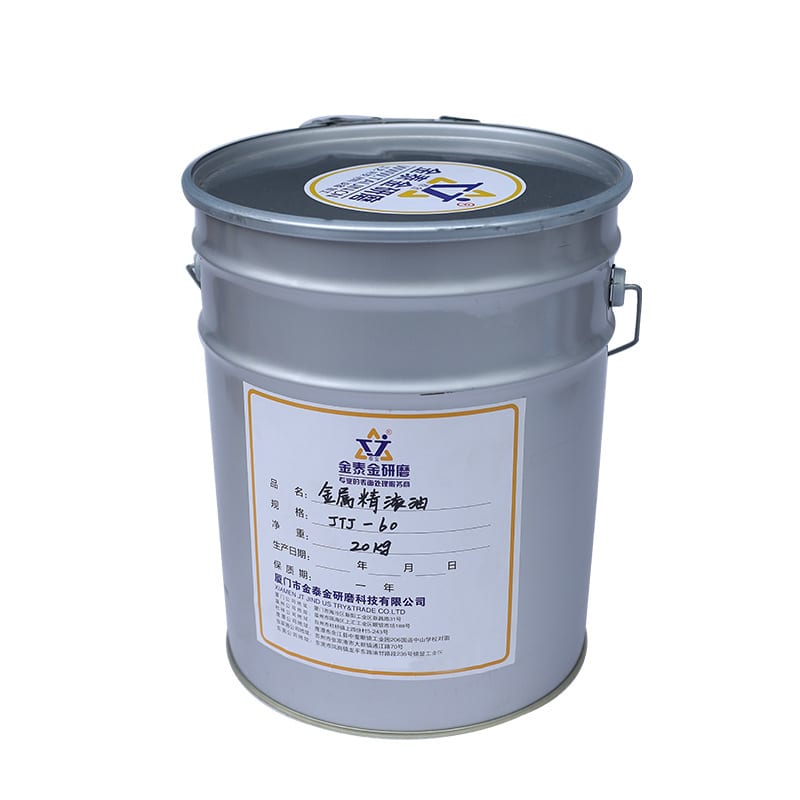
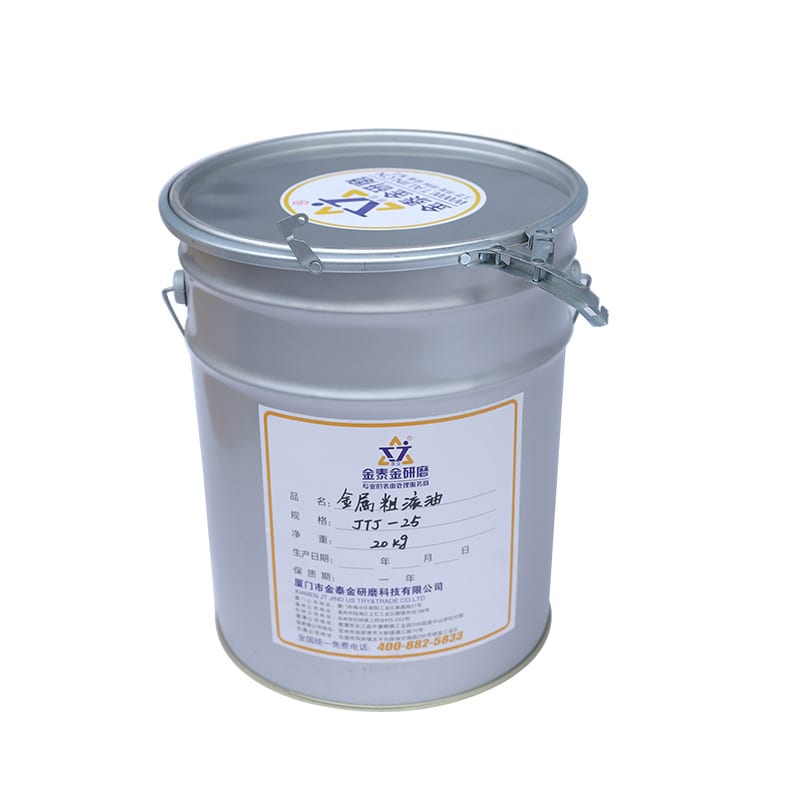
We manufacture the compounds and fluids that run in our machines, and the range is specified by metal rather than offered as a universal product. The categories, with the pack sizes they ship in:
| Category | What it is for | Pack |
|---|---|---|
| Polishing fluid for stainless steel | stainless cut and brighten | 20 kg barrel |
| Polishing fluid for stainless | the same family, second SKU | 20 kg barrel |
| Polishing fluid for metal | general metal work | 20 kg barrel |
| Polishing fluid for metal, essential oil | general metal, lubricity variant | 20 kg barrel |
| Aluminium polishing compound, green liquid | aluminium cut | 20 kg barrel |
| Aluminium grinding compound, green liquid | heavier aluminium cut | 20 kg barrel |
| Abrasive solution | cutting-stage chemistry | 50 kg drum |
| Abrasive polishing brightener | brightening stage | 50 kg drum |
| Degreasing and anti-rust powder | cleaning and the corrosion interval | 50 kg drum |
| Electrolytic polishing agent (stainless) | electrolytic route | 50 kg drum |
| Polishing fluid for acetate | transparent plastics | 20 kg barrel |
The read of that table: the range has separate SKUs for stainless, aluminium and general metal, which is the practical answer to the conflict at the top of this page. It is not one product with three labels — the aluminium SKUs are a different formulation from the stainless ones, and that is why both exist.
What we do not publish is a formulation. The pH, the concentration and the additive package are set by the metal and the process, and they are confirmed against your part and sample. A supplier who quotes a "universal metal compound" is quoting a compromise that will fail one of the two metals.
Where a shared compound will not help
A shop running both metals on one line. A compound that suits one attacks or fails the other. Change the compound and the charge between materials, and write the rule down — the change is the step that gets skipped on a busy shift.
A part that is plated after finishing. The mechanical finish sets the base colour the coating is built on. Two batches polished to slightly different base colours plate to visibly different appearances, and the plated difference is not the plater's fault.
A steel part that has to sit before the next operation. Without a corrosion package, the part rusts regardless of how well it was polished. This is a compound choice, and extending the cycle makes it worse because the part stays wet longer.
An aluminium part run in a compound inherited from steel. The damage is chemical and happens during the cycle. No amount of subsequent polishing reverses it.
A bench buffing job. A liquid compound is designed for a charge, not for a wheel. If the process is contact work, the product is a bar — which is a different purchase.
What to send with an enquiry
- The metal, by name — and if the shop runs both, say so, because that decides whether the compound can be shared at all.
- The alloy on aluminium (a casting alloy and a wrought 6061 behave differently in the same bath) and the condition on steel (hardened or soft).
- The process: wet machine, and which family; or contact work, in which case the product form changes.
- The stage the compound is for — cutting, brightening, cleaning, or the corrosion interval between stages.
- What happens after — plating, anodising, assembly, or a wait. On steel the interval itself is a specification.
- The pack scale and the lead time: the fluids ship in 20 kg barrels, the drums in 50 kg, and a standard machine in 25 to 35 days from the deposit with built-to-order at 45 to 60 days.
- The existing problem, if there is one — what the part looks like now and at which stage it changed.
FAQ
Can one compound be used for both aluminium and steel? Not without compromising one of them. Aluminium is amphoteric and is attacked by the alkaline band that steel tolerates; steel needs a corrosion package that aluminium does not. A "universal" metal compound is a compromise, and the failure shows on whichever metal it was not formulated for.
Why does my aluminium go black during polishing? Almost always chemistry rather than mechanics — a bath outside the aluminium-safe pH band, or a compound that attacks the metal instead of the oxide. The test is to run a scrap part of the same alloy in the suspect bath and watch it for about 15 minutes; a colour shift identifies the chemistry.
Why does my steel rust the next day? The compound lacks a corrosion package, or the drying step is missing, or both. A freshly finished steel part has no oxide layer and is wet, and it corrodes within hours in exactly the places water sits. Extending the cycle makes it worse, because the part stays wet longer.
What is the difference between a buffing compound and a polishing fluid? Form, and therefore process. A buffing compound is a solid bar picked up by a cloth wheel for contact work; a polishing fluid is metered into a wet charge for batch work. We publish the fluid side of the range.
Do you have separate compounds for stainless, aluminium and steel? Yes. The range has separate SKUs for stainless steel, for aluminium and for general metal, in 20 kg barrels and 50 kg drums. The separation exists because the chemistry differs, not for cataloguing convenience.
Is the compound concentration the same for both metals? No — but concentration is the second question. The pH band and the additive package come first, and they differ by metal before any concentration is set. Adjusting the dose on a compound formulated for the other metal does not fix the incompatibility.
Max Xu, Sales — Xiamen Jin Tai Jin Grinding Technology Co.,Ltd.
No. 31, Xinchang Road, Xinyang Industrial Zone, Haicang District, Xiamen
info@surface-polish.com
This article describes how a compound is specified by metal; it is not a claim about any specific part's achievable result and we do not publish formulations. A finishing process is set by the material, the stock to be removed and the finish required, so the compound for a specific part is confirmed against a trial on that part. We manufacture finishing equipment and the media and compounds that run in it; we do not offer a job-shop finishing service.
 +86-592-2381506


 IPv6 network supported
