


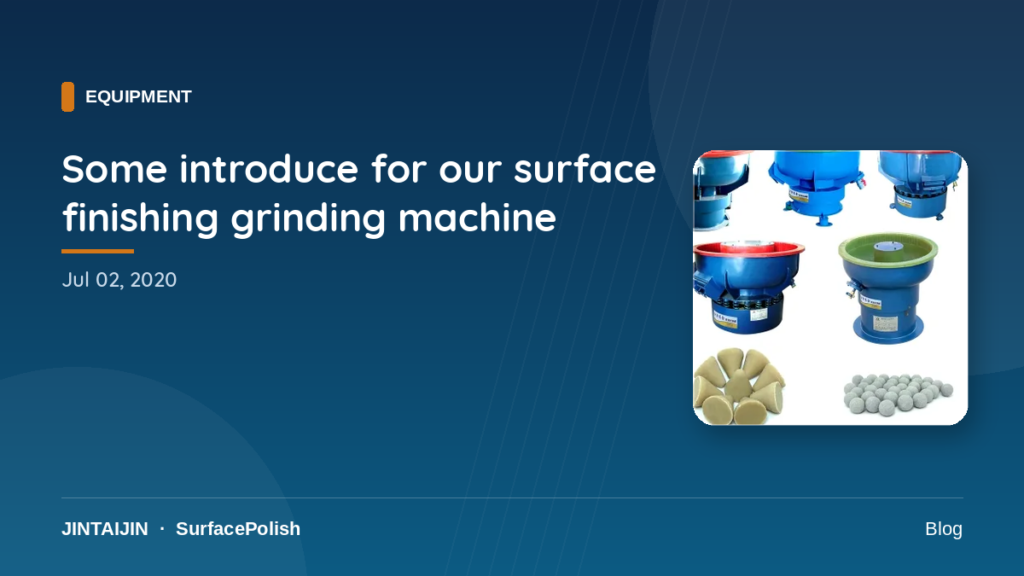
The legacy blog entry repeats a short generic introduction and does not help a buyer decide what to do with a real workpiece. This replacement keeps the page educational and starts with the problem that must be solved: deburring, smoothing, cleaning, brightening or another defined surface objective.
Define the result before choosing equipment
Record the incoming condition, the defect location, the target appearance and any protected feature. A burr, mould line, scratch, dull surface, residue or roughness problem can require a different process direction. Include the material, dimensions, weight, expected quantity and the inspection method that will decide whether the process is acceptable.
Compare machine families
Vibratory, barrel, disc, magnetic, grinding and dry-finishing equipment each create different movement and contact conditions. Consider part-to-part contact, access to holes and recesses, nesting, separation, liquid or dust handling and the next manufacturing operation. A machine category is a screening direction, not a universal recommendation.
Choose media and compound with the machine
Media shape, size and cutting or smoothing action determine where contact occurs. Compounds can support cleaning, brightening, rust prevention or process control, but the complete machine, media, compound, loading and cycle should be evaluated as one process. Do not copy a material recipe from another part family without testing.
Use a representative trial
Mark critical parts and inspect them at fixed intervals. Record movement, surface change, edge condition, residue, separation and any dimensional or fit concern. A product photograph or a demonstration can introduce an option, but it cannot replace inspection of production-representative workpieces.
What to send for a review
- Material, drawing, dimensions and weight
- Photos of the incoming defect and target finish
- Protected edges, holes, threads or cosmetic areas
- Quantity and downstream cleaning, coating or assembly
Next step
The team can help compare a machine and media direction after the workpiece information is available. Keep the final selection tied to a documented trial and an agreed inspection result.
Discuss your workpiece
Send the workpiece information needed for a practical review.
 +86-592-2381506


 IPv6 network supported