


Selecting the Right Vibratory Finishing Machine for Mass Production
This page reproduces the published article on this subject: its section-by-section guidance and the questions it answers. The source contains no numeric specification at all: no dimension, angle, speed, pressure or capacity figure appears in it, and none is supplied or inferred here. A gauge, a drawing requirement or your own acceptance plan decides whether a part is acceptable, not this page.
Browse the published passages
Choose a section or search the published text, then read the article wording.
Start with the Part and the Required Finish
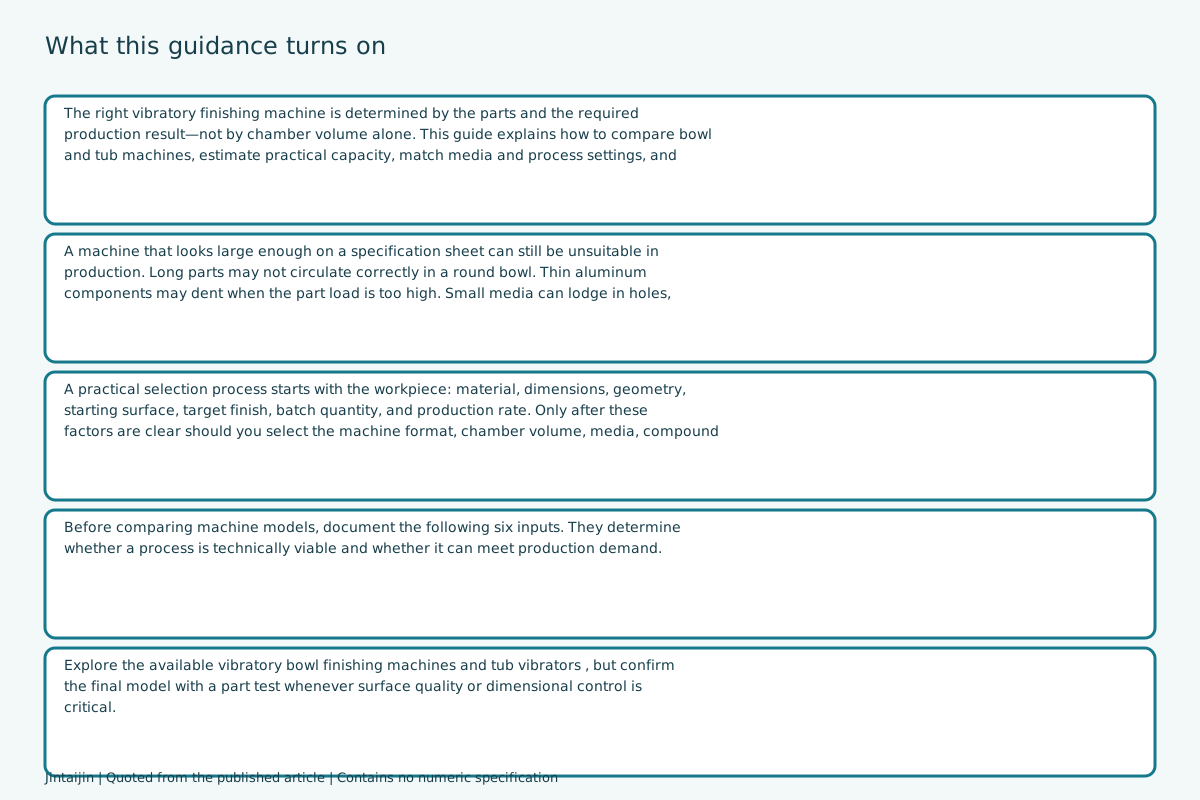
Before comparing machine models, document the following six inputs. They determine whether a process is technically viable and whether it can meet production demand.
Choose a tub when:
Explore the available vibratory bowl finishing machines and tub vibrators , but confirm the final model with a part test whenever surface quality or dimensional control is critical.
How to Estimate the Right Machine Capacity
Nominal capacity is the geometric volume of the machine chamber, usually stated in liters. It is not the same as the allowable weight of metal parts per batch. The working load also contains media, parts, water, and free space required for circulation.
Planning formula:
Estimated parts per batch = usable part volume ÷ average displaced volume per part
Use this only as a starting estimate. The safe loading level must be verified with the actual part geometry, media ratio, machine motion, and finish requirement.
A more reliable capacity calculation follows four steps:
Throughput example
If a validated process handles 120 parts per batch, requires 45 minutes of finishing, and needs another 15 minutes for loading, separation, and handling, the practical output is approximately 120 parts per hour. An eight-hour shift would have a theoretical maximum of 960 parts before allowances for breaks, media maintenance, cleaning, inspection, and changeovers. This calculation is more useful than comparing machine liters alone.
Match the Machine to the Finishing Process
For cutting and deburring, compare suitable ceramic media . For softer metals or a gentler cutting action, consider plastic media . Bright burnishing may use steel finishing media . Media shape and dimensions must be checked against every hole, slot, thread, and recess to reduce lodging.
See a Vibratory Finishing Process in Action
The video below shows the movement and operation of a vibratory polishing machine. Actual media, loading, cycle time, and machine settings should be selected for the specific workpiece.
Information to Send for an Accurate Recommendation
To shorten the selection process, send the following information with your inquiry:
Need help choosing a bowl, tub, media, and practical capacity? Send us your part photos, material, dimensions, target finish, and production quantity. Our finishing team can review the application and recommend a test direction before final machine selection.
Request a finishing process recommendation →
Choose the Machine from a Validated Process
The best machine is not simply the largest bowl or tub. It is the system that moves your parts safely, reaches the required finish, meets the accepted output per shift, and supports reliable separation and drying.
Send your parts for process evaluation →
Tags :
Magnetic Finishing Machine Guide for Deburring Small Metal Components
Why Your Parts Have Water Spots After Vibratory Finishing and How to Fix It
+86-592-2381506
Email : info@surface-polish.com
Access exclusive offers, news, and more.
click here to leave a message
Preparing secure enquiry form…
Home
Products
contact
Read our Privacy Policy
Questions the source answers
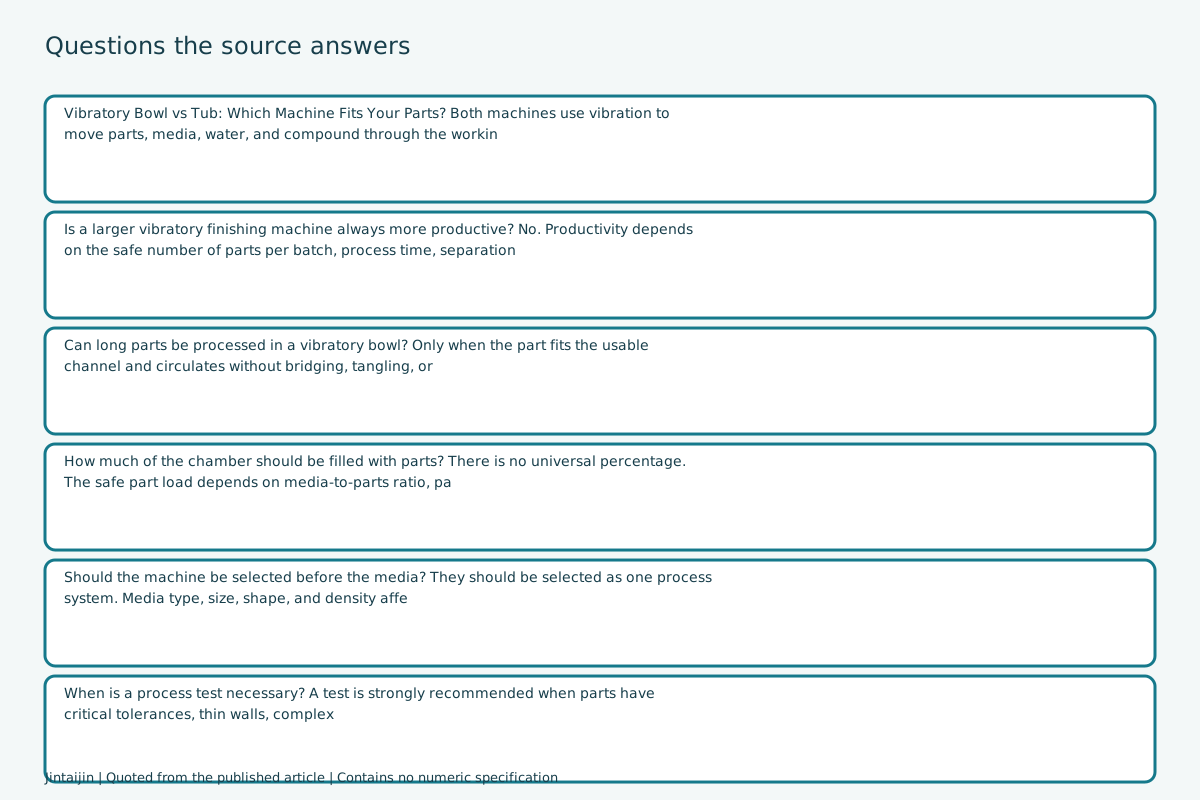
Vibratory Bowl vs Tub: Which Machine Fits Your Parts?
Both machines use vibration to move parts, media, water, and compound through the working chamber. The chamber geometry changes how the load circulates and what workpieces can be processed safely.
Is a larger vibratory finishing machine always more productive?
No. Productivity depends on the safe number of parts per batch, process time, separation, drying, and changeover. An oversized machine running an unstable load can increase media use and operating cost without improving accepted output.
Can long parts be processed in a vibratory bowl?
Only when the part fits the usable channel and circulates without bridging, tangling, or contacting other parts. Long shafts, blades, and profiles are often better evaluated in a tub vibrator.
How much of the chamber should be filled with parts?
There is no universal percentage. The safe part load depends on media-to-parts ratio, part geometry, material sensitivity, desired finish, and machine motion. Use a controlled test to define the production recipe.
Should the machine be selected before the media?
They should be selected as one process system. Media type, size, shape, and density affect cutting action, cushioning, load weight, separation, and the machine power required.
When is a process test necessary?
A test is strongly recommended when parts have critical tolerances, thin walls, complex cavities, high value, strict appearance requirements, or uncertain cycle-time targets. It converts a preliminary equipment estimate into a process-based recommendation.
Source and its limits
Published reference article; captured 7 October 2026. SHA256: e87870845d264330d8472a138d7de757995254161c16c801f8eaef5f4cc4347c. Source shape: prose guidance under section headings with a question block; no tables.
The source contains no numeric specification at all: no dimension, roughness, angle, speed, pressure or capacity figure. Nothing numeric is supplied on this page and none is inferred.
- The guidance and answers are the published article own text, reproduced verbatim. They are directions to test, not a validated recipe.
- No dimension, roughness value, angle, speed, pressure, concentration or result is stated or supplied, because the source states none.
- A gauge, a drawing requirement or your own acceptance plan decides whether a part is acceptable, not this page.
Frequently asked questions
Does the machine actually reach and finish every part in the load, not just the parts that circulate?
This page does not decide that for you. It reproduces the article own guidance. A gauge, a check on the protected feature or a drawing requirement decides whether a part is acceptable.
Does this page tell me what speed or setting to use?
No. The source article states no dimension, angle, speed, pressure or capacity figure at all, so none appears here and none is inferred.
Does it choose a machine or media for my part?
It describes the choices and trade-offs the source describes. It does not select one for your part.
Can I copy this straight into production?
No. It is a direction to test. Alloy, geometry, burr origin and your own loading all change the outcome. Confirm on a sample.
Are the passages quoted exactly?
Yes. Every passage and every answer is reproduced verbatim from the captured page and verified against it in the unit tests.
Does this page state or imply a result?
No. No cycle time, stock removal, finish value or outcome is stated or implied anywhere on this page or in its download.
What would you need from me to advise on my part?
Material, dimensions, the feature that must not change, the required finish and the production volume. That is what the source article says to send.
Is this a customer case study?
No. It reproduces a published reference article. It documents no SurfacePolish project, shipment, audit or result.
 +86-592-2381506


 IPv6 network supported