


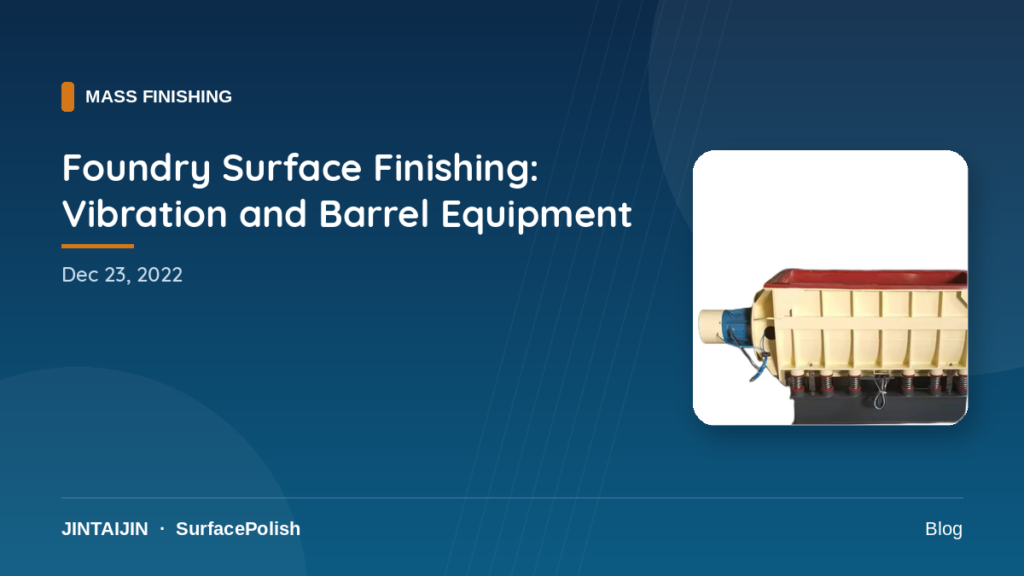
Foundry parts can arrive with flash, parting-line marks, sand or scale, sharp edges and residue. The archived record presents vibration and barrel equipment as process directions to compare around the casting geometry. The correct route still depends on access, contact, separation and the inspection result required by the part owner.

Classify the incoming casting condition
List the defects that must be addressed before choosing equipment. Separate loose residue and cleaning from burr or flash removal, edge conditioning and visual refinement. Record whether the casting has thin sections, deep pockets, threaded areas, sealing faces or cosmetic surfaces that cannot tolerate uncontrolled contact.
Match movement to geometry
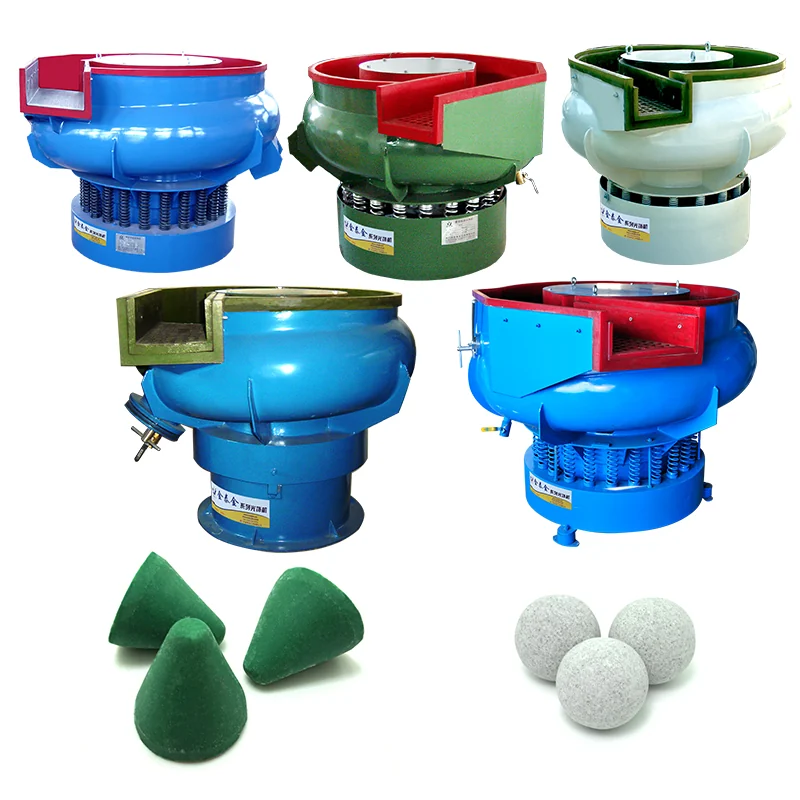
Vibratory and barrel routes create different movement and contact patterns. Check whether media can reach the target area, whether parts can nest, whether heavy sections can mark lighter sections and whether openings could trap media. Machine size, loading, media shape, compound, separation and post-process cleaning must be reviewed together.
Control dust, residue and separation
Foundry work often makes housekeeping and separation part of the acceptance criteria. Define how loose material is removed, how media is separated from the casting, which openings are inspected and how the part is cleaned before the next operation. Keep the observation record tied to the actual casting family rather than a generic foundry claim.
Use a sample test before selecting a route
Send representative castings and describe the starting condition, target finish, protected features and inspection method. Inspect at fixed intervals and record remaining flash, edge change, surface marks, trapped media, residue and variation between the first and last parts. A video or equipment photograph can show a direction to investigate; it cannot prove a production result.
Video reference
Review the footage for visible equipment, part handling, movement and inspection context only. Add model-specific or chapter-level claims after human frame review.
What to send
- Alloy or material information and casting dimensions
- Photos of flash, parting lines, pockets and protected faces
- Batch quantity and handling limits
- Target finish, cleaning requirement and acceptance method
Request a foundry-part review
Send representative workpiece details for a practical equipment and media comparison.
 +86-592-2381506


 IPv6 network supported