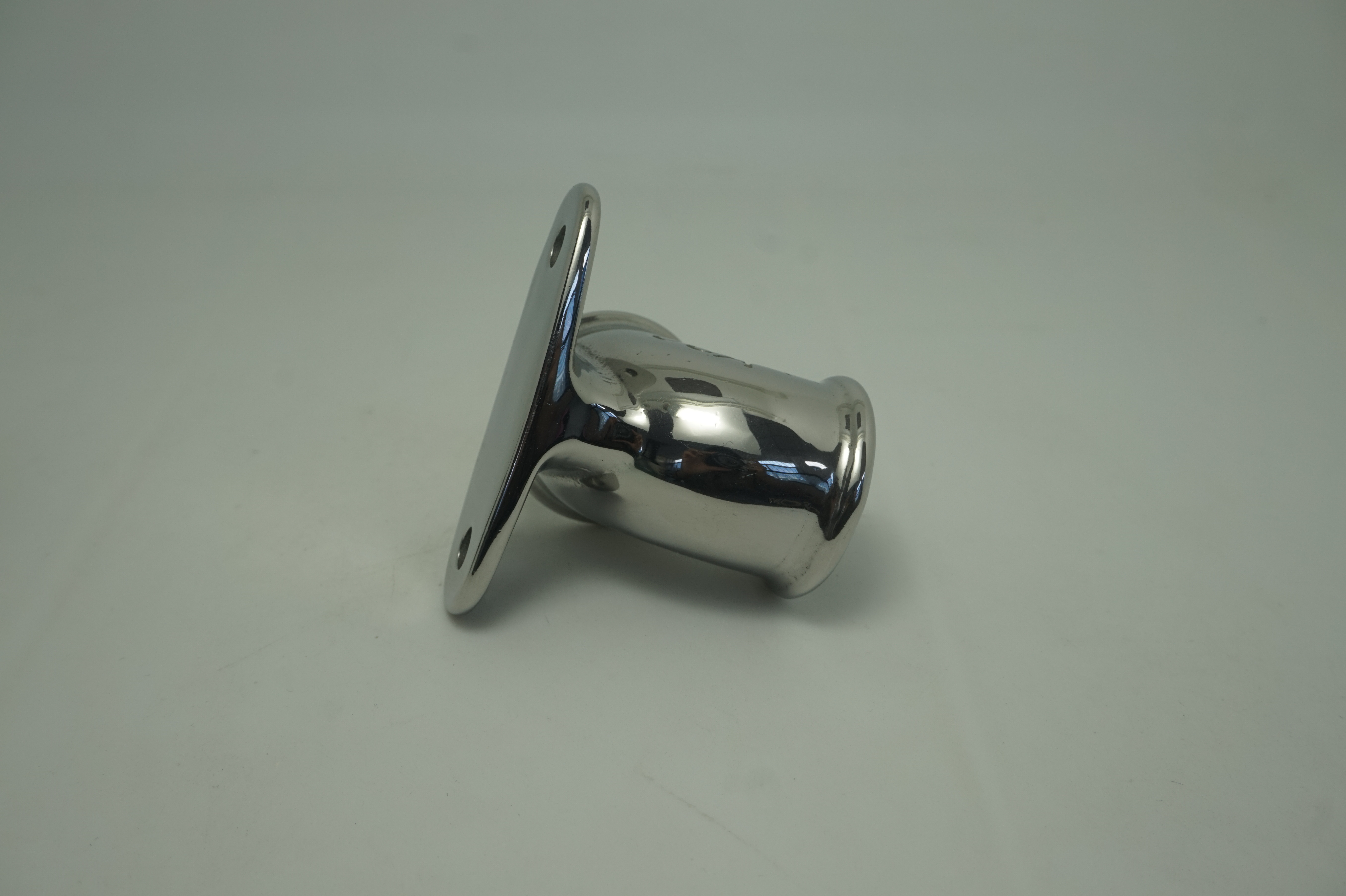
A buyer in Atlanta, United States in marine components has 3 m spools with internal root welds that no batch machine can reach. SurfacePolish supplies finishing machines, media and compounds across borders and offers a free sample trial on cut sections and production welds, which return from Xiamen with an observed condition and a proposed media, compound and cycle direction showing what an accessible surface can and cannot be finished to. This brief is written for a buyer in Atlanta working on marine components; it describes equipment, media and a scoped sample review, not a local polishing service.
Can the charge or the tool reach the surfaces that matter, and which enclosed passages and blind holes can never be reached at all?
Which acceptance criteria, measurement locations and functional checks must exist before any route, robot or otherwise, can be compared fairly?
Which features on this part are functional, such as seal faces, journals, tapers, keyways and weld toes, and which are only cosmetic?
Two 316L parts made to the same drawing can behave differently because of how they were produced. Cast material carries a skin and porosity; wrought plate has a rolling direction; duplex and super-duplex grades respond to heat input differently from austenitic grades, and a weld heat-affected zone finishes at a different rate from the parent metal. Hardfacing, weld overlay, and bronze or nickel-aluminium-bronze castings each cut in their own way. Record the grade, the product form, the heat treatment or stress relief, the welding process and the as-received condition, whether machined, plasma cut, grit blasted or still carrying mill scale and heat tint. Note who owns the pre-finish cleanliness step and what the part must be free of, because oil, marking ink and salt carry-over contaminate a charge and change how it cuts.
A robot reproduces whatever the fixture gives it. A large marine part has to locate on a repeatable datum, be clamped without forcing a thin panel out of shape, and be supported so that it neither sags nor shifts as material comes off. For tool-carrier work, adding a positioner or turntable can present several faces to the arm without re-clamping, which often reduces the reach and payload the arm itself must supply, at the cost of an extra axis with its own repeatability. Build the fixture around surfaces that are not being finished, use the datums the drawing already uses, and decide early whether clamping marks are acceptable on a visible face. A trial that cannot reproduce the production fixture will not predict production variation, however good the tool path looks.
| Machine route | Where it fits | What it will not do |
|---|---|---|
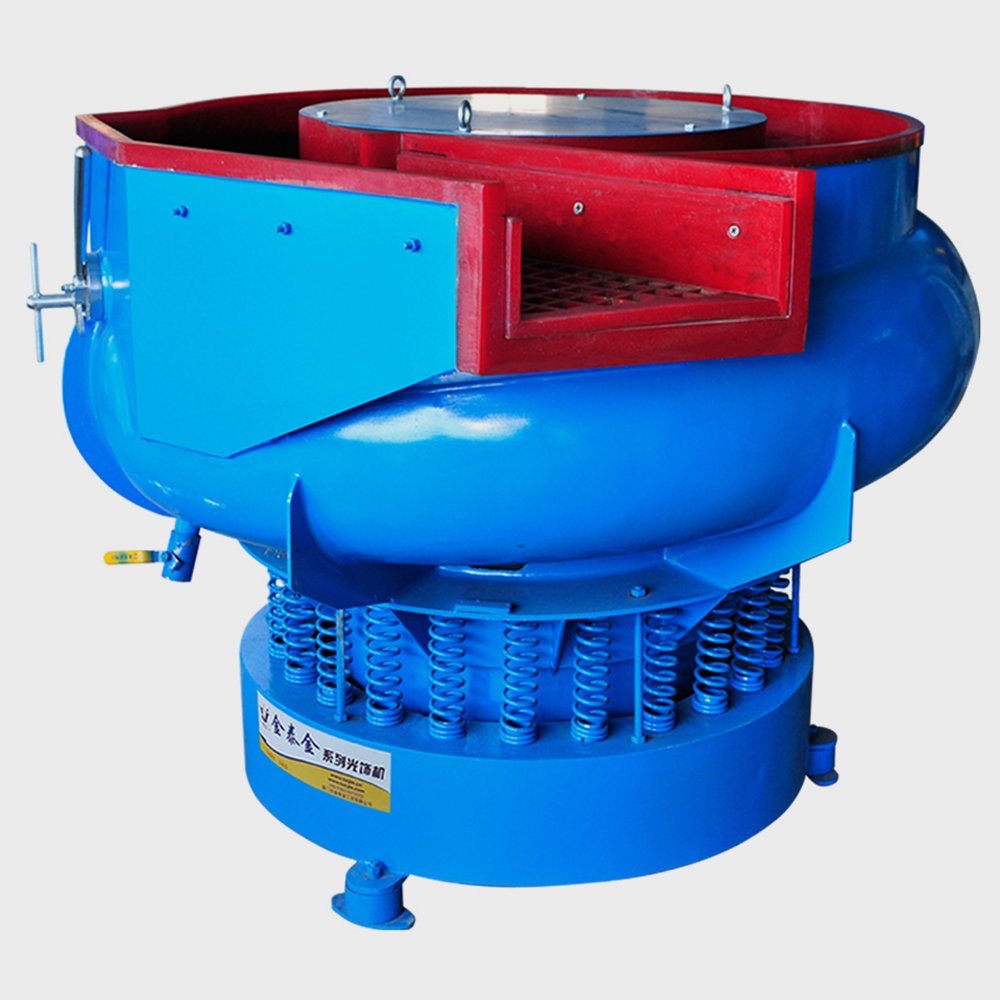
| Vibratory finishing machine (bowl) | Bulk deburring and refinement of small and medium marine fittings, cast cleats, brackets and machined valve internals that can tumble without racking | Continuous part-on-part contact and no access to internal passages; visible faces and heavy parts need separation, racking or a different route |
| Dry polishing machine and dryer | Drying parts after a wet stage and producing a dry polished surface with organic media where a wet residue would be hard to remove | No cutting action, needs dust extraction, and organic media must be kept dry and clean or it transfers contamination to the part |
| Tub vibrator | Long parts that cannot rotate in a bowl, such as rail sections, pipe spools, linear weldments and long shafts, provided they can be supported along their length | Lower energy per unit area, so heavy weld dressing takes longer, and a long tub needs floor space plus a support method that does not mark the part |
| Centrifugal barrel finishing machine | Short, aggressive cycles on small precision items such as valve trim, inserts and small stainless components with fine edge requirements | Rounds edges and can distort thin unsupported sections quickly, and results are sensitive to charge weight, speed and stop time |
Compound carries the work: it cleans the part and the media, holds fines in suspension, inhibits corrosion and controls foam. A mildly alkaline or near-neutral family is typical for ferrous work, and dose is set by measured concentration rather than by eye. On stainless and duplex marine parts the chloride content is the variable to control, because chlorides left in a pit, a crevice or a thread root can start pitting long after the part leaves the shop, and both tap water and recycled rinse water carry them. Confirm the water that will actually be used, add a rinse step that reaches the same features the finishing step reached, and dry the part rather than letting it drain and stain. Foam, residue and drag-out into a clean area are part of compound selection, not afterthoughts.
| Media | Best fit | Watch out for |
|---|---|---|
| Chloride-free mildly alkaline or near-neutral compound, liquid or powder | Cleaning, corrosion inhibition and fines suspension on stainless and duplex marine work where retained chlorides would risk pitting in service | Dose drifts with drag-out and water hardness, foam can hide the load, and rinse water must reach the same features the compound reached |
| Dry media such as walnut shell and corn cob with a dry polishing machine | Drying, light polishing and luster on parts that must leave the line dry, and on assemblies where a wet residue would be difficult to remove | Generates dust and needs extraction, cannot cut a burr, and organic media can carry moisture and contamination into a clean area |
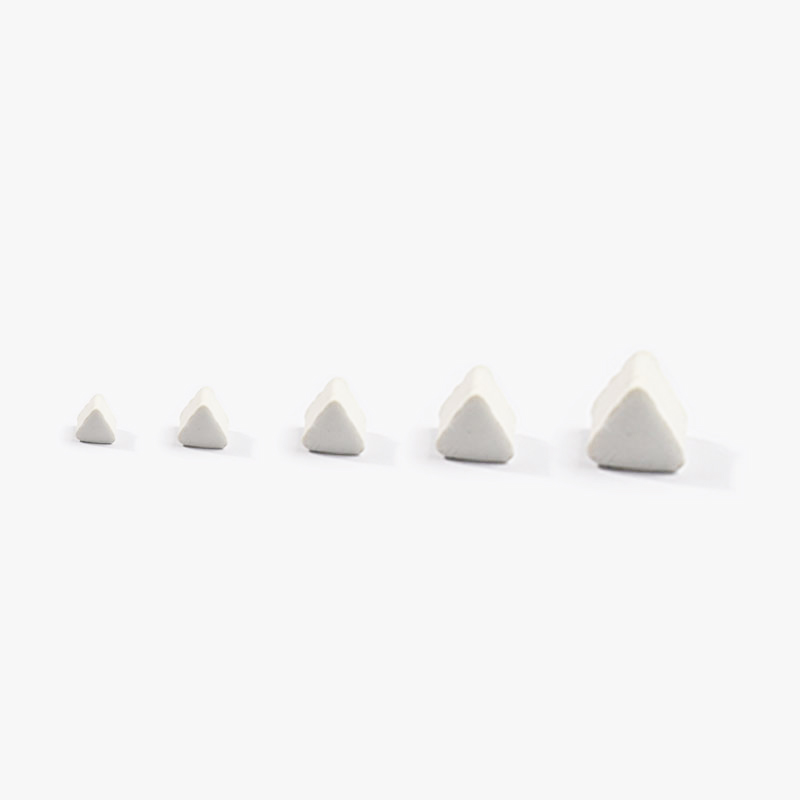
| Heavy-cut ceramic angle-cut triangles in a coarse size class | Breaking the edge of a machined or cast marine fitting and removing a substantial burr on robust stainless before a refinement stage | Cuts corners and weld toes aggressively and can round a seat or keyway, and the coarse section may not enter narrow passages at all |
| Plastic triangles, cones and pyramids in a soft to medium grade | Deburring aluminium brackets, bronze castings and cosmetic faces where marking and edge loss must stay small | Slow cut rate, media deforms as it wears, and a worn charge behaves quite differently from a fresh one |
A finished stainless or duplex part that develops brown bloom within days is usually showing contamination rather than a material fault. Sources include carbon steel media or brushes, a machine that also runs carbon steel, grinding dust settling on a wet surface, handling with bare or dirty gloves, and chloride carried in rinse water or left standing in a crevice. The staining often starts at a weld, a pit or a thread root, where the surface is already disturbed. Segregate stainless work, use dedicated or stainless tooling, keep the part wet only with controlled water, dry it promptly, and check with a wipe test or a free-iron check if the buyer wants one. Pitting from retained chlorides is a slower relative of the same problem, so the rinse step deserves the attention the finishing step gets.
| Failure mode | Likely cause | How to catch it |
|---|---|---|
| Over-grind step or gouge at a path transition or belt change | Two passes overlapping at different pressures, a fresh belt run at the setting that suited a worn one, or an operator touching up a transition by hand without recording it | Inspect each transition zone at a fixed viewing distance under consistent lighting, and compare the zone against the surrounding surface with a roughness reading on both sides |
| Weld toe, bore lip or free edge rounded past the drawing limit | Cycle too long, high-energy route or coarse dense media, a robot path that dwells at a corner, or a weld toe that was never given a maximum radius on the drawing | Measure the same edge before and after with an optical comparator, radius gauge or moulded replica, and compare against the maximum radius or minimum remaining edge specified |
| Rust bloom and tea staining appearing on a finished stainless surface within days | Free iron from carbon steel media or brushes, a machine shared with carbon steel work, airborne grinding dust on a wet surface, bare-hand handling, or chloride carried in rinse water | Wipe a defined area with a white cloth and record what it shows, run a free-iron check if the buyer wants one, and inspect welds, pits and thread roots under good light after the part has stood for a period |
| Abrasive grain embedded in a soft or gummy surface | Coated abrasive or bonded wheel used on bronze, aluminium or a work-hardened surface at excessive pressure, or a loaded belt that has stopped cutting and started smearing | Inspect under low-angle light and a magnifier, wipe with a solvent-soaked cloth, and check the part after a light refinement pass rather than only as it leaves the coarse operation |
Atlanta's industrial base combines transportation and logistics head offices with aerospace, defence and specialty metal fabrication, plus food and beverage production and a large academic medical centre. The Federal Reserve's Sixth District Beige Book, which covers Georgia, reports manufacturing activity growing at a moderate pace, with a fabricator of specialty metal products seeing particularly strong demand for aerospace and defence-related goods and a military shipbuilder expecting a decade of defence-driven demand. Hartsfield/Jackson Atlanta International tops the FAA's final CY2025 enplanement table, and CBP lists Atlanta, Georgia (port 1704) as a port of entry with its field office in the city. The Coca-Cola Company's own history page records the drink's first serving in downtown Atlanta in 1886, Norfolk Southern's corporate address is 650 W. Peachtree Street NW in Atlanta, and Emory University, based in the city, presents health and medical research as central to its mission.
For this brief the relevant part of that base is marine: The Beige Book also reports a military shipbuilder in the district expecting ongoing demand for the next decade given strength in defence spending.
Aerospace, defence and general machinery fabrication in the Atlanta region produces machined and formed metal parts whose burrs and edge condition affect fatigue life, coating adhesion and assembly fit, so edge blending and surface preparation before priming, anodising or plating are routine process steps. Fabricated sheet-metal and tube assemblies typically need weld dressing and edge radiusing, while food and beverage equipment adds a hygiene requirement: stainless product-contact parts are usually finished to a cleanable, pit-free surface with controlled roughness rather than to a decorative polish.
The first decision is whether the part is governed by an aerospace or defence special-process requirement (for example NADCAP-approved passivation, anodising or painting) or by a general industrial finish, because that sets the acceptable media, compound chemistry and documentation package. Confirming the inspection method for edge radius, Ra and burr limits before any media trial avoids qualifying a finish against the wrong criterion.
Freight context: Hartsfield/Jackson Atlanta International Airport (ATL), Atlanta, Georgia (CBP port of entry 1704 with the Atlanta field office), Norfolk Southern rail network, corporate headquarters at 650 W. Peachtree Street NW, Atlanta. FAA final CY2025 enplanement data rank Hartsfield/Jackson Atlanta International first in the country with 51,459,786 boardings, and CBP's Georgia table lists Atlanta, Georgia (1704) with the field office in the city; Norfolk Southern's published corporate address is 650 W. Peachtree Street NW, Atlanta, Georgia 30308. Metro Atlanta has no seaport, so containerised machines from China normally land at a US East or Gulf coast port and reach Atlanta by rail or truck, with air consignments and sample parts clearing at the Atlanta port of entry.
Business is conducted in US English. Units matter: US drawings and purchase orders frequently use inches, microinch Ra and US gallons, and a supplier that quotes only metric can be asked to reissue documentation. Buyers are US legal entities with an EIN and expect an identifiable contracting entity, a correct HTSUS classification, a commercial invoice, packing list and bill of lading, country-of-origin marking, and an importer of record for customs. Procurement is normally evidence-driven: process selection is expected to be justified by a trial run on the buyer's own sample parts with measured results (burr height, edge radius, Ra, cleanliness) and by media and compound data sheets, rather than by a capability claim. Payment terms in general US industrial practice are open account with net-30 to net-60 terms for established buyers, with letters of credit or advance payment more common for a first order from a new overseas supplier; no US buyer assumes Incoterms, warranty terms or spare-parts lead times unless they are stated in the quotation.
The United States has no single mandatory national finishing standard. The national standards system is voluntary and consensus-based, coordinated at national level by the American National Standards Institute (ANSI): ANSI published the United States Standards Strategy (USSS) 2025 on 6 January 2026, a strategy that 'guides how the U.S. develops standards and participates in international standardization', while the National Institute of Standards and Technology (NIST) is the federal measurement and standards agency and states that 'Technical standards keep us safe, enable technology to advance, and help businesses succeed.' In practice a buyer specifies surface finish, deburring, cleaning and coating requirements on the drawing or in the purchase order using the voluntary consensus standards maintained by bodies such as ASME and ASTM International and their ISO equivalents, and the acceptance criterion is the buyer's own specification rather than a government-issued finishing standard. Where a part is destined for a regulated product - pressure equipment, food-contact equipment, aerospace or medical devices - the relevant industry code or the customer's qualification requirement governs instead.
SurfacePolish supplies from Xiamen, China. The buyer's own destination rules, conformity marking, tariff classification and documentation responsibilities stay with the buyer; confirm them against the authorities named above before ordering.
Where a part sits in a charge changes what happens to it. Parts at the bottom carry more load and see more part-on-part contact; parts near the wall of a bowl can be bypassed; parts at the ends of a tub can be underworked. A sampling plan that draws from one position will not describe the lot. Agree the sample size, the positions sampled and the order in which parts are drawn, and include a control part measured only at the start and at the end. In a cell, the equivalent is the first part after a tool change, the first part of a shift and the part after a fixture change. Keep each sampled part with its settings record, and define in advance what happens to a lot when one sample falls outside the acceptance band.
A sample trial reports what was observed on the parts tested under the settings used, and that is the limit of it. It cannot promise a roughness value, an edge radius, a tolerance, a cycle time, a capacity or a cost. It cannot verify the reach, payload or path accuracy of a robot the buyer has not yet chosen, nor the behaviour of a gripper, fixture or positioner that does not exist. It cannot qualify a process for a classification society, a coating specification or a service environment, and it cannot demonstrate corrosion performance or coating adhesion. Nor can it show production uniformity, because a few parts do not describe variation across a lot, a shift or a media charge. Those gaps close only through the buyer's own line trials, first-article discipline and acceptance testing.
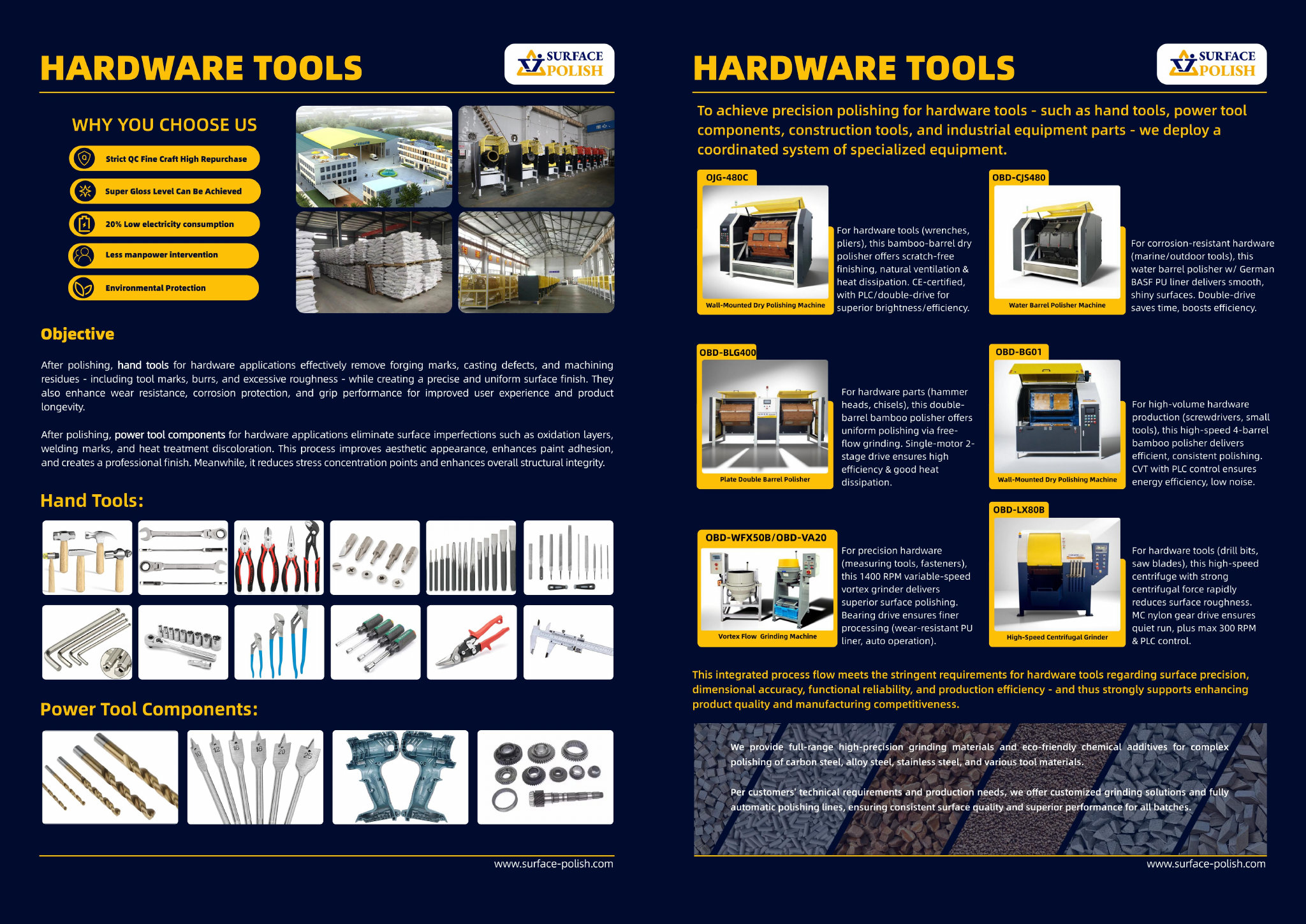
Partly, and the split is the useful part of the question. A robot can hold a grinder, sander or polishing head over a repeatable path with controlled pressure, which suits long weld runs, flat panels and consistent edges. It struggles where access is restricted, where the surface is free-form and required pressure changes continuously, and where a person compensates for part-to-part variation by feel. Work out which features recur in the same place on every part and which move; automate the first group and leave the second with an operator, or send parts to a machine route that already produces the surface in bulk.
Usually contamination rather than the material itself. Carbon steel media, carbon steel brushes, a machine also used for carbon steel work, grinding dust settling on a wet surface, bare-hand handling and chloride carried in rinse water can all leave something behind that starts to stain. It often appears first at a weld, a pit or a thread root. Segregate stainless work, use dedicated tooling, control the rinse water, dry the part promptly, and check with a wipe test or a free-iron check if the buyer wants one. Whether passivation follows mechanical finishing is the buyer's decision and its own requirement to define in United States.
The part has to arrive in a repeatable position and condition. That means a defined locating datum, a fixture or positioner that holds the part without distorting it, a starting condition that varies within a stated band, and a family whose geometry does not change on every job. The controlled features should be the same on every variant, and the part should be clean enough that oil or marking ink does not change how a tool cuts. If the part arrives different each time, the cell will spend its hours being adjusted rather than finishing, and the cost per part will not behave the way the original estimate assumed.
Use Atlanta, United States as the destination on the enquiry and state whether the deliverable is equipment, media and compound, a representative sample review or a line concept. A destination does not imply local stock, a local service point or a local delivery time.
Buyers in this supply chain commonly reference AS9100 and NADCAP-approved special processes for aerospace work, with SAE AMS process specifications such as AMS 2700 for passivation named on the certificate, while general industrial and food-equipment parts are specified to ASME B46.1 or ISO 4287 for texture with the customer's chosen salt-spray, adhesion or cleanliness test for coatings and hygiene.
Sources were retrieved on 2026-09-29 and describe the local industrial and trade context only. They do not evidence any SurfacePolish project, shipment, installation or service in Atlanta.
The buyer wants internal weld dressing that cannot be reached by any tumbling route and needs to know what can be finished from outside only.
Send the material, dimensions, approximate weight, batch quantity, the incoming condition and photographs of the difficult features. Mark which features must not be contacted by media and state how the result will be inspected. This form carries source reference PSEO-0076; quote it if you prefer an additional manual reference.
Open the SurfacePolish enquiry form Email a prepared enquiry
No price, lead time, certification or result is promised here. Confirm whether a sample trial is available for the specific part and what the trial can and cannot show.
Page PSEO-0076 · revised 2026-09-29 · cross-border equipment, media and scoped sample review. City context is sourced and cited above.
Use this local checker to identify missing part and inspection information. It prepares a technical-review brief; it does not approve a machine, process recipe or production result.
Complete the part details to prepare a review brief.
Email : info@surface-polish.com


 IPv6 network supported


 +86-592-2381506