

`High Frequency Ceramic Media` Guide: Vitrified Preformed Stones for Steel, Stainless, and Titanium

Manufacturing engineers sourcing high frequency ceramic media for industrial mass finishing quickly learn why high-density vitrified porcelain stones dominate ferrous and titanium production lines. Unlike brittle low-fired clay chips that crumble into sharp hole-wedging slivers—or soft synthetic plastic cones that wear away rapidly against tough alloy burrs—true high-frequency vitrified ceramic combines dense sintered porcelain strength with controlled micro-abrasive breakdown for brisk, repeatable deburring across multi-shift schedules.
The central thesis of this guide is simple: getting fast, jam-free edge breaking and consistent Rz leveling from high frequency ceramic media requires restricting use strictly to ferrous alloys (carbon steel, alloy steel, 304/316 stainless) and titanium (never soft aluminum or brass), selecting non-lodging preformed shapes (angle-cut cylinders, triangles, tri-stars), running continuous single-pass LC10 or MC8 wet flow-through into multi-baffle settling tanks, and transitioning cleanly to Stage 2 burnishing and 35A/70A centrifugal drying.
In this engineering guide, you will explore how high frequency ceramic media is engineered, match shape and cut grade to real ZL bowls, ZXL divided troughs, and LLF120 centrifugal barrels, and establish zero-glazing, zero-lodging maintenance across shifts.
What Defines High Frequency Ceramic Media in Industrial Deburring

High-Density Vitrified Porcelain Matrix vs. Weak Clay Tumbling Chips
True industrial high frequency ceramic media is extruded cleanly from fine porcelain clay blended with graded aluminum-oxide or silicon-carbide abrasive grain, then sintered at high firing temperatures into a dense, low-porosity vitrified matrix. That dense ceramic backbone delivers strong kinetic impact inside ZL circular bowls and resists premature tip shattering—cutting total media consumption and slashing broken-chip bore lodging compared to soft low-fired stones. Review our ceramic tumbler media guide and fast-cut vs fine-cut ceramic guide.
Ferrous & Titanium Sweet Spot: Carbon Steel, Stainless, and Aerospace Titanium
High frequency ceramic media shines on carbon-steel laser-cut brackets, hardened tool steel gears, 304/316 stainless valve blocks, and aerospace Grade 5 titanium fasteners where tough work-hardened burrs resist lightweight polymer media. Conversely, never run dense ceramic on soft 6061 aluminum, brass, copper, or Zamak zinc die castings—heavy ceramic bruises soft chamfers and hammers flat walls into an orange-peel texture. Use resin-bonded plastic cones on non-ferrous metals instead. See our synthetic plastic tumbling media guide.
Stage 1 Abrasive Cutting vs. Stage 2 High-Alumina Mirror Burnishing
Every grade of high frequency ceramic media is a Stage 1 abrasive cutting stone that removes sharp burrs and levels rough CNC valleys (Rz) into a clean uniform matte-satin surface. When mirror reflectivity is required, rinse Stage 1 parts thoroughly across your separator spray bar and run Stage 2 non-abrasive 304 stainless balls (JTJ20/JTJ60) or iron-free high-alumina spheres (HM3/JTJ50). Explore our porcelain ball burnishing media guide and ceramic media vs steel balls guide.
Selecting Preformed Shapes and Non-Lodging Sizes

Angle-Cut Cylinders for Cross-Drilled Bores and Hydraulic Ports
Angle-cut cylinders roll smoothly on curved cylindrical walls across round bolt holes without wedging, while presenting oblique elliptical cutting faces that tuck neatly into stepped housing shoulders and flange intersections. Read our angle-cut ceramic cylinders guide.
Straight & Angle-Cut Triangles for Acute Ninety-Degree Corners
Ceramic triangles present three crisp vertices capable of reaching deep inside ninety-degree CNC pockets, stamped slot corners, and gear roots—provided operators screen out worn thinned wafers weekly before tips pinch diagonally in holes. See our ceramic triangle media guide.
Tri-Star Ceramic for Curved Pockets and Thin Stamped Washers
Tri-star high frequency ceramic media features three convex lobes that prevent flat capillary sticking on thin stamped washers and shims while polishing concave fillets smoothly. Explore our tri-star ceramic media guide.
Applying the Bridging-or-Free-Pass Non-Lodging Rule
Never pick a stone width near any bolt hole, keyway, or counterbore on your blueprint; always verify physical clearance on raw sample parts so every stone either bridges safely over openings or passes freely straight through without jamming. Review our non-lodging media sizing guide.
| Preformed Ceramic Shape | Primary Geometry Advantage | Hole & Slot Lodging Risk | Cut-Grade Availability | Best SurfacePolish Machine |
|---|---|---|---|---|
| Angle-Cut Cylinders | Curved side + oblique slicing toe | Lowest round-bore lodging | Fast-cut, general, fine-cut | ZL bowl / LLF120 / ZXL |
| Angle-Cut Triangles | Sharp vertices for 90-degree corners |
Moderate if worn wafers remain | Fast-cut, general, fine-cut | ZL circular bowl / ZXL |
| Tri-Star Extrusions | Curved lobes break flat plate suction | Low-moderate in straight slots | General & fine-cut vitrified | ZL bowl / ZXL / LLB50 |
| Straight Cylinders | Maximum bulk wall durability | Very low round-bore lodging | Fast-cut & general-cut | Heavy rotary barrel / ZL |
Machine Pairing: ZL Bowls, ZXL Troughs, and LLF120 Centrifugal Barrels
Tuning Motor Counterweights and Cushion Ratios in ZL Circular Bowls
Inside ZL circular vibratory bowls (ZL250W, ZL900W, ZL900C), maintain healthy working fill levels and generous tumbler media ratio cushions around heavy steel manifolds so parts glide inside rolling high frequency ceramic media rather than colliding part-on-part. Review our vibratory motor counterweight tuning guide and tumbler media ratio guide.
Isolating Long Shafts and Rails Inside ZXL and L1300–L1800 Troughs
Long stainless extrusions, forged connecting rods, and heavy steel bars collide end-to-end inside open circular bowls. Load long parts inside ZXL or L1300–L1800 divided troughs so lane dividers protect part geometry throughout Stage 1 ceramic cutting. See our divided trough vibratory finisher guide.
Compressing Tough Titanium & Alloy Steel Cycles in LLF120 Barrels
When hard aerospace titanium or alloy steel requires intense sliding pressure that open vibratory bowls deliver slowly, LLF120 planetary centrifugal barrels multiply contact force cleanly—allowing high frequency ceramic media to deburr and radius stubborn edges rapidly. Read our centrifugal barrel finishing machine guide.
Inspecting Polyurethane Bowl Liners and Pneumatic Separation Screens
Inspect polyurethane bowl ribs and bottom drain grates weekly against abrasive ceramic wear, and pair ZL bowls with vibratory separator screen decks sized to drop full stones cleanly back into the tub while parts cross the clean spray bar. See our polyurethane bowl liner replacement guide and pneumatic separation screen deck guide.
Continuous Single-Pass Wet Chemistry (LC10, MC8, JTS5) & Drying

Keeping Ceramic Pores Open With Single-Pass LC10, MC8, and JTS5
Never run high frequency ceramic media dry; dry friction destroys polyurethane bowl liners, raises hazardous mineral dust, and smears parts. Run continuous single-pass clean water paired with metered compound-LC10 for everyday steel, stainless, and titanium cutting, acidic MC8 strictly for isolated carbon-steel descaling, and JTS5 for thin stamped steel washers routed into a multi-baffle settling tank after upstream alkaline pre-degreasing. Read our ceramic media glazing fix guide.
Heated 35/35A/70/70A Spin-Drying and Organic Buffing Options
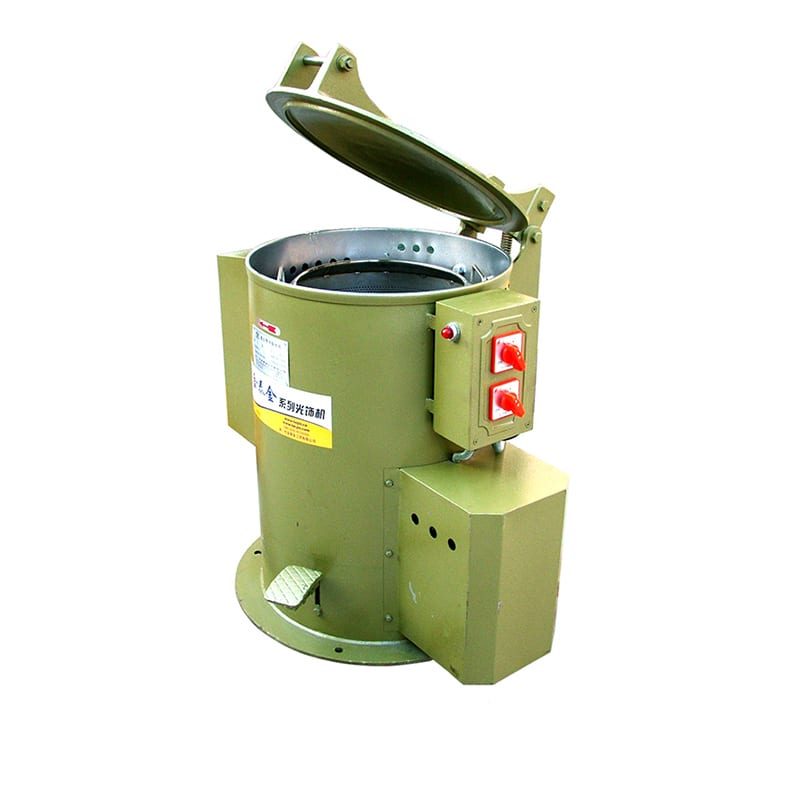
Immediately after wet steel or stainless batches cross the separator spray rinse bar, spin-dry them inside a heated 35, 35A, 70, or 70A centrifugal dryer to prevent flash rust and calcium water rings—adding dry corncob or walnut shell (8#-80#) buffing where optical clarity is needed. Review our centrifugal dryer guide.
Multi-Shift Maintenance, Screening, and Alloy Segregation
Weekly Fragment Purging and Color-Coded Carbon vs. Stainless Isolation
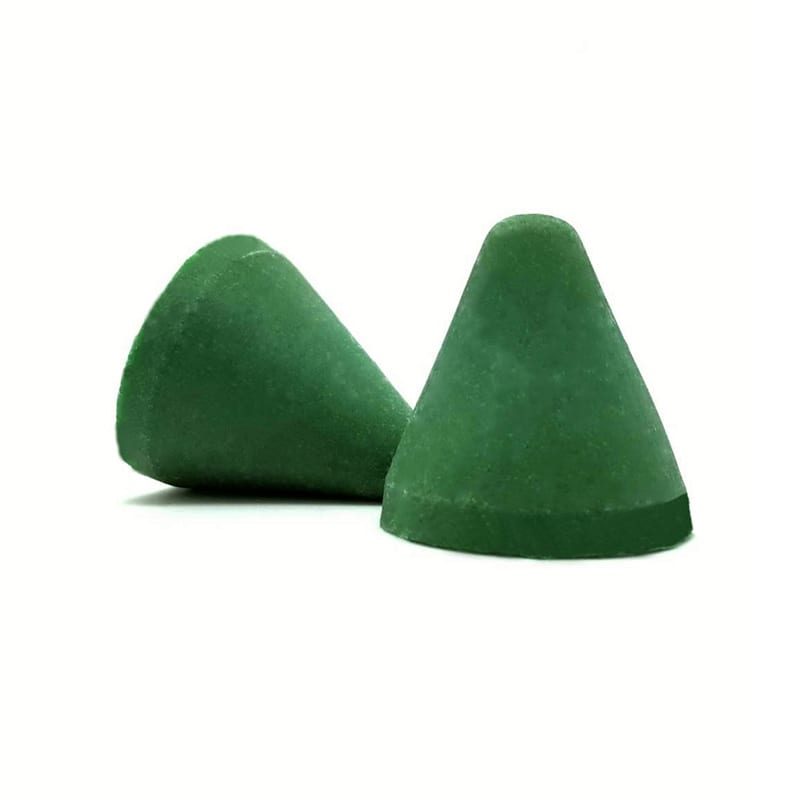
Screen undersized worn ceramic slivers weekly across your vibratory separator screen, top up fresh high frequency ceramic media to the working fill gauge, and enforce strict color-coded segregation separating carbon-steel bins and scoops from 304/316 stainless and titanium lines so residual iron dust never causes galvanic rust pitting. Explore our media screening and replenishment SOP.
| Ceramic Operations Issue | Likely Root Cause | Immediate Correction | Preventive Standard |
|---|---|---|---|
| Glazed smooth stones & slow cut | Oily CNC parts or starved LC10 dosing |
Pre-degrease batch; run hot LC10 flush |
Upstream alkaline wash + single-pass flow |
| Broken tips wedged in bolt holes | Shrunk worn chips not screened weekly | Purge undersized fragments; top up media | Weekly classification screen & fill check |
| Bruised edges on aluminum/brass | Dense ceramic used on soft non-ferrous | Switch Stage 1 to resin plastic cones | Restrict ceramic strictly to steel/titanium |
| Dark grey film on stainless batches | Dirty static sump or clogged bottom drain | Brush drain grates; restore single-pass flow | Daily drain brush + clean settling tank |
| Flash rust on steel parts post-rinse | Slow ambient air drying after unload | Spray rinse on screen + 35A/70A spin-dry |
Stage heated centrifugal dryer at chute |
Multi-Shift Bed Control, Storage, and Process Standardization
Maintaining Working Fill Height After Weekly Chip Screening
Never let active high frequency ceramic media beds sink below the bowl's working fill gauge after weekly classification screening. Topping up fresh vitrified stones immediately preserves kinetic tumbling momentum, keeps tumbler media ratio cushions generous, and prevents cycle times from stretching mid-month.
Storing Reserve Ceramic Pallets Cleanly Away From Coolant Mist
Keep palletized reserve bags of high frequency ceramic media sealed inside covered, dry storage racks away from CNC machining oil mist and metal grinding dust, with unmistakable color-coded labels matching each alloy family and bowl model.
Qualifying Motor Counterweight Angles for Each Part Family
Different ferrous alloys and part weights respond best to tailored vibratory energy: raise motor counterweight lead angles for aggressive laser-dross removal on thick steel brackets, and dial angles conservatively for thin-walled machined stainless housings.
Auditing LC10 Spray Nozzles and Bottom Drain Slots at Shift Start
Take two minutes before every shift to brush bottom bowl drain grates open and inspect overhead LC10 spray nozzles so clean single-pass lubrication wets the entire rolling ceramic bed evenly without muddy dead zones.
Factory Capabilities & Verified High-Frequency Ceramic Supply
Founded in 1992, Xiamen Jin Tai Jin Grinding Technology Co.,Ltd. (SurfacePolish) engineers and manufactures 21 machine platforms backed by 24 granted Chinese IP rights and more than 200,000+ solutions across certified facilities (ISO 00726Q01571R001, CE M.2023.206.C88121, and CE M.2023.206.C88120). Alongside ZL circular bowls, ZXL/L1300–L1800 divided troughs, LLF120/LLB50 centrifugal finishers, OBD-30..100 magnetic polishers, and 35/35A/70/70A dryers, we supply precision-extruded high frequency ceramic media (fast-cut, general-cut, and fine-cut cylinders, triangles, and tri-stars), resin plastic cones, iron-free high-alumina spheres, 304 stainless balls, corncob, walnut shell (8#-80#), and LC10/MC8/HM3/JTJ/JTS5 compounds. Standard machines ship in 25–35 days and custom lines ship in 45–60 days. Send sample raw parts to surface-polish.com for complimentary media sizing and process validation. Honest boundaries apply: we do not supply hobby rock-tumbler grit, dry sandblasting abrasive, or electroplating baths.
Frequently Asked Questions About High-Frequency Ceramic Media
What makes high frequency ceramic media better than cheap clay tumbling stones?
High frequency ceramic media is sintered from high-density vitrified porcelain and graded abrasive grain so stones hold sharp edges longer, deliver stronger kinetic cutting force on steel and titanium, and resist shattering into thin hole-wedging slivers.
Can high frequency ceramic media be used on 6061 aluminum or brass?
No. High-density ceramic stones bruise soft aluminum, brass, and zinc edges and hammer flat surfaces into an orange-peel texture. Use lightweight resin-bonded synthetic plastic cones or pyramids with compound-LC10 instead.
Which liquid compound pairs best with high frequency ceramic media?
Run continuous single-pass clean water with compound-LC10 for everyday carbon steel, stainless, and titanium cutting; reserve acidic MC8 strictly for isolated carbon-steel descaling; and dose JTS5 for thin stamped steel washers.
Can high frequency ceramic media run dry for dust-free deburring?
Never run ceramic media dry; dry friction overheats polyurethane bowl liners, raises hazardous mineral dust, and smears parts. Always run wet single-pass LC10/MC8 flow, reserving dry cycles strictly for corncob, walnut shell (8#-80#), and hardwood.
Does high frequency ceramic media produce a mirror polish?
No. It is an abrasive Stage 1 cutting medium that leaves a clean uniform matte-satin surface. Transition rinsed Stage 1 parts into Stage 2 non-abrasive 304 stainless balls (JTJ60) or iron-free high-alumina spheres (HM3) for mirror luster.
How do I prevent high frequency ceramic media from glazing smooth?
Pre-degrease oily CNC parts upstream in an alkaline wash, brush bottom bowl drain grates daily, and keep continuous single-pass LC10 water flowing into a clean multi-baffle settling tank.
How often should I screen worn high frequency ceramic media?
Run classification screening weekly across your vibratory separator screen to purge undersized worn chips before they wedge in bolt holes, and top up fresh stones to the working fill line.
How can I test the right high frequency ceramic media grade and shape?
Send representative raw production parts to surface-polish.com for complimentary lab testing; our engineers qualify non-lodging geometry, cut grade, and LC10 dosing and return finished samples before you order.
Why do angle-cut high frequency ceramic cylinders jam less than triangles in bored parts?
Angle-cut cylinders roll smoothly along continuous curved sides across circular bolt holes and cross-drilled hydraulic ports, whereas sharp ceramic triangles can pinch diagonally inside round bores once stones wear slightly thinner.
Can high frequency ceramic media remove weld spatter and black heat-treat scale?
Yes. Pairing fast-cut silicon-carbide high frequency ceramic media with continuous single-pass LC10—or acidic compound-MC8 inside isolated carbon-steel equipment—strips tough laser slag, weld spatter, and heat-treat mill scale cleanly across forged and stamped brackets.
What happens if I mix carbon steel and titanium in the same ceramic charge?
Residual iron swarf from carbon steel embeds into vitrified ceramic pores and transfers galvanically onto titanium or passive 304/316 stainless batches—causing rust pitting downstream. Always maintain dedicated color-coded tubs and scoops per alloy class.
How do I protect Stage 2 high-alumina spheres from stray Stage 1 ceramic grit?
Pass Stage 1 deburred parts beneath a filtered clean-water spray bar on the separator deck, inspect blind pockets carefully, and use strictly separate color-coded transfer baskets for Stage 2 burnishing tubs.
When is an OBD-30..100 magnetic polisher needed alongside ceramic deburring?
When intricate internal threads, knurled rings, or hollow watch-case pockets remain untouched by external high frequency ceramic media, adding a quick OBD-30..100 ferromagnetic pin cycle brightens deep recesses cleanly without risking ceramic bore lodging.
How does tumbler media ratio affect burr removal with high frequency ceramic media?
Packing excessive steel manifolds or heavy brackets into an under-filled ceramic bed strips away cushioning protection, causing crescent collision dings on chamfers and slowing mass turnover. Keeping a generous cushion of high frequency ceramic media around every part accelerates sliding shear and protects precision tolerances.
Why is polyurethane bowl liner inspection critical when running high frequency ceramic media?
Dense vitrified ceramic wears polyurethane discharge dams and bottom drain ribs steadily across multi-shift production. Weekly visual thickness checks around the discharge ramp let maintenance teams schedule proactive relining before bare steel backing damages parts.
Can worn high frequency ceramic media fragments be reused on smaller parts?
Only if screened fragments are uniform in size, pass physical non-lodging clearance tests across every hole and slot on the secondary part family, and stay strictly on the exact same alloy class (carbon steel vs. stainless/titanium).
What drying step prevents flash rust on carbon steel after high frequency ceramic cutting?
Immediately after wet steel parts cross the vibratory separator screen under a clean-water spray rinse bar, load them straight into a heated 35, 35A, 70, or 70A centrifugal spin-dryer so warm airflow evaporates trapped moisture out of blind threads immediately.
How does LLF120 centrifugal barrel finishing change high frequency ceramic wear?
Planetary centrifugal barrels multiply effective contact pressure against workpieces, allowing high frequency ceramic media to deburr tough tool steels and titanium rapidly while consuming stones slightly faster than standard ZL circular bowls.
Why should I inspect 35A and 70A centrifugal dryer baskets alongside ceramic screening?
Undersized worn ceramic chips that slip past separator screens can ride into heated 35A or 70A centrifugal spin-dryers, lodging inside blind threads or scratching finished parts during high-speed rotation. Wiping dryer baskets weekly keeps dry parts completely defect-free.
How does single-pass settling tank maintenance protect high frequency ceramic cutting?
Keeping multi-baffle settling tank compartments clean prevents fine metallic sludge and fractured porcelain silt from backing up through drains and glazing ceramic pores smooth mid-week.
Can high frequency ceramic media remove heavy EDM recast layers cleanly?
Yes. General-cut and fast-cut high-frequency stones paired with metered compound-LC10 strip thin EDM recast layers and heat-affected skins uniformly across precision steel and titanium components when cycle times and working fill heights are maintained properly. Always verify final edge-break radii and Ra uniformity on sample parts beforehand, and transition rinsed steel or titanium batches into Stage 2 304 stainless balls or high-alumina spheres whenever mirror optical luster is specified. Keeping color-coded media bins, clean separator decks, and daily drain-grate brushing habits active ensures consistent shift-to-shift deburring output. Recording exact stone sizes, cut grades, and metered LC10 pump flow rates on every work-order traveler eliminates operator guesswork and protects dimensional precision across long production runs.
 +86-592-2381506


 IPv6 network supported
